
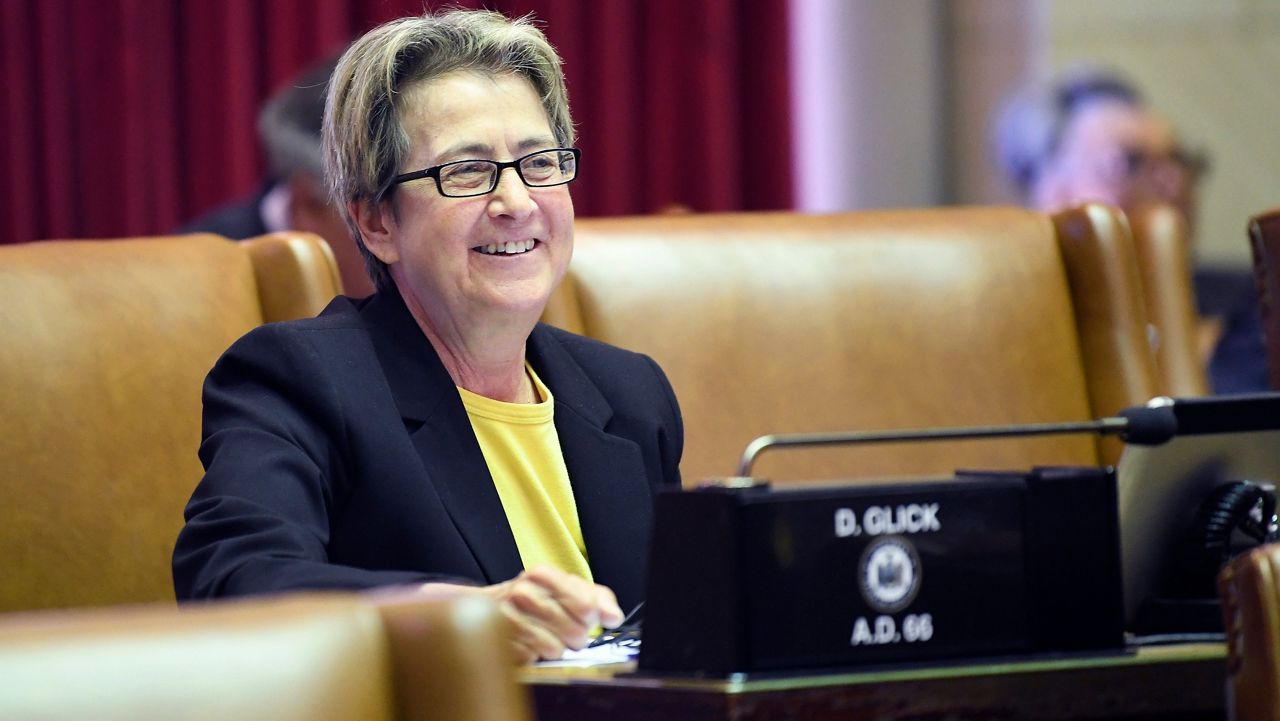
Deborah Glick, the first openly lesbian member of the New York state Legislature who co-authored New York’s ban on “conversion therapy,” said that Tuesday’s Supreme Court ruling against a law banning licensed therapists from trying to change a minor’s sexual orientation in Colorado would immediatly harm LGBTQ+ youth.
An 8-1 high court majority sided with a Christian counselor who argues the law banning talk therapy violates the First Amendment. The justices agreed that the law raises free speech concerns and sent it back to a lower court to decide if it meets a legal standard that few laws pass. It’s the latest in a line of recent cases in which the justices have backed claims of religious discrimination while taking a skeptical view of LGBTQ+ rights.
“As the sponsor of this legislation for many years before it became law in New York State, I have personally seen the damage that is done to young people and how it can persist throughout adulthood,” Assemblymember Glick, a Democrat from Manhattan, said in a statement to Spectrum News 1 Tuesday. “Major professional organizations in the field, including the American Psychological Association, the American Medical Association, and the American Academy of Pediatrics oppose this practice because it is associated with documented harm to patients, and is based on the false belief that LGBTQ+ expressions of gender and sexuality are deficiencies in need of correction.”
Like Colorado, New York banned conversion therapy in 2019.
“By striking down Colorado’s law restricting licensed professionals from engaging in this discredited practice, the Supreme Court has not only opened the door to more formative adolescent trauma for LGBTQ+ children; it has undermined states’ ability to regulate the professional standards for medical and mental health practitioners. This will immediately harm LGBTQ+ youngsters, but it also sets a troubling precedent for further judicial meddling of the regulation of the public health, the implications of which will extend beyond the LGBTQ+ community,” Glick said.
Glick was elected to the state Asembly in 1990. She recently announced she wouldn’t run for reelection again this year.