
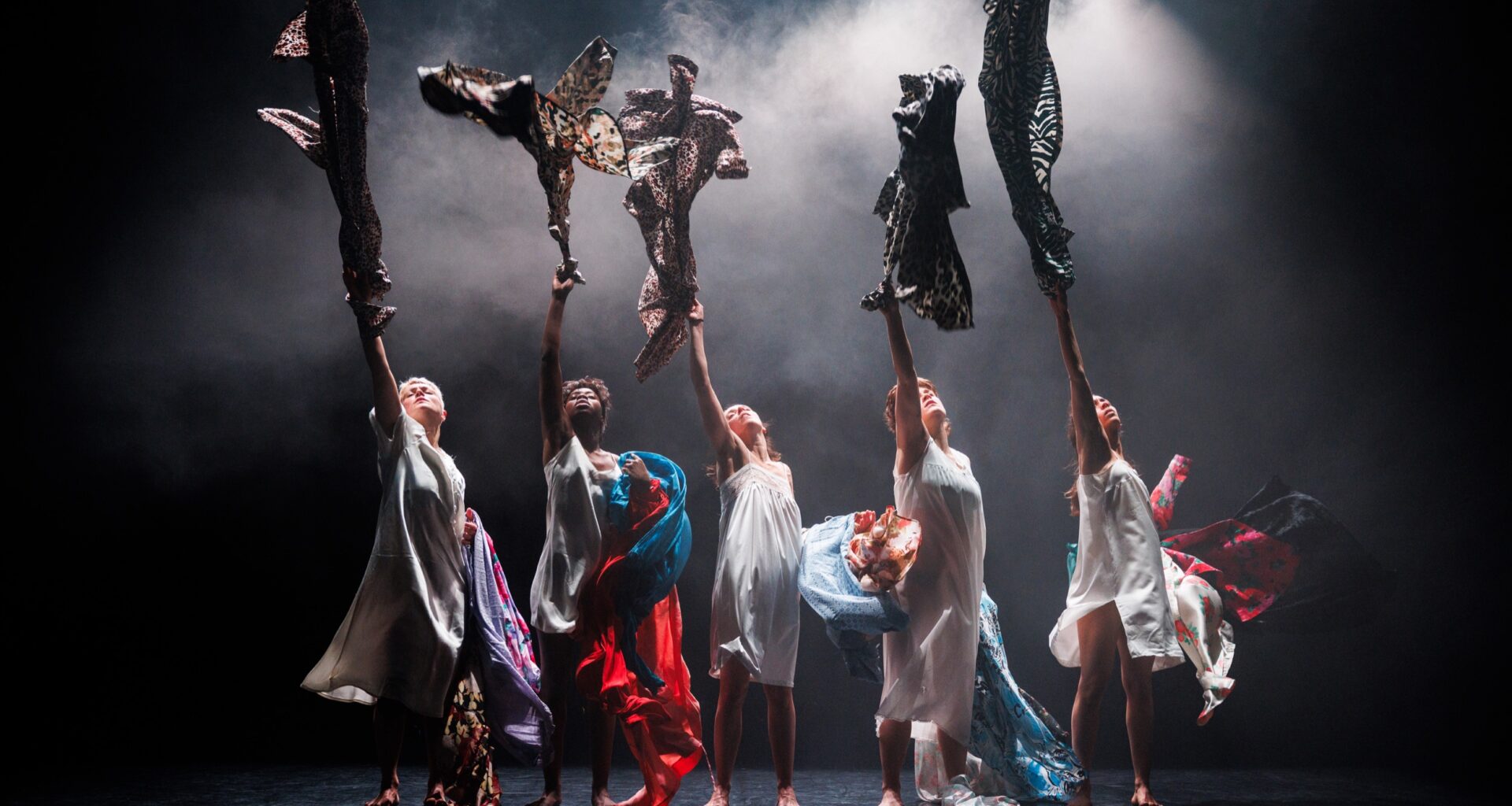
Leïla Ka
Maldonne
New York Live Arts
February 27–28, 2026
New York
Leïla Ka cycles. She cycles through movements with unforgiving repetition. She cycles through dress upon dress, each article constricting or extending the body. She cycles through shades of womanhood, the dancers transforming before our eyes through abstractions of different life stages. Each cycle is regimented, exacting, and precise. A sense of nobility, or prophecy, sustains Maldonne like a pulsating heart.
It’s Leïla Ka’s first group work following three lauded solos and duets: Pode ser (2018), You’re the one we love (2020), and Bouffées (2022). Ka feels destined to work with an ensemble, with her command over unison movement and startling visual compositions. Designed for five dancers, Maldonne works its way through a wardrobe of forty different dresses, and each shift in costume calls the performers to change, chameleon-like, into another kind of woman. The shifts distill into repeated gestures—pleading bows and sensual hip rolls—dialed up with drama.
Repetition, to the point of abandon or exhaustion, persists in Maldonne, creating a performance out of routine. In its opening, the women appear as weeping widows, draped in frumpish and long floral gowns. They wear their despair with dignity, shrinking away to wipe a tear, before jutting their chin in a show of quiet strength. They get faster, sliding through their statuesque positions of grief and feeding into a collective song of sharp sobs. They get bigger, imploring as they bow forward until collapsing onto the ground, jerking themselves across the floor. The breath pulses, metronomic. On we cycle.
At certain points, the dancers break the chain when someone falls out of unison or they alter their pattern ever so slightly. As the dancers pull themselves off the floor, one woman remains prostrate. They continue without her. In one cycle, the women flip up their skirts as they push themselves from laying on their bellies to sitting back on their knees, and we get a flash of their bare asses. Their skin is gone in a blink as they start the pattern over again, but the vulnerability of the moment persists.
Amidst the cycling of gesture, another, overlapping cycle of Maldonne is one of breakdown and recovery. Emotion builds up like a dam until it breaks, and we see the women try to put themselves back together. It’s a pendulum between precision and theatricality, and each swing back and forth leaves the stage hollower than before.
When the women change from their floral dresses to slinky, satiny animal print pieces, they transform from despairing to lascivious. Kneeling, they force their knees open and close, open and close, manipulating the slit in the front of the dress. Their eyes stay trained on the audience. It’s an intense, almost primal depiction of sexuality, as the dancers grip the satin tail of the dress between their teeth or slide a closed fist down the fabric, extending it from their crotches.