
Long Life
Iziko South African National Gallery
December 12, 2025–June 30, 2026
Cape Town
During the press preview for Steven Cohen’s long anticipated retrospective, there was a last-minute dash to veil twelve works. Museum management demanded the works be removed. Curator Anthea Buys and Steven Cohen were only informed of this decision at 11 p.m. the night prior to the opening. A compromise was struck—during the press preview, installers were hastily cutting black cloths to cover these specifically targeted works. No less, the Iziko judgement was undertaken at the very last minute. As the black-out censorship continued and the press preview began, it became evident that the national gallery had known the content of the exhibition for months. This action ignored Cohen’s well-established, forty-year-long career which was about to be celebrated. In fact, the exhibition, we were told, had been under discussion for fourteen years.
Steven Cohen: Long Life was organized by independent Johannesburg-based curator Anthea Buys. The exhibition of Cohen’s often provocative work is methodically structured and presented in a crystalline manner. Curatorial clarity of purpose and the teleology of Cohen’s thinking made the artist’s career appear clear, natural, vibrant, activist, and above all logical. Buys concisely reminds viewers that Cohen deploys his queer, Jewish, white South African male body as a stage for complex and challenging investigations that are at once historical and contemporary, personal and societal. In doing so, the artist concurrently raises issues of ethics, politics, race, sexuality, spirituality, fear, beauty, and love.
In close collaboration with the artist, Buys arranged the rather traditional galleries at Iziko as a modified chronological survey. It begins with Cohen’s early work, mainly in screenprint on canvas. Eventually, the artist began using the screenprinted fabrics to upholster earlier-twentieth-century furniture or to create simple, usually unassuming domestic accessories such as napkins or dishes. The power of these works lies in their juxtaposition of disjunctive imagery and the benign customs associated with their seemingly innocent domestic forms. Images include apartheid-era villains, children’s fiction, and body parts that can be teasingly sexual and/or violently severed. These initially amaze by virtue of their formal character, seducing viewers with their collage-like elements in vibrant colors and of flamboyant interlocking forms. When the images are ultimately deciphered, they rattle with their often-contradictory ethical concerns and conflicting emotive dynamics. This is especially true in such works as Gas Mask and Prayer Shawl (2004) and the “Alice in Pretoria” series. Both bewilder audiences who are hit by the sharp juxtapositions of fairytales and other seemingly innocent childhood narratives with unnerving images of racist politicians and racial or personal subjugation.
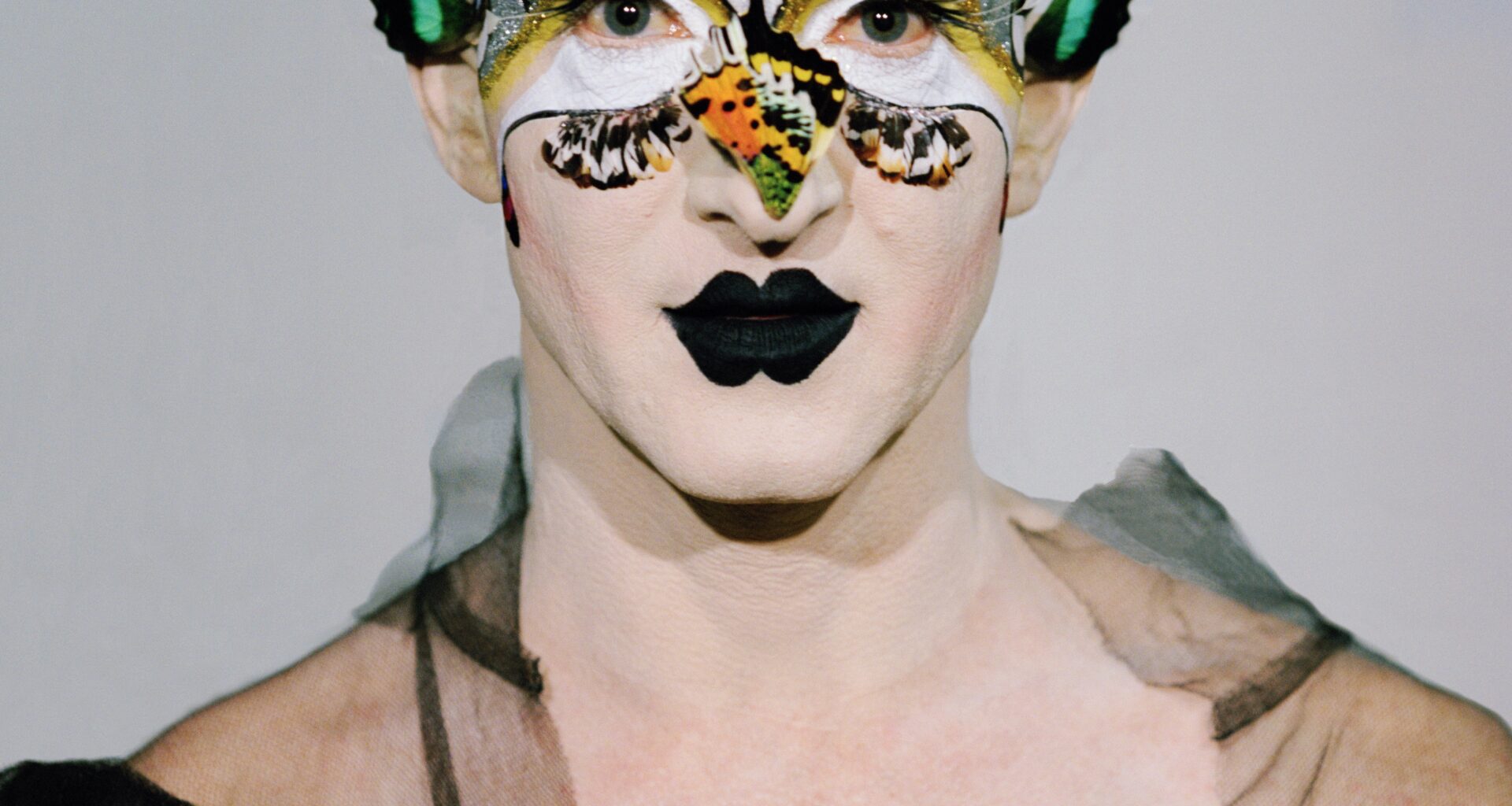
Beginning in the mid-nineties, Cohen gradually shifted to making performance work. Some writers deem his performances confusing and threatening and have labelled them “monster drag”—a finely constructed and often harrowing picture of societal and ideological menace. Cohen himself calls his flouting of social mores around privacy issues “conceptual drag.”
In truth, one can break down his performance work into two categories: the first, staged works that are presented at specific theatrical/artistic locations where viewers occupy seats reserved for the event; the second, distinctly different, highly focused site-specific work. These sites are loaded with historical or contemporary meaning and symbolism.
The site-specific works are executed at hot-button loci, drawing attention by their historically or socially fraught situations. Often these sites/histories are burdened by the fact that the performance’s success depends on Cohen’s apprehension or arrest. Perhaps most noted among his site-specific performances is his 2001 Chandelier. Outfitted in a chandelier repurposed as a body-enveloping tutu, Cohen wore exceeding high-heeled footgear to enter a settlement in which a contractor engaged by the city of Johannesburg begins to bulldoze and demolish the fragile settlement. His ingenious outfit is a metaphor for faux civility of bourgeois elegance in the face of government aggression. Cohen’s incongruous performative presence was embraced by the community disheartened by the fact they were losing their tenuous homes, however improvisatory and fragile they may have been. Cohen was arrested at the performance. In fact, it was news of Cohen’s apprehension that made the domestic destruction public. As such, Cohen’s performance succeeded in its goals to make clear the continuing racism, fragility of power, and lack of respect certain Black communities in South Africa continue to face.
Cohen has had two major collaborations, the first with his family’s caregiver and his nanny, Nomsa Dhlamini—the only person in his home he claims offered him security and love. The curator reminds us that this work is crucial to the exhibition as it forces viewers to consider the ethics of representation as well as the continuation of exploitative labor practices in middle and upper-class life in South Africa. Despite the importance of Cohen’s forced confrontation with continuing racism and subjection, many of these works were censored. The nude depiction of Dhlamini going about the most basic of her domestic chores were purposely contrasted with the idea of Dhlamini as artistic collaborator and model. As with Chandelier, Cohen felt these collaborative interventions were meant to make evident racism and exploitation while concurrently admitting, as a white man, his own implication in it.