
I saw the off-Broadway production of Gotta Dance!, and what hit me hardest was not just the dancing, though there is plenty there to love. It was the strange, immediate way the whole evening brought back a version of New York that I sometimes worry exists more in memory than in real life now: the New York of musical theater obsession, of rushing into Midtown for a curtain time, of feeling as though a night out could still lift the entire mood of the city. The production is now at Stage 42, scheduled through June 14, 2026.
What I mean is not some vague, overpackaged nostalgia for “old New York,” which is a phrase people toss around so casually now that it can start to mean almost nothing. I mean something more specific and, at least for me, more emotional than that. Sitting there, I found myself thinking about the version of the city I first fell for, the one that felt inseparable from theater, from dance, from that peculiar Manhattan mix of glamour and hustle and total overstatement. There was always something a little excessive about New York at its best, and that is partly why it could be so thrilling. Even when it was frayed, too loud, too expensive, too much, it still felt alive in a way that made you forgive it. A show like Gotta Dance! taps directly into that.
It reminded me how much New York still lives through performance
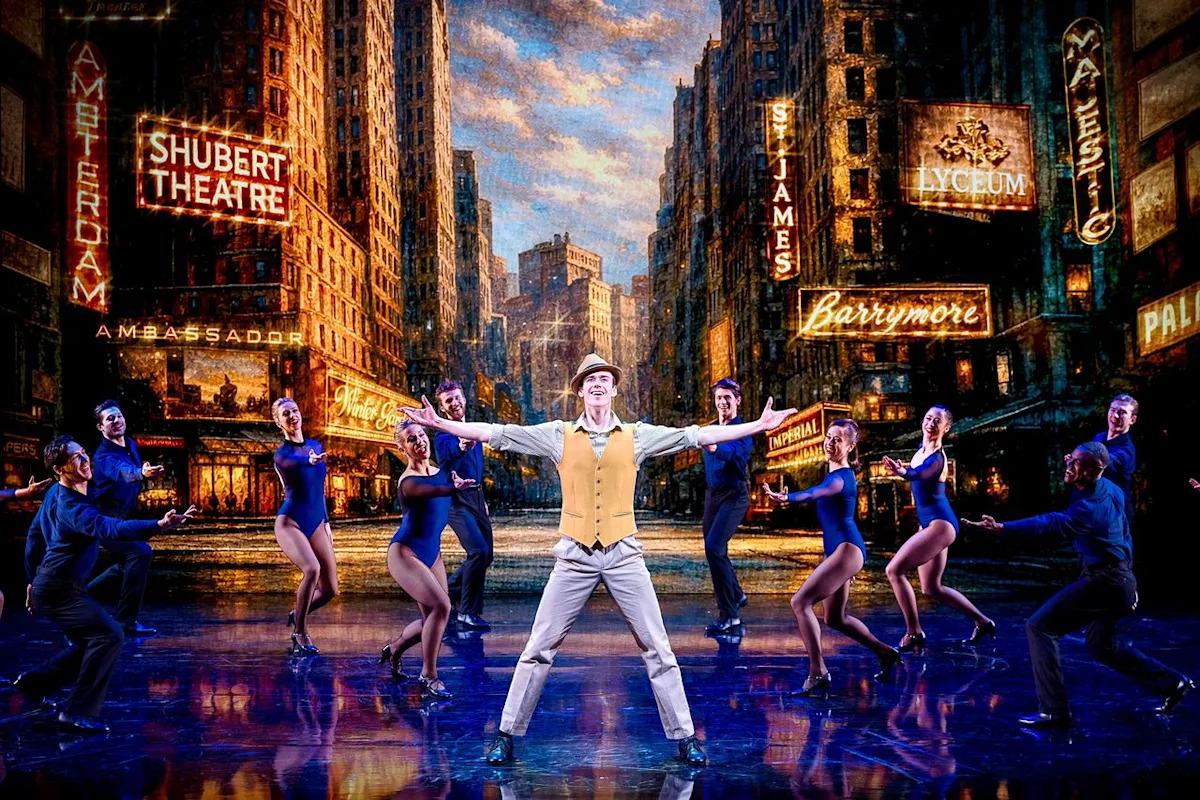
Cowperthwaite, Libby Lloyd, and the ensemble of Gotta Dance! perform reimagined routines inspired by legendary Broadway and film musicals, honoring the golden age of musical theater.
(Christopher Duggan)
The premise itself is part of what makes it work. Gotta Dance! is built around reconstructed choreography from classic Broadway and film musicals, including numbers from West Side Story, Singin’ in the Rain, A Chorus Line, Pippin, and more, all presented as a celebration of the choreographers and dance traditions that helped define musical theater onstage and on screen.
But what stayed with me was less the list of titles than the feeling underneath them. The show does not come at its material with embarrassment or irony, and that alone felt refreshing. So much culture now seems terrified of sincerity, as though delight must always be slightly undercut before we are allowed to feel it, but Gotta Dance! does something much more old-fashioned and, to me, much more pleasurable: it simply believes that these numbers still matter, that audiences still want to be carried along by rhythm and skill and theatrical confidence, and that there is nothing outdated about the sheer pleasure of watching people dance brilliantly to music that still knows how to land.
That confidence, for me, is deeply tied to New York itself. Theater in this city has always done more than entertain. At its best, it creates atmosphere. It changes the emotional temperature of a night. It reminds you that New York is not only a hard, expensive, overstimulating place to move through, but also one that can still feel romantic, heightened, and full of promise for two hours at a time. That is what came rushing back to me during Gotta Dance!, not because the show was trying to lecture anyone about Broadway history, but because dance can sometimes get to memory faster than words do. It bypasses analysis. It goes straight to recognition.
What I really felt was homesick for a city I was already in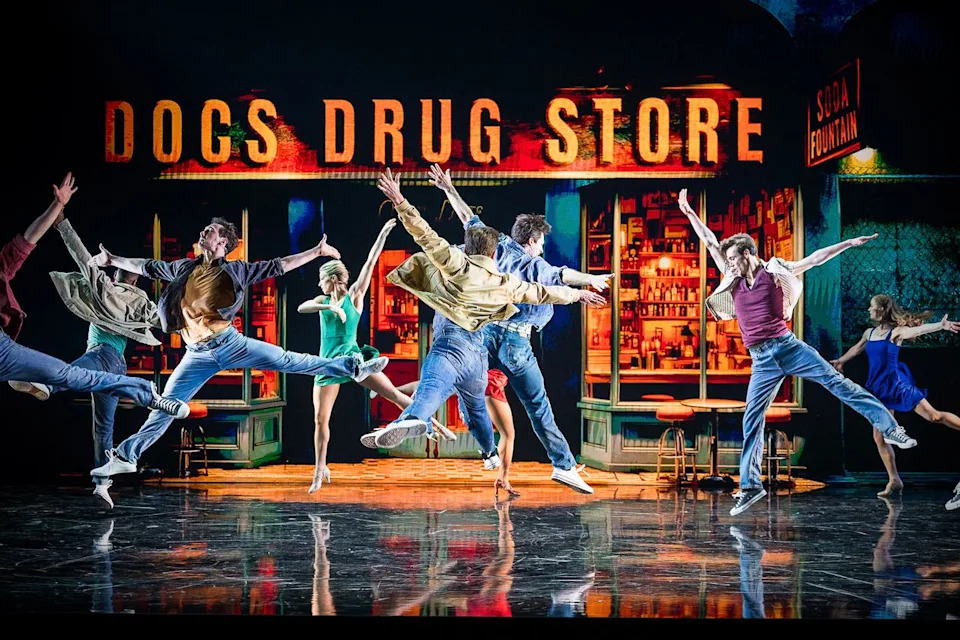
The full company of Gotta Dance! delivers a vibrant tribute to musical theater history, blending precision, nostalgia, and live performance energy on stage in New York City.
(Christopher Duggan)
That was the strangest part of the evening, especially as a former New Yorker who moved across the ocean to Copenhagen for love. I was in New York, watching a New York show, and yet what I felt was a kind of homesickness for the city itself, or maybe for the version of it I first knew through theater. If you have loved New York for a long time, you probably know that feeling. The city changes, the blocks change, you change, and yet every so often, something cracks open that older relationship you had with it and reminds you why you cared so much in the first place.
For me, Gotta Dance! did that. It brought back the New York of bright marquees and post-show adrenaline, of leaving a theater and feeling the air on 42nd Street differently than you did when you went in, of believing, for a moment, that performance was not a luxury added to city life but part of its bloodstream. It reminded me that one of the reasons New York has such a hold on people is that it has always been a city willing to stage itself a little, to let artifice, ambition, and beauty sit right out in the open. That is a big part of what theater understands so well, and a big part of why a dance show like this can feel unexpectedly emotional.
I also think there is something especially moving right now about a production that leans so unapologetically into pleasure, craft, and inheritance. Gotta Dance! comes from American Dance Machine’s effort to preserve iconic choreography, and you can feel that mission in the evening, not as homework, but as affection. It does not feel dusty. It feels grateful. It feels like people who love this form are making a case for why it should still be seen live, in a room, in a city that understands exactly what live performance can do.
That is why I left thinking less about whether I had seen a “good show,” though I had, and more about what it had stirred up in me. I left thinking about New York as feeling, not brand; as atmosphere, not content; as a place where theater can still make the city seem bigger, older, and more charged than it looked an hour earlier. And honestly, in a moment when so much of the city can feel flattened by cost, exhaustion, and sameness, that felt like no small thing.