
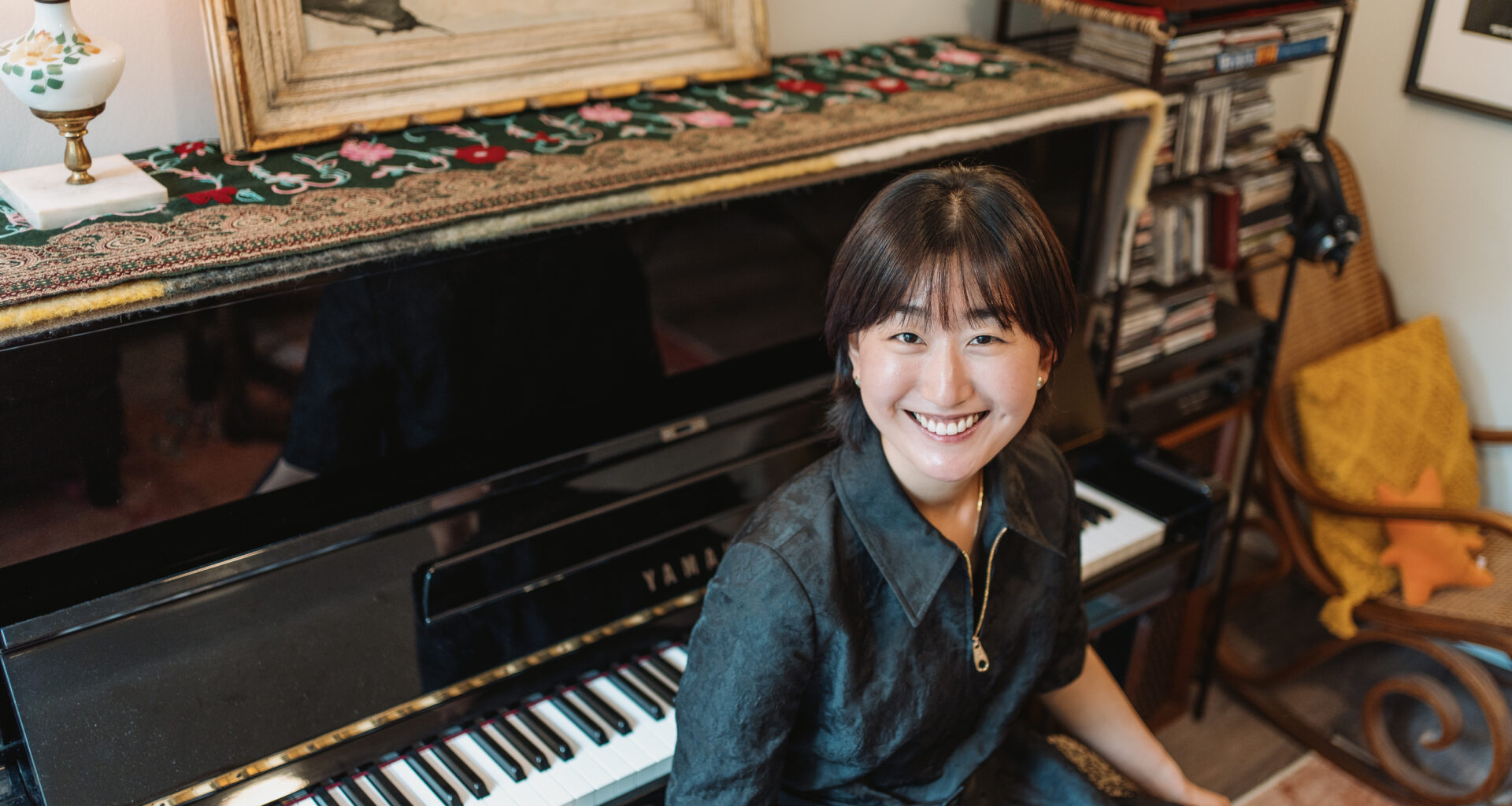
Jinjoo Yoo is also a pianist (and one New York’s hidden jazz gems—her glassy, elegant, playful touch is as achingly in-the-pocket as a ripely spare koan), but strictly believes that being a full-time musician means supporting yourself from performance alone. Yoo expresses that she “wants to free up more time and energy to focus on composing, practicing, and rehearsing,” but laments that “you have to take gigs you don’t feel connected to—for me, that can mean playing pop music, and that sort of kills my soul.” Teaching provides a balance in the meantime, because, for her, the point of playing jazz is simple: authentic creative expression, no more and no less. “I’ve seen many people focus on becoming famous,” she recalls, “making more money, or getting ‘bigger’ gigs. But the jazz artists I’ve always admired appeared to value a different path, even when they could have had it all. And that’s the kind of path I want to follow.”
Then there’s Chris “Parnhash Nakovsky” Carr, a rapper who actively upholds and defines underground principles more than most anyone. Chris not only performs across the country, but organizes the annual Brooklyn Wildlife music festival; authored the scathing, incisive book Thoughts of an Angry Black Man; hosts a podcast; co-founded the grassroots organization Black Land Ownership; and ran a crystal shop in Greenpoint called GAMBA Forest, where he put on shows boasting only indie artists. In our conversation about what motivates him to make music, he notes:
When products are put on the market, it totally alters their purpose. Asking a friend why we weren’t making any money, I realized it’s about finding a way to do something that no one else knows how to do: to fulfill a need. So then the question becomes, “Is there a need for art? Is there a need for music?” And then the purpose shifts: I just have this emotional feeling that I want to share with people. We don’t have to try to figure out this need-based system with this idea of having to exchange it for something.
Or, as he put succinctly in one of his freestyle performances, “I rap for the love and the relationships, and less for the money and the patronage.” And while Carr may not be rich, money has always worked out for him, as it has for all of the other musicians who—for whatever reason—loosened their grip on the siren song cooing its “quality of life” chorus.
So it’s ironic that the musicians here playing styles that once symbolized rebellion are living the least “underground” lives. And it makes sense that classical lay somewhere between ether and archive, and that the musicians playing jazz and hip-hop—two Black forms of music that, Yoo articulates, “express the painful history of African-Americans and is grounded in collective creativity, intelligence, and the desire for freedom and resistance against oppression”—are arguably the most dedicated to embodying countercultural values that emphasize creativity over capital (I’m reminded of the Louis Armstrong quip, “What we play is life.”). But the other portrait emerging from these experiences is that New York creatives have no choice but to interface delicately and strategically with economics. This is an enormous challenge that, to Couvo’s point, can detract from creative impulse altogether. Yet within this lies the more subtle truth that committing to both creativity and community can provide enough, a subjective concept, as Tender explains thus: “I may make less in some ways, but I feel like I live with more.” As his own persistence indicates, it’s almost as though karma itself rewards us for making it work in lieu of working, especially for, say, the AI overlords. In underground music economics (as opposed to free market economics), even making rent is an act of creative resistance. New York grinds you down, but gives you infinite opportunities to rebuild as you see fit.