
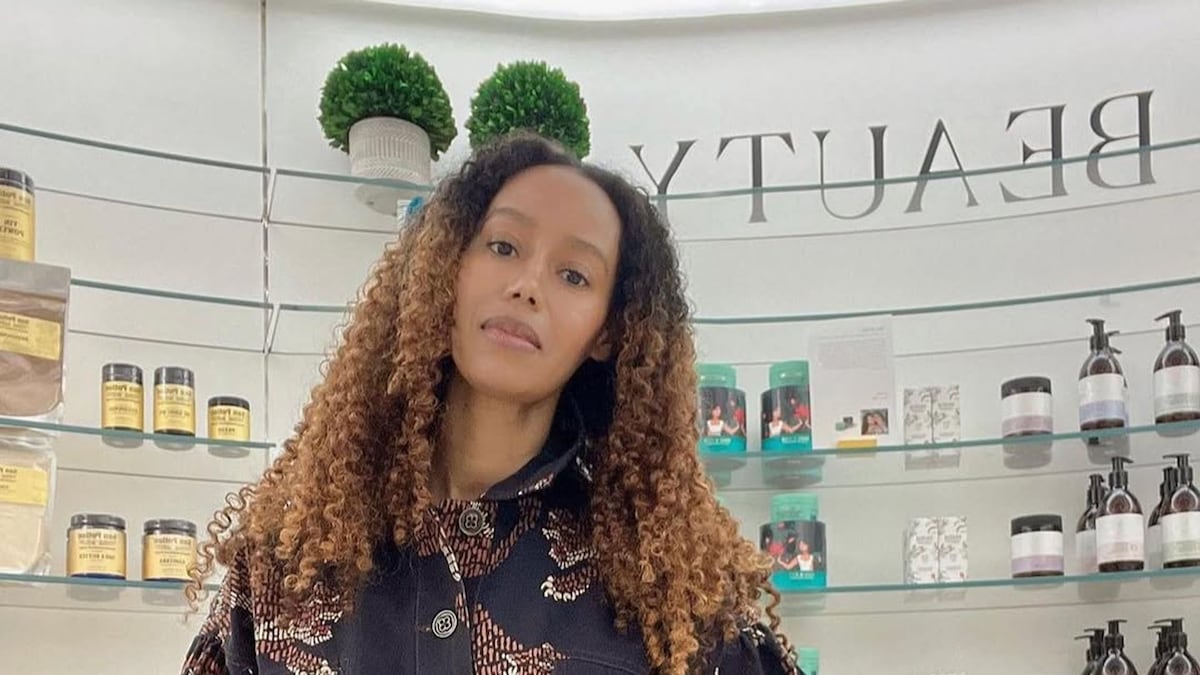
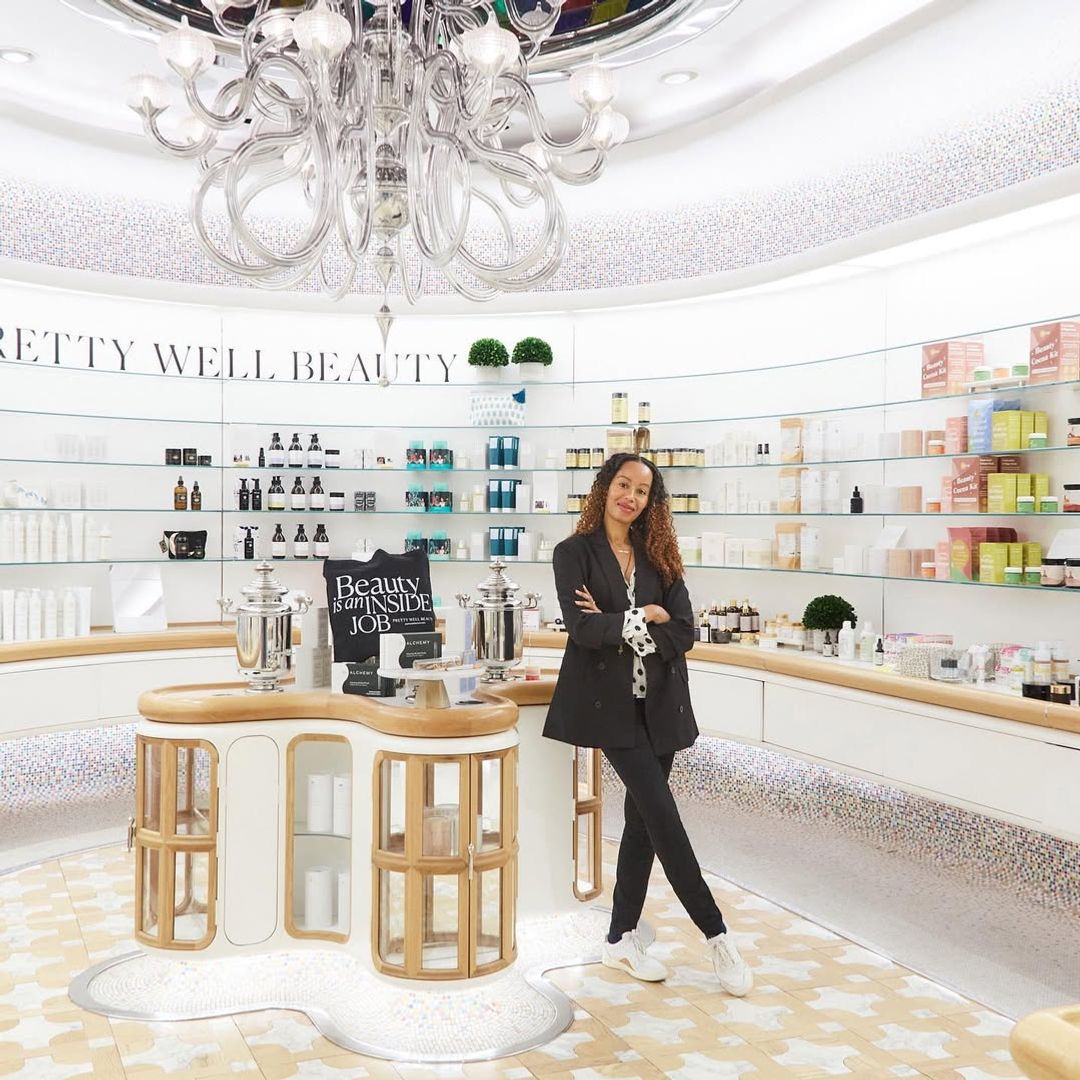
Eight years after launching Pretty Well Beauty, founder Jazmin Alvarez is still running her New York City store while building a clean beauty business rooted in culture, education, and community.
At her location, inside the Oculus, one of the busiest transit hubs in Manhattan, Alvarez operates in one of the most competitive retail environments in the world. She oversees everything from opening the doors to managing inventory, fulfilling orders, and guiding customers through their purchases with the kind of care and attention that defines her brand. In an industry dominated by major retailers and venture-backed brands, that level of hands-on commitment and involvement is rare, and it truly stands out.
Jazmin isn’t building her business from a distance; she’s living it every single day.
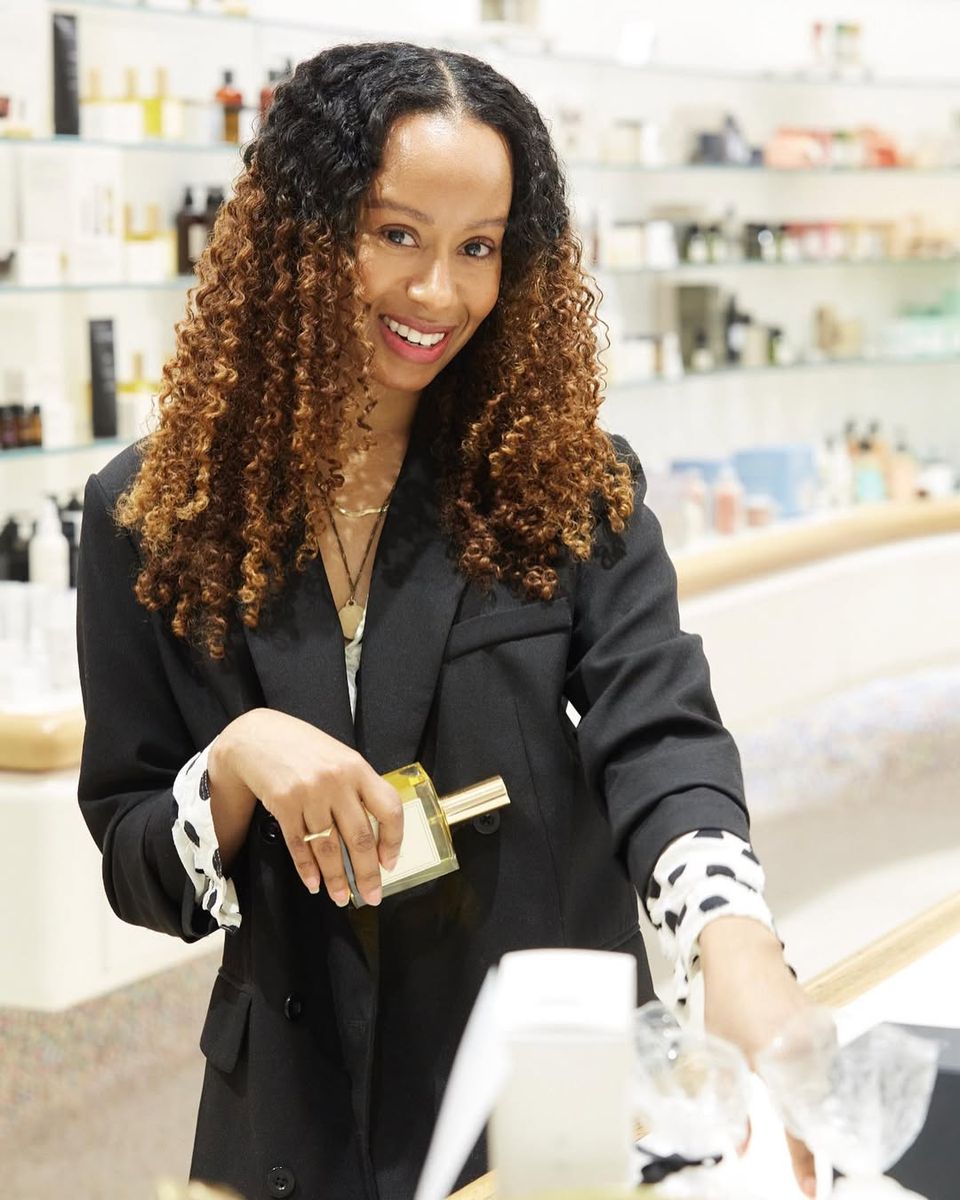
The way Jazmin talks about her journey is in a very relatable and human way. She doesn’t romanticize entrepreneurship. She speaks openly about the pressure, the financial uncertainty, the moments when she questions everything, and the decision to keep going. That blunt honesty reveals an entrepreneurial spirit actively growing through every phase of the process. It’s refreshing and real.
As a Latina founder with Central American, African, and Indigenous roots, Jazmin carries generations of knowledge into her work. Growing up around her mother, a hairstylist who used natural ingredients long before they were widely marketed, laid the foundation for what would become Pretty Well Beauty. For her, clean beauty isn’t a trend; it’s a continuation of practices that have long been part of her culture.
That perspective is reflected in the business she has built. More than 75% of the brands her store carries are founded by people of color, and every product is carefully curated and selected with intention to meet her clean beauty requirements. But beyond what is on the shelves, what she is creating is a space that focuses on education, transparency, and trust, one where customers are encouraged to understand what they’re using and why.
¡HOLA! sat down with Jazmin for a candid conversation about what it really takes to build and sustain a business. Eight years in, she is still showing up, still learning, and still choosing to believe in what she started. Read our conversation to see her commitment and drive up close. Her energy is contagious, and her insights offer helpful guidance for first-time business owners.
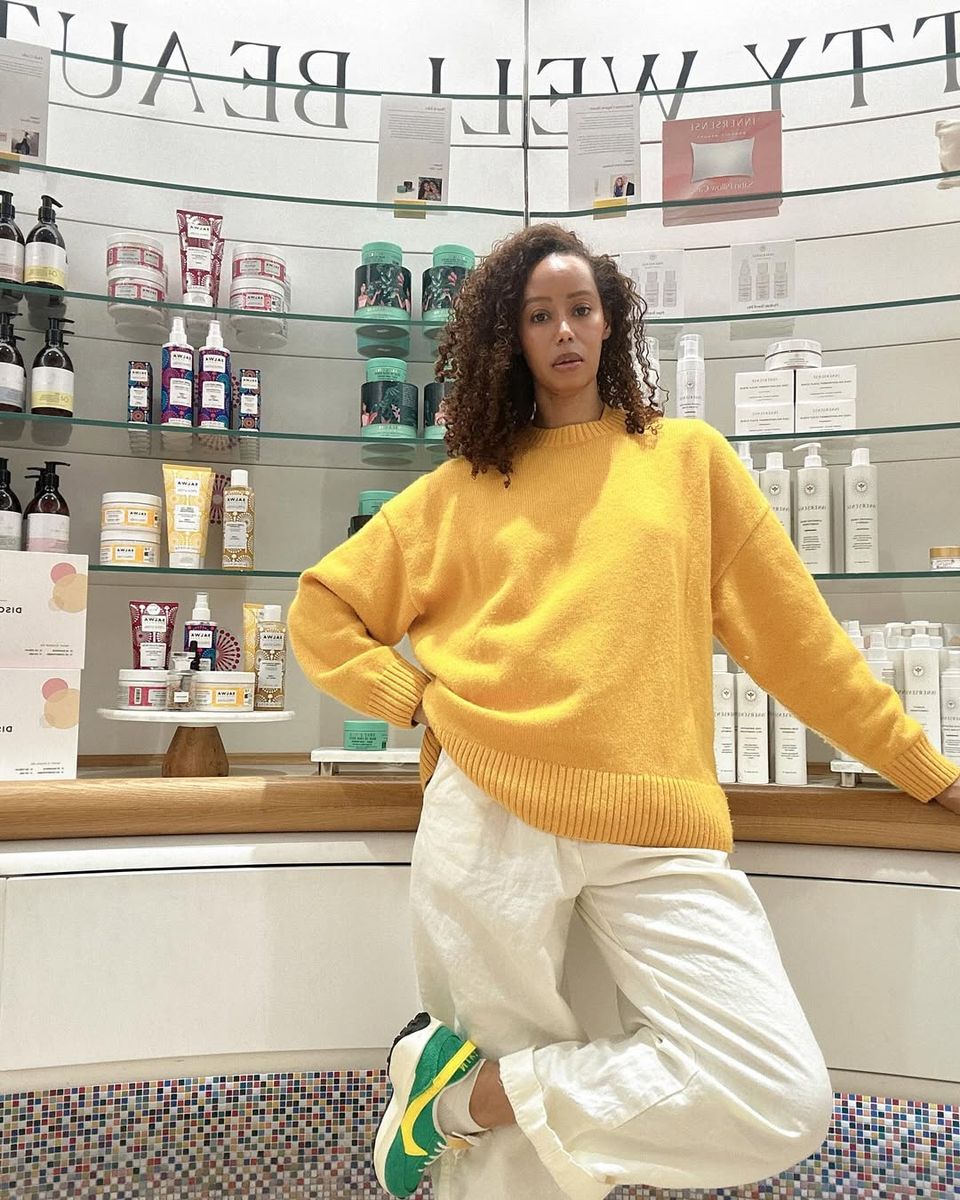
You’ve spoken about growing up around beauty. Did your culture play a role in inspiring Pretty Well Beauty?
Yes, absolutely. My mom was a hairstylist, so I pretty much grew up in hair salon culture around her. A lot of what I learned about hair directly came from my mom. She taught me very early about using natural products. She would mix formulas with natural ingredients for her clients. I don’t know what she was using, because I was young, but it planted a seed for me really early on.
For a lot of Latino, African, and Indigenous people, it really does trace back to our ancestors’ roots, because that was how they took care of themselves. Clean beauty is not a new concept. This is just something that has been marketed and branded into what we know it as today. Our ancestors have been using Mother Earth and nature as sources of these ingredients for thousands of years to make makeup, skincare, lotions, and more.
My mom really followed a lot of that, especially when it came to beauty, but also with what she fed us. She tried to give us the most natural, minimally processed things. In our household, snacking just was not a thing.
She is from California, but her roots are Central American. My grandfather, her father, is from Spain, and my grandmother is from Managua, Nicaragua. We’re Central American, and we’re also African. I have African ancestry on both sides of my family, as well as in Ethiopia. We’re kind of a mixture of all these beautiful cultures that have come together.
Was that what ultimately inspired you to start the business?
The real inspiration was honestly not even really that deep. I used to suffer from acne, and because I worked in fashion and beauty, I always had access to all of these “amazing” products. I say that in quotations, because I thought they were amazing because they were expensive, luxury items, prestige items, and sold in all the department stores.
I was always raiding the beauty closet at Condé Nast, and I just never understood it. I’m using all these amazing products, but I’m not getting amazing skin. One pimple would clear up, another would pop up somewhere else. It was just this continuous cycle. I even did Accutane for a little bit. I just could never have good skin.
Then one day, I was like, “None of these are clearing my skin.” I’m spending a lot of time, effort, and money on things that aren’t working. I remembered my mom saying, “You’re doing too much to your skin. You’ve got to do less.” I started looking for a face wash with very minimal ingredients, and without a ton of chemicals I didn’t understand. It was actually the face wash from a brand that I still carry to this day that really started it for me.
I slowly began replacing products with more natural alternatives. At the time, there were no one-stop shops where you could buy everything in one place, so I was getting things from random places, Whole Foods, and little things at the farmer’s market. I started learning how to read ingredients, and I became obsessed with it.
“It’s hard to be the person who’s having the breakdown and also the same person who has to talk yourself off the ledge. There’s no one else coming in to save you, so you have to figure out how to keep going.”
Jazmin Alvarez
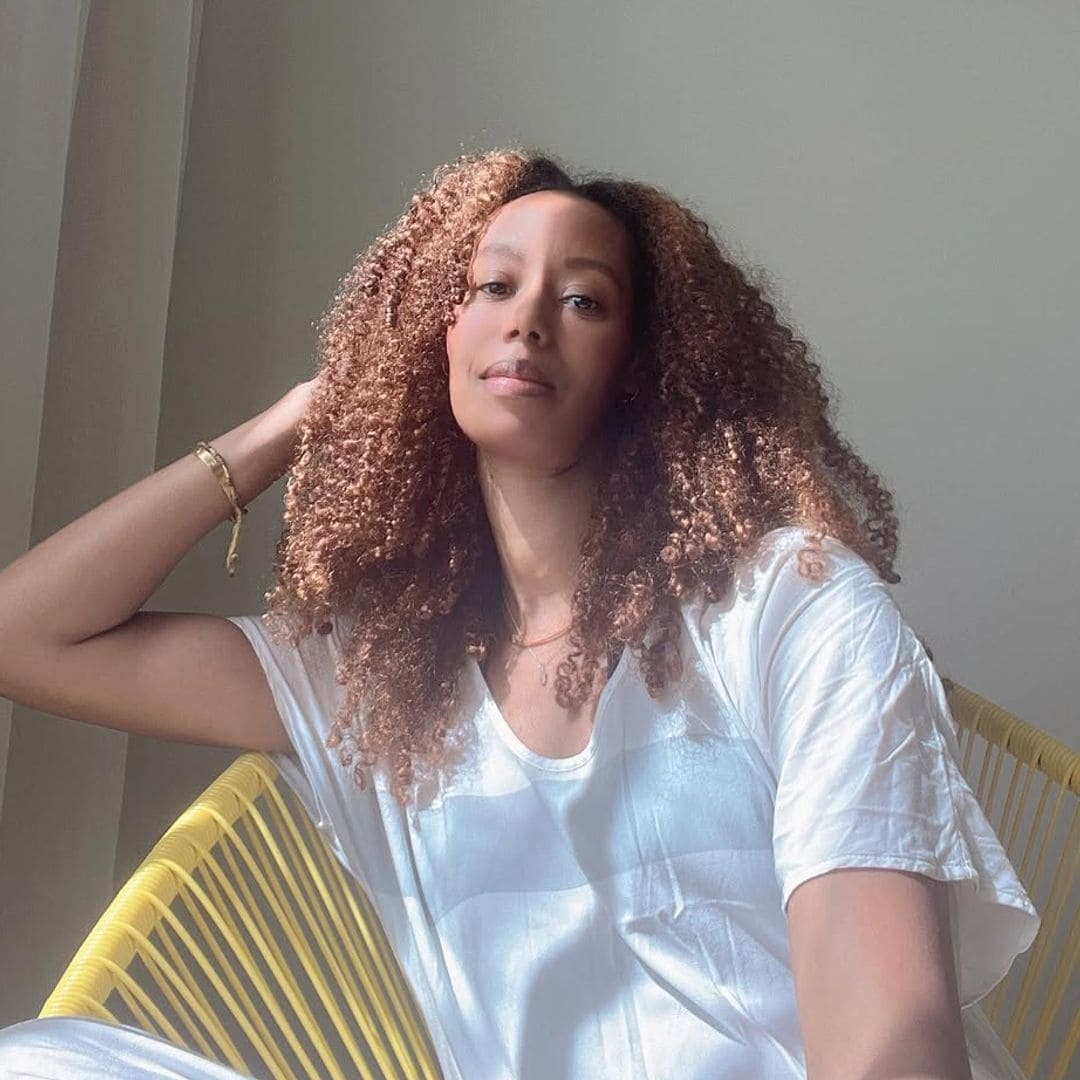
Was that your aha moment?
Yeah. Really understanding ingredients and then seeing the results, that combination is what sold me. I was like, “Huh, this is what my mom was always talking about. I hated to admit it, but Mommy was right.”
Everything I use comes from here. I don’t wear much makeup. I really focus on taking good care of my skin and prioritizing that. I always say if your skin is good, you don’t need to wear a lot of makeup. You don’t need foundation, you can use skincare as my foundation.
You were already working in fashion and beauty, with brands like Ralph Lauren and Fenty Beauty. What gave you the confidence to start your own business?
It was really a now-or-never moment. I had this internal dialogue with myself, thinking, “Should I do this? How can I do this? I’ve never started a business before. I spent a couple of weeks really thinking about it, and then I was like, you know what? It’s either now or never. You either do it now or you’re never going to do it.”
I told myself that if it didn’t work, I could always go back. And I had already laid the foundation because a lot of people don’t know this, but Pretty Well Beauty started off as just an Instagram page. That wasn’t even really the intention. I was working at Ralph Lauren and just wanted an outlet to talk about clean beauty and the brands I liked. That was it.
This was early 2018. Then I launched Pretty Well Beauty’s e-commerce site in January 2019. I left Ralph Lauren, and literally two weeks later, I was like, okay, I’m ready to file the LLC, get the EIN, all that. So the last quarter of 2018 was really about setting up the business, the legal and business structures, and finding a website developer and designer, because I don’t know how to do that myself.
A day in the life of Jazmin Alvarez of Pretty Well Beauty
And you did all of that on your own?
All bootstrapped in my apartment. No co-founder, no advisors, just me trying to figure it out.
What were those early financial decisions like?
I was scared, but I was also willing to take the risk. I had saved up some money. One of the good things about some of the projects I had done, like Fenty, for example, is that they paid me very well because I was a freelancer. So I saved a lot and felt like I had a little cushion.
I gave myself a budget. This is how much I’m going to allocate from my savings to launch. That helped determine how much I could spend on the things I knew I needed to outsource, like website design and development, inventory orders, and all of that. I still needed to make sure I could pay my rent and keep the lights on, because I wasn’t sure how long it would take to start generating revenue.
Did you always imagine having a physical store in New York?
Yes, initially, my big idea was to have a physical store. That was the vision in the ideation phase. I put together a budget for that, because I’m really good at making budgets, that’s what I did as a producer for so long. But when I realized I needed probably like a million dollars to do that, I was like, okay, I can’t launch with a store.
So I had to figure out what I could do. E-commerce became the most logical, cash-efficient solution for me to start small. I launched with 12 brands. Now we have close to 60.
“Don’t wait until everything is perfect, because it’s never going to be perfect. Your website, your packaging, your product, it’s all going to evolve. You just have to start.”
Jazmin Alvarez
What does your day-to-day look like now?
It’s hard to say because every day is a little different, and any entrepreneur would agree. I try to create a schedule for myself, but especially when you’re a solopreneur and don’t have a full team to delegate to, something always pops up and takes up your time.
Something might be on my to-do list for the day, and then out of the blue, I have to address another right away. So being fluid, flexible, and adaptable is something I’m very accustomed to, not only because of how I grew up, but also because of my previous career.
I’m here at the store pretty much six days a week. Previously, I was here seven days a week. I usually start my days by going through emails, checking any overnight online orders, and fulfilling them before noon if I can. I have weekly calls with vendors I work with, like our email marketing partners, and I’m also fundraising right now, so I’m constantly working on my pitch deck. Every day, there’s always something.
Do you have a team now?
No, not an in-house team. I work with vendors and independent contractors. I have a social media intern who comes in a couple of times a week, but for day-to-day operations and sales, it’s just me.
How do you keep yourself going without burning out?
It’s hard. Every other day, I have a breakdown. I’m like, I’m just going to quit. I’ve cried in here so many times. Like, it’s not working. What am I doing? Should I just wrap this up and go move to Mexico and teach Pilates?
It’s hard to be the person who’s having the breakdown and also the same person who has to talk yourself off the ledge. However, my trait is that I never give up, even when things get really sticky. I also have really good friends who believe in me, and they remind me that I’ve come too far to give up.
This is my first time being an entrepreneur. I had no idea what I was doing when I started, and most days I still feel like I’m just learning as I go. I believe that’s really what entrepreneurship is, as they say, it’s like jumping out of an airplane without a parachute and then trying to build one on the way so that you don’t crash and burn.
Many founders rely on credit while building their businesses. What has your experience been with that?
Every business is different, and every founder’s financial needs are different. Some businesses require more capital than others. I opened a business credit card when I first started Pretty Well Beauty, and credit cards have been, and still are, one of the tools I use to cover expenses, from inventory invoices to other operational costs.
I would say make sure you’re someone who is already good at budgeting and won’t overspend. You need to be mindful of your cash flow at all times. If you’re spending more than you’re bringing in, that’s a problem.
That can be normal at the beginning as you’re building and your revenue needs to catch up with your expenditures. You need good accounting tools so you can see what’s coming in versus what’s going out, and you need to track that consistently. Hiring a bookkeeper can really help with that, too.
There are other options, such as small-business loans, low-interest loans, and grants. Grants are competitive, but you’ve got to be in it to win it. I’ve won a few grants myself, which is pretty cool, because that’s money you don’t have to pay back and you’re not giving up any equity. There are many funding tools available, and I encourage founders to explore them all.
Looking back, what do you wish you had known at the beginning?
Because I’m a marketplace and a retailer, I didn’t know what the different purchasing options were. I didn’t know about net terms. I didn’t know about consignment. I didn’t know those were options for me. So I was buying everything up front, which was really hard because I was a nobody. Nobody knew my company. How were they going to find me and then purchase these products from me?
I had a lot of inventory sitting around for a long time because I didn’t have a marketing or advertising budget. If I had known then what I know now, I would not have purchased inventory the way that I did.
I also would have started with Shopify. It’s the number one e-commerce platform in the world for a reason. They really do know what they’re doing, and they offer support in ways that no other platform can. Those are probably the two biggest things I wish I had known earlier.
What has it meant to build this business in New York?
New York is hard, period. Whether you are launching a business or just trying to get a job and pay your rent, this is a city that will break you if you let it.
But something really beautiful happens when you’re trying to build something in the hardest city in the world to live in. It tells you a lot about who you are and what you’re made of.
So yes, it’s hard because it’s New York. The city itself is highly competitive, and then the space I’m in, Beauty, is also very competitive. I’m not the only one doing this. However, being here is also advantageous because the city is among the most densely populated in the world. Foot traffic is much more abundant than it would be in a smaller place.
In the end, it’s both. As I’m approaching year eight now, and honestly, all you can do is take it day by day. It’s hard to plan too far ahead when the economy is uncertain, and this kind of business can be cyclical. But if you can make it here, you can make it anywhere.
Jazmin does it all: Inspiring Entrepreneur in NYC
“Clean beauty is not a new concept. Our ancestors have been using natural ingredients for thousands of years. This is just something that’s been repackaged and marketed in a different way.”
Jazmin Alvarez
What does clean beauty mean to you?
Clean beauty may feel like a trend, but to me, it’s always been there. It’s the foundation of how we care for ourselves, especially since our skin is our largest organ, which absorbs much of what we put on it. While there’s been fearmongering that’s made some people skeptical, there’s real science behind it. For me, clean beauty completely transformed my relationship with self-care.
Are all of the brands in your store clean beauty brands?
Oh, absolutely! That’s a non-negotiable. Every brand we carry has to be 100% clean, with no synthetic ingredients. That even extends to fragrance, where I don’t allow synthetics because many are known endocrine disruptors.
And fragrance isn’t just in perfume; companies add it to makeup, skincare, and shampoos. Women are being exposed to these ingredients daily, often without realizing it. Because of that, we turn down the vast majority of brands that approach us. I’m extremely selective about what we bring in.
I also created an “Aware List,” available on our website. It highlights ingredients I believe every consumer should know about. If you’re shopping and see something on that list, my advice is simple: don’t buy it, put it back.
Your business is rooted in inclusivity and education. How do you stay true to that mission?
I made a commitment that at least 75% of the brands we carry are founded by people of color and underrepresented groups. Inclusivity is part of everything we do.
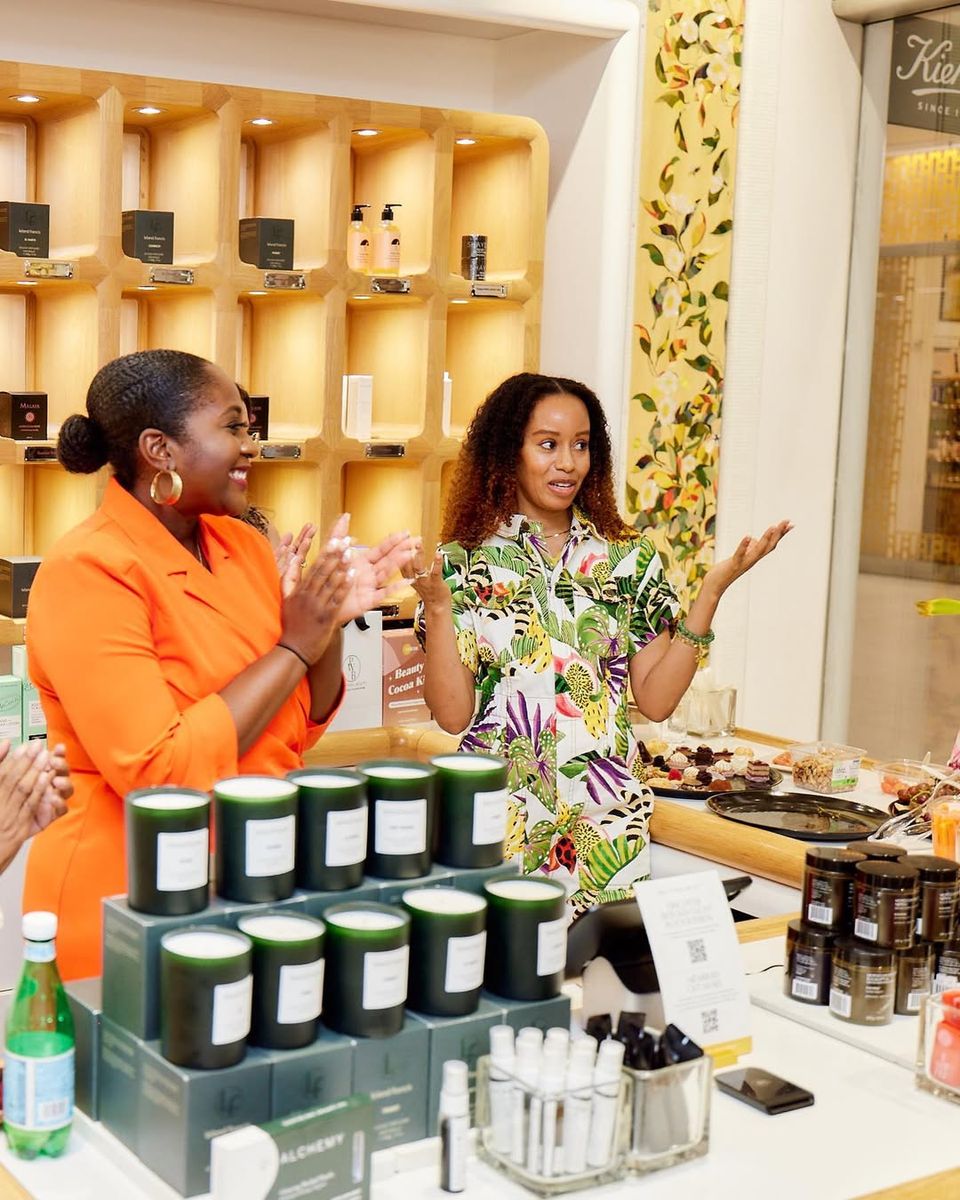
Education is really the heart and soul of our business. We take the time to explain ingredients, sourcing, and benefits so people can make informed decisions.
That is what sets us apart. I do not see myself as a salesperson. I am a curator and an educator. I share what I know and trust people to choose what is best for them.
What advice would you give to women, especially Latinas and women of color, who want to start a business but feel intimidated?
It’s normal to be scared. It’s normal to be cautious. It’s something new that you’ve never done before. I always encourage anyone thinking about starting a business to just do it.
Don’t wait until the perfect time. Don’t wait until your website looks “perfect,” because it’s never going to be done. Websites are living, breathing things. There will always be something you want to change or improve.
Same thing with packaging. A lot of people say, “I want to wait until I can afford this specific packaging.” Don’t do that. Every brand I carry in the store, whether they’ve been around for one year or 30 years, started somewhere. The packaging you launch in year one doesn’t mean you’re married to it forever.
As you learn, generate revenue, and get feedback, you can improve your product. But the only way you’re going to get there is by actually doing the thing first. There’s really no shortcut.
I would also make sure you surround yourself with people who are not just going to placate you and tell you something is amazing because they don’t want to hurt your feelings. It’s important to get feedback from people who are going to be unbiased.
Many founders make the mistake of testing their product only with friends and family. That’s fine, but it’s not enough information to determine whether you’re really solving a problem in a market that’s meant to serve millions.
I always say: make the mistakes early, when you don’t have as many people watching. That’s actually a luxury that new founders have. Make them now, get them out of the way, learn from them, and then you’ll be better. I also tell people: “just do it ugly. It doesn’t have to be perfect and pretty. Just put it out there. Get the feedback, learn, mess up, fix it. You will get there if you want it badly enough.”
One of the worst human experiences is regret, regretting not doing the thing that made you excited because you were scared. It’s better to try and fail than not try at all.