
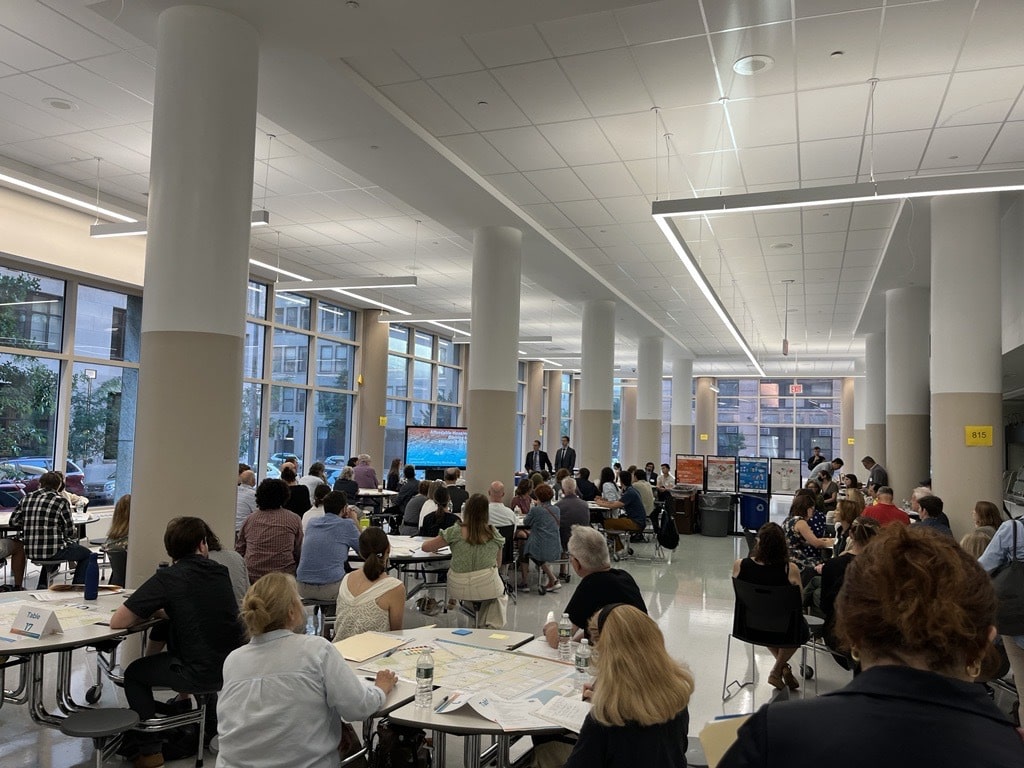
NYC Community Boards are the backbone of civic involvement in the Big Apple. Every town in the city has a community board where New Yorkers can voice their opinions on issues, stay informed about local current events and become aware of potential changes in their neighborhoods.
Despite their important role in city government, many New Yorkers remain unfamiliar with community boards, including how they function, how their members are selected and the direct impact they have on residents’ quality of life. This guide provides an essential introduction to community boards, covering their operational mechanics, the selection process for members, and current movements advocating for reforms to the system.
NYC Community Boards
What is a community board?
A community board is an appointed group that advises on land use and zoning issues, budget and service delivery within its district. The group also takes neighborhood complaints. There are 59 community districts within the city, located in all five boroughs. They play a role in improving the quality of life for all New Yorkers.
Community boards in their current form date back to the 1975 City Charter.
How do people become board members?
Being a board member is an appointed position. Local residents do not elect board members.
Stephen Louis, counsel to New York Law School’s (NYLS) Center for New York City and State Law, explained that community board members are selected and appointed by the five NYC borough presidents, with input from each district’s City Council member.
There are up to 50 members per board.
“They are all appointed by the borough president of their respective boroughs, but half of those appointments are based on nominations by the NYC Council members whose districts include part of a community board district,” the professor explained.
Expanding on that point, NYC has 51 City Council districts. But the boundaries of those districts do not “line up” with the 59 community districts. Therefore, there will always be at least two, but often more, City Council members whose districts fall within a community district, Louis explained.
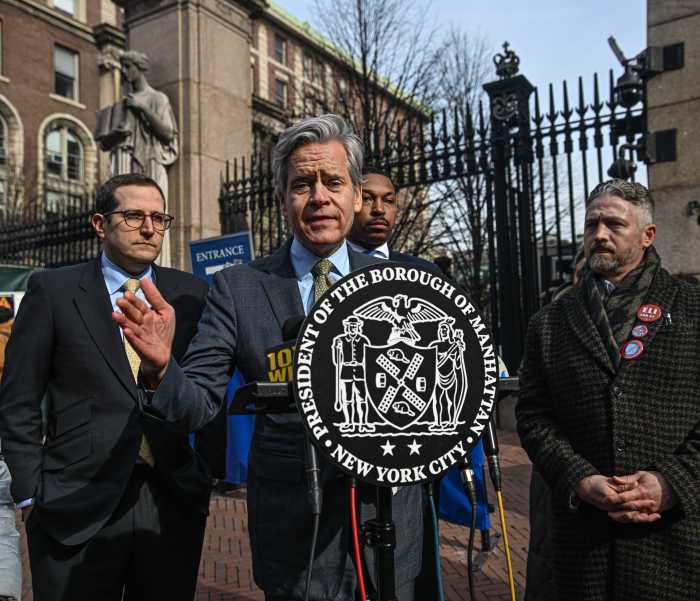 Manhattan Borough President Brad Hoylman-Sigal outside of Columbia University. Borough presidents select and appoint community board members. Photo by Dean Moses
Who is qualified to become a board member?
In order to be appointed by a borough president, potential board members must have a key interest in their communities. They must live or work in the district, or, as the city’s website puts it, have “some other significant interest” in the community.
Community board members can even be as young as 16 years old.
Each community board in NYC has a District Manager who establishes an office and a small staff.
“Community boards do not have extensive staff,” Louis said. “A district manager handles day-to-day matters.”
Board members serve for two-year terms.
Do community board members get paid?
Generally, community board members do not get paid.
“They serve without compensation but can be reimbursed for expenses,” Louis said. “Staff, such as the district manager, have salaries.”
But for most members, being part of a community board is a labor of love, as each board consists of up to 50 unsalaried members.
Jesse Greenwald, co-chair of Manhattan Community Board 4’s transportation committee, said he enjoys being part of his local team and learns a lot about city government.
“Serving on a board gives you the opportunity to work alongside neighbors, learn how city government really functions, and advocate for practical solutions that make your community more affordable, livable and inclusive,” he said.
As a transit guru on the board, Greenwald has spearheaded various efforts to help improve transit in his West Side district. Last March, for example, the community board advocated for more bus stop seats and shelters by writing to the Department of Transportation (DOT), informing the media about the issue, and encouraging New Yorkers to call 311 if their bus stops need shelters or seats.
Later the same year, the DOT began installing more bus stop seats and leaning bars, citywide. Greenwald said it was “terrific news” for New Yorkers who rely on buses to traverse the city.
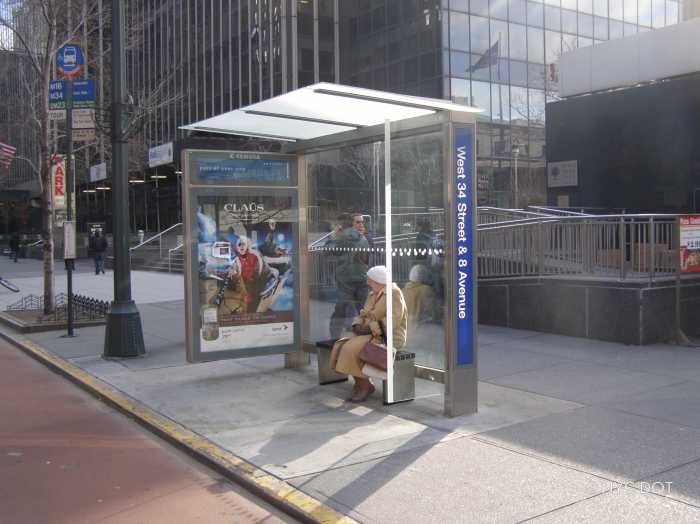 A bus shelter in Manhattan.Credit: NYC DOT
“I’ve found enormous value in serving [on the board] because it’s where creative, block-by-block solutions actually take shape, whether that’s improving street safety, strengthening transit access or making sure major infrastructure projects reflect the needs of the people who live here,” he said.
Community boards have committees. What do those committees do?
Community board committees handle most planning and prepare issues for full board action, according to the city’s website. Committees focus on various topics, such as land use, transportation or budget.
“Each community board establishes the committee structure and procedures it feels will best meet the needs of its district,” the website states. “Committees may be functional committees that deal with specific Charter mandates (e.g. “Land Use Review” and “Budget” committees) or agency committees that relate to a particular agency (e.g. “Police” and “Sanitation” committees), among other structures.”
Do community boards have the authority to make laws and policies in NYC?
No. However, as an advisory group, their recommendations carry some weight with the City Council and other entities.
Martha Stark, an attorney and professor of public service at New York University, explained the role community boards serve within neighborhoods and city government.
“While community boards do not make laws, they play a very important role because they are the closest body to communities and provide elected officials and agencies with feedback about policy decisions and laws, especially in the area of land use,” she said.
Louis, of NYLS, underscored the importance of community boards in land-use and zoning matters. Though advisory, community boards influence land use, shaping discussions on zoning, development, permits and controversial public or private projects citywide, he explained.
“They are the first stop in ULURP (Uniform Land Use Review Procedure), and thus can shape some of the discussion on land use proposals,” he said. “These issues can include site selection for city facilities, or special permits allowing developments not otherwise permitted under zoning. Development of any kind, be it public or private, can of course be very controversial in the city, and community boards get to weigh in on those projects.”
In other words, this hopefully means that when the city is deciding on a land-use issue, City Council members take into account a community board’s recommendations.
Problems with community boards and a call for reform
Despite the good intentions of community boards, they are not a perfect system, as New Yorkers have expressed concern about how they operate and the appointment process.
Although the City Charter requires “adequate public notices” of public meetings and hearings, one New Yorker told amNewYork he rarely hears anything about his local community board or public meetings.
“I never hear about the meetings. I don’t know how they get advertised. I also think they are very easily influenced,” Edward from Queens said.
There is also some movement to reform them. While NYC community boards aim to represent neighborhood needs, their internal structures can concentrate power and limit meaningful dissent, Richard Khuzami, of the Old Astoria Neighborhood Association, said. The key issue is not membership alone, but how authority is exercised after appointments are made.
“While most serve honorably, the process is inherently political and largely opaque, Khuzami, who is also a 26-year member of Queens Community Board 1, said. “Once seated, board members elect a chair, who typically controls committee assignments and appoints committee chairs.”
A chair can put like-minded members on committees, sidelining dissent and creating the appearance of consensus. Khuzami has suggested reform that entails proportional committee representation based on election results to ensure minority viewpoints are included.
“If a chair is elected with 60% of the vote and an opponent receives 40%, then 40% of committee seats would be allocated to members aligned with the opposing candidate,” he said. “This ensures that differing perspectives are present, even without formal political parties or platforms.”
He recognizes the idea is not perfect, but fairer than the current system.
More information
More information about is available online. Nyc.gov has information on finding your community board, how to apply for membership by borough