
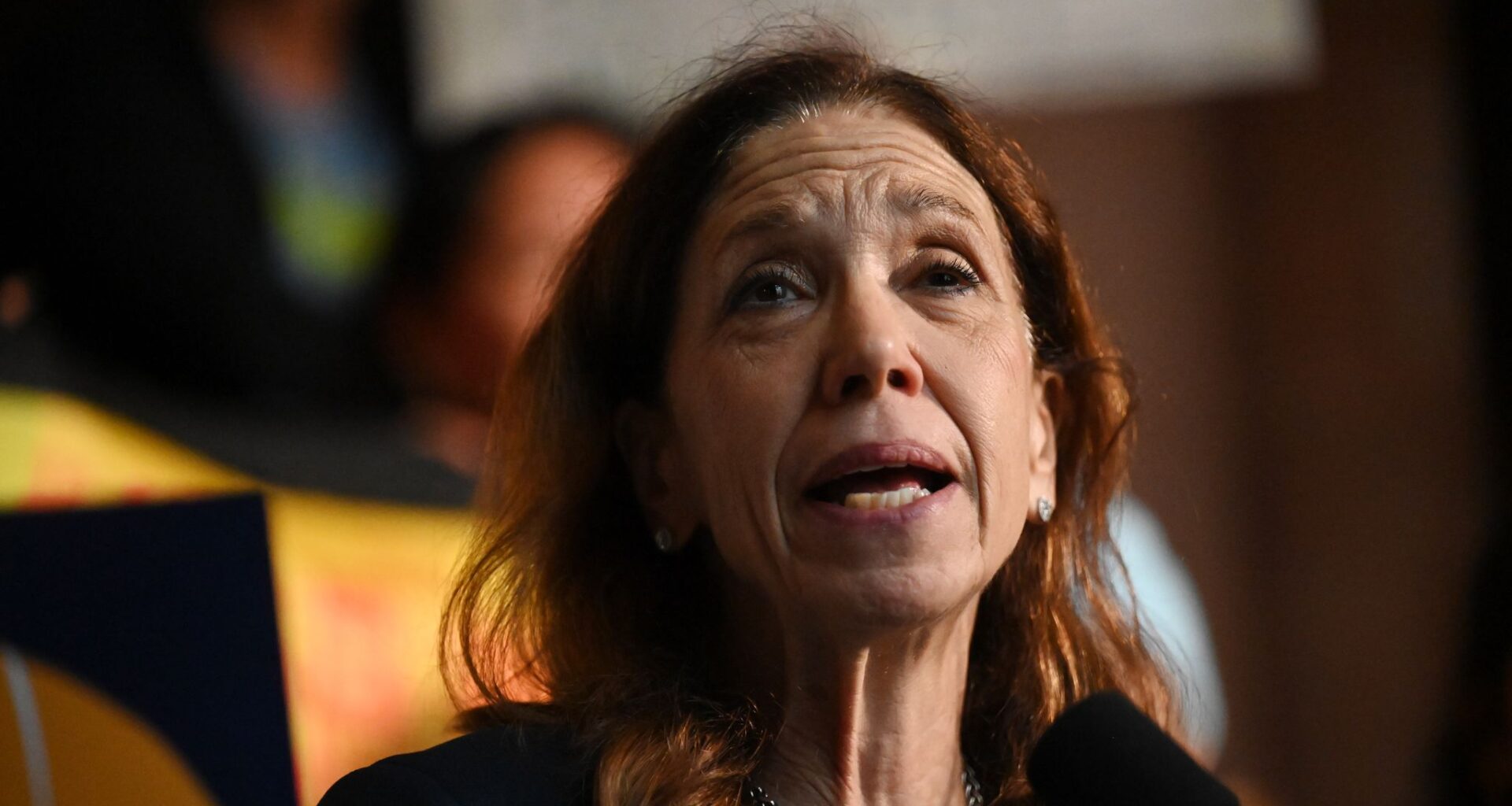
Assemblywoman Amy Paulin has introduced a bill that would require the state to fund health insurance for those set to lose it.
Will Waldron/Times Union
State Sen. Gustavo Rivera said he’s optimistic the proposal could become part of the state budget and that his staff was scheduled to meet with Hochul’s team to discuss it.
Will Waldron/Times Union
The cost of the proposal varies depending on who’s doing the projections. Some, like Elisabeth Benjamin from the Community Service Society of New York, estimate it would cost the state $393 million.
Will Waldron/Times Union
The Hochul administration has said it would cost $3.5 billion to fund health coverage for those set to lose it under the Essential Plan.
Will Waldron/Times Union
Gov. Kathy Hochul said Wednesday that Republicans in Congress should find a fix for the people who will remain without health insurance when the Essential Plan ends in July.
Lori Van Buren/Times Union
ALBANY — Hundreds of thousands of people in New York will begin receiving letters from the state Wednesday warning that their government subsidized health coverage through the state’s online marketplace will end in three months.

But Democrats in the state Legislature are now proposing a measure that this week they said would preserve that coverage before it expires in July.
Article continues below this ad
“This is critically important that we go forward and I believe that we will have the cooperation of everyone in doing so,” said Assemblywoman Amy Paulin, a Democrat from Westchester County who chairs the Health Committee.
Paulin and state Senate Health Chair Gustavo Rivera have introduced a bill that would require the state to pay for a new subsidized health care plan for the 400,000-plus people set to lose coverage.
It’s the first formal proposal that’s been made at the state Capitol to fund a fix for that problem since the state said last fall it would seek to end the Essential Plan, which provides coverage for low-income people who earn too much to qualify for Medicaid.
Make the Times Union a Preferred Source on Google to see more of our journalism when you search.
Add Preferred Source
Medicaid in New York is available to people who earn up to 138% of the federal poverty level — $1,836 per month for single individuals as of January.
Article continues below this ad
The Essential Plan is available to people who earn more than that but less than 250% of the federal poverty level, which was $3,325 per month for single individuals in January. There are about 1.7 million people enrolled in the plan.
Another key difference is that the Essential Plan has historically been available to lawfully present noncitizens. Those include refugees, asylum seekers, green card holders and other immigrants with permission from the federal government to remain in the country.
But that’s no longer the case after Republicans in Congress and President Donald J. Trump approved legislation last year that made those noncitizens no longer eligible for government subsidized coverage under the Essential Plan.
That created a serious fiscal problem for the state. The Essential Plan was primarily funded by the federal government based on enrollment.
Article continues below this ad
The immigrants who were enrolled generated billions of dollars in federal funding for the state to administer the Essential Plan. With that funding set to disappear, the state decided it couldn’t afford to keep the plan online.
Gov. Kathy Hochul decided to instead revert the income eligibility for the Essential Plan down to 200% of the federal poverty level — $2,660 per month as of January. That’s where the cap was before 2024, when it was raised with federal approval.
That will allow the state to continue offering a subsidized health insurance plan for 1.3 million low-income individuals who make too much to qualify for Medicaid. New York received federal approval for that change in March.
But that will still leave the remaining 400,000-plus people currently on the Essential Plan without coverage. About 80% of them are citizens, according to Elisabeth Benjamin, vice president of health initiatives at the Community Service Society of New York, a nonprofit policy group focused on economic opportunity.
Article continues below this ad
That’s where the bill from Paulin and Rivera comes in. It would require the state to fund a new health care plan for those individuals.
“We are a rich state,” Benjamin said. “We are here to make sure that everyone who’s threatened with cuts for health coverage manages to keep it.”
Not all of the individuals set to lose coverage under the Essential Plan would be expected to take advantage of the new option. Benjamin estimates that about 113,000 would enroll in the new plan.
That would cost the state $393 million over the next year, according to estimates from the Community Service Society of New York.
Article continues below this ad
“They’re aware we have proposed this as an alternative,” Rivera said of the Hochul administration. “Let’s just get it done so people can actually have coverage in July.”
Both Rivera and Paulin said they expect that their proposal could realistically make its way into negotiations around the state budget. The spending plan was due Tuesday but Hochul and lawmakers remain far apart on an agreement.
That could give lawmakers an advantage in advancing the proposal, Paulin said. Hochul and lawmakers are currently negotiating major policy items — not spending.
“We haven’t even begun to talk about money yet. They’re still talking policy,” Paulin said. “I believe everybody wants to do something. It’s a matter of what we do.”
Article continues below this ad
State Budget Director Blake Washington said such an idea wasn’t off the table as part of state budget talks but that it could be difficult to find the money to fund the proposal.
If each of the 400,000-plus people set to lose coverage signed up for the health care option provided by the bill sponsored by Rivera and Paulin, it would come with a price tag of $3.5 billion, Washington said.
“It gets very, very tricky to find something that large in nature,” Washington said. “So it’s going to be very challenging.”
The Hochul administration is not projecting that every individual who’s set to lose coverage under the Essential Plan will lose health insurance altogether, Washington said.
Article continues below this ad
Many are expected to secure coverage through their employers or through a privately purchased plan, he said. They estimate that about a third of those will remain uninsured.
“We surmise that roughly 300,000 would be able to secure coverage from the employer that they previously had it with just two years ago, prior to this product coming onto the market or becoming available in the state of New York,” Washington said.
Hochul said in a statement Wednesday that Republicans in Congress should find a solution for the people who will be without health insurance come July.
“My administration is committed to helping impacted individuals find the most affordable coverage available,” Hochul said. “New Yorkers deserve better than the decisions coming out of Washington. They must fix this now.”
Article continues below this ad
Hochul and lawmakers have no expectation of when they will come to an agreement on this year’s state budget, which is projected to be more than $262 billion.
“I’ve been here 26 years. Nothing phases me in this place,” Assembly Speaker Carl E. Heastie said Wednesday.