
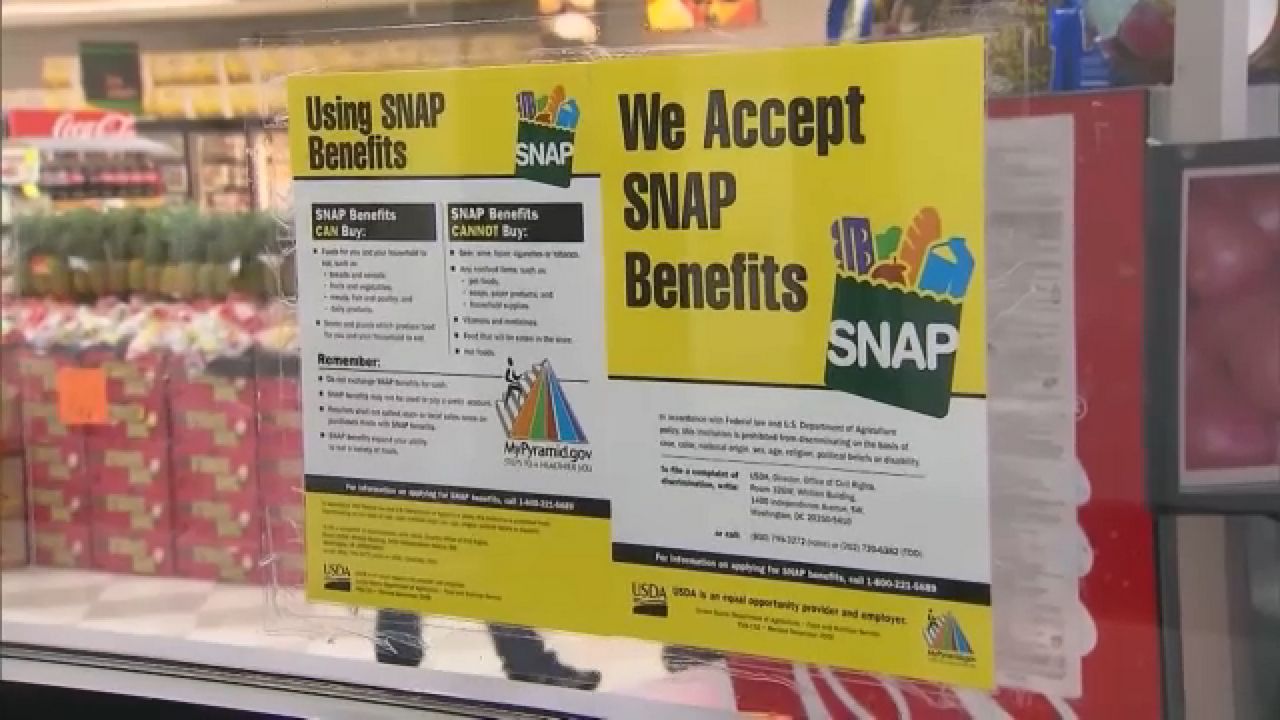
There’s a measure being actively discussed in budget negotiations to keep track of food insecurity trends in the state of New York.
“People understand that the SNAP program is important. However, if you cut the data to show the need, you can stop funding things like SNAP or other anti-hunger programs that depend on that data to show that the need is there,” said Democratic state Sen. Michelle Hinchey, chair of the Senate Committee on Agriculture.
In the wake of $186 billion cuts to the Supplemental Nutrition Assistance Program (SNAP) in the Trump administration’s “One Big Beautiful Bill,” Hinchey’s office said her proposal on annual hunger data reporting is being actively discussed in current budget negotiations.
It’s part of the state Senate’s one-house budget.
“We feel like it’s our responsibility,” said Hinchey. “That the state has a responsibility to track that data so that we don’t lose it.”
Last September it was announced that the U.S. Department of Agriculture’s Household Food Security report would be discontinued after feeding what many called critical data to the federal government for decades on where the hungriest Americans live.
The information collected was used to form funding decisions for hunger relief programs like SNAP, which serves an average of 41.7 million Americans including 3 million New Yorkers each month.
A USDA spokesperson told Capital Tonight: “USDA has long time contractual relationships with other vendors who are able to provide less subjective data that can drive more fruitful policy discussions.”
Last year when the report was terminated, the USDA said: “The U.S. Department of Agriculture announced the termination of future Household Food Security Reports. These redundant, costly, politicized, and extraneous studies do nothing more than fear monger.
For 30 years, this study—initially created by the Clinton administration as a means to support the increase of SNAP eligibility and benefit allotments—failed to present anything more than subjective, liberal fodder. Trends in the prevalence of food insecurity have remained virtually unchanged, regardless of an over 87% increase in SNAP spending between 2019 – 2023.
USDA will continue to prioritize statutory requirements and where necessary, use the bevy of more timely and accurate data sets available to it.”
Spectrum News 1 recently spoke with Krista Hesdorfer, of Hunger Solutions New York, about the potential impacts of the SNAP cuts in the state.
“We know we’re in good company in trying to minimize harm here in New York, both by providing families with information and resources and urging our state lawmakers to make investments in the state budget that can help families,” said Hesdorfer.
In her bill, Hinchey said the New York Legislature and other stakeholders need this information to better understand the state’s hunger trends to make decisions on how to best invest taxpayer dollars.