
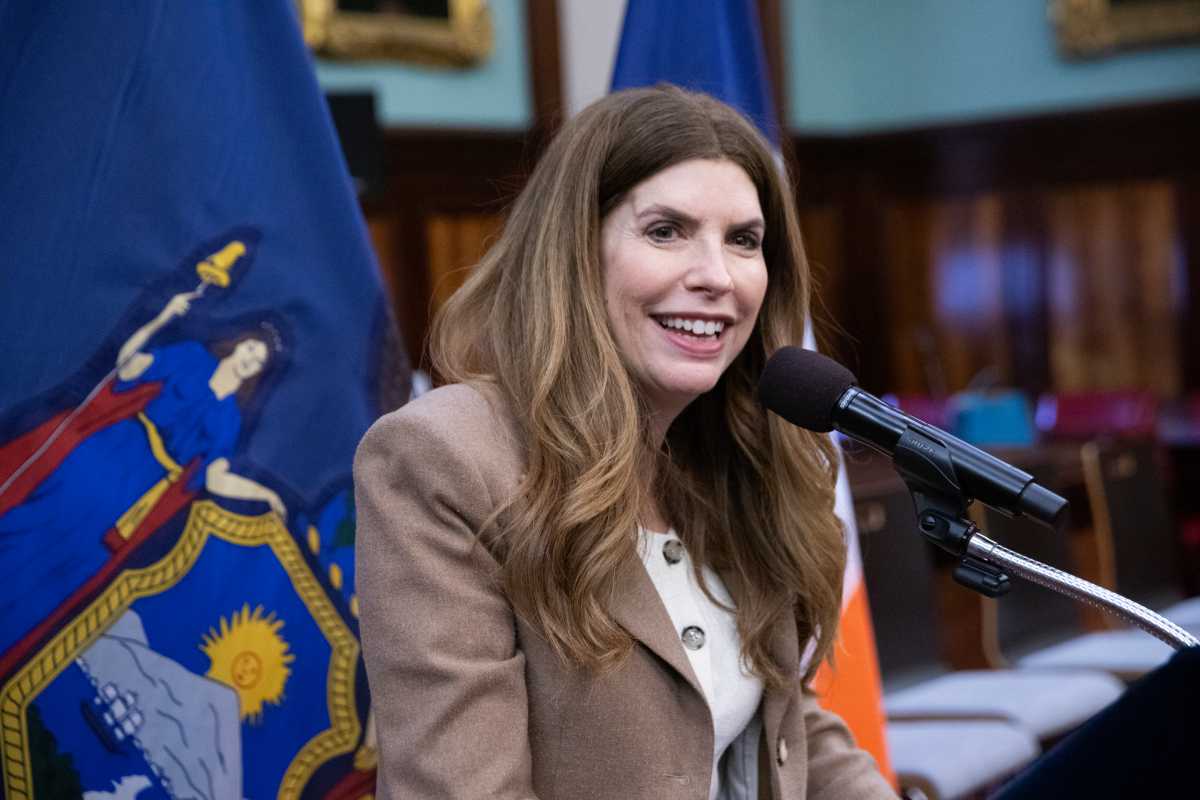
City Council Speaker Julie Menin
John McCarten/NYC Council Media Unit
Every year, New York City undertakes one of the most consequential — and least understood — exercises in government: the budget.
What sounds as simple as a document or spreadsheet is truly quite the opposite. It’s a months-long negotiation that determines how we invest in our neighborhoods, support our schools, keep our streets safe, and confront the affordability crisis facing too many New Yorkers.
This year, that process carries even more weight. We have new leadership in City Hall and the Council, and we are navigating a moment defined by real fiscal pressure and rising costs for families across the five boroughs.
Yesterday, the City Council released its official response to the Mayor’s proposed budget — our roadmap for how to move forward responsibly. And just as importantly, it reflects the priorities we believe will make the biggest difference in New Yorkers’ lives.
So what does the Council actually do in this process, and why does it matter?
Each February, the Mayor proposes a preliminary budget. From there, the Council steps in — not as a rubber stamp, but as an independent check and governing partner. We hold oversight hearings, question agency leaders, scrutinize spending, and develop our own plan to strengthen both the City’s finances and its priorities.
Over the past several weeks, we have done exactly that.
The Council held 32 hearings with more than 50 city agencies — digging into spending, identifying inefficiencies, and pressing for answers on how taxpayer dollars are being used. Based on that work, we released our response yesterday.
The picture that emerged is clear: New York City is facing a projected $6 billion funding gap at a time when families are already struggling with the rising cost of living.
That reality demands discipline — and it demands clarity about what we will and will not do.
The Council strongly opposes raising property taxes. At a moment when affordability is top of mind, increasing property taxes would only deepen the strain on homeowners, renters, and small businesses.
In the same way, we are adamant that critical services will not be cut. Whether it’s childcare, after-school programs, or legal representation for our most vulnerable New Yorkers, the Council will remain committed to funding them. A responsible, balanced budget means an equitable, just budget, too.
We are equally firm in our opposition to drawing down the City’s Rainy Day Fund. That fund exists for true emergencies — not as a first step in closing a gap. Before turning to it, we must do the harder but more responsible work of identifying savings and using existing resources more effectively.
And that work is already producing results.
The Council has identified approximately $6 billion in additional resources across this fiscal year and next, giving us a viable path to closing the gap without placing new burdens on New Yorkers.
But a responsible budget is not just about closing gaps; it’s about making smart investments that expand opportunity and ease the cost of living.
That is why our response puts forward two signature investments that go directly to the heart of affordability and economic mobility.
First, we are calling for a major expansion of the Fair Fares program: making buses and subways free for New Yorkers earning up to 150% of the federal poverty level. For working families already stretched thin, the cost of getting to work, school, or a doctor’s appointment adds up quickly. This investment would put real money back in people’s pockets and make our city more accessible for those who need it most.
Second, we are proposing to expand NYC Kids RISE: providing a $1,000 investment for every public school kindergartener, and up to $3,000 for children with the greatest need. We know that higher education remains one of the most powerful tools for addressing income inequality. Data consistently shows that college graduates earn, on average, more than double the salaries of those who stop their education after high school. By investing early, we can give every child in New York City a stronger financial foundation and a clearer path to opportunity.
These are the kinds of investments that do more than just respond to today’s challenges — they help shape a more equitable future.
And importantly, this is not the final budget.
In the coming weeks, the Administration will respond with a revised proposal. The Council will hold another round of hearings, and negotiations will intensify before a final budget is adopted by July 1.
In other words, we are only halfway through this process.
But this stage matters. It sets the tone and defines our priorities. And it makes clear that the Council is approaching this moment with seriousness, transparency, and a commitment to doing right by New Yorkers.
At a time of economic uncertainty, that means being disciplined with taxpayer dollars — while still investing in the people and programs that make this city work.
That is the responsible path forward.
Julie Menin is the City Council Speaker.