
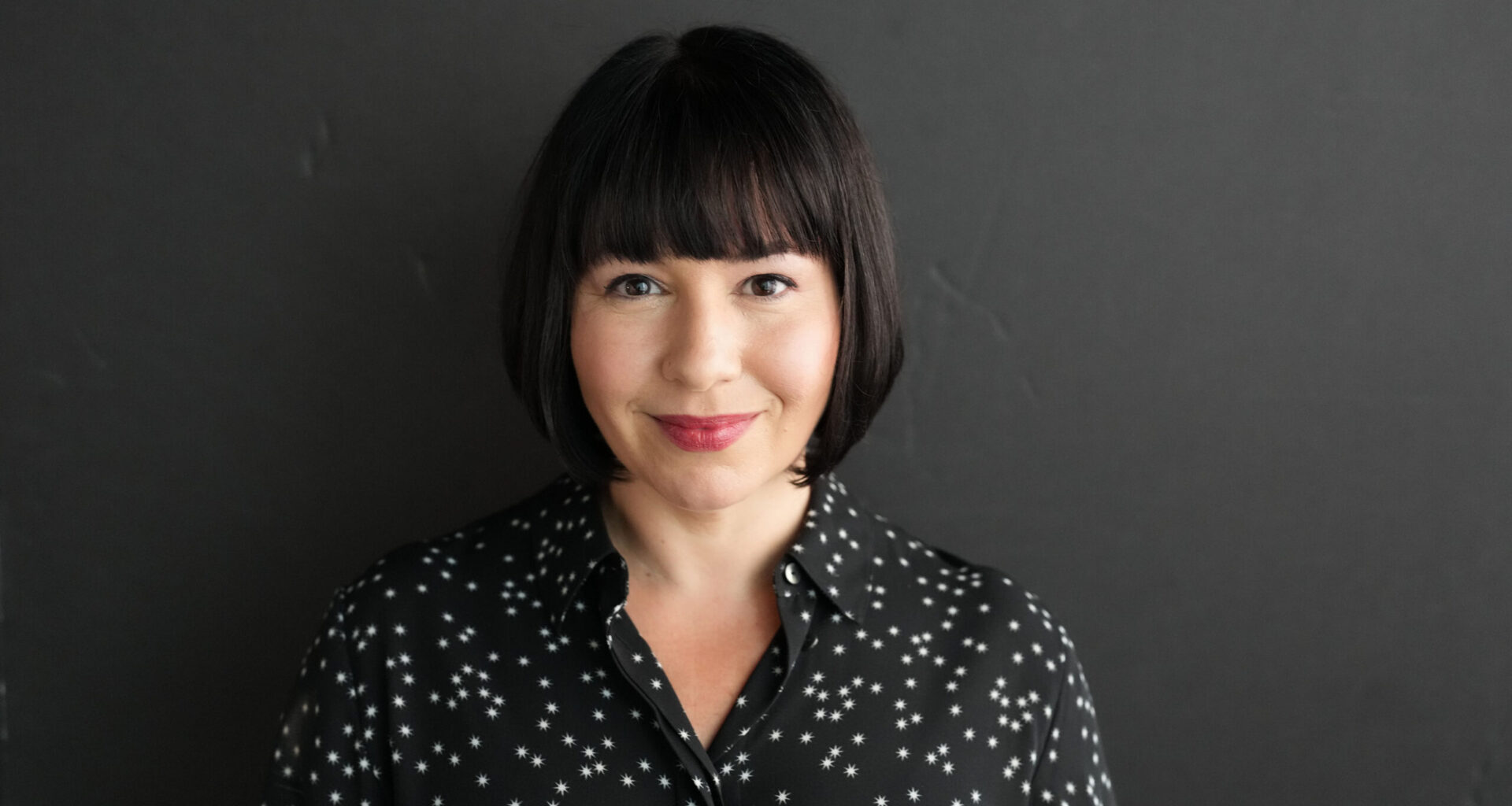
Michelle Goldberg is something of a political prophet. As a journalist, author and opinion columnist for the New York Times, she’s been warning the public about the rise of authoritarianism in the United States for longer than most.
“I’ve always thought it was fascism,” she told the Brooklyn Eagle.
In 2006, she published “Kingdom Coming: The Rise of Christian Nationalism,” a book that traced the roots of the Christian Nationalist movement before it reached the level of power it has now.
“I saw echoes of fascism in the movement when I was writing about it then. I was reading a lot of the most important scholars of fascism. If you’ve read any of that and you saw this movement, it was very obvious that it was at least fascistic,” she said.
As for President Donald Trump, it was clear to her from the beginning of his first administration that the conditions for fascism were escalating.
This January, Goldberg published a column in the New York Times, “The Resistance Libs Were Right,“ that put the final piece of the puzzle that she started building two decades ago.
In it, she laid out how the last two conditions that would allow Trump’s regime to be labelled as fascist had been met this year: the presence of a street-level paramilitary force like Mussolini’s Blackshirts and his pursuit of campaigns of imperial expansion.
Unfortunately, it seems Goldberg’s early hunches were correct.
“The strangest thing for me writing about politics all these years is the fantasies that people have projected onto Trump that have allowed them to not see what’s right in front of them,” she said.
Before she was a leading voice in progressive politics, Goldberg just wanted to get to New York City. “It didn’t take a lot of arm-twisting to make me want to get out of Buffalo,” she joked.
Her ticket out was graduate school, not in New York City but at UC Berkeley. She was recruited by the director of its magazine program, the legendary editor and writer Clay Felker.
“I was blown away” at the recruitment, she told the Brooklyn Eagle in a recent interview.
Despite her prestigious grad school experience, she had New York City in her sights.
“The whole time I was on the West Coast, it was a question of when are we going to move back? We were always trying to talk ourselves into appreciating California,” she laughed. “My husband is from Brooklyn, so don’t think that there was ever any question that we would end up here eventually.”
At the end of a year of post-grad travel across Asia in late 2001, Goldberg and her husband returned to the East Coast, hoping to settle.
As with so many artists and creatives, Brooklyn wasn’t necessarily the goal, but they needed an apartment immediately.
“At that point, Brooklyn was still cheaper than Manhattan.”
They were helped in their search by another legend: Allan Gerovitz, who was known as a matchmaker for Brooklyn real estate, loved by his clients, creative renters and landlords alike.
“He was a very mean, cutting person who would size you up and down and enumerate all your flaws, but he was also known for helping creative class-type people find Brooklyn apartments,” said Goldberg.
Gerovitz got the couple their apartment in something of a Brooklyn fairy tale.
On Dec. 31, 2001, they saw an apartment that they loved but couldn’t quite afford. Gerovitz insisted on calling the landlady on New Year’s Eve; the line was busy, so he made an emergency breakthrough and explained the situation.
The landlady heard Goldberg’s husband’s last name and “realized that she had gone to the Y with his mother, because he’s a Brooklyn person and that she had known him as a boy,” said Goldberg. “So she lowered the rent and let us move in the next day.” They’ve been in Brooklyn ever since.
For her first 14 years in New York, Goldberg worked as a writer for several newspapers and magazines, including The Nation. In 2017, the New York Times named her an opinion columnist.
She discussed how she thinks about “overcoming the overwhelm” that can come with political writing over the last few decades of American politics.
“You don’t just want every column to be endless screaming. I wrote a column once where I compared it to trying to comprehend the vastness of the universe. It’s big in a way that the human mind can’t quite wrap around,” Goldberg said. “So, at least for me, the challenge [is] you have to find small things that stand for the whole.”
She gave the example of Cory Mills, a congressman in Florida. “The accusations against him are of such spectacular unfitness that in another world, he would be headline news all the time.”
She said he wasn’t as newsworthy because his wrongdoing, which would have been shocking in the past, has now become normalized.
“I found him [to be] the perfect symbol of what the Republican Party has become and what Trump has done to our political standards.”
Brooklyn is not just a long-time home for Goldberg but a model in her work as a progressive political writer.
“Right now we’re in this white nationalist administration that wants you to think that multiracial democracy is not possible, that it’s this sort of hopeless dream,” she said. “If you live in Brooklyn, you see that it’s not. In New York, all kinds of people can coexist, sometimes with frictions and unease, but like nowhere else in the world.”
“I’ve been inspired by Zohran Mamdani,” she continued.
“He represents this vision that, in some ways, I grew up taking for granted: that America’s greatness stems from immigration and stems from all the kind of treasures that people bring from their own societies here. It’s been so painful to see that idea rejected at the national scale, but I think it’s alive every day in Brooklyn.”