
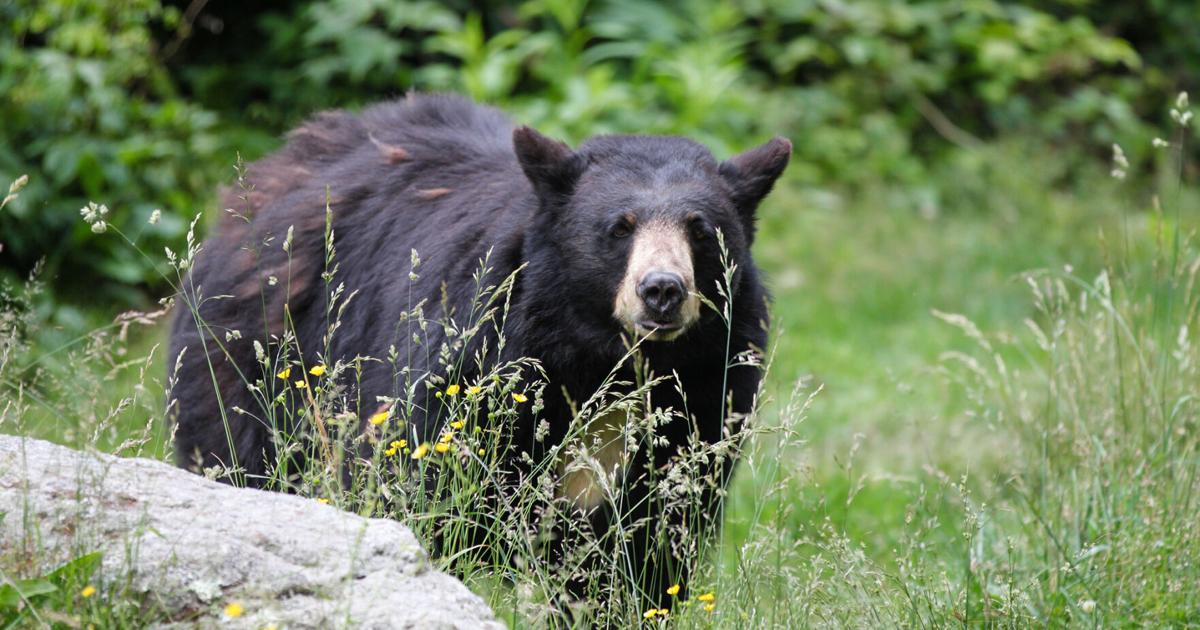
Black bear hunters in New York had a banner year, according to harvest numbers just released by the state Department of Environmental Conservation.
Hunters harvested an estimated 1,759 black bears during the 2025-26 hunting season. That total is second only to the 2003 season, while the number of bears harvested in the Southern Zone set a new record.
“The recovery and growth of New York’s bear population is testament to DEC’s vigilant wildlife management efforts,” said DEC Commissioner Amanda Lefton. “New York’s big game management plans help maintain populations at levels that are acceptable for local communities and provide sustainable hunting opportunities.”
Statewide, hunters killed approximately 4% more bears than the 2024 season and 18% above the 10-year average.
Hunters shot or arrowed black bears in 74 of 88 Wildlife Management Units open to bear hunting. Bear harvest densities were highest in WMUs within the Catskills, Adirondacks, and Allegheny Mountains.
With 106 bears harvested, WMU 6C in the Northern Zone had the highest total. The area encompasses parts of Jefferson, Lewis, St. Lawrence, and Franklin counties on the northwestern corner of the Adirondacks and the Tug Hill Plateau.
The Northern Zone harvest estimate of 557 bears was slightly lower than 2024, but still above the 10-year average. The Southern Zone take was more than twice as big at 1,202 bears, including the 10 heaviest bears recorded for the year.
The record-setting bear season in the Southern Zone is the culmination of a long-term pattern DEC documented in NY’s bear populations.
Bear population shifts
In the 1950s, bears only occupied the most remote and mountainous regions of the state, such as the Adirondack, Catskill, and Allegheny mountains. Over the past 70 years, however, bears gradually expanded their range, and DEC began opening new areas for bear hunting.
Bears now occupy most areas of the state except Long Island and NYC, and all areas of the state are open to bear hunting except Long Island and areas closed to big game hunting.
The expansion of bear range is particularly notable in the Southern Zone, where the bear harvest exceeded the Northern Zone for the first time in 1998 and has accounted for most of NY’s bear harvest for the past 20 years.
While bear populations have increased in the Southern Zone, the Northern Zone remains a traditional bear hunting destination. Northern Zone bears typically grow slower in the wilderness ecosystems of the Adirondacks, but tend to live longer than their Southern Zone counterparts. All but one of the oldest bears on record were taken in the Northern Zone.
Notable Numbers from the 2025 Bear Season:
74: The number of WMUs, out of 88 open to bear hunting, with reported bear harvests.
562 pounds: The dressed weight of the heaviest reported bear, shot in the town of Olive, Ulster County, WMU 3C.
668: The number of harvested bears from which DEC received pre-molar teeth to determine the bear’s age.
26 years: The age of the oldest bear harvested in 2024 (the most recent year for which age data are available). The bear was killed in the town Mooers, Clinton County, WMU 5A.
21: Bears harvested per 100 square miles in WMU 3C, the highest harvest density of any WMU.
DEC collects black bear harvest data from two main sources: harvest reports, and physical examination of bears by DEC staff, cooperating taxidermists, and meat processors.
Harvest estimates are made by cross-referencing these two data sources and determining the rate at which hunters report their bear harvests in each zone. In fall 2026, DEC will send a commemorative 2025 Black Bear Management Cooperator Patch and a letter confirming each bear’s age to all hunters who reported their bear harvest and submitted a tooth for age analysis.
DEC’s 2025 Bear Harvest Summary report provides tables, figures, and maps detailing the bear harvest around the state. DEC’s Black Bear Management Plan provides information on how DEC determines black bear population objectives throughout the state.
Steve Featherstone covers the outdoors. Contact him atsfeatherstone@syracuse.com.