
Everyone has their issues, and the Disney villains are no different.
To be the most evil Disney character of them all, the characters need to have a level of depth in their story. Captain Hook was chased by a crocodile, Ursula wanted revenge on King Triton, and the list goes on. The same events that gave them their bad tempers also gave them mental health issues.
In a YouTube video shared by Cinema Therapy, licensed therapist Jonathan Decker and filmmaker Alan Seawright sat down to discuss what ails the classic Disney villains. The duo starts the video with a disclaimer — there is “no correlation between mental illness and villainy.” All of these characters are villains because of their choices, not their mental health.
Decker and Seawright start by dissecting the famous Captain Hook from Disney’s Peter Pan. As the antagonist, Hook makes a name for himself by chasing after Peter Pan and his lost boys, but the experts take the time to examine a scene where Hook confronts his worst fear, the crocodile. While sitting on his ship, the animal comes up to the ship begging like a sadistic and starving dog. The animal got his first taste of the captain when Peter chopped off his hand and fed it to the crocodile.
After seeing the crocodile, Hook responds by screaming and jumping into Smee’s arms. His first mate shoos the animal away, but not before Hook hides behind a chair while shaking like a leaf. Decker explains that Hook is suffering from post-traumatic stress disorder because of his close encounter with death. “I don’t think I need to explain why that’s traumatic,” he said.
Next, they discuss the Evil Queen from Snow White and her battle with body dysmorphic disorder. The queen’s most famous line, “Magic mirror on the wall, who is the fairest one of all?” shows her seeking validation in her beauty, according to Decker. He explains that the disorder isn’t just about a fixation on how someone looks, but a perceived flaw in that person’s appearance.
Seawright commented that he would have pegged the queen as a narcissist, but Decker diagnosed her with body dysmorphia because her appearance and being the most beautiful person in the kingdom are very important to her. Snow White being perceived as the fairest of them all, instead of her, is a major flaw in the queen’s eyes. The comparison between her and Snow White is what makes it body dysmorphic disorder.
Captain Hook
Post-Traumatic Stress Disorder
Evil Queen
Body Dysmorphic Disorder
Jafar
Narcissistic Personality Disorder
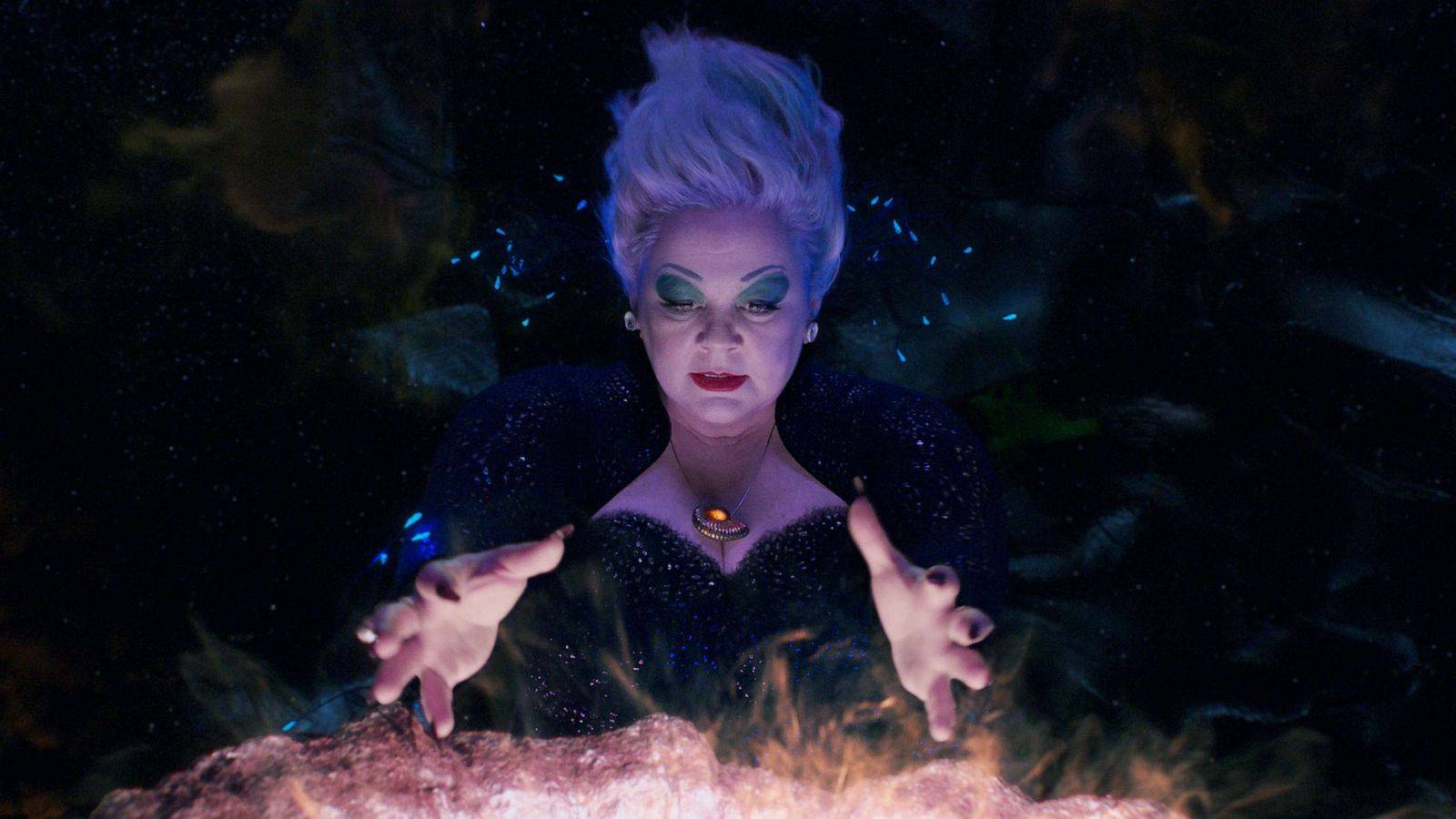
Ursula
Antisocial Personality Disorder
Third on the list is Jafar from Aladdin, and Decker diagnosed him with narcissistic personality disorder. Jafar’s downfall comes from his need to be the most powerful being in the world, and that makes him wish to become an all-powerful genie. Decker said, “He sees himself as special. Obsessed with grandiosity.” Jafar sees himself as so special that he doesn’t realize that he’ll be affected by all the rules of being a genie, including that he will be at the command of whoever possesses his bottle.
Finally, they get to Ursula from The Little Mermaid, whom Decker diagnoses with antisocial personality disorder. He said she has a “blatant disregard for the feelings, wants, needs, or emotions of others.” She gets Ariel to give up her voice by manipulating her and feigning compassion. “A lot of times with antisocial personality disorder, they know what it looks like even if they don’t feel it. So, it’s performative to get what they want,” Decker added.
All of these classic Disney villains can be seen in their films streaming on Disney+.