
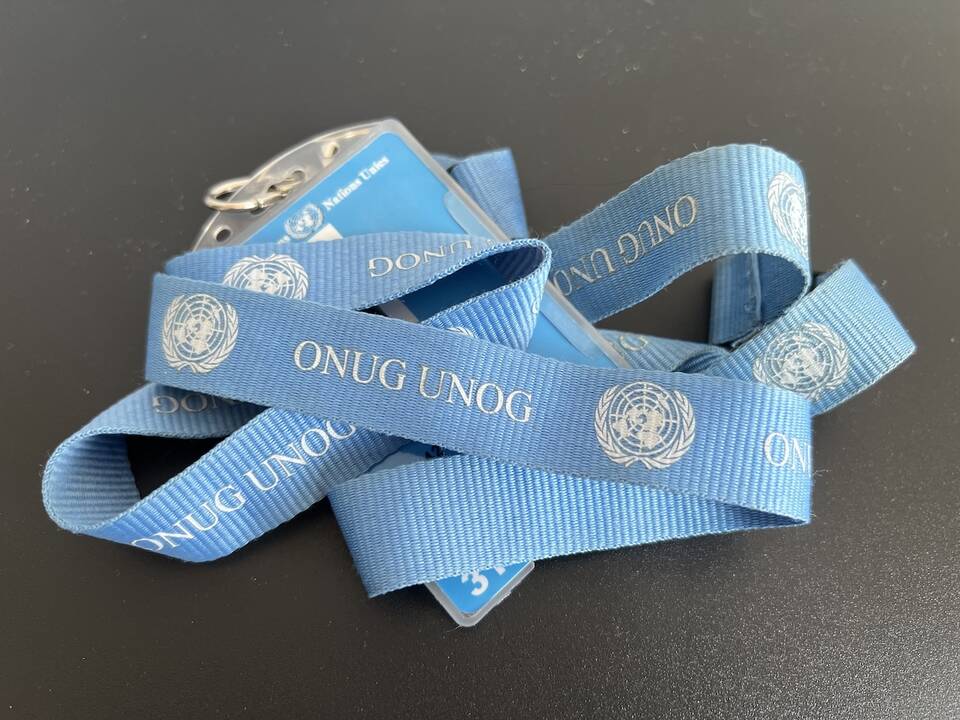
An obscure body in New York holds outsized power over which NGOs can enter the United Nations. Campaigners say states hostile to scrutiny have turned it into a tool to keep critics out.
Every year, thousands of NGOs seek a foothold inside the United Nations. They covet the prized blue badge that grants them the right to enter its buildings, attend a large part of its meetings and make their voices heard in forums otherwise dominated by governments in Geneva and other duty stations like Nairobi. To claim it, they must first clear a little-known committee in New York. This Wednesday, the UN General Assembly will vote on who sits in it.
The UN Committee on Non-Governmental Organizations grants – and can revoke – what is known as consultative status. Over 6,000 NGOs currently hold it. But campaigners say that the committee that grants it has been captured by the very states that civil society wants to scrutinise.
“Its members have a history of perpetually blocking NGOs and civil society groups they believe would be critical of them or their allies from gaining any access to the UN,” says Maithili Pai, UN advocate at the International Service for Human Rights (ISHR), who has spent years closely monitoring the committee in New York.
A committee stacked against civil society
The list of candidates for 2027-2030 is telling. Among the countries vying for a seat are China, India, Saudi Arabia, Turkey, Israel, Cuba, Nicaragua and Sudan. “Most of the countries running are governments with human rights records that range from problematic to abysmal and with track records of restricting and even persecuting civil society at home,” says Louis Charbonneau, UN director at Human Rights Watch. According to ISHR, 14 out of 20 running candidates have been singled out in UN reports documenting reprisals against those who engage with the UN.
More worryingly, many of them are accused of exploiting the committee’s procedures to block NGOs, burying their applications under endless rounds of questions and pushing them back year after year. Hundreds of organisations are currently stuck in the queue, including a dozen that have been waiting for over a decade. Charbonneau says that has turned it into a “de facto anti-NGO committee, instead of vetting applications responsibly.”
A Geneva organisation in the crosshairs
At its most recent session, the committee, at Algeria’s initiative, moved to suspend for one year Cirac, a Geneva-based NGO working on respect for the African human rights charter, giving it four days to reply. Switzerland and others protested, but were outvoted.
Cirac’s president, Anselme Maluza Mavula, called the move “arbitrary”, saying his organisation has always met its reporting obligations and has yet to hear any justification. Cirac has denounced rights violations in the Tindouf refugee camps overseen by Algeria. Mavula accused Algiers of trying to silence critical voices. The final decision now moves to the committee’s parent body, the UN Economic and Social Council (ECOSOC), at its next meeting in June.
While the NGO committee has to revoke UN access for an accredited NGO, Pai says it matters how that decision is made. “Given the long and complicated process for NGOs to get status in the first place, it is even more imperative that any decisions regarding loss of status be preceded by a fair and non-arbitrary process.”
Barely an election
With 20 states vying for 19 seats, Wednesday’s election offers little choice. “Uncompetitive elections essentially make a sham of the election process,” says Pai. NGOs have long pushed other countries traditionally supportive of civil society to stand in elections, but diplomatic priorities appear to lie elsewhere.
This year, all but one regional slate are closed. The sole genuine contest is in the Eastern European regional group, where Estonia, Ukraine and Belarus will face off for two seats. NGOs are hoping that Belarus, which shut down nearly 2,000 organisations and jailed over 1,000 critics, will lose its seat just as Russia did four years ago for the first time since 1946.
Others too have clung on to their seats since the committee’s inception 80 years ago. Despite withdrawing from swathes of the UN system, Washington appears keen on retaining its place there. The US and other western states have historically acted as a counterweight, forcing votes at the ECOSOC, which can overrule the NGO committee. Most recently, they ended a 15-year stalemate for the International Dalit Solidarity Network.
“For all its faults, the US has been a helpful force in the NGO committee,” says Charbonneau. But its future intentions remain an open question. The Trump administration’s hostility towards civil society, especially on issues such as climate change, sexual and reproductive health rights, racism and discrimination, is a cause for concern. “We don’t have any illusions about what may come in the coming years,” he adds.
Is Geneva next?
The vote comes at a precarious moment for the UN. The UN is navigating a serious financial crisis, largely driven by steep US cuts, and the division that administers NGO accreditation has warned it may no longer be able to sustain the committee’s work.
For rights groups, the deeper fear is that losses become permanent, especially amid UN reform efforts. After the September 11 attacks, accredited NGOs lost access to parts of the UN building in New York. During Covid-19, they were the last group allowed back in. “Tourists were allowed back in before us!” Charbonneau recalls.
Geneva has historically been the countermodel – open entry and one queue for diplomats and NGOs alike. But cost-cutting pressures from New York now threaten even that. Speaking times have shrunk, the number of events has been capped, virtual participation is still being refused, and webcasting and translation services have repeatedly come up as targets for cuts.
“In New York, there are a lot of situations that are instrumentalised and abused to curb civil society access,” says Pai. “In the current context of shrinking civic space, when something gets lost, it’s very hard to get back.”