
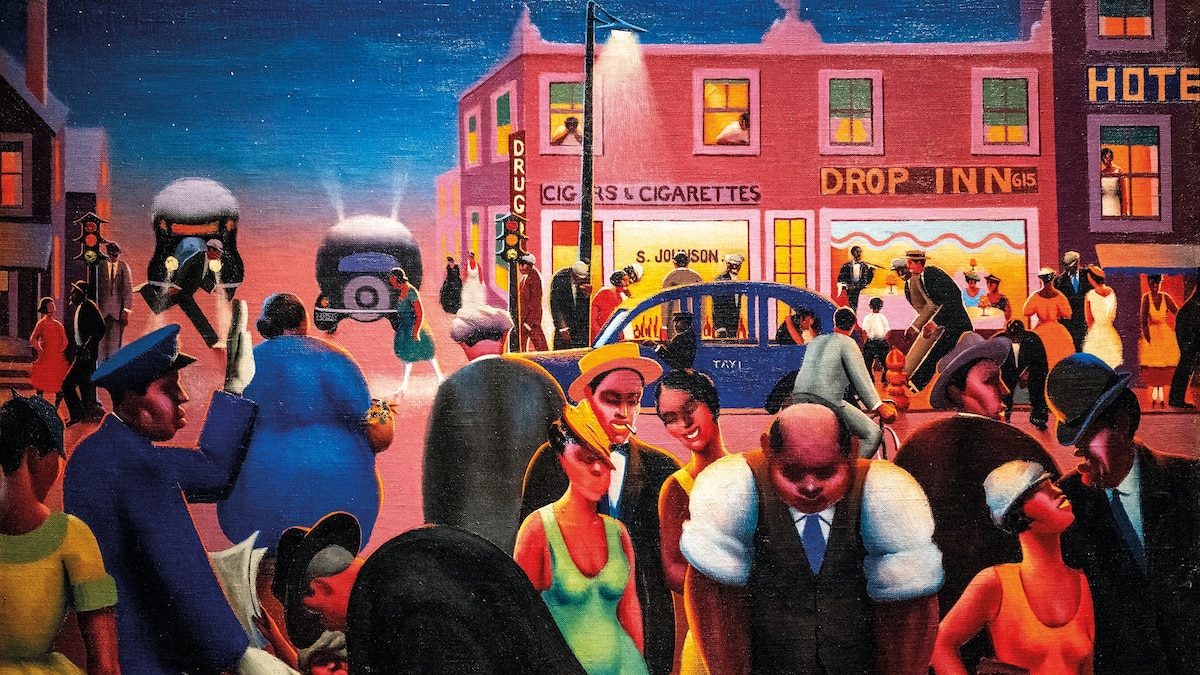
The gala dinner held at New York City’s Civic Club in 1924 was nominally in honor of Jessie Redmon Fauset. The 41-year-old editor of The Crisis magazine was publishing her first novel, There Is Confusion, that year. But there was a bigger purpose behind the celebration. The dinner’s organizers, sociologist Charles S. Johnson and philosopher Alain Locke, were bringing together some of the country’s leading writers and intellectuals, both Black and white, to showcase the rising stars of what was not yet called the Harlem Renaissance. Fauset’s book was merely a pretext for this heady gathering.
The Great Migration of African Americans from the South to the North, which began early in the 20th century, had brought artists and thinkers together in cities such as Chicago, Detroit, and notably New York City and its Harlem neighborhood. Stalwarts of civil rights such as W.E.B. Du Bois, as well as intellectual leaders including Johnson (the editor of the journal Opportunity) and Locke (a professor at Howard University), were mentoring these minds. Fauset and these elder statesmen recognized that young talent was creating a “New Negro literature” and needed to be nurtured. Writers such as Gwendolyn Bennett, Countee Cullen, Langston Hughes, and Zora Neale Hurston were just starting out on promising careers. It was time, the organizers thought, to bring them to national attention.
(Before the Great Migration, there was the Great Exodus. Here’s what happened.)