
Monday, April 6, marks the 96th day of Zohran Mamdani’s term as mayor. amNewYork is following Mamdani around his first 100 days in office. We are closely tracking his progress on fulfilling campaign promises, appointing key leaders to government posts, and managing the city’s finances. Here’s a summary of what the mayor did yesterday and today.
Nearly two-thirds of New York City residents do not have the resources needed to meet the city’s true cost of living, according to a new city report released Monday alongside a long-awaited preliminary racial equity plan meant to shape policy across city agencies.
The inaugural “true cost of living” measure found that 62% of New Yorkers — about 5.04 million people — fall short of the threshold, which is meant to reflect what families need to cover housing, food, health care, child care, transportation, taxes, savings and other essentials. The report said 3.58 million residents are above traditional poverty measures but still lack sufficient resources to meet the city’s cost of living.
For families with children and adults under 65, the report put the median annual threshold at $159,197. It said the average annual gap between costs and available resources for those below the threshold was $39,603.
Mayor Zohran Mamdani released the affordability report alongside the city’s first preliminary racial equity plan, a document required by the voter-approved 2022 charter changes that was not released under the Eric Adams administration.
Asked later whether a version of the plan had already been completed under Adams, Mamdani said he could not explain the previous administration’s delay. He said his team inherited work already underway, expanded it into a broader report spanning 45 agencies, more than 200 goals and more than 600 indicators, and chose to release it for public comment so New Yorkers could help shape the final version.
On his 15th day in office, while appointing longtime organizer and attorney Afua Atta-Mensah as chief equity officer and commissioner of the Mayor’s Office of Equity and Racial Justice, Mamdani pledged to release the racial equity plan within his first 100 days. He cast releasing the report as a legal obligation and a measure of whether City Hall can translate commitments on equity into action.
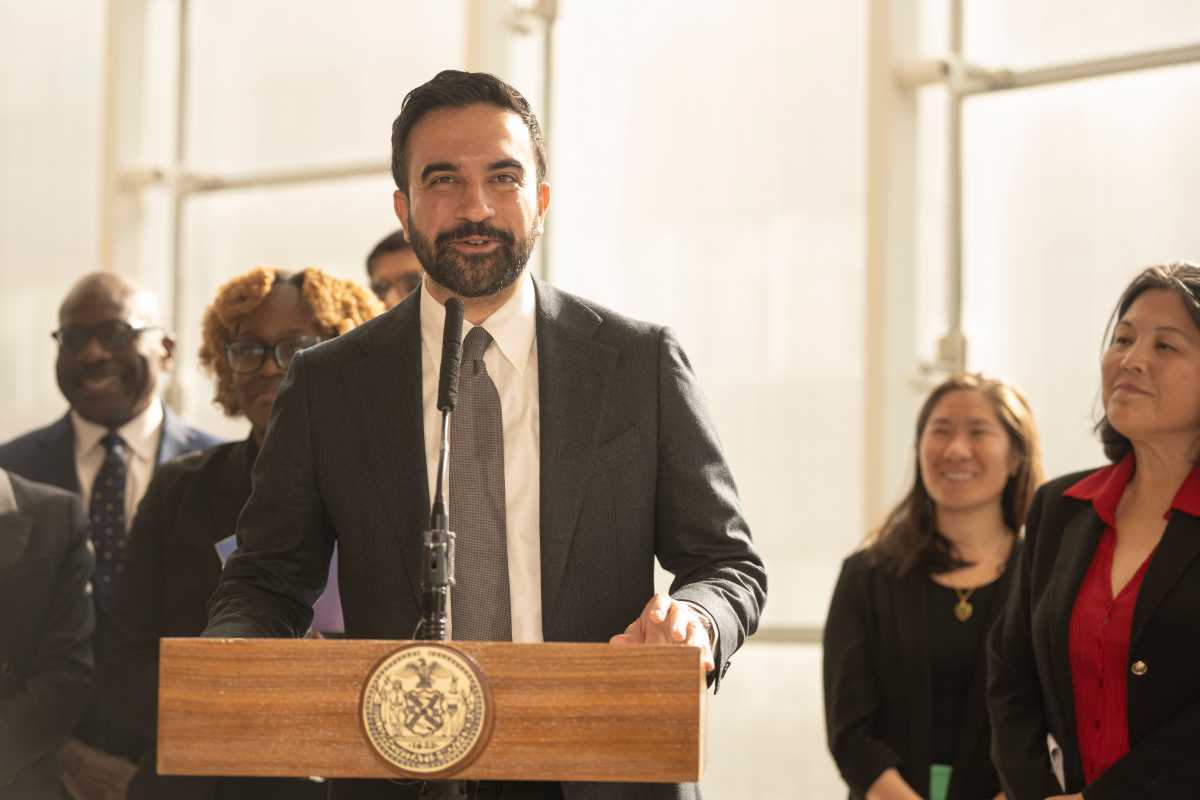
At a press conference in Brooklyn, Mamdani said the two reports released Monday should be read together.
“The true cost of living measure confirms what New Yorkers have long known to be true. Too many people cannot afford the city that they love,” he said.
He added that “this preliminary racial equity plan is the first step in developing a whole-of-government approach to tackling that reality.”
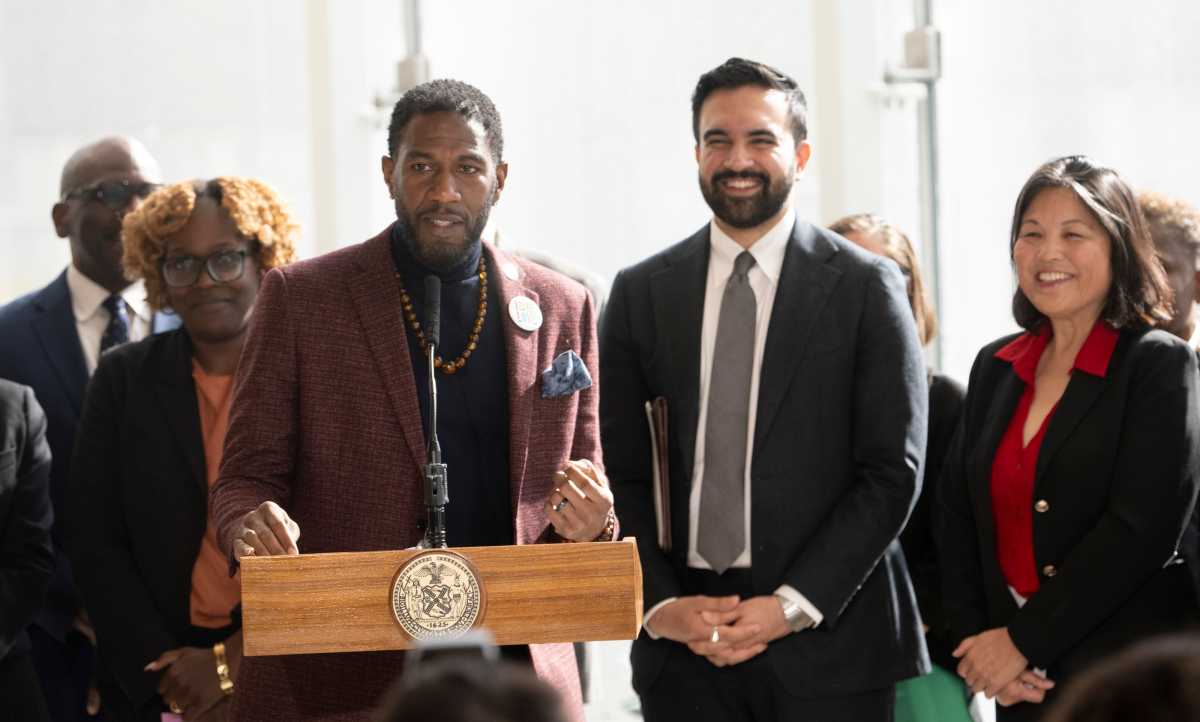 Public Advocate Jumaane Williams said at the event that “plans don’t just don’t change lives, actions do,” and said city budgets would have to reflect the findings.Photo by Lloyd Mitchell
The racial equity plan organizes agency work across seven domains: Children, Youth, Older Adults and Families; Economy; Housing and Preservation; Infrastructure and Environment; Health and Wellbeing; Community Safety, Rights and Accountability; and Good Governance and Inclusive Decision-Making. According to the report, agencies were asked to assess their work across core government levers, including service delivery, staffing, contracting, and budgeting, and to set short-, medium-, and long-term goals.
The report says several common themes emerged across agencies, including budget reallocation, equitable service delivery, targeted investment in underserved neighborhoods, reversing past harms, building organizational capacity and diversity, and supporting Minority- and Women-Owned Business Enterprises.
It also cites agency commitments, including pay equity efforts, reviews of fines and fees, investment in high-need neighborhoods, expansion of the MyCity platform with underserved communities in mind, and stronger college and career pathways for public school students.
City Hall has framed the plan as both a policy document and an accountability tool. In the report’s opening section, the administration says agencies will be expected to use the final plan to guide “policy, operations, and accountability across government.” At the event, Chief Equity Officer Afua Atta-Mensah said, “Our responsibility now is to move from planning to action, and to do so with intention, transparency and accountability, because plans alone do not create change.”
The cost-of-living report found large disparities across racial and ethnic groups. Hispanic New Yorkers had the highest rate of residents falling short of the threshold at 78%, followed by Black New Yorkers at 66% and Asian and Pacific Islander New Yorkers at 63%. The rate for white New Yorkers was 44%.
The report also found that 73% of children in the city live in families that do not meet the threshold. Geographically, the Bronx had the highest share of residents below the threshold at 75.1%, followed by Brooklyn at 61.5% and Queens at 61.1%. Manhattan was at 55.6%, while Staten Island had the lowest rate at 48.2%. The report said government supports, including stabilized housing, SNAP, tax credits and free Pre-K and 3-K, reduce the citywide shortfall rate from 67% to 62%.
Public Advocate Jumaane Williams said at the event that “plans don’t just don’t change lives, actions do,” and said city budgets would have to reflect the findings.
Economy: Mamdani says warning signs show need for more work on wages and costs
On Monday, reporters also pressed Mamdani on jobs and business confidence, following reports over the weekend of new signs of strain in the city economy.
A recent report by THE CITY said NYC lost 20,000 jobs in 2025, with weakness in home health care, film and television production, and Wall Street.
Separately, according to the New York Post, Steve Fulop, CEO of the Partnership for the City of New York, warned that some companies are already taking steps to relocate or move jobs elsewhere because of Mayor Mamdani’s push to raise taxes on the city’s wealthiest individuals and corporations.
Asked how the affordability data in Monday’s report would change policy and what the administration was doing to bring jobs to the city, Mamdani said the findings reinforced the administration’s focus on both wages and costs.
“It inspires us to redouble our commitments in two ways,” he said. “One is to ensure that as many New Yorkers in this city as possible can earn a living wage … and two is to tackle the costs that are pushing that cost of living so high.”
He pointed specifically to housing and child care, including the administration’s push for free child care seats for 2-year-olds.
Mamdani said he also wanted growth that reached residents at risk of being priced out. “We are looking to continue to grow not just jobs, but also industry in this city, and to ensure that that growth reaches every single New Yorker,” he said. He added that the city had seen “an economy that has grown” while “working class New Yorkers [were] being pushed out of this city.”
In a follow-up question about retaining large employers, including concerns raised about Apollo Global Management moving its headquarters, Mamdani did not offer a company-specific retention strategy and instead pointed back to the report’s findings on affordability and inequality. “This report focuses on the cost of living for New Yorkers at large,” he said.
Pressed on whether employers leaving the city was an immediate concern, he said the administration would “continue to do everything we can to increase jobs in this city,” and pointed to the coming World Cup as “the immense economic opportunity” that could generate “billions of dollars” if its benefits were spread across the five boroughs.