
This menu sounds a bit fishy.
The state announced it’s now safe to eat some seafood caught in the murky Hudson River — but locals aren’t ready to throw a fish fry just yet.
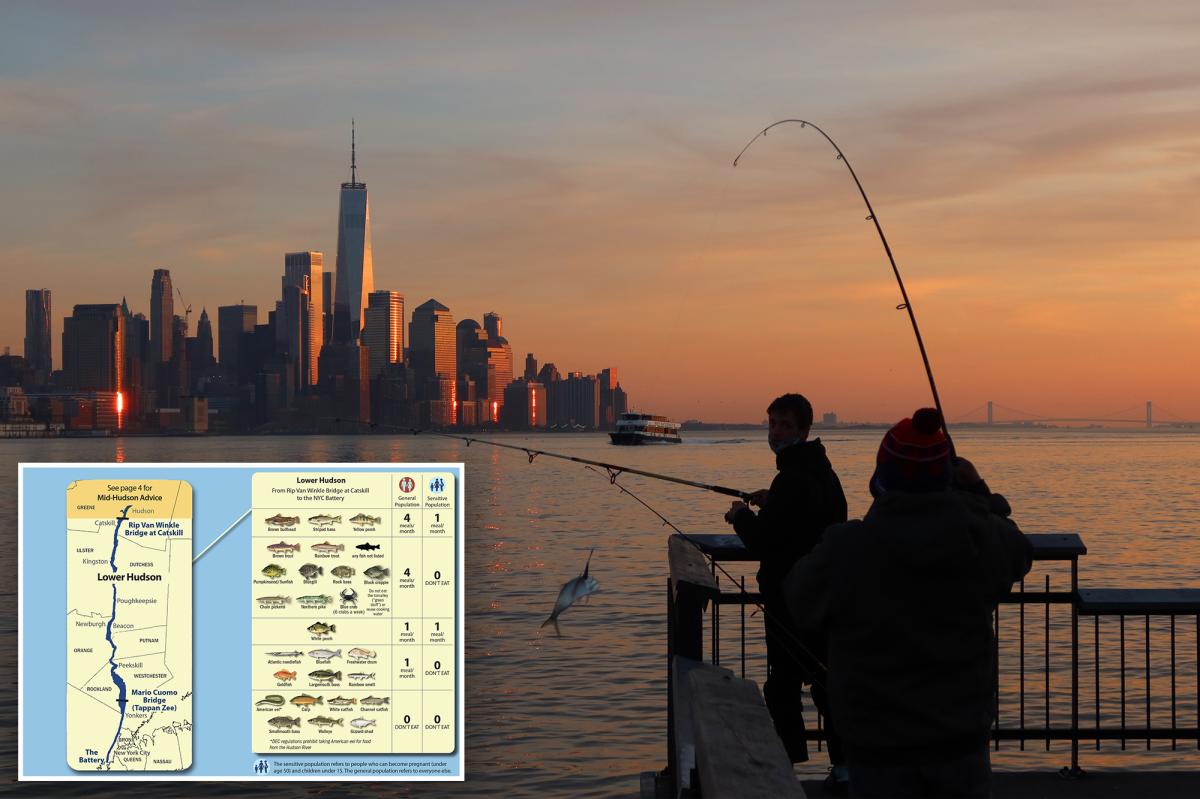
Department of Health officials said last week that it’s OK for the general population to nosh on some fish caught in the pollution-plagued waterway for the first time in 50 years, with mouthwatering options for dinner including wild goldfish, succulent black crappie and delicious Big Apple-style brown bullhead.
Still, New Yorkers told The Post in Battery Park they’re scared Hudson “surf and turf” could end up a “surf and turd” despite lower levels of toxins found in local wildlife.
New York anglers and their families can eat “some” fish caught in the Hudson River for the first time in 50 years, state health officials announced Wednesday. Getty Images
“The Hudson already is one step above a sewer,” huffed Manhattan finance worker John Hummler.
“We are a modern society, and we already have sources of food,” Hummler, 68, added. “So why eat the remaining wildlife that we have? Just because you decide you don’t want to pay for fish.”
Some fish, like smallmouth bass, remain off limits under the state’s updated guidance — which also advises diners to limit intake of the local fish to four times a month. The guidance applies to seafood caught from the Battery up to Catskill.
Analiese Colon said the idea of fishing off Manhattan is “off-putting” compared to her hometown in Suffolk County, Long Island.
“The water on Long Island, where we’re from, is very, very clean and clear. You can see everything you’re looking for,” Colon, 23, said.
It’s “a little gross,” observed 23-year-old Ethan Cohen near Pier 25 at Battery Park, “but if people want to eat it, it’s their decision … Eat at your own risk.”
Striped bass and yellow perch can now be caught and eaten from the Hudson River in New York City. New York State Department of Health
And there remain some risks, according to the state.
People under 50 who can become pregnant and children under 15 are recommended to eat just one 8-ounce meal per month due to increased contamination risks.
“It’s a great day when the Department can relax guidance for certain fish in the lower Hudson River, allowing people who may become pregnant and children to eat fish from one of the most important fisheries in New York State,” State Health Commissioner Dr. James McDonald said.
Regardless of risk level, eager pescatarians are urged to slow consumption of big catches, as smaller fish usually have fewer chemicals than older fish of the same species, state reps said.
Health officials also urge anglers to cut the skin and fat off the fish and cook it, as PCBs stay in the fat of the fish.
The updated guidance comes as lower levels of toxic polychlorinated biphenyls, or PCBs, were detected in several fish species, state health officials said.
Those consuming Hudson River crabs should remove the tomalley and discard the cooking liquid.
Health officials urge anglers to cut the skin and fat off the fish and cook it, as PCBs stay in the fat of the fish. New York State Department of Health
The updated guidance comes as lower levels of toxic polychlorinated byphenyls, or PCBs, were detected in several fish species, state health officials said.
Anglers can eat fish like brown trout, blue crab and striped bass, but still stay away from carp, white catfish and smallmouth bass, reps said.
Health officials also urge anglers to cut the skin and fat off the fish and cook it, as PCBs stay in the fat of the fish.
Those consuming Hudson River crabs should remove the tomalley and discard the cooking liquid.
Despite all the fine print, some locals are keeping an open mind — or trying to.
“I do like personally catching my own fish: It just makes it a little bit more fun, something to do, and then you feel rewarded afterwards,” said Kevin McLoughlin, 22.