
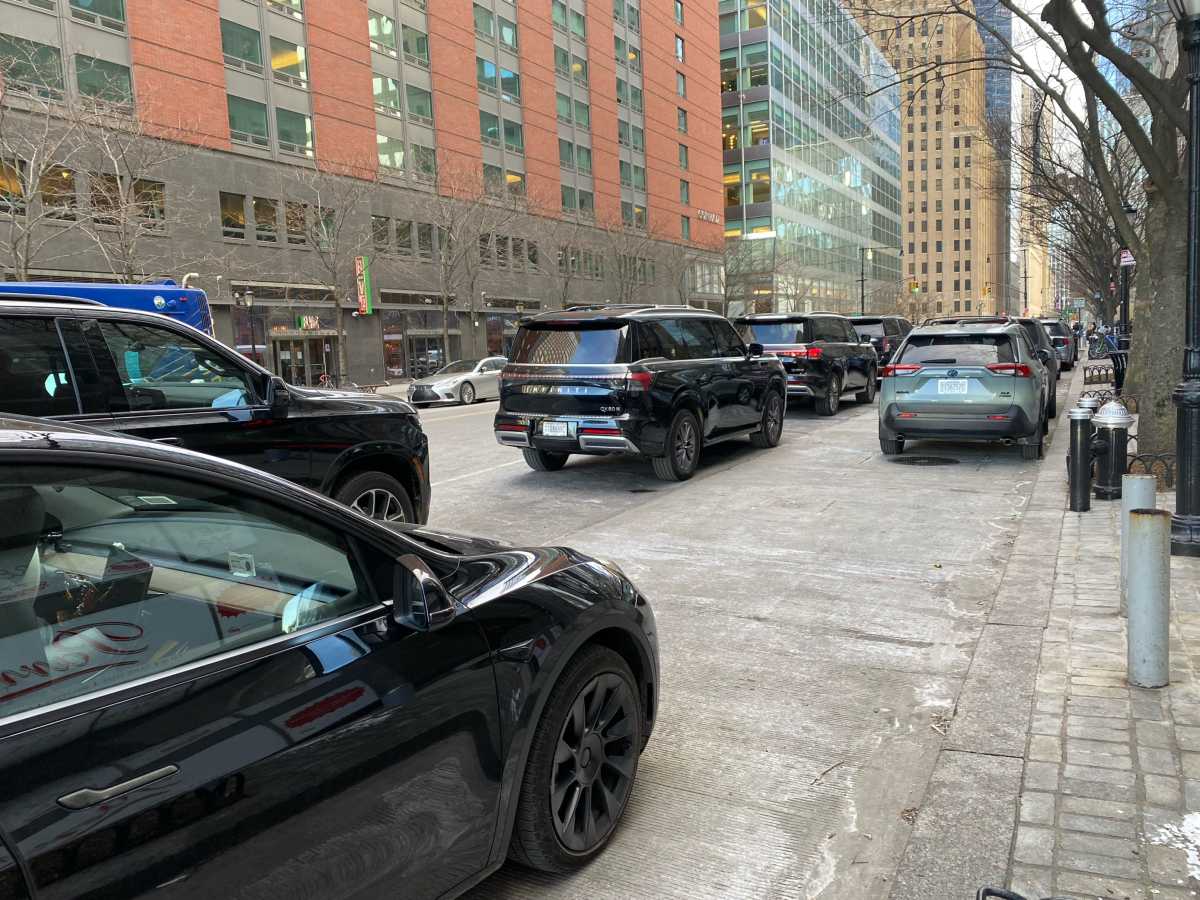
Ride share services led by companies like Uber and Lyft are failing disabled riders, despite reporting $15 billion in profits in 2024, according to a report by New York Lawyers for the Public Interest (NYLPI) last month.
There are roughly 1 million NYC residents living with a disability, according to the most recent statistics released by the Mayor’s Office for People with Disabilities.
The NYPLI report — Left Behind Across New York State — states that only 7% of New York City’s fleet of 106,000 for-hire vehicles (FHVs) had wheelchair accessible vehicles (WAVs), forcing wheelchair users to wait significantly longer — over twice the wait time — than other users that did not have special accessibility needs.
Experts pointed out that while Uber and Lyft hire drivers who use their personal vehicles, the companies should be incentivizing their drivers to make upgrades to their vehicles to accommodate disabled riders in need of access to wheelchair ramps.
The report also claimed that ride share services deprioritize WAV services, often listing it below options for luxury vehicles, energy-efficient green vehicles and pet transportation services — if WAVs are even offered at all.
While changes to rules implemented in 2019 by the Taxi and Limousine Commission (TLC) have resulted in a modest increase in the number of fully accessible FHVs within New York City, and FHV fleets have begun transitioning to electric vehicles, the report said wheelchair users continue to get left behind.
In order to ensure disabled riders are not excluded from the growing ride share sector of the transportation industry, the NYPLI suggests solutions including:
imposing a $1 surcharge on all ride share trips to contribute toward a fund that would subsidize all-electric WAVs;
passing the Green Accessible Transition Act, mandating that any autonomous vehicles licensed to operate in New York State are 100% accessible;
issuing a Request for Proposals for fully accessible electric vehicle models that can be deployed in FHV and taxi fleets;
banning Uber and Lyft’s surge pricing and algorithmic pricing practices for accessible vehicles
Ride share companies defend progress
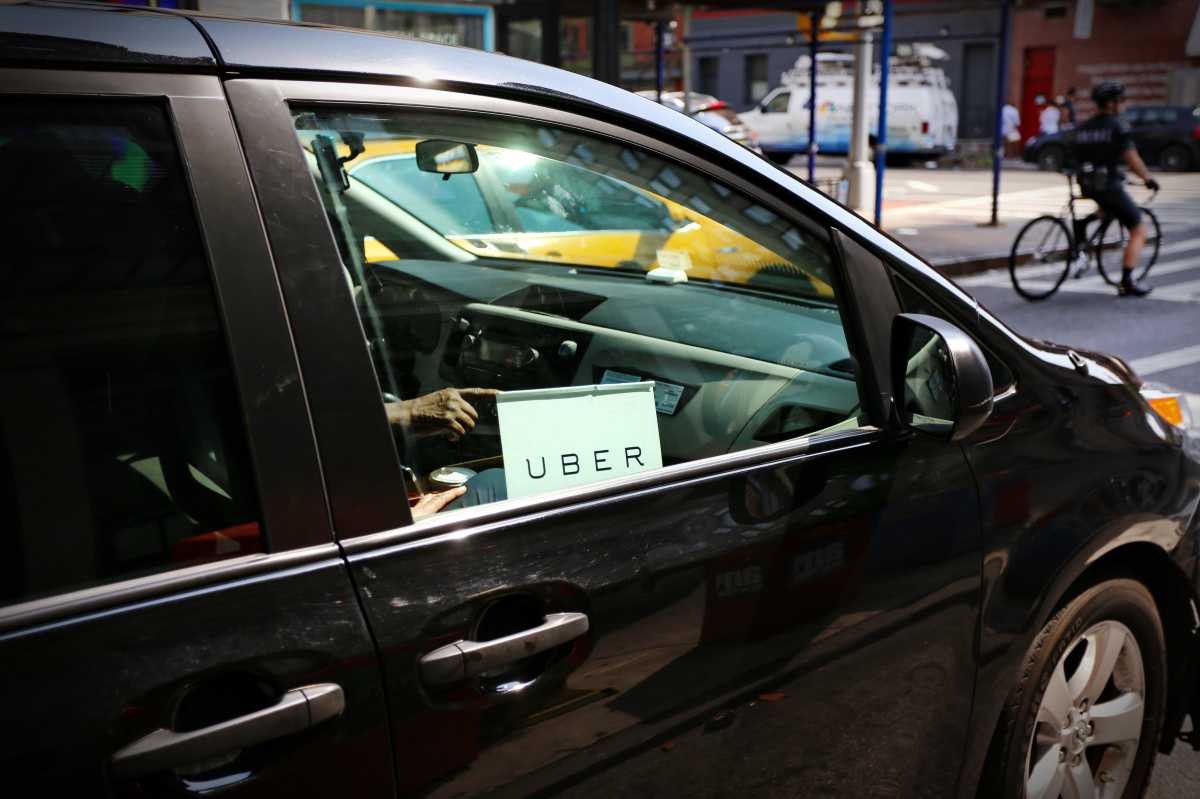 NYPLI pointed to large ride share companies like Uber and Lyft, who report record profits each year, saying they have not met disability access standards shared by the rest of the ride share industry. Photo courtesy of Mike Dotta/Shutterstock
Despite reports that ride-share companies are not meeting basic accessibility standards, a Lyft spokesperson said the company meets all applicable WAV service levels per TLC requirements.
The spokesperson said there are currently “thousands” of drivers who fulfill WAV rides in NYC.
“While we always strive to expand and improve our service, characterizations that we do not prioritize accessibility are untrue and overlook the meaningful progress that has been made,” the spokesperson wrote to QNS on March 30.
Uber, on the other hand, did not respond to QNS’s requests for comment, but an Uber spokesperson was quoted in a Feb. 17 story by The City saying that more than 10% of all trips on the platform last year were done in WAVs. He also countered the report’s conclusions on wait times.
“While a difference exists, we also reject the premise that a roughly two-minute difference in reported wait times is significant,” the spokesperson said. “WAV trips often require additional time for safe boarding and proper securement before a trip is formally started in the app — a step that does not apply to non-accessible trips and can influence how wait times are measured.”
New York’s systemic lack of regulation
Justin Wood, director of policy at NYPLI, said the focus of the report was on the availability of FHVs in the city and the systemic lack of regulation that causes many of the issues experienced by disabled riders.
He pointed out that companies reported record profits last year.
“This is a massive, multi-billion dollar industry in New York State,” Wood said. “Uber and Lyft aren’t even trying to operate a wheelchair accessible service.”
The 2019 TLC settlement agreement imposed a $1 surcharge on every taxi trip in NYC, which contributes to a taxi improvement fund that gives grants every year to taxi drivers who agree to install or retrofit their cab for wheelchair accessibility, or purchase a cab that has a wheelchair accessible ramp.
He said from NYPLI’s perspective, if changes could be made to the taxi industry that required 50% of its vehicles to be wheelchair accessible, then Uber and Lyft can be held to the same standards.
Uber and Lyft dominate the industry at this point, Wood said, but their vehicles have not been held to the same standards as the rest of the industry.
“The companies may offer incentives,” Wood clarified. “But they’re not transparent about it, and there’s no city or state regulation requiring a fund that would help drivers operate and purchase these vehicles. That’s important, because we don’t want this all to be on the drivers — many of whom are working in a gig economy, are low or moderate income, and are often immigrants.”
Wood said legislation requiring an equivalent fund would force these ride-share companies, which he emphasized are not doing so on their own, to accommodate disabled riders.
While NYC is one of the only regions in the state that requires these ride share companies to provide some kind of wheelchair accessible service, the rest of the state still does not have these regulations.
That means users who need to cross county lines, either into Nassau County or Westchester County, will no longer have access to WAVs on their way back into the city.
Wood said many of these programs are pilot programs, as well, meaning enrollment is limited and not all users in need of accommodations are able to access the program.
The current state of ride-share accessibility
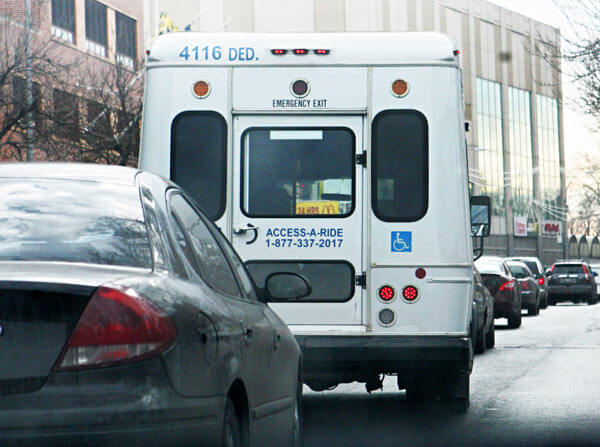 Currently, Access-A-Ride operates an On-Demand E-Hail program to fill gaps in transportation options left by the traditional service, although it is capped at 40 rides per month. QNS file photo by Christina Santucci
The introduction of Access-A-Ride (AAR) On-Demand E-Hail, a paratransit service that began as a pilot program serving about 1,200 users in 2017, was a result of advocacy efforts by both the disabled community and the Metropolitan Transportation Authority (MTA).
It helped bridge gaps in transportation needs not met by traditional AAR services, which must be scheduled at least 1-2 days in advance.
While Access-A-Ride provides ride share services in WAVs — and has since expanded to include another 2,400 users, adding up to 3,600 users total — the service has contracts with companies like Uber and Lyft to provide FHVs in order to conduct its services.
Users note that the service in general is also limited in its field of operation, so drivers are only allowed to go partway into Westchester, Yonkers or Nassau counties.
Users must be approved for the on-demand AAR program and connect their accounts to their existing Uber or Lyft accounts.
The most recent expansion to on-demand rides, introduced in August 2023, outlines costs at $4 per trip and is limited to 40 rides per month.
Any rides beyond a user’s allotted quantity must then be paid entirely out of pocket.
On-demand rides are crucial to disabled users
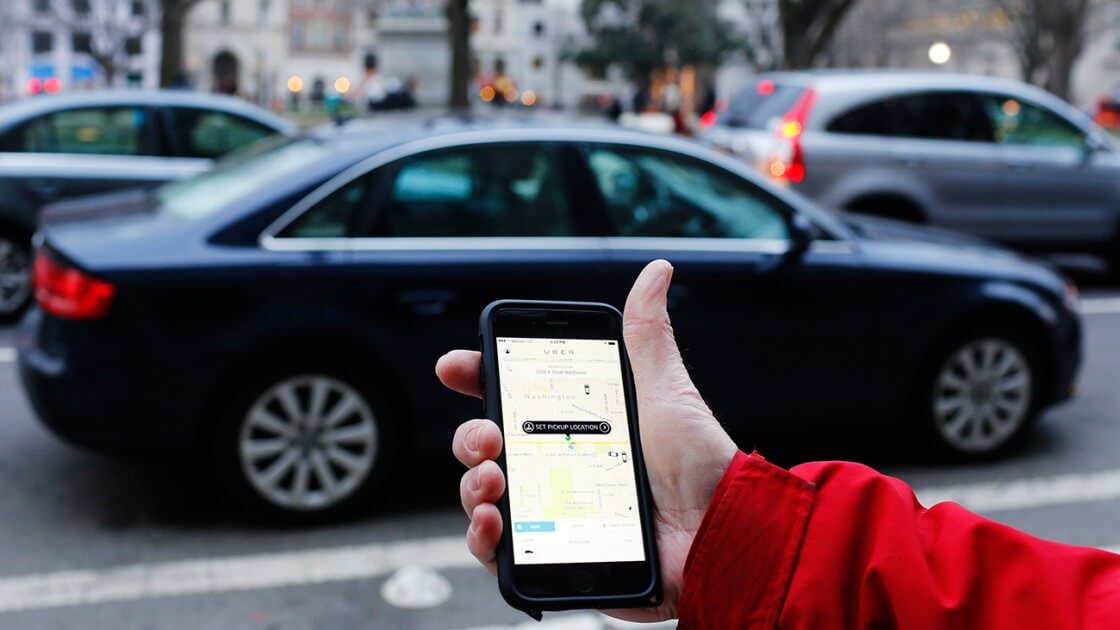 Disability advocates like Valerie Joseph and Eman Rimawi Doster said they’ve gotten stuck in Access-A-Ride for-hire vehicles for up to six hours due to the lack of available cars and drivers that are able to accommodate their needs. Photo via Flickr/Mark Warner
Eman Rimawi Doster, a senior community organizer in the Disability Justice Department at NYPLI, said she not only advocates for the disabled community, but she has lived experience as a double amputee with Lupus who uses a walker and prosthetic limbs.
Doster, who lives in East Harlem, is active in the community — she works, takes classes, goes to events and travels all over the city. She hasn’t been able to use a train since 2013, so she said AAR makes it possible for her to live her life.
“I know a lot of other people who have chronic pain and chronic fatigue who use Access-A-Ride the same way,” she said. “They wouldn’t be able to function otherwise.”
However, even this specialty service has its limitations.
Doster recalled one ride prior to the pandemic in which she was stuck inside the vehicle for over six hours during a traditional AAR trip. She had met with an elected official in Brooklyn and requested a ride back to her home in the Bronx, where she lived at the time.
The driver — whom Doster did not fault for the incident and praised for making the trip easier and more pleasant for her — was forced to pick up other riders along the route.
Doster said she left Brooklyn around 2 p.m. and didn’t return home until after 8 p.m.
“My phone actually died during the ride, which is why I started using a portable charger because that’s so wild to me,” she said. “That’s one of the reasons why on-demand services like Uber and Lyft are so important.”
While the Uber ride would have been significantly more expensive, Doster said she would have much preferred it over being stuck in a vehicle for six hours because being crammed in a vehicle for that long is especially difficult for people with disabilities.
Valerie Joseph, a former Access-A-Ride Advocate at Brooklyn Center for Independence of the Disabled, as well as a lifelong wheelchair user, said AAR users call these long rides the “tour of the boroughs” — a common experience for users of the service.
Joseph, who is now an onboarding specialist for the Drivers Cooperative, said not only does she need a wheelchair ramp, but she needs a driver who knows how to use it and can help strap her in place.
Being bumped around in a vehicle for hours puts strain on her back and body, Joseph said, especially on days when her balance is worse than others.
Misconceptions of the disabled community
“People need accessible, reliable, quick transportation,” Doster said. “But, oftentimes, disabled folks get put on the back burner because people think we don’t have things to do. But in fact, we do have things to do. The city often talks about how important employment is for disabled folks, but how are we supposed to get there without transportation? You can’t have one without the other.”
One of the more frustrating parts of these long trips is that just like anyone else, Joseph has places to be.
“I am anyone else,” Joseph said. “My disability is not me. Just because I have a disability doesn’t mean I’m not a normal person. I have a college degree, I’m very social, and I don’t want to be staring at four walls all the time.”
Joseph lives in Queens, right near the border of Nassau County, so she said almost every trip she takes through AAR is long.
“I work every day,” she said. “When you’re late to something, that’s your credibility. If I say I’m going to be somewhere at a certain time, I need to be there.”
She added that people often have the misconception that wheelchair users like herself always travel with an aide or companion, but sometimes Joseph wants to travel alone, especially to private doctor appointments.
“There’s certain things that are personal,” she said. “I have a personal life.”
When she does travel with an aide, she said it frustrates her when drivers ask her aide where she’s going instead of asking her directly.
“I can speak for myself,” she emphasized. “Ride share companies that have wheelchair accessible vehicles need to come a long way. They need work and still need training.”
Solving the issue across New York State
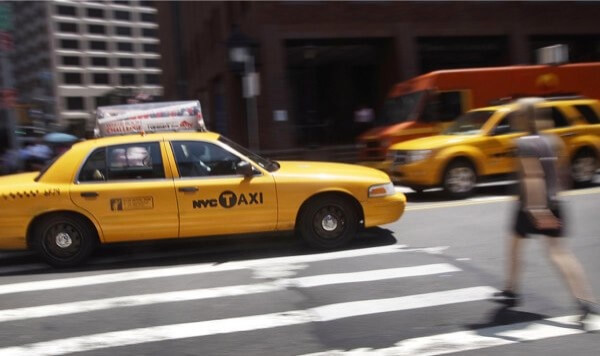 Photo by Mary Altaffer/AP
State Sen. Julie Salazar and Assemblywoman Jessica González-Rojas have both sponsored versions of the Green Transition Authority Bill, which would establish a $1 FHV improvement surcharge on each trip that would go into a fund to help drivers purchase zero-emission WAVs.
González-Rojas, who noted that she had over 25 years of experience in disability justice, said she first became familiar with the challenges facing disabled commuters during her time working at the Eastern Paralyzed Veterans Association, where she largely dealt with enforcement of the Americans with Disabilities Act.
Aside from reading the NYPLI report, González-Rojas said, she spoke with many of her constituents who expressed the challenges they face accessing transportation options.
“We want to make sure our workers have good-paying jobs, that our wheelchair users are able to access vehicles, and that we’re meeting our climate goals, which is critical,” she said. “The authority would focus on creating a jobs plan to encourage electric vehicle manufacturers to commit to good wages, benefits and training because we also want to look at the worker justice part of it.”
The transition authority would maintain the power to determine how the funds collected through the surcharge would be used, she said, although the goal of the bill is to ensure the vehicles and infrastructure needed to achieve equity for disabled commuters and climate justice are provided for.
“This surcharge is not a new type of idea, and it’s actually mutually beneficial,” González-Rojas explained. “What does it cost not to do this? This is our climate, our future and the accessibility of our wheelchair users across New York.”
Currently, the bill is still in the Corporations, Authorities and Commissions Committee, which oversees the MTA.
Once deliberations are done, the bill could then go to a vote in the state assembly and senate, and potentially enter the Ways and Means Committee to determine if there is a fiscal cost.
González-Rojas said if the bill does not make it past the finish line by June 4, it would have to be reintroduced in January.
Continuing the fight for equity and justice
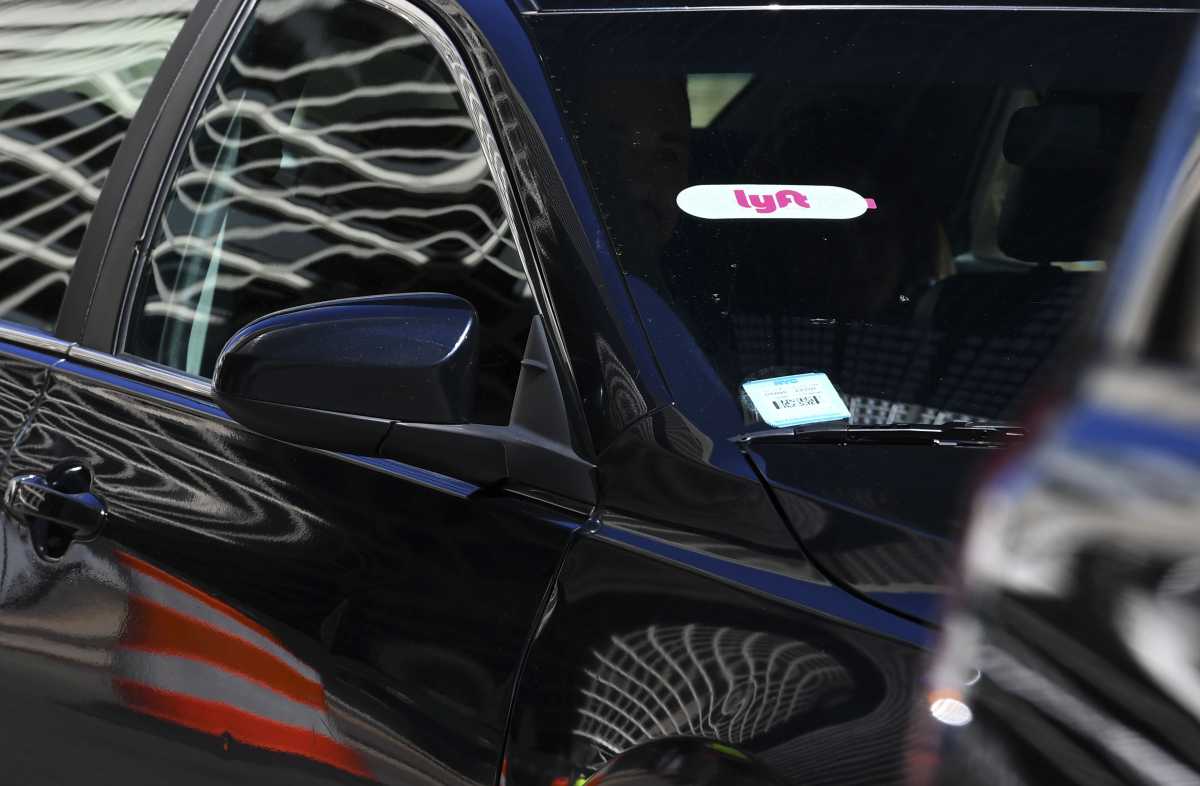 By addressing accessibility, climate and driver inequities, disability advocates said New York could be a leader in disability, climate and worker justice. Timothy A. Clary/AFP via Getty Images
While Doster acknowledged that much progress in accessible transportation has been made, she said it is only a result of those in the disabled community constantly fighting for it on the front lines.
“When you’re either born with a disability or acquire one later on, I’ve found folks make the automatic assumption that you just get the support you need,” Doster said. “But you often need to fight tooth and nail to get that support.”
The reason why the legislation sponsored by Salazar and González-Rojas would address multiple issues at once, Wood explained, is because it levels the playing field with the taxi industry and gives the state funds to make improvements that meet these services halfway.
“We believe people with disabilities deserve respect,” Wood said. “Our hope is that by organizing around the state, then we can have a statewide solution. New York State could really be a leader in trying to transition to an accessible and zero emissions fleet at the same time.”
At the end of the day, Doster and Joseph said this is really about giving the disabled community the tools it needs to maintain its dignity and independence.
“My hope is that we can get some legislation passed so that it’s less expensive for those of us using it, but also continue work to improve the service,” Doster said. “You know, the system isn’t made easy for folks with any kind of disabilities, so I hope we can make it so disabled folks can fully function throughout the state.”
“Ride share companies that have wheelchair accessible vehicles need to go a long way,” Joseph added.