
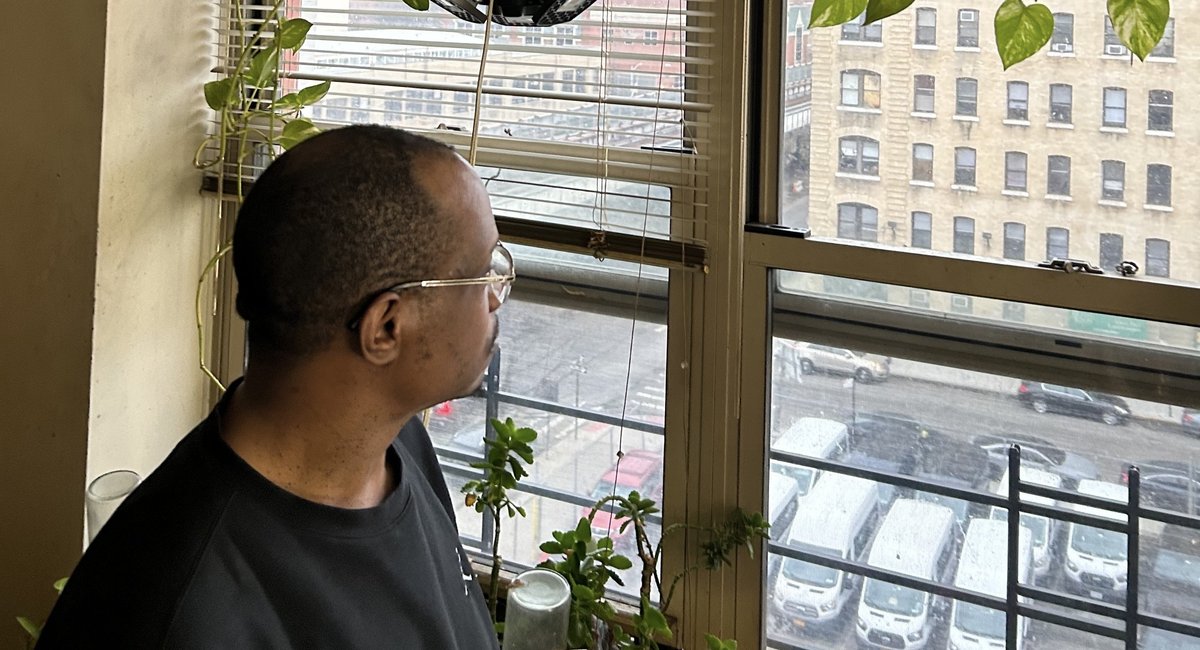
Last summer’s Legionnaires’ disease outbreak in Central Harlem has changed the pace of life for many of the New Yorkers at its epicenter, and some public health experts have expressed concern over why it happened in the first place and how city officials have responded.
Patricia Miller lives across the street from Harlem Hospital and a new city-owned public health lab, where officials say harmful Legionella bacteria first began spreading through the air. She said she no longer walks to the bus stop on Fifth Avenue but instead takes a cab to work, too afraid to walk past the two buildings.
Ian Avant, who lives a few blocks away, has stopped walking his dog by the hospital, though he still passes it on his way to work and feels a sense of panic.
“Every time I hear about Legionella or pneumonia, my heart drops,” he said.
Both were among more than 100 people sickened in the outbreak that health officials ultimately linked to rooftop cooling towers on the hospital and lab, which share the same city block.
Avant said the disease did long-term damage to his kidneys. He and Miller now want those responsible for the outbreak to be held accountable.
An August inspection report by the city’s Department of Health and Mental Hygiene said there were no records of regular monitoring, testing or cooling tower disinfection at the lab building, which was under construction at the time.
And last month, a Gothamist investigation found that Harlem Hospital ignored its own cooling tower maintenance plan in the weeks before the outbreak when it failed to conduct rapid, weekly tests for Legionella. The public hospital was at the center of a previous outbreak in 2021 when health officials determined that the facility had not properly managed one of its cooling towers in accordance with local law.
Miller, the Harlem resident, was shocked to learn that the hospital failed to follow its own management plan.
“People go about their day-to-day work, taking their children out and stuff, and you subject people to something like that?” Miller said. “That is horrible.”
Avant said he has gone to Harlem Hospital for medical care before but will likely choose another hospital next time he’s sick.
“ If you won’t take care of little things, how can I trust you to take care of me?” he said.
He and Miller are a part of a group of over 50 victims who plan to file a lawsuit against NYC Health and Hospitals and a private company called Skanska, which oversaw construction of the lab building, for failing to manage their cooling towers.
A spokesperson for Skanska declined to comment on the litigation but said the company has worked with the health department since the outbreak to ensure its cooling tower is in compliance with the health code.
This is concerning that the health department has backed off a very important tool.
Mark LeChevallier, water management expert
In addition to not conducting the weekly rapid testing, staff at Harlem Hospital did not act when the hospital’s cooling tower system showed low levels of disinfectant that could have indicated a problem, according to records obtained by Gothamist and reviewed by independent experts.
Adam Shrier, a spokesperson for Health and Hospitals, said hospital staff interpreted the disinfectant levels as normal and that they were not required to conduct weekly rapid testing because it is not mandated by the city’s regulations.
In response to questions about Harlem Hospital’s failure to follow its maintenance protocols, Mayor Zohran Mamdani’s press secretary, Joe Calvello, said the administration “will work closely with NYC Health and Hospitals and the NYC health department to minimize the potential outbreak of Legionnaires’ moving forward.”
Councilmember Lynn Schulman, who chairs the Council’s health committee and helped pass new legislation after the outbreak last year to increase testing requirements, said she would not comment “on the day-to-day operations of internal compliance matters of other agencies.”
‘Why have your plan?’
Public health experts expressed alarm that the hospital did not follow its own cooling tower maintenance plan.
Cooling towers are complex machines that require daily monitoring, water management experts said. The equipment functions as part of a building’s air conditioning system by circulating cold water that absorbs heat. But that warm water can grow and spread dangerous Legionella bacteria if the system isn’t properly managed, especially in the warmer summer months.
The city’s health code requires building owners to develop and follow detailed protocols tailored to their facilities for preventing the legionella outbreaks.
On paper, Harlem Hospital’s plan, which was drafted with the help of an outside water management company, met all the requirements of city regulations and included an additional regimen of weekly rapid tests between June and September.
But the hospital did not conduct the tests. And the health department determined that the facility’s failure to follow its maintenance plan did not constitute a violation, even though the health code requires building owners to manage their cooling towers in accordance with their individualized maintenance plans.
“ To have elements in the plan that you could decide, ‘Well, I don’t really need to do that.’ Well then why have your plan?” said Mark LeChevallier, a water management expert with over 30 years of experience working for American Water, a national utility company. ”It’s pretty obvious that the [cooling tower management plan] was not an active tool that they were using to manage the cooling tower.”
Harlem Hospital
Google Street View
Both Health and Hospitals and the health department said the rapid tests, also known as qPCR tests, can be unreliable because they detect both living and dead bacteria. But water management experts said the tests could have detected an increase in the presence of bacteria if conducted on a weekly basis, potentially alerting staff members before the outbreak started, and that the hospital should have followed its maintenance plan.
LeChevallier said the health department’s decision not to issue a violation could send a signal to other building owners that they don’t need to follow their specific maintenance plans, as long as they meet the minimum requirements in the city’s regulations.
“This is concerning that the health department has backed off a very important tool,” he said. “The health code could never cover every cooling tower in New York City.”
The Department of Health and Mental Hygiene did not respond to questions about how it interpreted the language in the health code requiring building owners to follow their cooling tower maintenance plans, even if they exceed the requirements of the city’s regulations.
Tailor-made maintenance plans
Legionnaires’ outbreaks tend to be hyperlocal events. The cooling towers on the hospital and the public health lab spread the deadly bacteria in the immediate vicinity. Those infected lived largely in five Central Harlem ZIP codes.
Prevention, therefore, also requires solutions that are specific to each cooling tower and the environment around it, water management experts said.
”If public health is your objective, then you have to understand your context,” said Annette Davison, a water systems and risk expert based in Australia.
Acidity, temperature and a range of other factors can lead to contamination. But Davison said adequate maintenance can catch early warning signs and prevent Legionella from growing to dangerous levels.
”Your management plan has to be specific for your site,” she said. “Otherwise, it’s no use.”
Cooling tower guidelines from the Center for Disease Control and Prevention emphasizes the importance of having and closely following a management plan.
Entrance to Harlem Hospital’s Martin Luther King, Jr. Pavilion.
Emily Nadal
The health department said it’s impossible to know which cooling tower was responsible for infecting Miller, Avant and other victims. Bacterial samples collected from the hospital and the construction site were identical.
Miller, 72, said she has not recovered completely since contracting Legionnaires’ disease and that the illness has left her unsteady when she walks. The disease is especially dangerous for elderly and immunocompromised patients. Miller said she was healthy before catching Legionnaires’, but the disease had her bedridden for a week and then hospitalized for another five days.
Ilana Wolk, Miller’s attorney, said the hospital put the public in danger by failing to follow its own protocols. She said she represents other clients sickened in the outbreak who have experienced cognitive impairment or had to stay in nursing homes as they recovered. She said the planned lawsuit would seek compensation for medical expenses as well as for the physical harm that victims experienced.
“ I think when you look at the scale of what happens here, it was obvious that there were failures,” she said.