
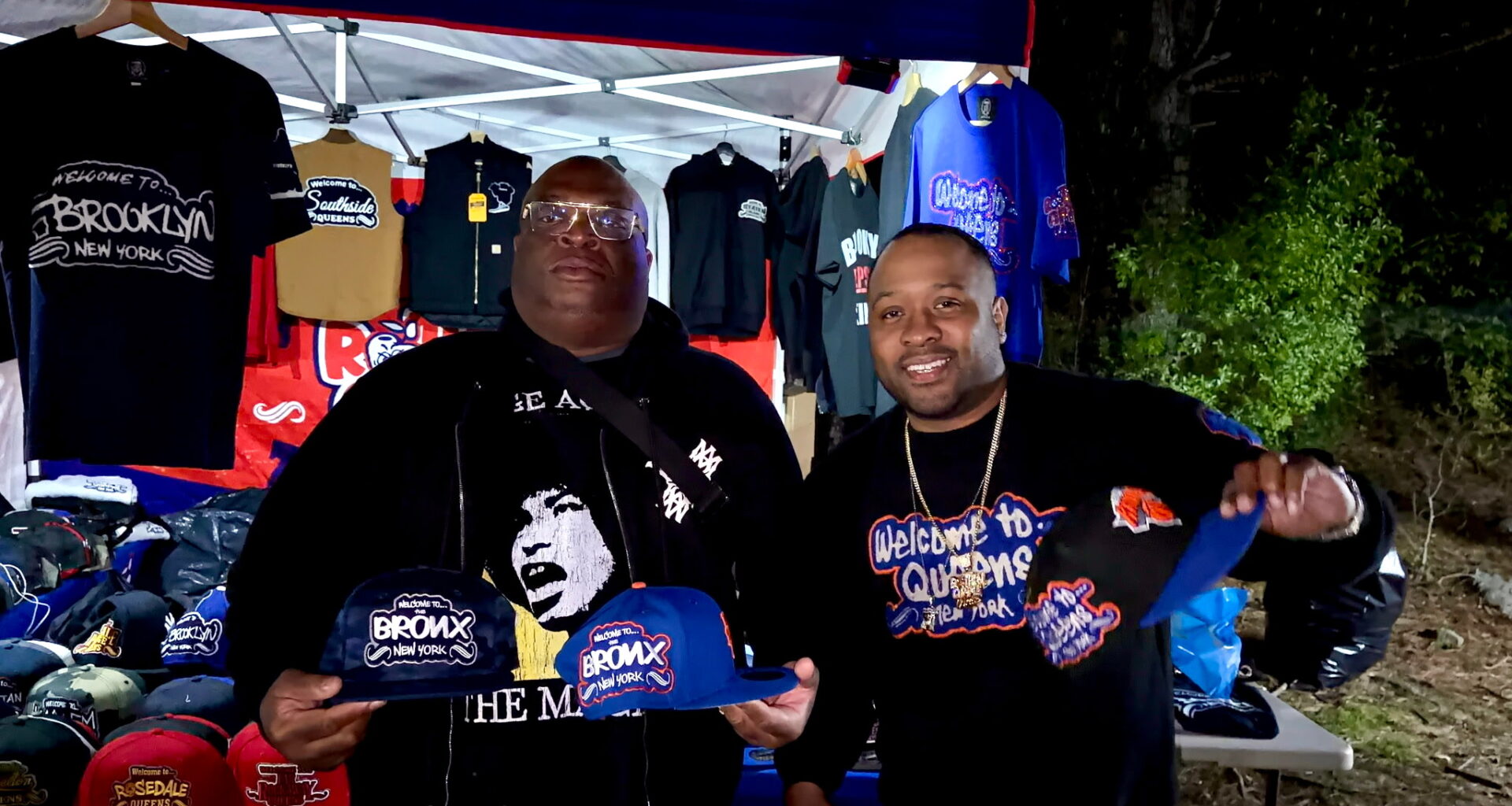
It didn’t sit well with a younger Che Williams that there had never been a community basketball tournament in his neighborhood in Flushing, Queens. He and other neighbors knew the area as the “Wastelanz,” a nickname popularized by the likes of rappers Mic Geronimo and Royal Flush.
But when Williams helped coordinate the area’s first basketball tournament there in the early 2000s, he had no idea it would also be the beginning of a business specializing in hometown pride: Rotten Apple Wear.
The online shop features T-shirts, hoodies and caps representing each borough and nearly every neighborhood and major public housing development in the city, from Astoria to the Woodside Houses. The brand’s roots in hip-hop are documented through photos of the celebrities who have visited and bought merchandise over the years: among them, Nas, 50 Cent, Fat Joe, DJ Kool Herc and LL Cool J.
“I’m the originator of representing neighborhood pride,” Williams said. “Everybody’s doing it now, but they weren’t doing it in the early 2000s. We had some brands, such as FUBU, School of Hard Knocks and Shirt Kings, where they represented different boroughs, but I went a little deeper — from East New York, Brownsville, Harlem, all over. Nobody was putting [in] the neighborhoods.”


 The brand’s roots in hip-hop are evident through rappers who have visited and bought merchandise over the years. Credit: Rotten Apple Wear
The tournament
In summer 2001, Williams helped organize a tournament among four different public housing buildings in the community. He and his friends applied for park and sound permits and secured sponsorships from local delis, supermarkets and pharmacies. Raffle tickets, sponsorships and money from Williams’ family paid for trophies, referees and the food his mom made for the barbecue.
The friendly competition was held on a court at Colden Street and Juniper Avenue. The games involved a separate “peewees” division for children and games for adults who were used to playing together but had never done so with official referees and uniforms. It meant a lot, Williams said, that after years of having to leave their community to participate in tournaments they could finally have their own here.
It was also the start of Williams’ experimentation with what would become his signature merchandise for Rotten Apple Wear. His older brother, who organized an annual basketball tournament in Harlem, gave him some pointers on how to get T-shirts with players’ numbers. Williams hired a graffiti artist he admired to make a basketball print with “The Wastelanz, Queens,” then sought out a cousin in Maryland working in screen printing.
He could make the T-shirts at a lower price point there, so he ordered both the players’ uniforms and a separate batch to sell.
On the day of the tournament, “The Wastelanz” T-shirts — about 10 dozen, at $10 each — sold as quickly as his mom’s free barbecue food. Their popularity sparked the idea to produce more T-shirt designs around neighborhood pride.
Making “Rotten Apple Wear”
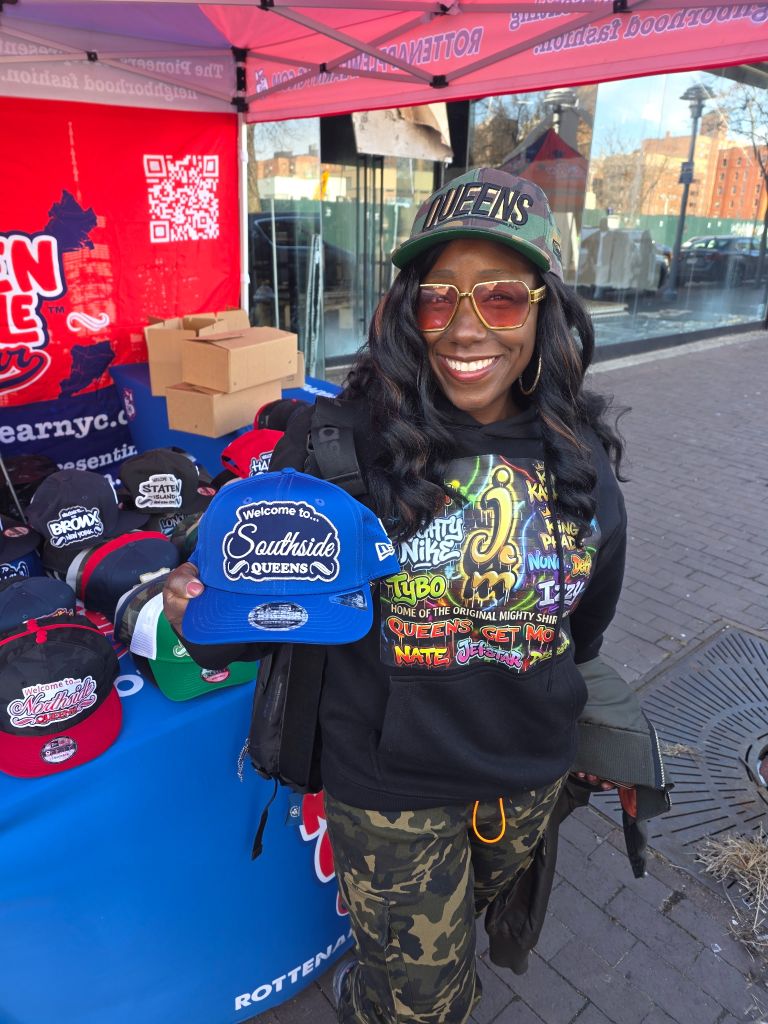 Customers display their finds from Rotten Apple Wear. Credit: Rotten Apple Wear
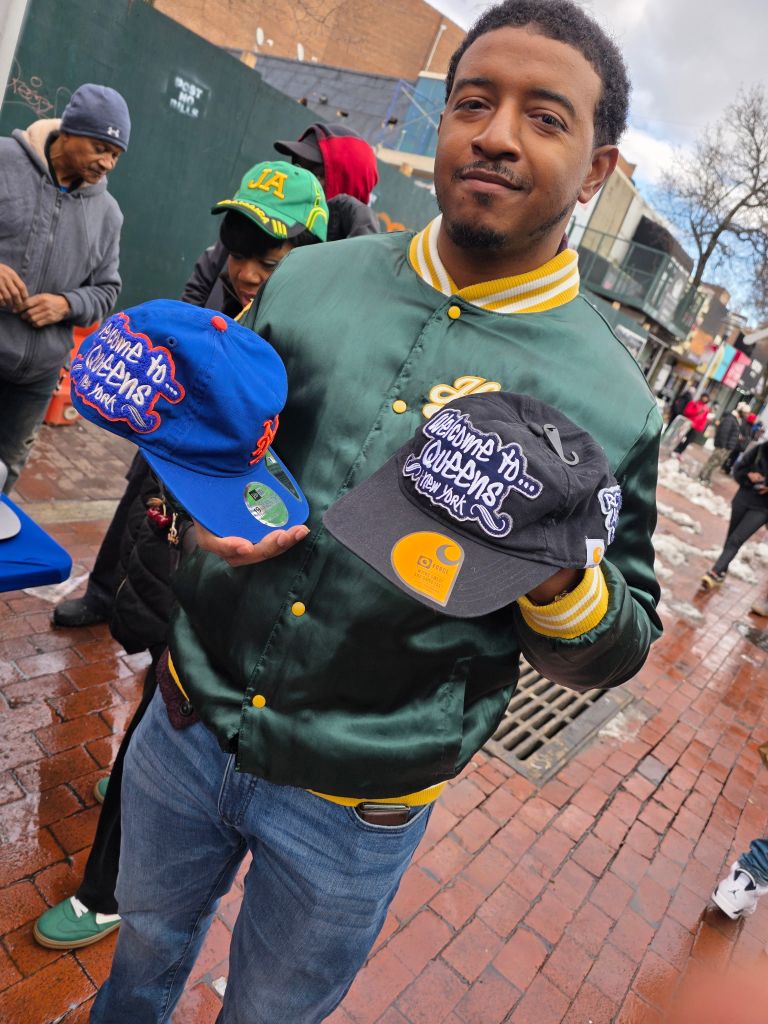
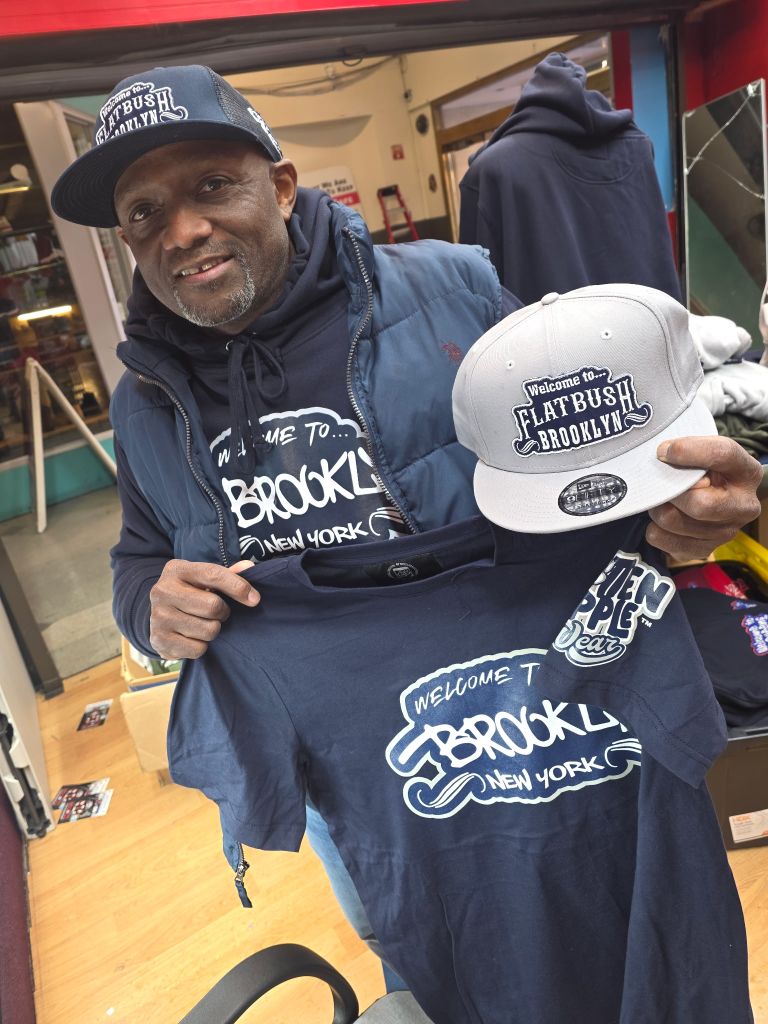
On a visit to his father’s neighborhood in Queensbridge, Williams noticed the sign that said “Welcome to Queensbridge Houses.” It was the same style as all New York City Housing Authority signs. This became the template for designs — not just for shirts representing NYCHA buildings but also neighborhoods from Corona to Queens Village.
The name for his business came from a lyric of one of Nas’ most well-known songs, “The World Is Yours”: “Dwelling in the rotten apple, you get tackled.”
It represented how he viewed his hometown: “New York is called the Big Apple but the rotten apple gets overlooked — the bad parts of the neighborhood, the slums, the ghettos,” Williams said. “But a lot of positive things come out of the rotten apple. We inspire the world: 50 Cent, Nas, Jay-Z. You can’t overlook the rotten part of the apple and you get nutrients from rotten fruit.”
For around six years after his start in 2002, Williams sold his merch out of a backpack, walking through the city. He sold at tables during family day events, block parties and housing project events. He expanded to different boroughs, and his product line grew. . He took neighbors’ feedback to include hoodies, thermals, hats as well as seasonal colors and school and sports colors.
Throughout this distribution, his brand gained recognition through the likes of its sources of inspiration, including Nas, Mobb Deep, 50 Cent, Wu-Tang Clan, Remy Ma and The Game. It became a kind of early organic marketing through celebrity influencers.
In 2009, after attending a major trade convention in Las Vegas, Williams learned more about sourcing, overseas production and wholesale scaling. He introduced bulk ordering and manufacturing from abroad into the business, which helped lower costs.
Shortly after, he opened his first brick-and-mortar store in the Jamaica Coliseum Mall while continuing to sell on the streets. By the 2010s, these operations expanded beyond New York into Atlanta, cities across North Carolina and cities such as Compton and Long Beach, California and Newark and Paterson, New Jersey. Street sales often made more sense than the high costs of a retail store.
Resilience in the face of rotten apples
Williams launched his website in 2022, with help from his graphic designer cousin. Now much of his business is through online ordering and his social media presence, steps that helped him withstand the closing of the Jamaica Colosseum Mall earlier this year. This past holiday season was also the worst ever Williams had faced, he said.
“It’s just a season — it’s ups and downs, just like Wall Street,” he said. “So if this is a down period, I’ve got to wait for my up period. And it’s going to come because this is not the first time you’re going through this. This is a rerun.”
Otherwise, he said, “you go from having a store to not having a store and you’re trying to figure things out, but you don’t want to make a desperate move. You make a desperate move, you fall deep in debt, you fall deep in the red making bad decisions.”
Williams is continuing to focus on his online sales and wholesale partnerships in neighborhoods across the country. And while he is considering having a permanent presence via a street van, he is still out in the streets himself, at seasonal pop-ups and other community events. It’s where it all started.
“I’m the pioneer of representing neighborhood fashion, with receipts,” he said.
To other aspiring pioneers, Williams advises: “No matter who doubts you, believe in your passion and you must persist,” he said. “If you quit, you’ll never know anything but regrets.”