
The H5N1 strain of highly pathogenic avian influenza has spread across the globe, infecting hundreds of birds and mammal species. Few places offer a clearer view of the virus’s spread in urban wildlife than New York state, where the Atlantic Flyway and a layered surveillance system have made the virus easier to track.Scientists and local wildlife rehabilitators in New York City have reported a sharp uptick in suspected avian influenza cases this past winter. The current H5N1 strain is unusual not only for its significant impact on migratory birds, but for its ability to jump to a growing number of mammal species.H5N1 continues to surface in live animal and poultry markets across New York City, after more than a decade of recurring avian influenza outbreaks. Experts say the crowded, mixed-species conditions in these markets can amplify viral spread and create new opportunities for spillover to other species, potentially including humans.If H5N1 can move this readily across species in a city as heavily surveilled and globally connected as New York, experts warn that the risks may be even greater in other urban centers with more migratory wildlife, large live animal markets and weaker surveillance.
See All Key Ideas
NEW YORK — Catherine Quayle has been caring for sick and injured wild animals in New York City for the past 12 years, first as a volunteer at the Wild Bird Fund, the city’s only wildlife rehabilitation center, and now as that NGO’s communications director and a licensed rehabber.
Despite all her experience, she is stunned by what she’s seen at the clinic lately.
“We certainly deal with viruses on a day-to-day basis, but nothing like this,” Quayle said, speaking from the nonprofit’s clinic on the Upper West Side.
For the past four years, the fund has been dealing with a rising tide of suspected highly pathogenic avian influenza cases and operating in “triage mode” — setting up isolation areas, adopting new H5N1 virus protocols and relying on protective gear and regular testing. “People call us every day,” about sick and dying birds, Quayle said. “About Canada geese, especially.”
Geese are just the tip of the iceberg.
In New York state, the H5N1 virus has killed bald eagles, red-tailed hawks, great horned and snowy owls; swans and geese in Central Park; ducks and wild birds at the Queens and Bronx zoos; shorebirds on Long Island; small mammals including raccoons, skunks, opossums, red foxes, bobcats, gray squirrels, muskrats and feral cats. Nationwide, more than 130 domestic cats have been infected since 2022.
“At this point, it’s pretty safe to assume that highly pathogenic avian influenza could appear anywhere in New York state at any time,” said Kevin Hynes, wildlife program leader for the New York State Department of Environmental Conservation (NYSDEC).
Hynes recently held a webinar addressing mounting concerns about the surge. “We were all hoping that like other avian influenza viruses, we might see it for a couple years and then it would disappear — but that doesn’t seem to be the case,” he said. “It just keeps coming back stronger.”
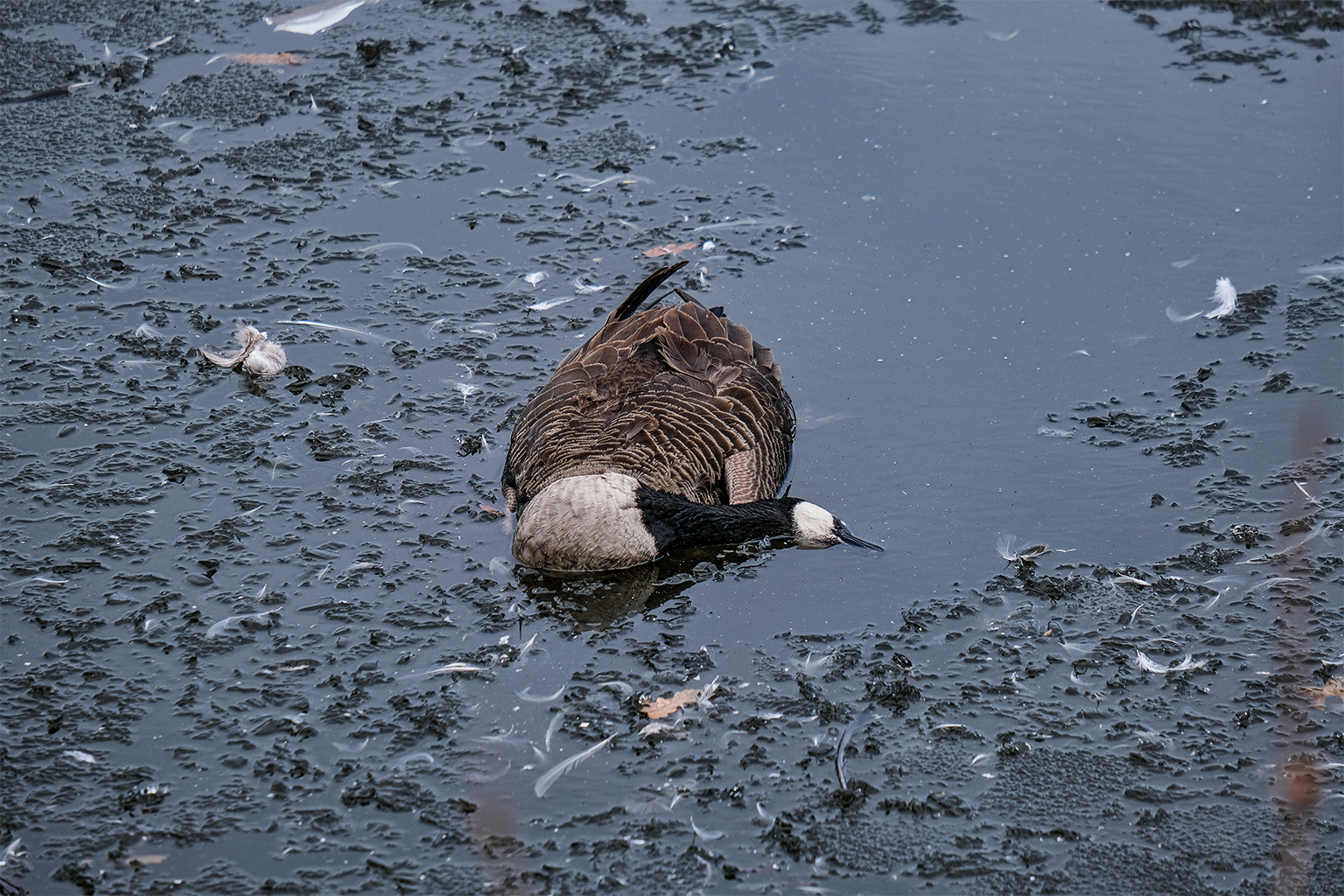 A dead Canada goose (Branta canadensis) floats in New York City’s Central Park Reservoir in early March 2026. Twenty-one geese were seen dead in the reservoir that day. Public health officials warn against people handling sick or dead animals. Image by Cate Twining-Ward.
Rapid spread between species
What sets this strain (known as H5N1 clade 2.3.4.4b) apart from previous strains of avian influenza is the scale of its impact on migratory birds and how easily it jumps from species to species.
In just four years, this H5N1 strain of highly pathogenic avian influenza (HPAI) has swept the globe pole-to-pole. As of December 2025, the virus had infected 598 bird species and 102 mammals. There have also been 990 human infections globally, including 71 in the U.S., though the virus has yet to achieve major spillover to humans.
This viral strain has spread across all four major North American migratory flyways: the Atlantic, Mississippi, Central and Pacific. Movement by the virus along these flyways, particularly the Atlantic and Pacific, has accelerated its spread across North America, contributing to tens of thousands of known infections in wild birds and in species not previously thought to be affected, according to a 2025 study in Nature.
Few places offer a clearer view of H5N1’s spread than New York state. Positioned on the Atlantic Flyway, it offers detailed insights into how the virus behaves in a dense urban ecosystem, not only because of bi-yearly bird migrations through the metro area, but because of New York’s multilayered surveillance system. How deeply H5N1 may have penetrated other less-intensively monitored urban wildlands the world over is largely unknown.
At the NY state level, researchers at Cornell’s College of Veterinary Medicine work with the state’s environmental agency and the U.S. Department of Agriculture Wildlife Services to collect, test and track wildlife samples. In the city, researchers from Mount Sinai Hospital conduct local surveillance, testing samples gathered from parks and local partners such as the nonprofit Wild Bird Fund (WBF).
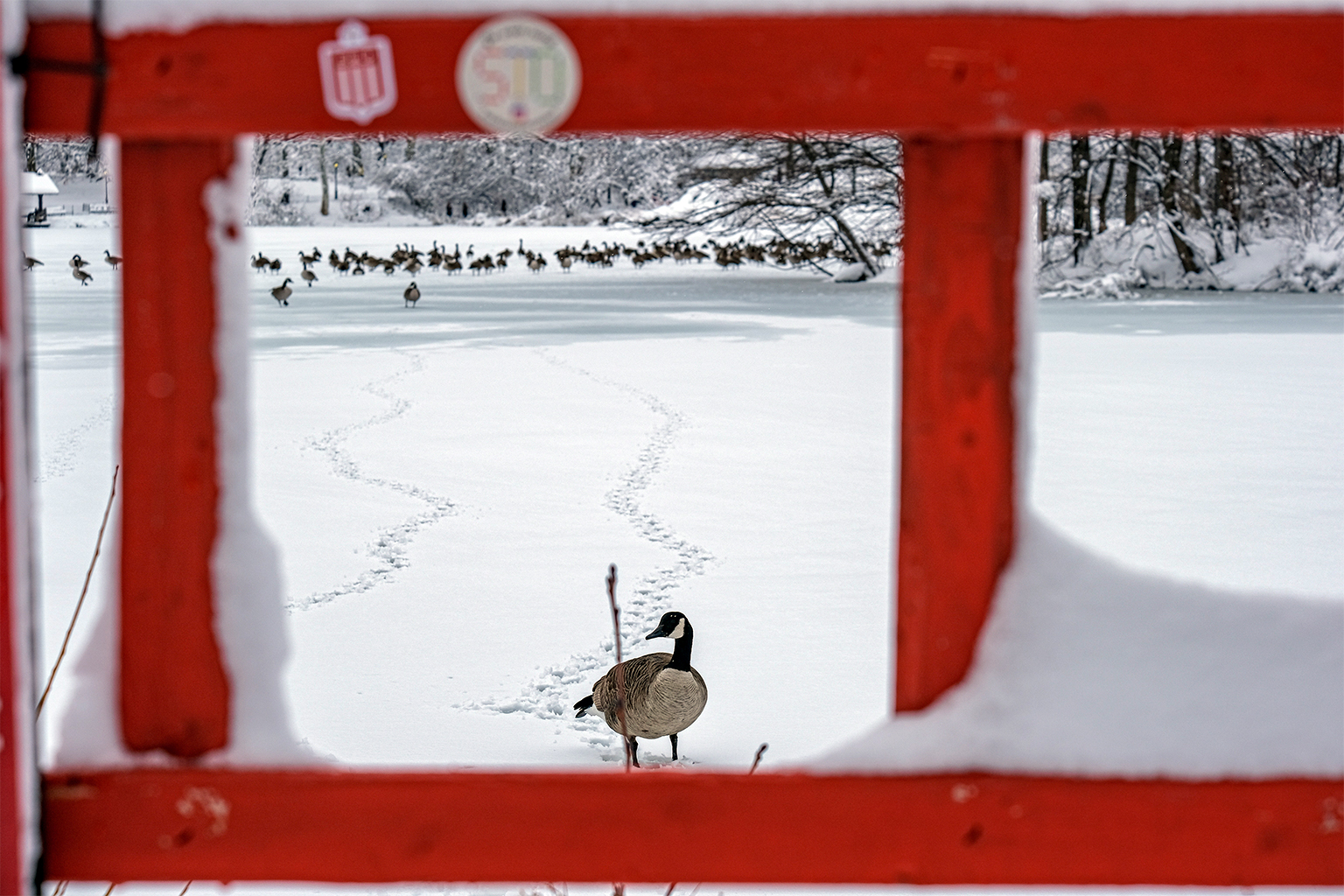 Canada geese cluster on a frozen lake in Central Park during a cold front in New York City. Like cities the world over, New York is host to a wide variety of migratory bird species. Image by Cate Twining-Ward.
The findings are sobering. At WBF, staff have witnessed a “huge uptick” in suspected avian influenza cases this winter. It’s part of a broader trend that the U.S. Geological Survey (USGS) reports has resulted in some of the largest nationwide wild bird morality events yet. Among them, a die-off of roughly 67,200 geese in Kansas was recorded, some ten times larger than any other mortality event in the Central Flyway this year; along with 50,000 deceased eared grebes (Podiceps nigricollis) along the Pacific Flyway, an event twice the size of a similar HPAI die-off the previous winter.
To strengthen surveillance in New York, NYSDEC recently launched a public reporting form (though public health officials warn people against handling sick or dead animals). When suspected cases emerge in new areas or species, scientists are sent to conduct necropsies and genetic analyses to carefully track frequent genetic mutations — changes that facilitate jumps from species to species and could lead to human-to-human transmission.
Infected migratory birds can shed the virus in saliva, mucus and feces, contaminating water sources along their transcontinental routes. In colder temperatures, the virus can remain viable longer, and birds congregate more tightly, further increasing chances of transmission. According to NYSDEC data, the virus has already traded genetic material with low pathogenic influenza viruses, showing how it has changed in just a few years since arriving in North America.
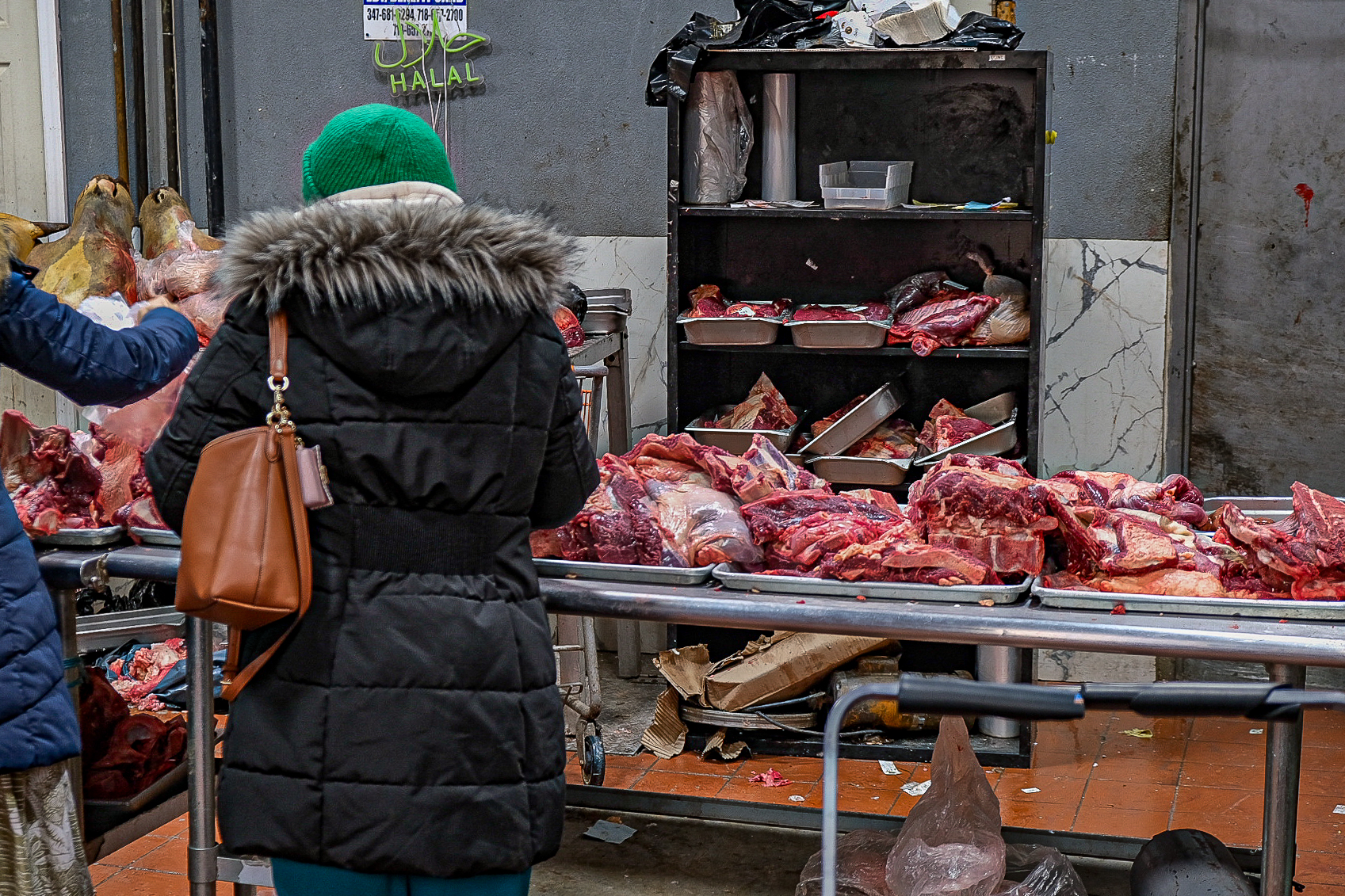 Cuts of mammal meat and organs are laid out for sale at a market in Jamaica, Queens, where customers sort through them using plastic bags over their hands. Image by Cate Twining-Ward.
The wet market problem
Migration, crowding and cold weather aren’t the only amplifiers of avian flu in New York. Live animal and poultry markets also appear to be key culprits. (The working theory is that H5N1 turned pathogenic on crowded poultry farms, then spread widely via migratory birds.)
“For many infectious diseases, especially those with density-dependent transmission like influenza, density is the biggest risk factor,” a senior disease ecologist for the Centers for Disease Control and Prevention (CDC) stated on background. “In the context of a wet market, it’s the combination of high density and high diversity of bird species together, which creates countless opportunities for viral strains to emerge.”
Wet markets sell perishable foods including raw meat and, in some cases, live animals, which may be slaughtered on-site. Though often imagined as exotic or exclusive to the Asian continent, wet markets exist across the globe. What makes a market “wet” is not geography or species, but water: floors routinely hosed down to rinse away the blood and residue of slaughter.
There are wet markets in every New York City borough — more than 80 in total. Most slaughter and sell birds, including chickens, ducks, pigeons, fowl and quail. Roughly a quarter also offer mammals, such as rabbits, goats, sheep and cows. Many are located within just a block of elementary schools, residential buildings and public parks, creating opportunities for viral spillover.
For more than a decade, live bird markets in New York City have experienced avian influenza outbreaks. Most recently, in February 2025, a series of H5N1 detections across the city prompted Governor Kathy Hochul to temporarily shut down all live bird markets for “depopulation” and disinfection.
But even that sweeping intervention failed to stop the problem. In the year since, official reports of bird flu from these facilities have continued to rise, as have cases in wild birds and an increasing number of wild mammals.
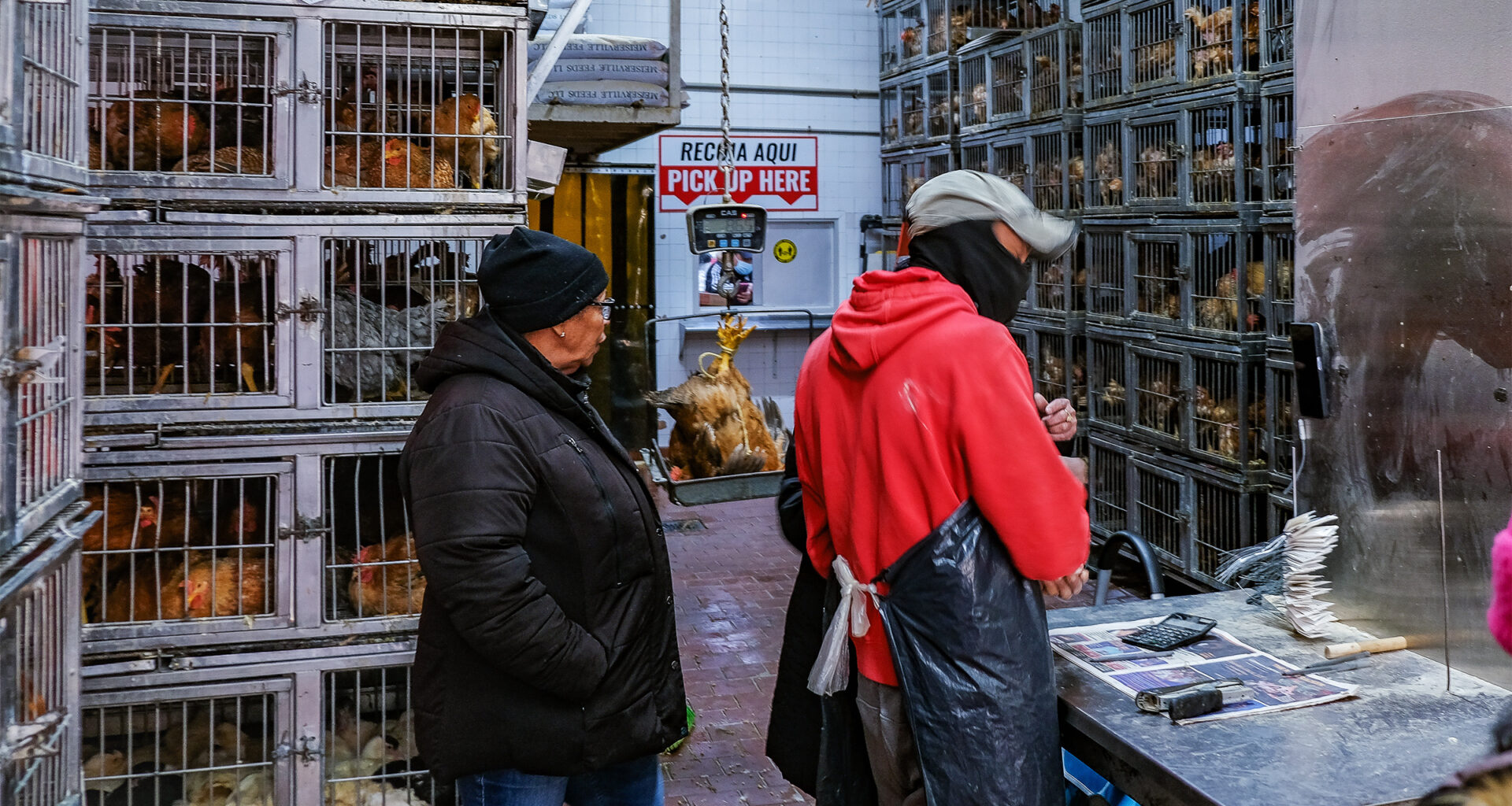
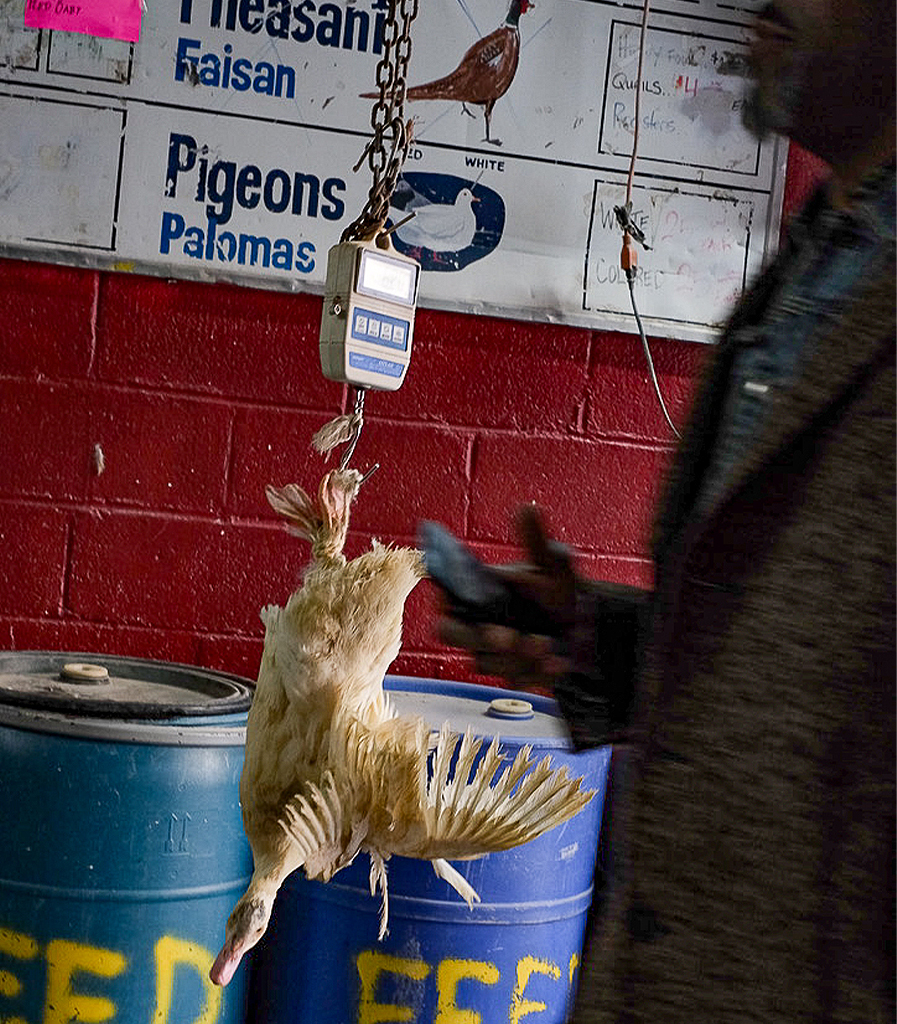 A domestic duck (Anas platyrhynchos domesticus) is weighed after being removed from its cage at a live poultry market in West Harlem. A customer stands nearby. Image by Cate Twining-Ward.
Around the world, wet markets — often located in urban areas — have come under intense scrutiny due to the potential spillover of zoonotic diseases that can jump between wildlife, livestock and humans. It was a wet market in Wuhan, China, that was suspected as an early epicenter for the spread of COVID-19.
In Bangladesh, live bird markets have been described as “putative hotspots” for the maintenance, amplification and spread of avian influenza, endangering both wildlife and human health there. Recent studies from Indonesia, the United States, Hong Kong and Vietnam have all shown that live bird markets can pose significant public health risks.
In a recent podcast, Apoorva Mandavilli, global health reporter for the New York Times, called the current H5N1 outbreak “uncharted territory” for virologists. What worries disease experts most is the virus’s growing capacity to infect new mammalian hosts and the threat that transmission could become airborne.
“Every new species is an opportunity for the virus to acquire new abilities,” Mandavilli said. “The more we let this virus run wild … the more [it will have] enormous opportunities to become adapted and possibly become very good at spreading among people.”
For now, American health officials say the risk to the public remains low, with no evidence yet of sustained person-to-person spread in the United States. But scientists around the world are sounding the alarm.
 Bird crates stacked outside a live poultry market in Jamaica, Queens, where feces and runoff seep into the street and mix with snow. Image by Cate Twining-Ward.
Even in Antarctica, where species are isolated and wildlife populations often small, Chilean scientist Victor Neira told France 24 that H5N1 has “completely spread throughout the Antarctic region” and that “in one or two days it can kill 90 percent or 100 percent of the animals in a given area.”
Megacities like New York face intensifying risks. In just a few years, H5N1 has infected thousands of wild birds and a growing number of mammals. If the virus can move this readily across species in one of the world’s most heavily surveilled urban regions, it raises questions about what may be happening, or about to happen, in other urban centers, especially those with migratory wildlife, large live animal markets and weaker surveillance.
In highly dense, urban environments, even small margins of risk can carry outsized consequences. “New York is almost a worst-case scenario,” the CDC official stated on background. “You can be connected to every corner of the globe within a day. That’s a disease ecologist’s worst nightmare.”
Banner image: A chicken (Gallus gallus domesticus) is weighed at a live poultry market in West Harlem as a customer stands nearby. The stacking of live animal cages allows bodily waste to drop into the cages below, facilitating disease spread. Image by Cate Twining-Ward.
Avian flu strikes California’s northern elephant seals; area quarantined
Citations:
Chrzastek, K., Lieber, C. M., & Plemper, R. K. (2025). H5N1 clade 2.3.4.4b: Evolution, global spread, and host range expansion. Pathogens, 14(9), 929. doi:10.3390/pathogens14090929
Damodaran, L., Jaeger, A. S., & Moncla, L. H. (2026). Ecology and spread of the North American H5N1 epizootic. Nature, 649, 432-441. doi:10.1038/s41586-025-09737-x
Martin, G., Becker, D. J., & Plowright, R. K. (2018). Environmental persistence of influenza H5N1 is driven by temperature and salinity: Insights from a Bayesian meta-analysis. Frontiers in Ecology and Evolution, 6, 131. doi:10.3389/fevo.2018.00131
Trock, S. C., Gaeta, M., Gonzalez, A., Pederson, J. C., & Senne, D. A. (2008). Evaluation of routine depopulation, cleaning, and disinfection procedures in the live bird markets, New York. Avian Diseases, 52(1), 160-162. doi:10.1637/7980-040607-Reg
Worobey, M., Levy, J. I., Malpica Serrano, L., Crits-Christoph, A., Pekar, J. E., Goldstein, S. A., … Andersen, K. G. (2022). The Huanan Seafood Wholesale Market in Wuhan was the early epicenter of the COVID-19 pandemic. Science, 377(6609), 951-959. doi:10.1126/science.abp8715
Islam, A., Rahman, M. Z., Hassan, M. M., Epstein, J. H., & Klaassen, M. (2023). Determinants for the presence of avian influenza virus in live bird markets in Bangladesh: Towards an easy fix of a looming one health issue. One Health, 17, 100643. doi:10.1016/j.onehlt.2023.100643
Henning, J., Hesterberg, U. W., Zenal, F., Schoonman, L., Brum, E., & McGrane, J. (2019). Risk factors for H5 avian influenza virus prevalence on urban live bird markets in Jakarta, Indonesia: Evaluation of long-term environmental surveillance data. PLOS ONE, 14(5), e0216984. doi:10.1371/journal.pone.0216984
Kung, N. Y., Morris, R. S., Perkins, N. R., Sims, L. D., Ellis, T. M., Bissett, L., … Peiris, M. J. S. (2007). Risk for infection with highly pathogenic influenza A virus (H5N1) in chickens, Hong Kong, 2002. Emerging Infectious Diseases, 13(3), 412-418. doi:10.3201/eid1303.060365
Duc, T. T., Bach, T. H., Van, T. P., Chanachai, K., Prarakamawongsai, T., Padungtod, P., … Van, M. T. (2018). Avian influenza outbreaks and surveillance in live bird markets, Quang Ninh Province, Vietnam, 2015-2017. Outbreak, Surveillance, Investigation & Response Journal, 11(3), 1-7. doi:10.59096/osir.v11i3.263052
FEEDBACK: Use this form to send a message to the author of this post. If you want to post a public comment, you can do that at the bottom of the page.
