
“It comes and goes. It never has gained any traction,” said Dorothy Morehead, a Sunnyside resident who has lived in the neighborhood since 1968.
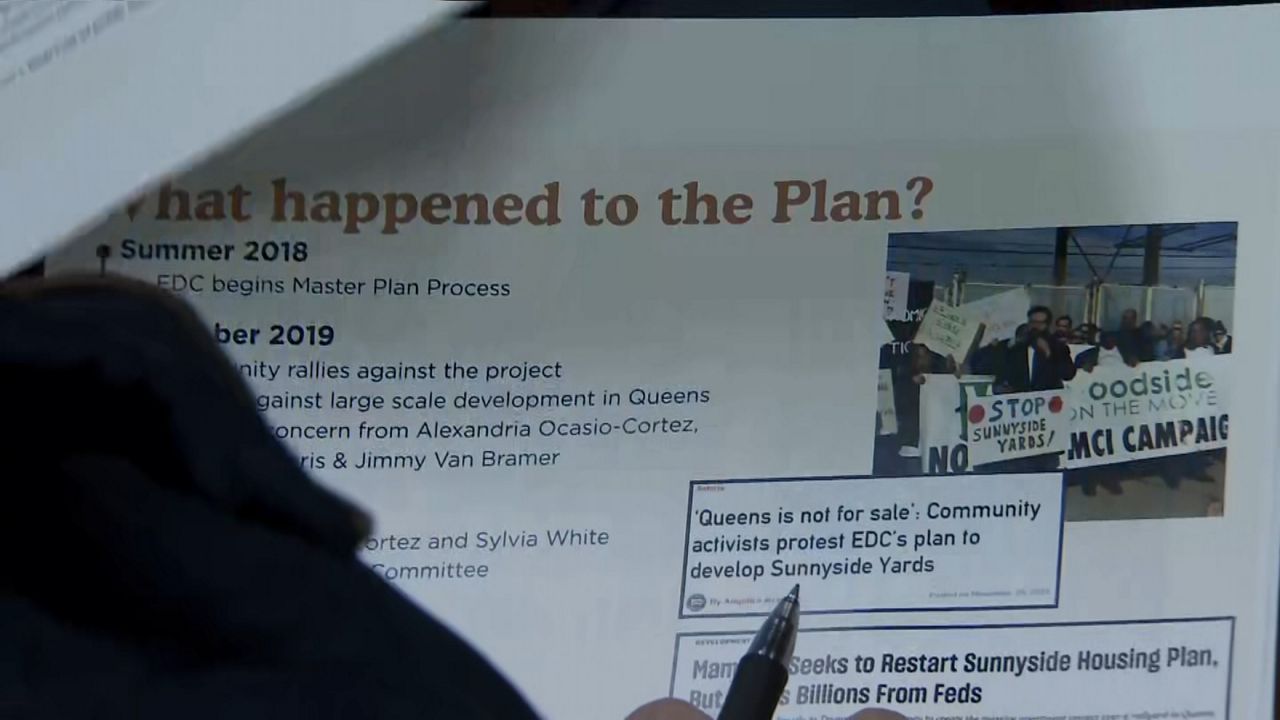
That’s how many longtime residents feel about plans to develop Sunnyside Yard, a project that has been proposed for decades but never realized. The plan was shelved in 2020.
What You Need To Know
A long-stalled plan to build over Sunnyside Yard is being revived, with a proposed $21 billion federal price tag
The project could include 12,000 affordable housing units, parks and schools, but is not yet shovel-ready
Residents raised concerns about affordability, timeline and whether the project would benefit the community
City leaders say the plan depends entirely on securing federal funding, which remains uncertain
Now, Mayor Zohran Mamdani is seeking to revive the proposal for a massive 180-acre housing development built over the rail yard in Queens, which serves Amtrak, Long Island Rail Road and NJ Transit.
Mamdani pitched the project to President Donald Trump in the Oval Office in February.
City Councilmember Julie Won said her office has received a surge of calls from residents since that meeting. She said the city would need $21 billion in federal funding to move forward.
Won hosted an information session Monday to update residents on the proposal, where many raised concerns about affordability and who would benefit.
“What’s our guarantee, and I know there’s really no easy answer to this, if we use 21 billion dollars of taxpayer money to create profit for for-profit developers that we’re not gonna another Hudson Yards or Atlantic Yards that’s gonna be 100 percent luxury like where is the deep affordability,” said one resident who asked a question during the meeting.
“You’re talking 21 billion dollars and housing isn’t even a part of this plan so who’s benefiting from this deck not the community we need housing,” said another attendee.
Won stressed the proposal is not shovel-ready.
However, a 2020 master plan for the site estimated it could create 12,000 units of affordable housing, along with 60 acres of parks and open space and 10 to 12 schools.
Won said City Hall should commit to the Uniform Land Use Review Procedure, or ULURP, to ensure community input for a project of this scale.
“We have to understand where the federal administration is, and how are we getting this appropriation of 21 billion dollars,” Won said.
Some residents said there may be faster, more cost-effective ways to address the city’s housing shortage. The $21 billion price tag would cover only the construction of a platform over the rail yard and would not include the cost of building housing on top.
“I think there are better faster more economical ways to build housing. This will take 40 years and cost billions,” said Morehead.
Won said the city will not move forward without securing federal funding, though it remains unclear when or if that funding will be approved. Mamdani has said the president expressed interest in the project and agreed to continue discussions.