
FRANCESCO DAMICO
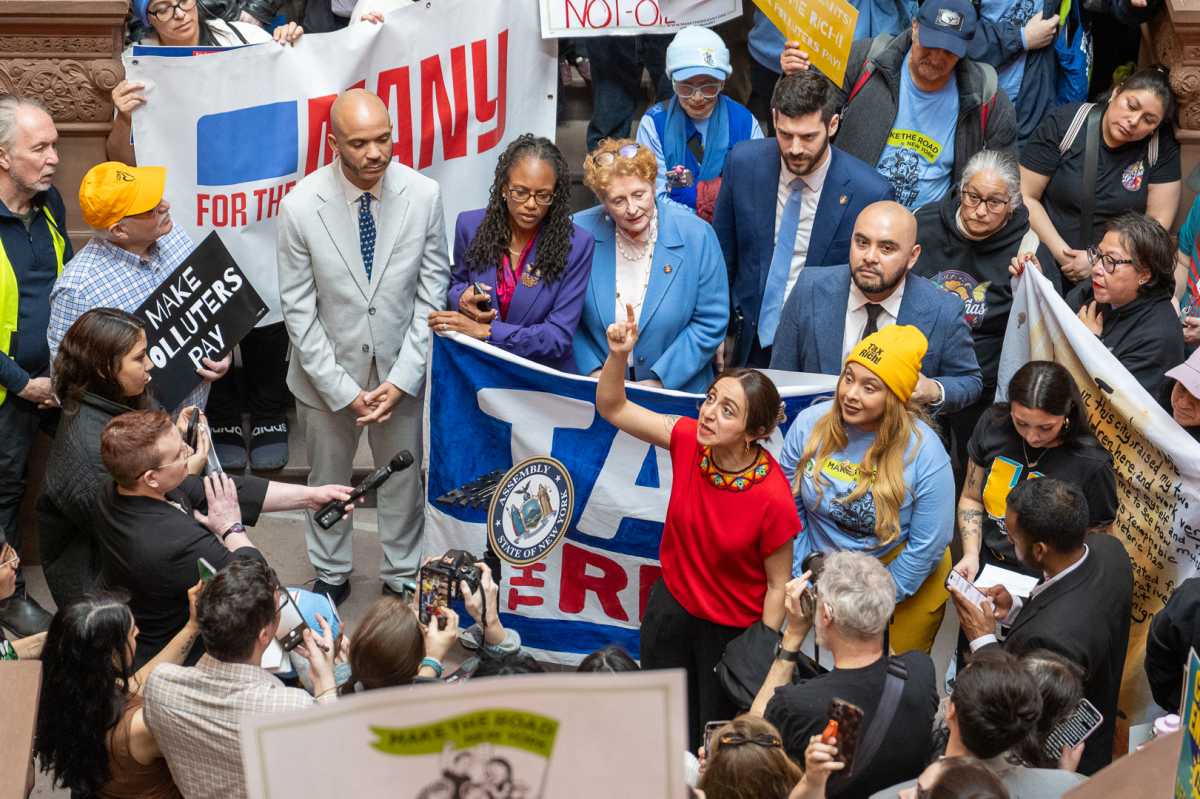
Photo courtesy of Assemblymember Diana Moreno’s Office
At a time when households and small businesses are struggling to afford their energy bills and corporate utilities continue to raise rates in New York, Governor Hochul wants to weaken the Climate Leadership and Community Protection Act (CLCPA), our landmark Climate Law, in an alleged attempt to lower costs. That deeply flawed argument risks making energy more expensive in the long run and would lock us into the kind of volatility that has defined the fossil fuel era.
If the past several years have taught us anything, it is that the climate crisis is already here and that vulnerable communities bear the brunt of its consequences. In my district of Astoria, children suffer from disproportionate asthma rates from peaker plant pollution, giving our neighborhood the unfortunate nickname of “Asthma Alley.” In Queens, Hurricane Ida highlighted the deadly impacts of flooding in low-income immigrant neighborhoods and the inequality in access to disaster recovery resources.
We’re also suffering from an affordability crisis and know that fossil fuels are the primary driver of energy price spikes. Natural gas prices soar based on global supply disruptions, extreme weather and international wars — not to mention the rising costs of maintaining NY’s aging
fossil gas infrastructure.
Weakening the CLCPA will not insulate us from both the human and material costs of the climate crisis, but instead lock us into fossil fuel dependence for years to come, further endangering New Yorkers.
Clean energy, on the other hand, is the only path to both affordability and energy independence. Renewable wind and solar power is now the fastest and least expensive way to add new energy to the grid. Investments in energy efficiency reduce consumption permanently and lower bills month after month. Scaling renewables and efficiency is one of the most effective long-term cost-control strategies available to the state. Fully implementing the Build Public Renewables Act with 15GW of publicly owned renewable energy projects will supercharge our transition
away from fossil fuels and lower utility bills through the REACH Program. Fully implementing the Climate Law would strengthen state and local economies and create upwards of 30,000 jobs a year statewide, including nearly 10,000 jobs a year in NYC installing heat pumps, weatherizing homes, expanding EV charging networks and building community-led solar.
Weakening our climate laws will not lower our bills. It will only slow the transition away from the polluting fuels that cause price volatility in the first place which continuing our complicity in accelerating the human-made climate crisis.
As the Trump administration destroys federal climate protections and drags us into endless wars, state leadership becomes more critical. Laws like the CLCPA are now the primary safeguard against unregulated pollution and unchecked greenhouse gas and co-pollutant emissions.
New York has been a national leader on climate, and retreating would send the wrong signal to other states, as well as local businesses and frontline communities living at the crossroads of climate pollution who are counting on the state to stay the course.
The CLCPA’s targets are ambitious because the risks we face are real: intensifying heat waves, stronger storms, worsening air quality, rising costs and the threat of an unlivable future. Weakening the framework meant to address those threats would not make them disappear — it
would simply make New York less prepared.
The CLCPA is more than an emissions statute — it is also a commitment to environmental justice. The CLCPA requires that 35-40% of clean-energy and climate investment benefits flow to disadvantaged communities — neighborhoods like mine that have borne the brunt of air pollution, extreme heat, flooding and public health burdens for decades.
Those provisions are central to the law’s design, and weakening the CLCPA would reduce investment in precisely the communities that face the highest risks. It would mean fewer resources for cleaner air, resilient housing, energy efficiency upgrades and local job creation in areas that have historically been overlooked.
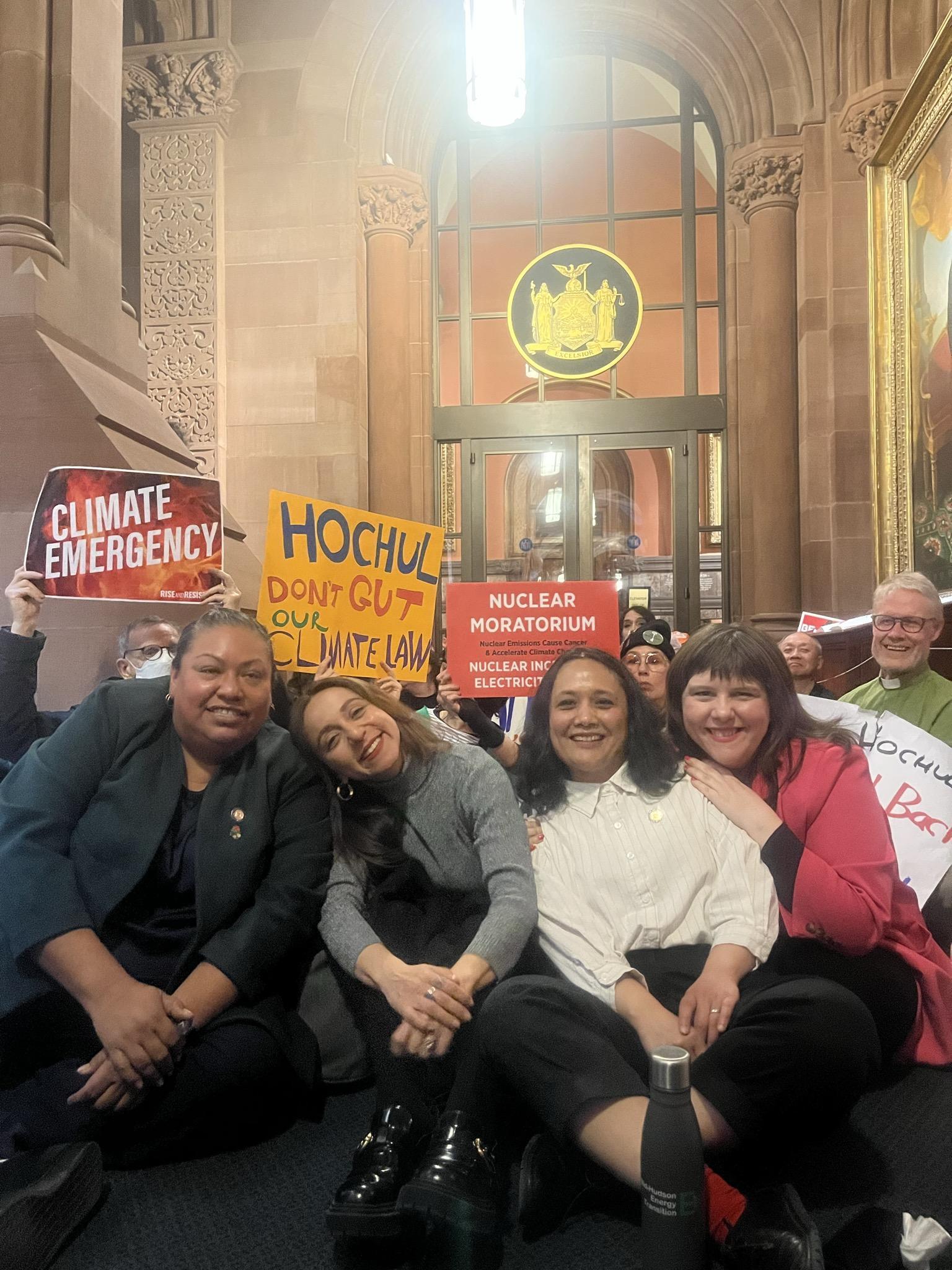 Photo courtesy of Assemblymember Diana Moreno’s Office
Lower energy bills won’t magically appear by rolling back NY’s Climate Law or taking irresponsible actions to tie NY to fossil fuels forever.
As federal protections crumble, New York State’s responsibility only grows. Holding the line on the CLCPA protects public health, economic stability and long-term affordability. It honors commitments to disadvantaged communities. And it sends a clear message that New York
intends to lead.
The solution is not to slow the transition. It is to accelerate it with a clear understanding that the cost of inaction is far greater than the cost of progress.