
Less than twenty-four hours after Iran and the United States agreed to a cease-fire, a disagreement surfaced over whether or not the terms applied to Lebanon, where Israel is bombarding Hezbollah.
Iran said the deal included Lebanon. The U.S. said it did not.
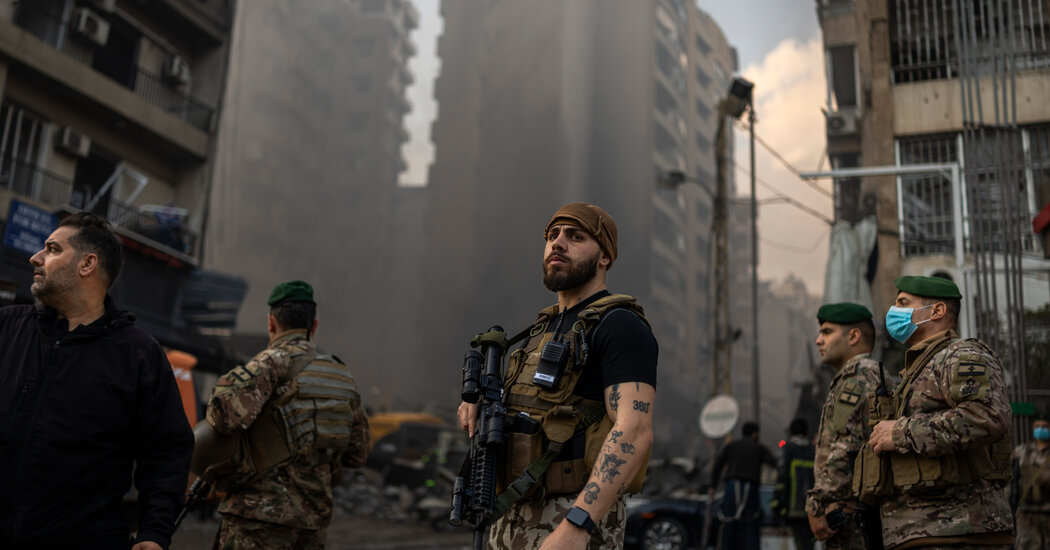
Israel attacked more than 100 targets in Lebanon, including many buildings in Beirut, on Wednesday in one of the deadliest attacks on the country during the war. Lebanese officials said 180 people were killed and 900 were injured. The attacks risked unraveling the fragile cease-fire between Tehran and Washington.
“Once again you have shown that you do not understand the concept of a cease-fire, and only fire will bring you to your senses. So you must wait for it,” said Ebrahim Azizi, the head of the Iranian Parliament’s national security committee, in a social media post.
Vice President JD Vance said the cease-fire focused only on Iran. Lebanon, he said, was not part of the deal, and the Iranians misunderstood.
It was not immediately clear if Iran planned to retaliate by striking Israel, or if Tehran was merely toughening its rhetoric to pressure President Trump to rein in Israel. But Iran was clearly signaling that protecting Hezbollah and including it in the cease-fire was a priority.
“If we show weakness for one of our allies, in this case Hezbollah, and abandon it, it would send the wrong message to all our allies that we don’t have their back even when we ask that they have ours,” said Mehdi Rahmati, an analyst in Tehran, in a telephone interview.
Mr. Rahmati said Hezbollah’s entering the war in early March and launching rocket attacks on Israel had strained and distracted Israel’s air defenses, allowing for more precision attacks from Iran and adding a layer of psychological pressure on Israel.
Hezbollah and its Shiite constituents have also suffered heavy blows in recent weeks. Israeli airstrikes have devastated their stronghold towns and neighborhoods in southern Lebanon and in southern Beirut, and more than a million people have been displaced in Lebanon, mostly Shiites.
Two Iranian officials, one of them a Revolutionary Guards member who has worked with Hezbollah, said in interviews that Iran had a moral responsibility and a strategic interest in insisting that the cease-fire include Hezbollah. The officials, who asked not to be named because they were discussing sensitive issues, said Iran wanted to show its other allies in the region that it would not abandon them if they intervened militarily on Iran’s behalf.
Iran funds, trains and arms several militant groups known in the region as the “axis of resistance.” They include Hezbollah, Shia groups in Iraq, the Houthis in Yemen and Hamas and Palestinian Jihad in Gaza.
The Houthis didn’t enter the conflict until March 28, and even then not in full force. Iran had planned to leverage the Houthis’ ability to close the Bab al-Mandab Strait, at the mouth of the Red Sea, if the war intensified and Americans staged a ground invasion, the officials said. The Houthis said they had a “duty” to help a fellow Muslim country.
Iran’s foreign minister, Abbas Araghchi, said in a social media post that the United States must choose between a cease-fire and war via Israel, and that it cannot have both.
There were also reports of cease-fire violations in Iran, with an attack on Lavan island in the Persian Gulf and drone sightings in several locations including the capital, Tehran, and the city of Bushehr. In Shushtar, a city in southwestern Iran, a 7-year-old girl was killed and six people injured when Iran’s air defense shot down a drone, according to a statement from local officials.
Pakistan’s prime minister, Shehbaz Sharif, who brokered the cease-fire, said in a social media post that violations had occurred across the war theater and urged all sides to allow for peace negotiations.
Sina Azodi, the director the Middle East department at George Washington University said that Iran wanted “a clear slate, and no war anywhere in the region when it reaches a long term cease-fire with the United States.” He continued, “If they allow the attacks on Hezbollah to continue, it risks dragging them back into conflict.”