
No New York 
Geeta Dayal
Adele Bertei’s book forefronts the many women artists, filmmakers, and musicians who were integral to the no wave scene.
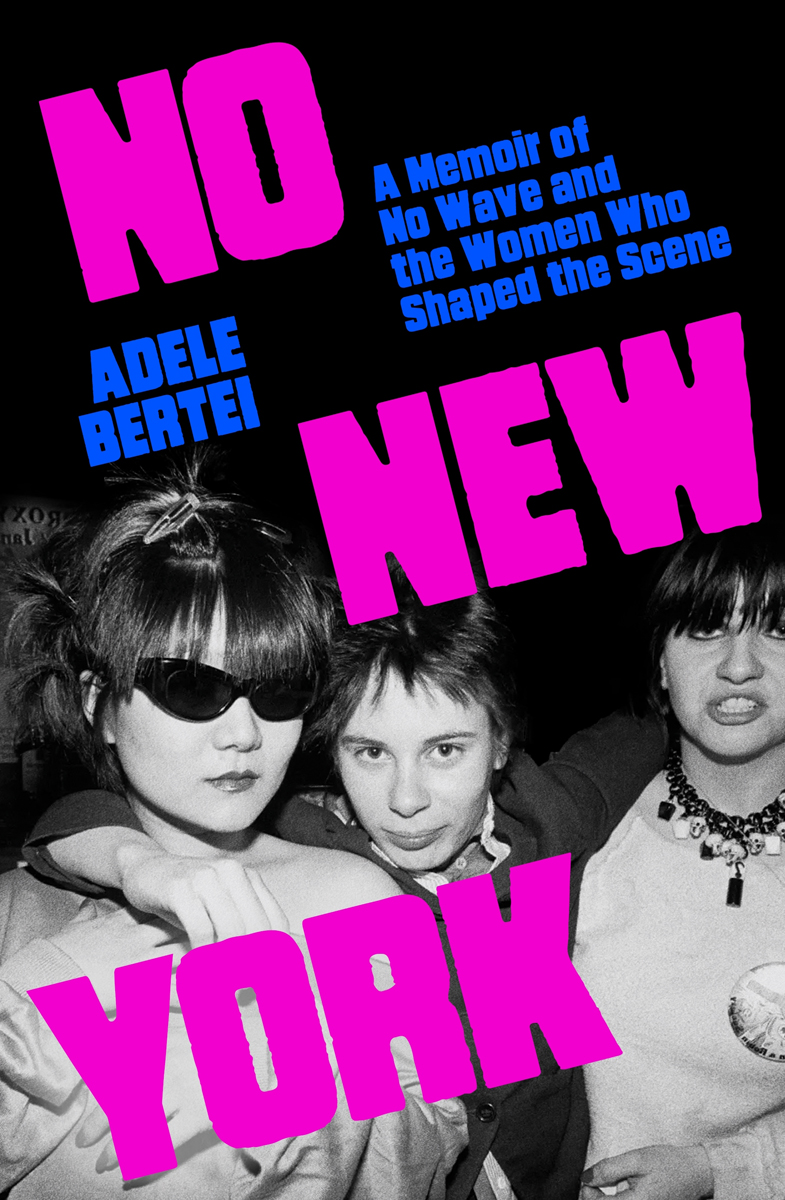
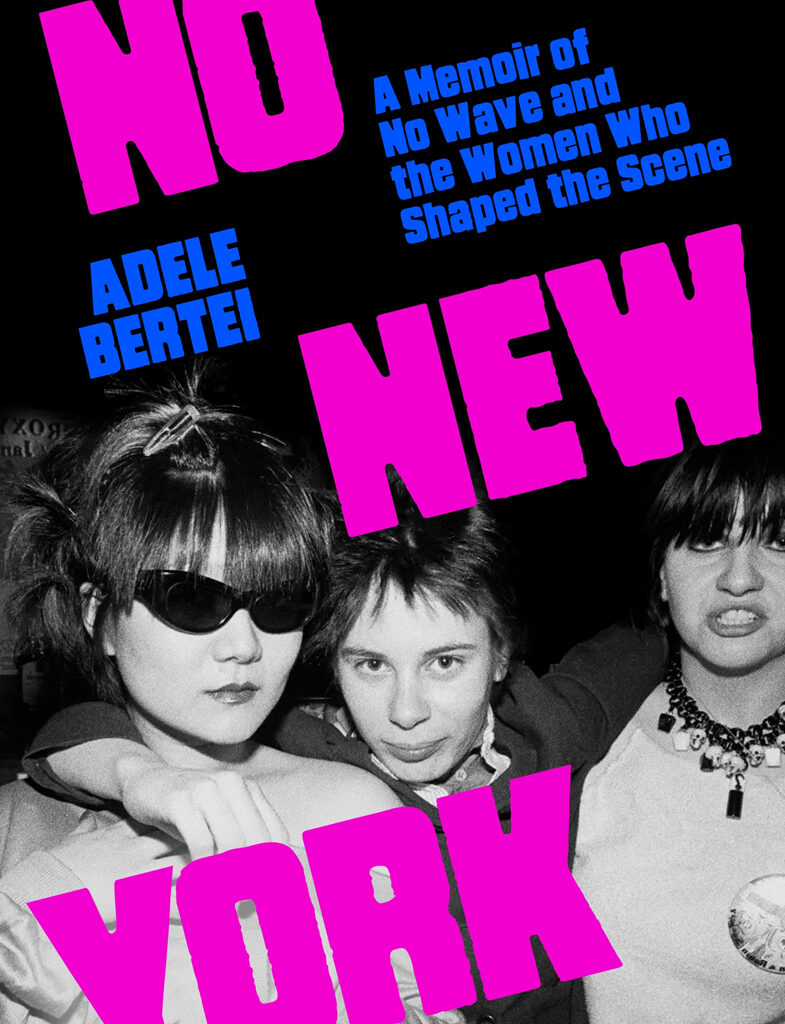
No New York: A Memoir of No Wave and the Women Who Shaped the Scene, by Adele Bertei, Beacon Press, 328 pages, $29.95
• • •
The beating heart of a music scene lies not in its finished albums, but in all the messy stuff in between. The New York “no wave” genre that emerged in downtown Manhattan in the late 1970s and early 1980s was emblematic of this idea. A lot of strange and captivating music came out of the scrappy and chaotic subculture of no wave, but many people only know one LP, called No New York, a compilation of songs by four bands—Mars, DNA, James Chance and the Contortions, and Teenage Jesus and the Jerks. It was a neatly packaged snapshot, but it didn’t do much justice to how wild and varied no wave actually was.
Adele Bertei’s new book, No New York, chronicles no wave from a unique vantage point. She was not an outside observer but an active participant, playing for a stint in the Contortions before fronting her own band, The Bloods. No New York is a memoir, of sorts, but it follows the weird logic of the music—smart, sharp, vivid, fragmented. She organizes the book as a series of short vignettes about various people and situations, without trying to build a coherent narrative arc. It’s an entertaining read, but a rocky and sometimes confounding one, with no tidy resolutions or neatly linear chronology. The inclusion of numerous black-and-white photos from the time period without captions (descriptions are listed at the very end of the book) only heightens the disorientation; the pictures obfuscate as much as they illuminate.
It begins with Bertei’s arrival in Manhattan in 1977 from Cleveland, Ohio. She quickly connects with an underground scene around the East Village, SoHo, and the Lower East Side. One of the first people she meets is Nan Goldin, with whom she is immediately enraptured. “Her skin was nearly translucent, as milky white as her string of pearls,” Bertei writes. “And the way she tilted her head when she laughed—the pearls cradling just so in the embrace of her collarbone. I watched how she dazzled with her smile.” This is the first in a long series of romances that Bertei documents, in crystal-clear detail.
Bertei’s photographic memory for anecdotes of events that occurred over forty years ago is impressive; she writes with exacting precision, as if they happened yesterday. In her colorful prose, bygone venues like Max’s Kansas City, the Mudd Club, and CBGB come alive again. You can picture graffiti-covered walls and smell the stench of cigarettes. She has a talent for describing visual elements—a silky black dress, a derelict street, a tousled blonde hairstyle. Regarding her friend, the late rock critic Lester Bangs, she writes: “Lester’s apartment was a mess of typed pages, assorted rock ephemera, empty food containers and beer cans. A narrow path snaked through the stepped-on pizza boxes, leading to the couch where, in the seams and cracks, a confetti of pharmaceuticals mixed it up with crumbs of unknown origin.” Such small details, like the contours of a room, let the reader live inside of the story.
Her experiences playing with James Chance and the Contortions are described in stark accounts that make it sound like the group constantly hovered at the brink of total collapse. The concerts were unpredictable affairs that sometimes descended into chaos. Instability is an ongoing theme in No New York—with relationships, friendships, band projects, finances—and the issues seem to accelerate as the book progresses.
Bertei doesn’t hide the uglier parts of the downtown circuit—addiction, sexism, deception, exploitation. She doesn’t romanticize her life; she does not dwell in nostalgia. It is all there for everyone to see. By the end, No New York becomes about survival, and the slow-motion collapse of her world due to the AIDS pandemic and several other factors.
The book’s greatest contribution is not in its discussion of men like Bangs or Chance, but in its centering of women. The standard version of this musical history puts mostly male figures in the spotlight. Bertei puts women first—from Goldin to Kiki Smith to Kathy Acker, and many others. She rearranges the canon, expanding the historical record of no wave to include many women artists, filmmakers, and musicians, not just as an aside or a footnote, but as major protagonists in the story.
Where No New York begins to stumble is in its lengthy chronicling of addiction—which, while certainly brave to document in all its gritty realism, becomes harder and harder to read about for its mind-numbing repetition. It is a theme that is looped back to again and again. The scenarios get worse and worse—overdoses abound; people pass away. For Bertei, these experiences eventually and slowly lead to redemption, culminating in AA meetings and a sober lifestyle.
Bertei does not want us to look at the past from a safe distance, but to meet it head-on, time-traveling through all its hardships and heartaches. One wonders, though, if the book could have been edited down and shortened somewhat. What could have been a tighter, more focused memoir on no wave and the characters surrounding it becomes a more disordered, rambling tale in its grim and thorough accounting of several chemical-laden escapades.
Today, downtown Manhattan has been completely transformed, and the cheap rents that helped make no wave possible vanished long ago. Museum retrospectives, documentaries, and commemorative plaques have taken the place of what once was. But we should not be wistful about the past, because, as Bertei writes, “No wave was never meant to last. Self-destruction was inherent in the DNA of the scene’s fierce, combustible resistance to commodification.” In that sense, No New York is about more than just no wave; it is also an exhilarating celebration of community and the creative spirit.
Geeta Dayal is an arts critic and journalist specializing in twentieth-century music, culture, and technology. She has written extensively for frieze and many other publications, including the Guardian, Wired, the Wire, Bookforum, Slate, the Boston Globe, and Rolling Stone. She is the author of Another Green World (Bloomsbury, 2009), a book on Brian Eno, and is currently at work on a new book on music.
Adele Bertei’s book forefronts the many women artists, filmmakers, and musicians who were integral to the no wave scene.