
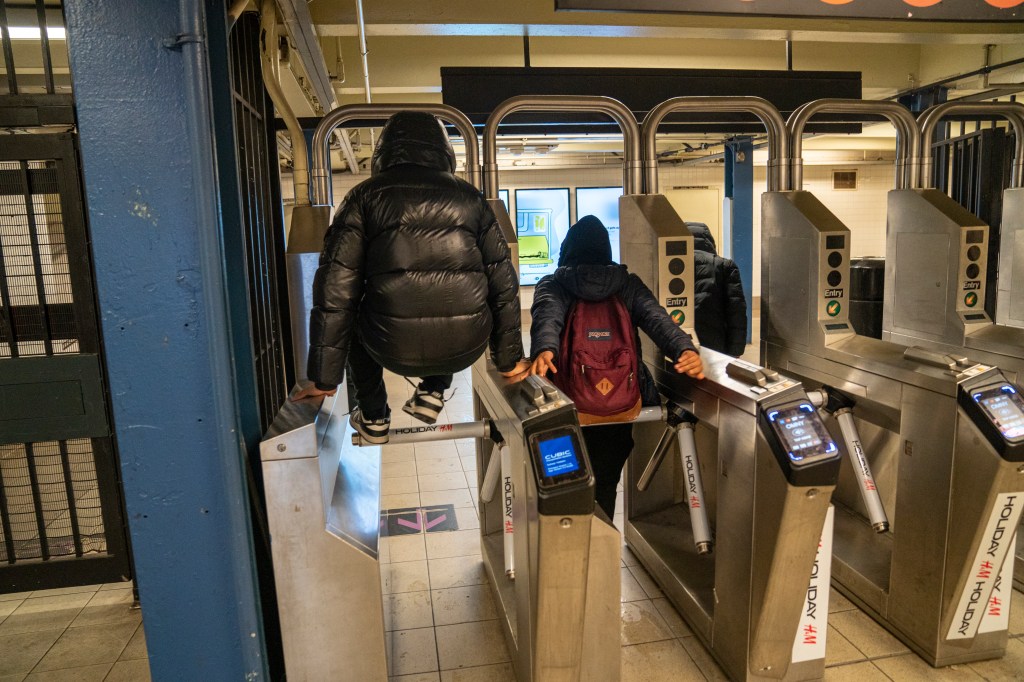
Fare evasion is a massive, well-known problem, costing the MTA nearly $1 billion in unpaid bus and subway fares in 2024 alone, according to the Citizens Budget Commission — $568 million on buses and $350 million on the subway.
The MTA knows this and, to its credit, has taken steps to address it. The agency has installed new fare gates, deployed “Evasion and Graffiti Lawlessness Eradication” (EAGLE) inspection teams on buses, and is weighing bus monitors — actual humans stationed onboard to watch people pay.
But these tactics share a common limitation: none is fully deployed across a system that carries millions of riders a day, none is impervious to evasion, and each comes with ongoing complexity and cost. It’s hard to imagine bus monitors squeezing through a packed M15 at rush hour — exactly when and where the problem is worst.
There’s also a political headwind. Mayor Mamdani made free buses a signature campaign issue. Whatever you think of that policy, the message has a side effect: when the mayor says buses should be free, it’s not a stretch for riders to wonder why they’re still paying.
The MTA keeps reaching for sticks. It’s time to try a carrot.
Specifically: turn every tap into a lottery ticket.
This isn’t a gimmick. Businesses and governments have long used gamification to encourage behavior. And New Yorkers already love the lottery: city residents purchase more than $1.3 billion in tickets each year. This is a city that runs on the thrill of maybe.
Here’s how it would work. The MTA already runs OMNY, its tap-and-ride system, which tracks every fare. That infrastructure could power a simple monthly raffle: every compliant tap earns an entry. At the end of each month, one rider wins $100,000.
Start with a three-month pilot — call it Tap and Win, a natural extension of the MTA’s own tap-and-go language. Three winners, total cost: $300,000. That’s less than one-third of 1% of the roughly $1 billion lost annually to fare evasion. If it doesn’t work, little is lost. If fare evasion drops, the MTA could fund the program year-round with recovered revenue.
“Tap and Win” could even borrow logic from the very successful congestion pricing program and increase prizes during peak travel periods — holidays or major events like the World Cup — to nudge riders toward transit instead of gridlock-inducing rideshares. We can combat fare evasion and congestion in tandem.
The policy case is simple. The political case may be even stronger.
A lottery doesn’t punish anyone. It doesn’t profile anyone. It doesn’t require confrontation on a bus. It rewards the millions of New Yorkers who already do the right thing — and gives everyone else a reason to join them.
Imagine the campaign: real New Yorkers, real Tap and Win winners, cameras at the turnstile the morning after the drawing. A bodega worker from Flatbush. A nursing aide from the Bronx. A retiree from Jackson Heights who’s been riding the No. 7 train for 40 years.
These are the people the MTA serves. Give them a shot.
Three months. Three winners. $300,000. That’s the price of finding out if New York City can make honesty feel lucky. It shouldn’t hurt that this could also be a lot of fun.
Harrigan, a board member of Tech:NYC, is cofounder and managing partner of Company Ventures.