
One‑third of the food we eat depends on a tiny worker most people rarely think about – the honey bee. But across the U.S., beekeepers have seen honey bee colonies collapse at alarming rates.
Now a team of Texas A&M AgriLife Research scientists is looking inside the hive for answers. A new research effort is exploring how the reproductive health of honey bee queens and their mates, or drones, shape and strengthen the survival of colonies.
The AgriLife Research team will look at parasites, disease and environmental stressors like weather and chemicals that are putting growing pressure on the important pollinators supporting a significant share of the nation’s food supply.
Juliana Rangel, Ph.D., AgriLife Research entomologist and professor of apiculture in the Texas A&M Department of Entomology in the College of Agriculture and Life Sciences, leads the new five‑year, U.S. Department of Agriculture-funded project fittingly named SWARM – Sustainable Ways to Advance Reproductive Management in Honey Bees.
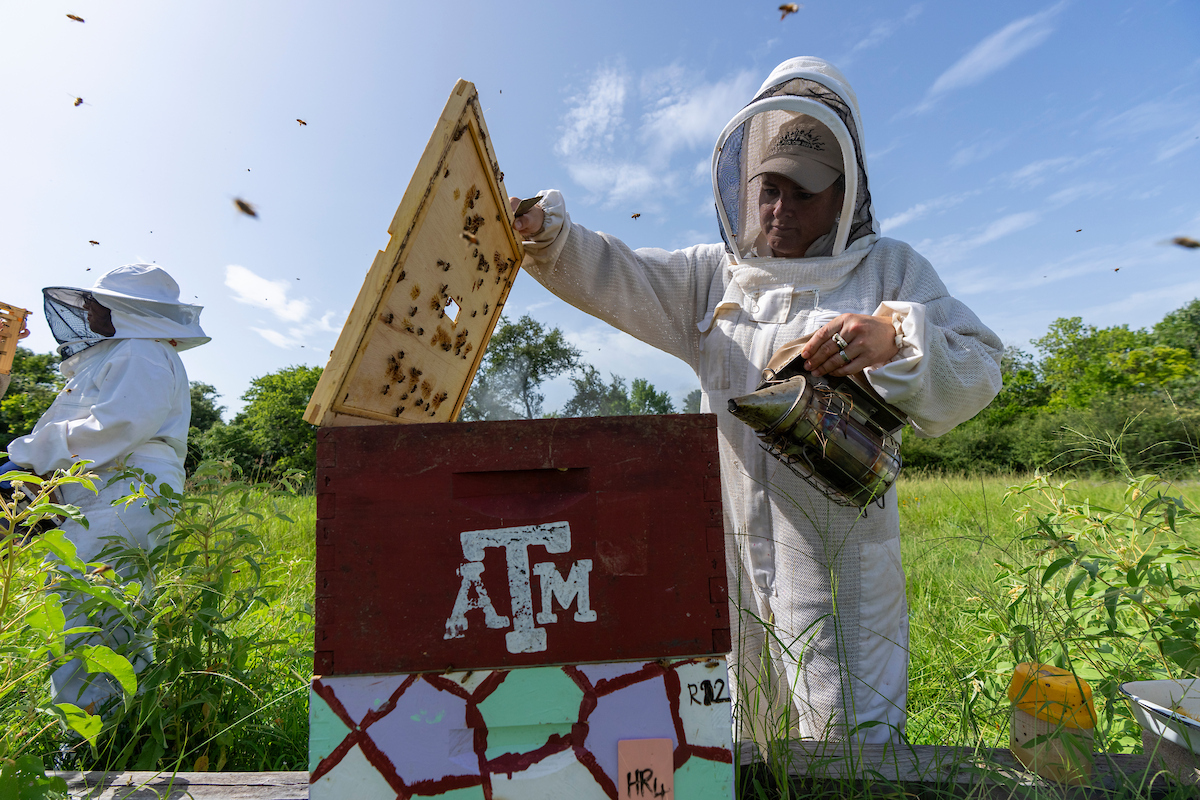
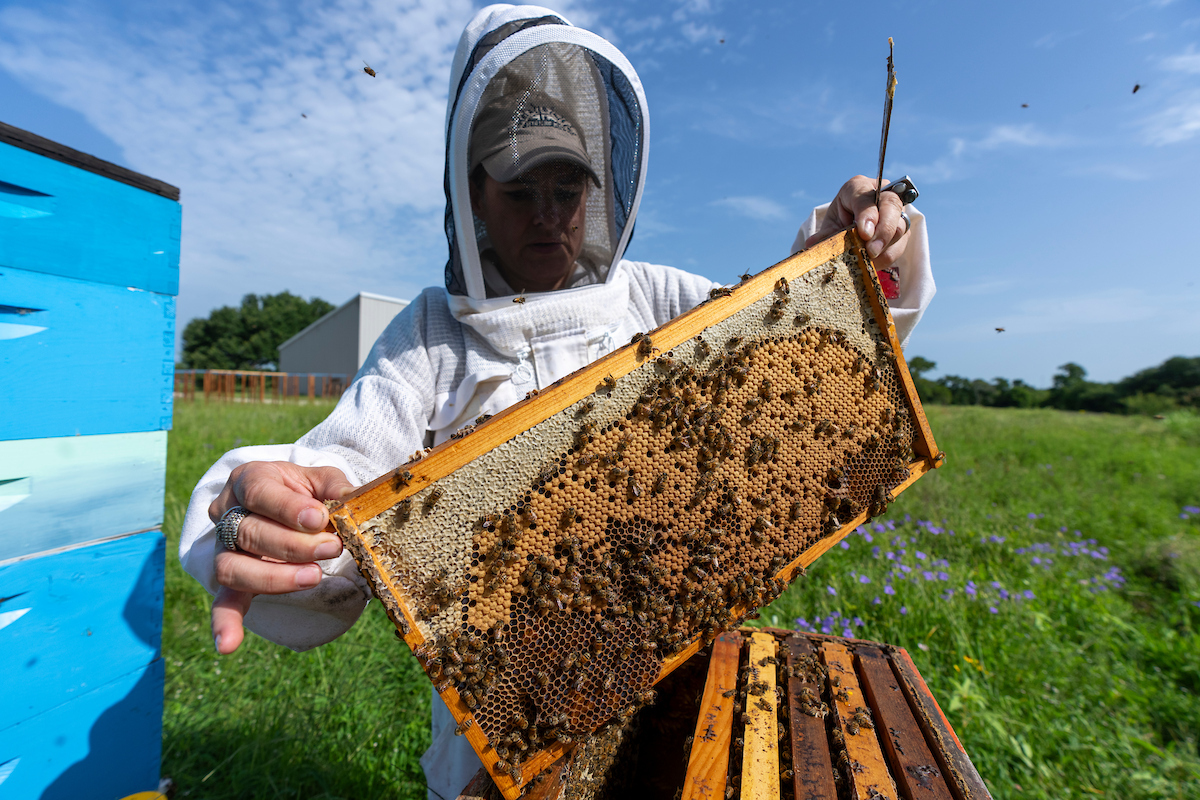
Juliana Rangel, Ph.D., and her team, which includes colleagues in Ireland, are studying honey bee species found in the U.S. alongside native Irish bees to identify genetic characteristics that could improve drone and queen reproductive health and ultimately make colonies in the U.S. more resilient. (Michael Miller/Texas A&M AgriLife)
The project brings together researchers across disciplines and continents to better understand how environmental stress affects the way queens and drones grow, mate and ultimately keep colonies healthy.
“This couldn’t have come at a timelier moment because of issues with high colony losses,” Rangel said. “If we can help improve the reproductive health of the queens that head these colonies, then we can help improve colony health, productivity and sustainability.”
Rangel is joined on the project by department colleague and assistant professor Erick Motta, Ph.D., AgriLife Research scientist whose research focuses on microbial communities and their dynamic relationships across ecological and agricultural systems, and Nancy Ing, Ph.D., AgriLife Research scientist and professor in the Department of Animal Science and Department of Veterinary Integrative Biosciences, whose expertise includes genetics and reproductive biology.
“Healthier queens mean healthier colonies, and that strengthens the pollination systems that our food supply depends on.”
Juliana Rangel, Ph.D.
Texas A&M AgriLife Research entomologist
International collaboration to improve beehive health
The project also includes collaborators in Northern Ireland and the Republic of Ireland, where scientists face other environmental challenges affecting bee reproduction.
Rangel and team are partnering with Irish colleagues to identify reproductive characteristics across in the Irish bee population that could help colonies in the U.S. remain more resilient under environmental stress.
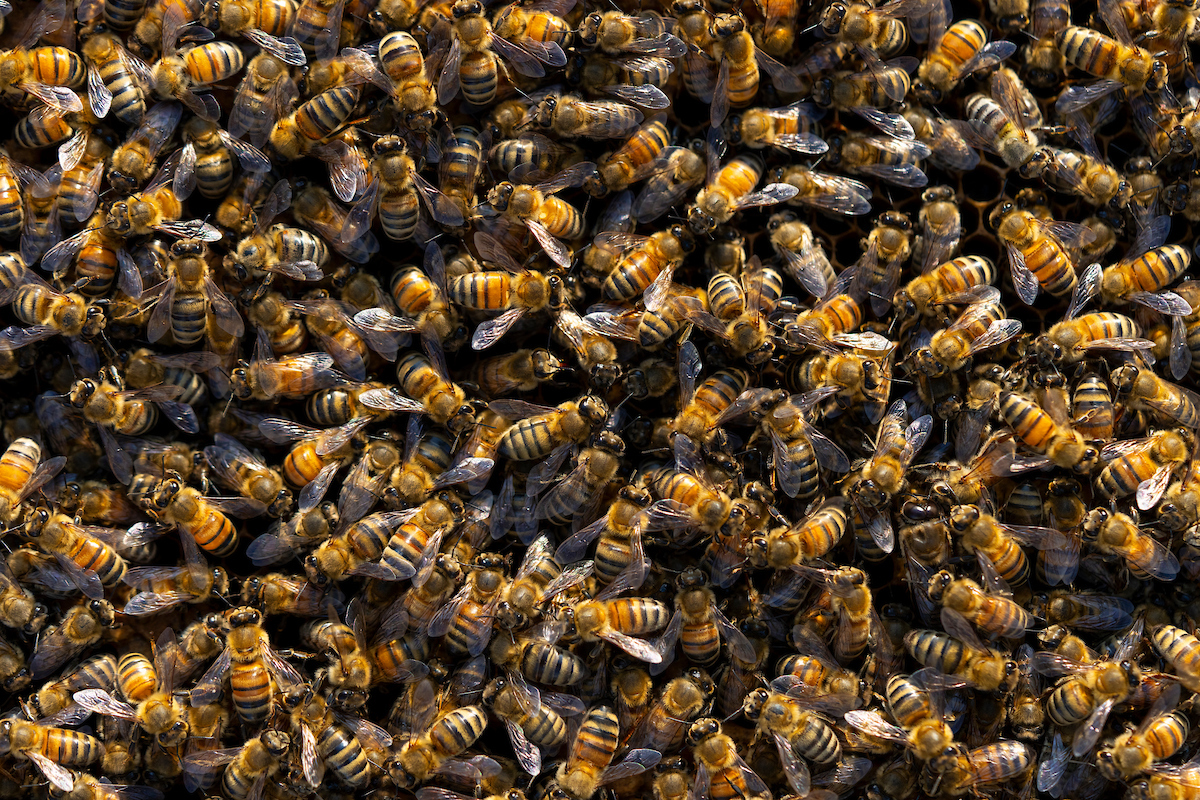
A honey bee colony depends on one queen, who mates with 12-15 drones during brief, risky flights early in her life. According to Rangel, the number of drones she mates with, the quality of their sperm and the viability of what she stores in her reproductive organ, known as a spermatheca, determine how long she can sustain the colony.
But environmental pressures can disrupt this delicate process.
In Texas, Rangel said obstacles often include high pathogen levels in developing colonies, nutritional stress and pesticide residues in the nectar, and pollen that the bees forage. The team will examine how each of these factors affects both queens and drones — from nuptial flight behavior to sperm count and viability.
In Ireland, honey bees face a different challenge. Queens have a very short mating season due to frequent rain, which limits the opportunity for mating flights. The short window and challenging conditions decrease the likelihood that queens travel far, often leading to inbreeding, which weakens colonies over time.
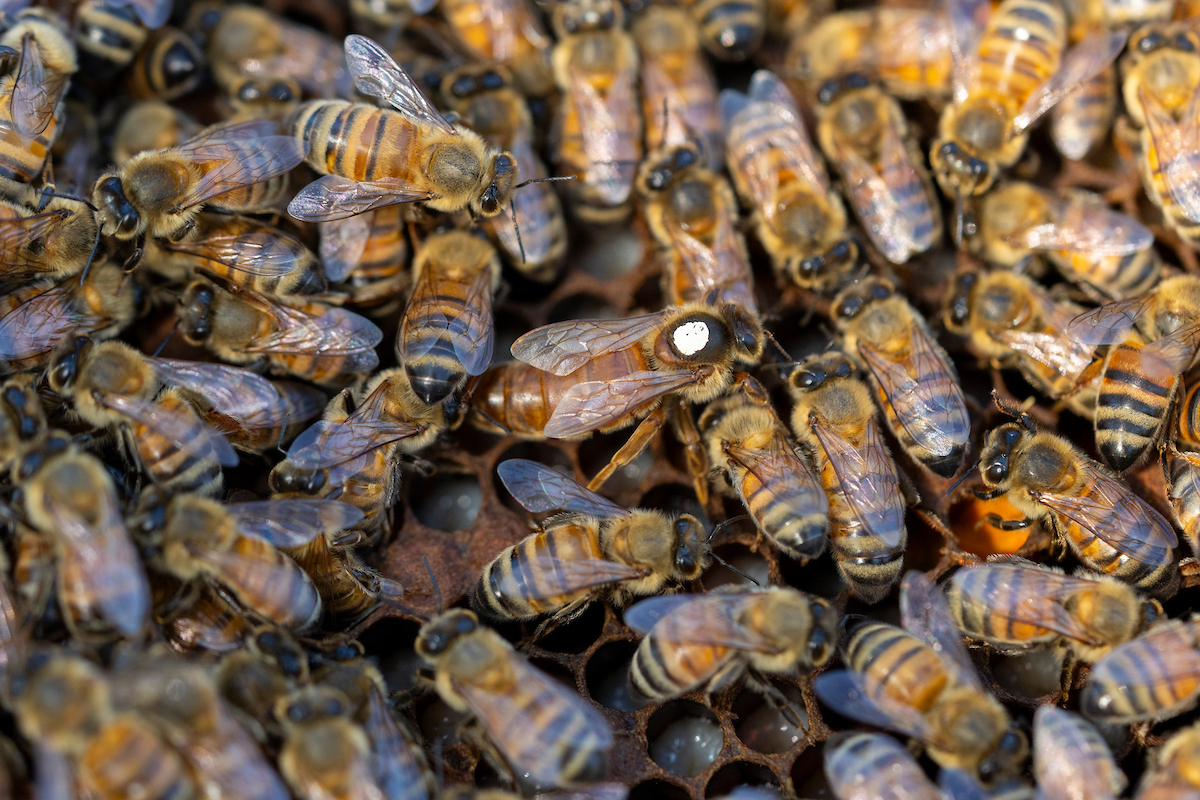 Queen bee (marked) health and reproductive resilience is a major focus among Texas A&M AgriLife Research and Department of Entomology scientists seeking solutions that address recent high rates of colony collapse across the U.S. (Michael Miller/Texas A&M AgriLife)
New tools and practical solutions for beekeepers
Beyond advancing scientific understanding, Rangel believes the project could provide practical applied science and tools for beekeepers.
One of the project’s most groundbreaking components is the search for molecular “marker RNAs” inside queen-laid eggs. These tiny biological signatures could allow beekeepers to assess queen fertility without harming her. A reliable queen fertility test would be a significant advancement for beekeepers, Rangel said.
This project also includes an outreach component. Texas A&M AgriLife Extension Service specialists will develop beekeeper surveys, expand queen‑rearing workshops and deliver new training in Texas and Ireland based on the research findings.
“The goal is to continue improving the reproductive health of queens and drones,” she said. “Healthier queens mean healthier colonies, and that strengthens the pollination systems that our food supply depends on.”
Texas A&M AgriLife Research and Texas A&M AgriLife Extension Service turn science into solutions by advancing innovative research and delivering knowledge that supports beekeepers. Honey bee research and outreach is just one way scientists and specialists impact producers, communities, and protect the food supply.

Share or print this post: