
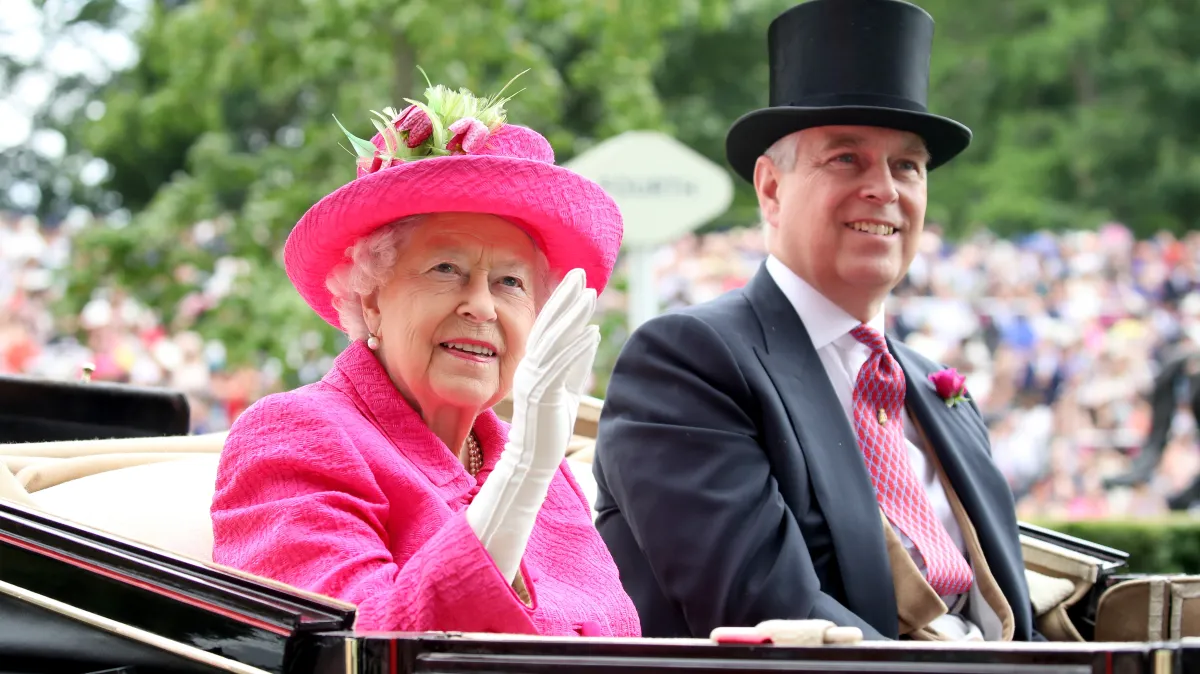
There is a lot to respect about Queen Elizabeth II: the duration of her reign (at 70 years, the longest by a British monarch), her sure grasp of her constitutional role and her commitment to a lifetime of public service. Even the crustiest of republicans can usually muster some sneaking admiration for her.
On the other hand, even the most fervent of monarchists ought to concede that she was not very interesting. From birth she was expected to accede to the throne, and she did. She married Prince Philip when she was 21, and loved him constantly until his death when she was 94. She liked horses and she liked corgis. She worked hard and expected the rest of the royal family to do the same.
The Queen was good at stability and discretion, neither of which makes for a thrilling narrative. Her family had plenty of scandal in her lifetime — from her uncle Edward VIII’s abdication, via Charles and Diana’s infidelities, up to Megxit and the comprehensive disgrace of the former Prince Andrew — but none of it involved her directly.
Books newsletter
News, reviews, author interviews and suggested reads from our literary editors.
Sign up with one click
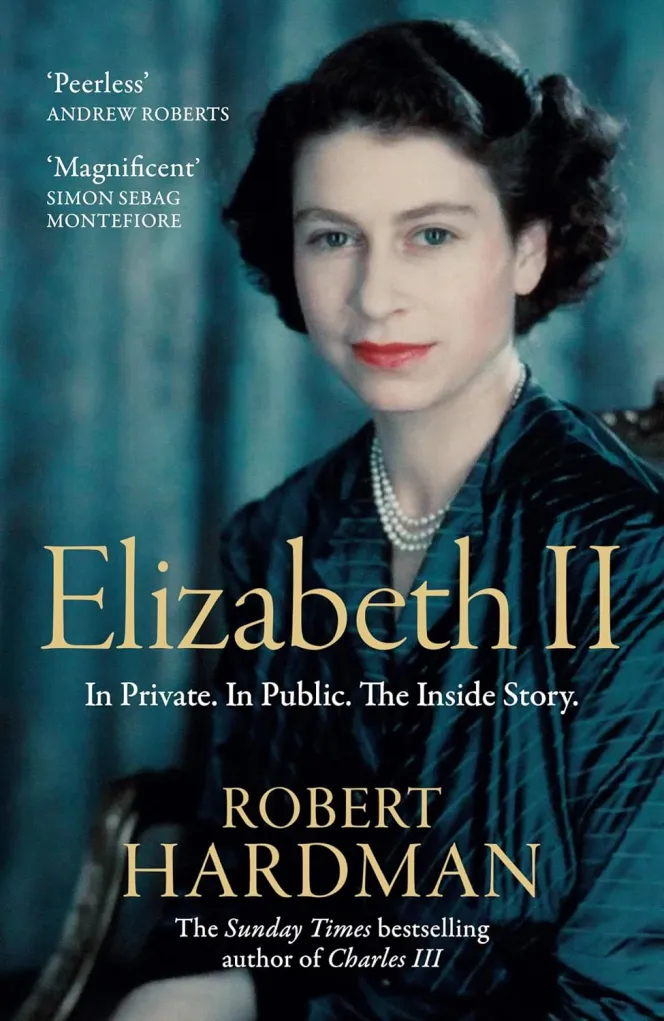
That makes her unpromising ground for biographers. Nevertheless, they persist in trying: after all, she was the Queen. And since her death in 2022, the possibility of posthumous revelations has encouraged some authors to go back for another try. Hugo Vickers and Robert Hardman have written about Elizabeth II before. Now both have attempted to wring another book out of her.
In Hardman’s case, this is his fourth go, although given that his previous effort, Queen of Our Times: The Life of Elizabeth II, came out in 2022 and could only briefly touch on her death, perhaps it’s fairer to think of this as volume three and a half in his Queen cycle. In the preface he half apologises for the inevitable repetitions, writing that “a good story deserves another airing”.
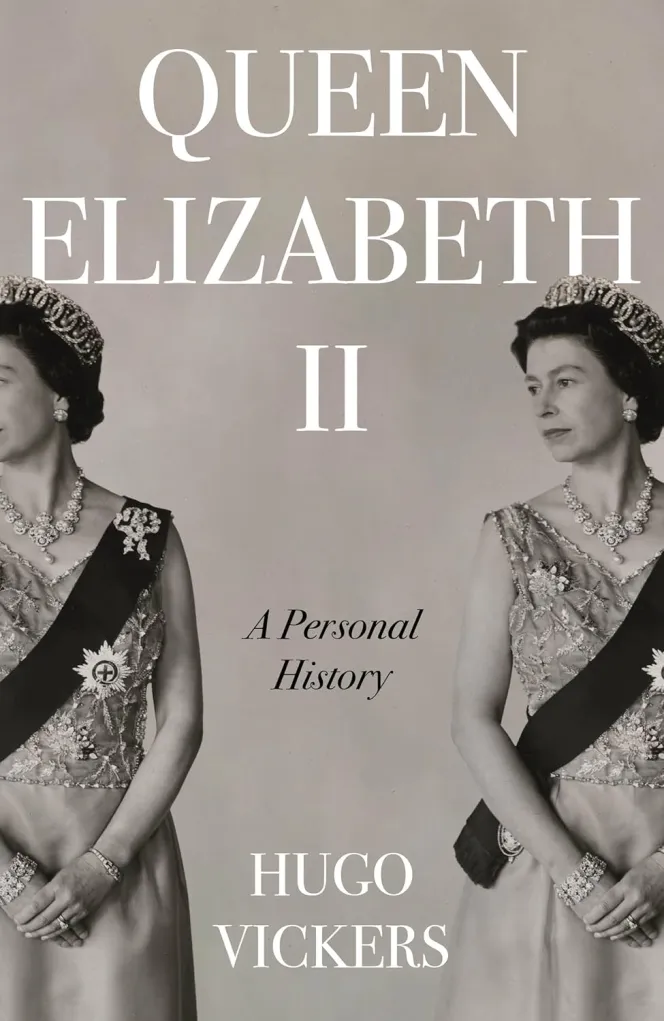
Vickers, meanwhile, has written extensively on royal subjects, but this is his first biography proper of the Queen. That should make it the more compelling proposition here, and in one sense at least it’s a perfect match between subject and writer. The Queen lived a determinedly undramatic life, and Vickers is the bore to end all bores.
The level of detail in Queen Elizabeth II: A Personal History is unequalled. There is seemingly no fact too trivial for inclusion in its 600-plus pages. He lists the animals that Elizabeth and Margaret saw in a visit to London Zoo in 1936; he even notes that Lady Strathmore had a cold when the princesses visited Glamis that year. (Strangely, though, he doesn’t mention the Nazi affiliations of Prince Philip’s family.)
The effect is stultifying. Vickers is a world-class toady, given to absurd outbursts of bowing and scraping. In the introduction he claims that Elizabeth’s reign will be unparalleled “even if we live for a thousand years”. This is ridiculous enough, but it reads like unsentimental rationalism compared with the way he writes about her death.
“I had invested so much of my life in following the Queen. When she died, it was as though the Last Post sounded,” he writes in the epilogue. “I found myself floundering in the dread dark of night, fearful of the abyss into which I would stare when Reveille came.” This lurid, purple stuff makes you yearn for Prince Philip to pop back from the grave and tell Vickers to pull himself together.
Particularly telling is Vickers’s attitude to Crawfie — Marion Crawford, the governess to Elizabeth and Margaret who was exiled from the palace after publishing an intimate (but complimentary) memoir in 1950. Vickers loyally explains that he considers her an unreliable witness, then quietly uses her book as a source without naming her in the text.
When it comes to royals who let the side down, Vickers has no trouble inveighing against Diana, or Meghan and Harry. All incurred the Queen’s displeasure, and all are portrayed unsympathetically here. He struggles, though, regarding Andrew. The problem is that the Queen did not think that Andrew did anything wrong, and that means Vickers must force himself to think the same — even if he makes himself ridiculous in the process.
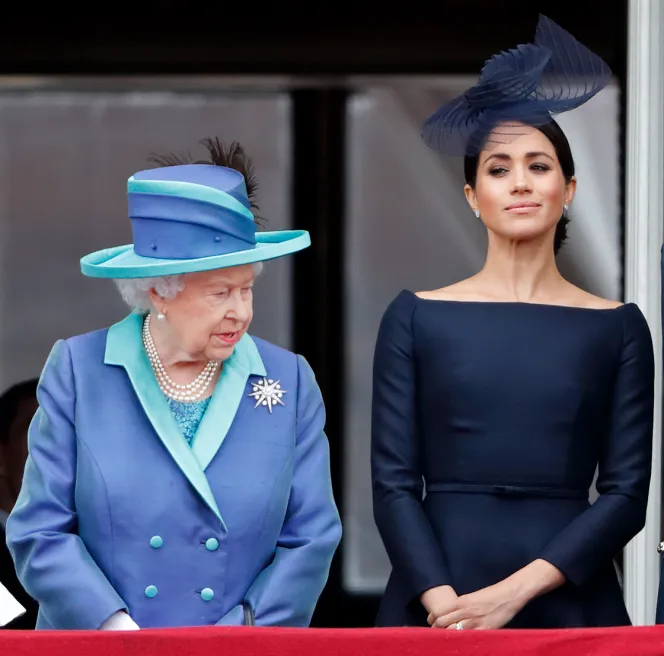 Queen Elizabeth II with Meghan, who is portrayed unsympathetically by Hugo VickersMax Mumby/Indigo/Getty Images
So he tells us that Andrew believed that paparazzi photos published in the 1990s of his wife, Sarah, topless had been faked, “quite possibly presaging [Andrew’s] own fate many years later”. This is a reference to the absurd suggestion that the picture of Andrew with the trafficking victim Virginia Giuffre was forged. Vickers’s desperation to let the Queen’s favourite son off the hook is humiliatingly palpable.
Andrew is a headache for friendly biographers of the Queen and monarchists in general — not only because he demonstrates the poisonous effects of privilege, but also because the Queen’s judgment clearly failed when it came to him. Allegations of criminality (which Andrew denies) aside, it is hard to reconcile the Queen’s vaunted sense of duty with her indulgence of her most oafish and incompetent child.
Hardman, sensibly, attempts no exonerations on this point. His admiration for the Queen does not obscure her responsibility for her son’s dissipation: “Out of loyalty to [the Queen], the Andrew problem had been allowed to fester.” One of his biggest scoops is a damning account of Andrew physically attacking one of his mother’s aides with a “kinetic blow” after being told he couldn’t use Buckingham Palace for an event on a specific day.
The other significant new information here pertains to Donald Trump, who — according to Hardman — charmed the Queen on his first state visit and bonded with her over their mutual status as Scottish landowners. He claims that Trump’s respect for the monarchy even led him to give up his plans to annex Canada. Although given that Hardman’s source for this is Trump himself, readers may be permitted a little scepticism.
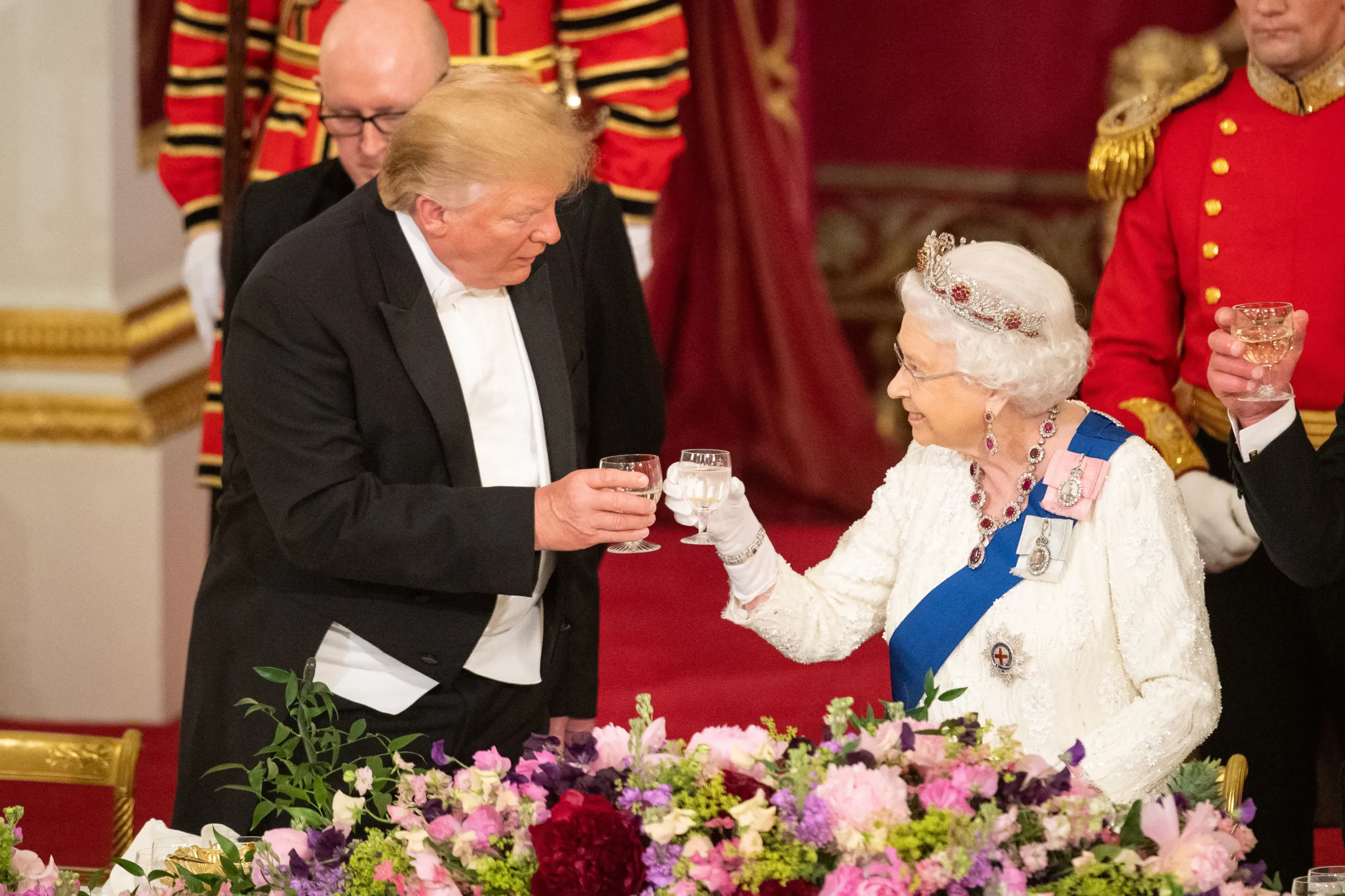 With Donald Trump during the 2019 state banquetDOMINIC LIPINSKI/POOL/AFP/Getty Images
The story of Elizabeth II moves considerably more briskly with Hardman than it does with Vickers. That’s not only because Hardman’s book is shorter by more than 200 pages, it’s also because Hardman has solid historian’s instincts, using the Queen as a frame through which to survey the social and political fortunes of her time.
The Queen oversaw an era of phenomenal transformation in the role of the monarchy. This was technological: Hardman notes that TV ownership in the UK quadrupled between her accession and her coronation. It was attitudinal: the irreverence of the 1960s evolved into the baying hostility of the paparazzi-fuelled 1990s. And it was geopolitical: under Elizabeth II’s reign, and with some thanks to her diplomatic skills, Britain (largely) peacefully ceased to be an empire.
Hardman credits the Queen’s ability to navigate all this to her fundamental character. “At heart,” he writes, “she was a pragmatist, not a romantic.” It was never her job to be interesting — quite the opposite. Understanding that allows Hardman to write a considerably more interesting, and insightful, book than the crawling Vickers can manage.
Queen Elizabeth II: A Personal History by Hugo Vickers (Hodder & Stoughton £28 pp672). Elizabeth II: In Private. In Public. The Inside Story by Robert Hardman (Macmillan £22 pp448). To order copies go to timesbookshop.co.uk. Free UK standard P&P on orders over £25. Special discount available for Times+ members