
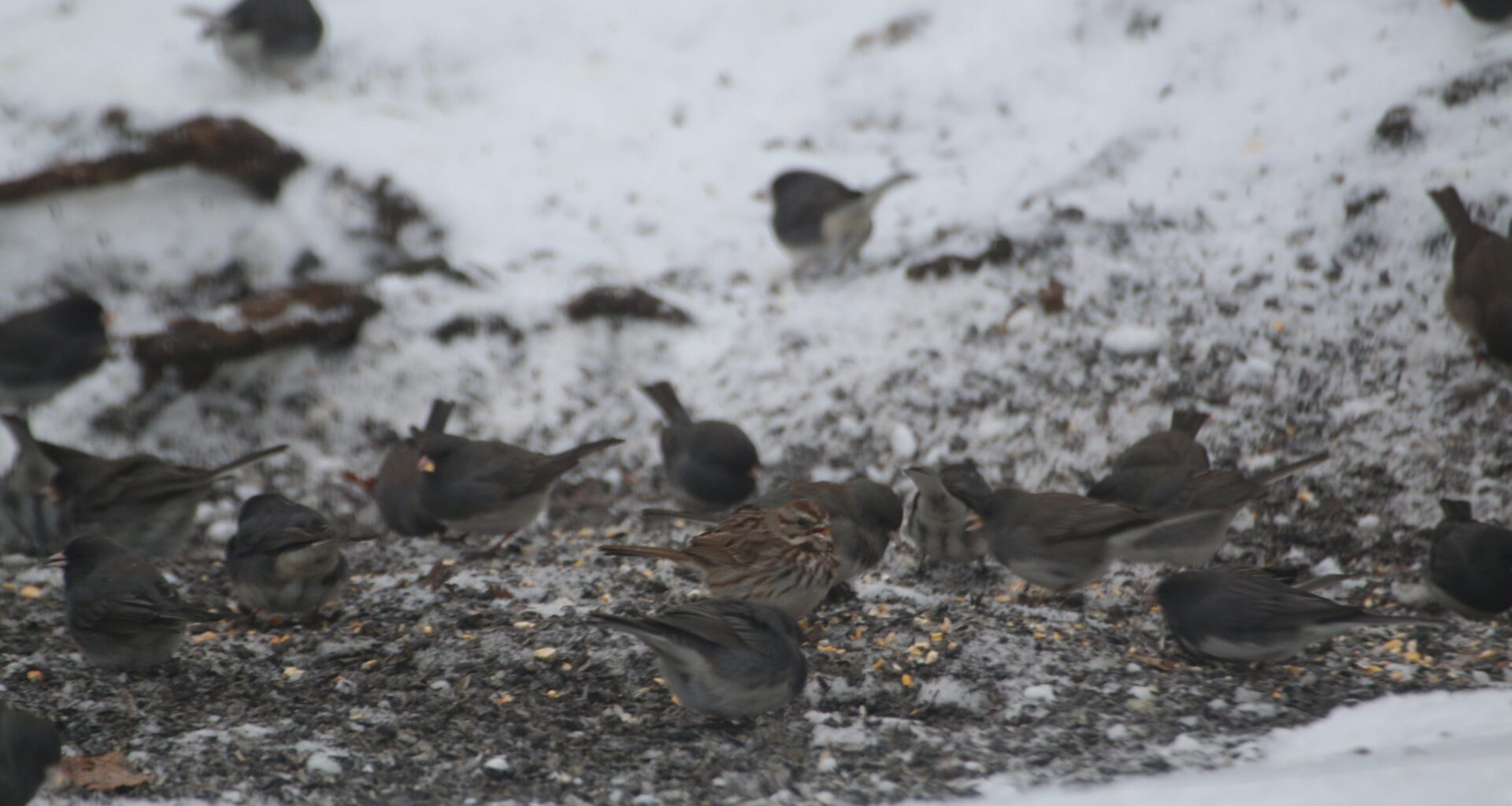
Yesterday was like getting up on Christmas morning to new fallen snow, and it was still coming down, but this is April and the 90,000 birds that just flew north last week didn’t like the looks of it. More than 200 descended on my feeders. The slate colored juncos and evening grosbeaks were the majority on the flock but there were 25 common grackles and a flock of red-winged blackbirds. A few song sparrows and fox sparrows were in the mix. The blue jays had left here last week and only three or four were left here. One lone American robin was here, and it had just looked at the nesting site under the porch roof the day before now; it was looking for a bare spot to flip leaves looking for a worm. I swept out the feeding area and scattered seed for the seed eaters; the robin would have to fend for himself.
I set the potter traps and caught birds until about 4 p.m. I banded 125 juncos, three song sparrows and two fox sparrows. Looking out this morning, there were still 100 or more juncos feeding on the seed I put out, and I saw no bands on any of these. I did see a banded fox sparrow in the group but that was the only one. So, these other banded birds must have moved further north despite the snow-covered ground. That urge to get to their nesting areas is powerful and off they went. Most of the birds I banded had fat storage in and around their neck area, so they still had reserves to make that trip.
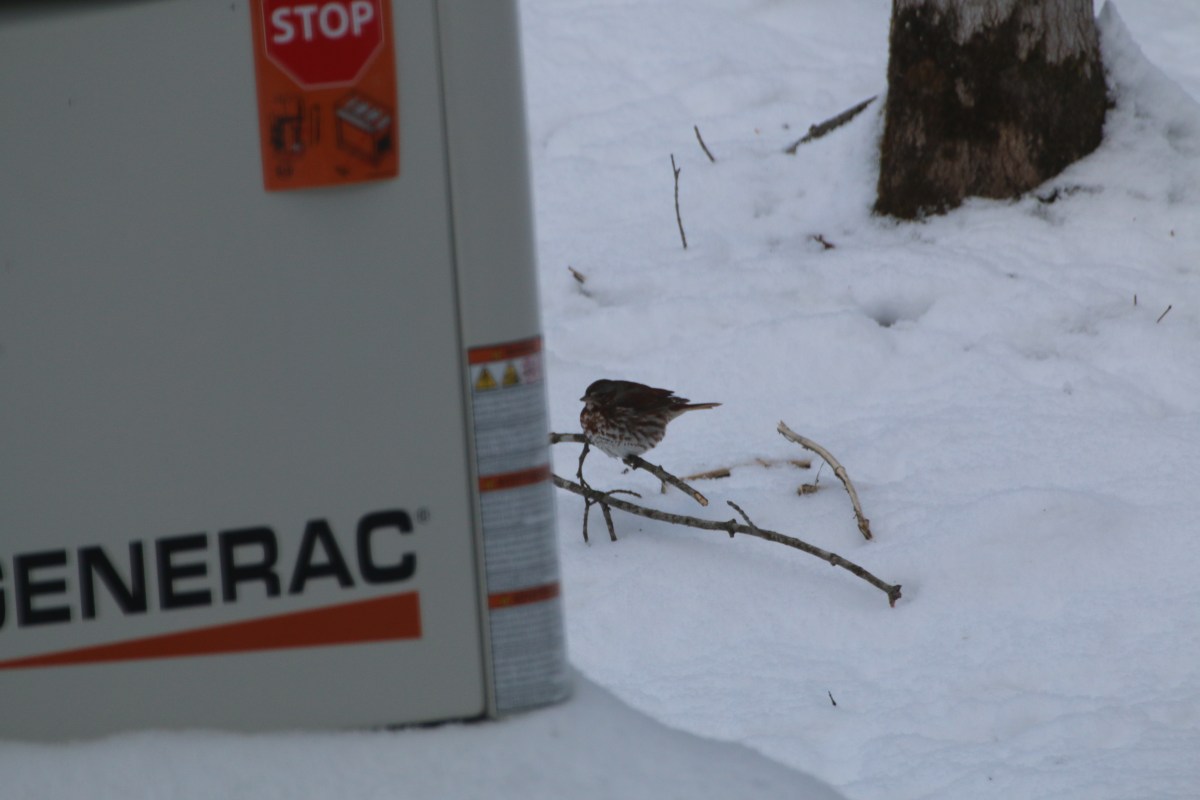 Fox sparrow. Photo by Gary Lee.
I just got a report of the ruby throated hummingbirds that were all over the south making their way north which is ahead of schedule. There are flowers up into Virginia but not much further north than that—lets hope they don’t overfly their food supply or they may have to go back south for a brief time. One time, we had freak snowstorm on Mother’s Day and lots of the songbirds were here on territory, even the hummers. I was living at the ranger headquarters at Limekiln Lake, and my feeders were mobbed, just like yesterday, by the seed eaters. Rose breasted and evening grosbeaks were eating together at the feeders. I thawed out the hummer feeders several times and kept them going.
The snow lasted a few days, and the bug eaters didn’t fare very well. Thousands were all dead along the shoreline of the lakes, the only bare spot they could find to feed, and there was nothing to eat and they perished. Warblers, tanagers, swallows, sparrows, thrushes and orioles were all laying there dead. There was one colony of purple martin living at the Cedar River Golf Course for several years and they all died with no bugs to eat.
The black bear take for last season was a new record. The 2025 statewide bear harvest was the second only to the 2003 season, and the southern zone estimates set a new harvest record. The southern zone take included an estimated 1,202 bear taken, including the 10 heaviest bears recorded for the year. The northern zone harvest estimate of 557 bears was slightly lower than 2024, but still above the 10-year average.
Hunting remains one of the most popular forms of wildlife related recreation in the state with nearly 600,000 New Yorkers participating annually, helping achieve state wildlife management objectives and safely enjoying time outdoors. DEC released 2025 hunting safety statistics and the 2025 season was the safest on record. The total number of hunting related shooting incidents (HRSI) in 2025 was seven, five of which were self-inflicted and two involved more than one person. One incident involved an unlicensed individual who was hunting illegally. Fortunately, there were no HRSI fatalities.
Owls and eagles are already on nests, but that’s another story. See ya.