
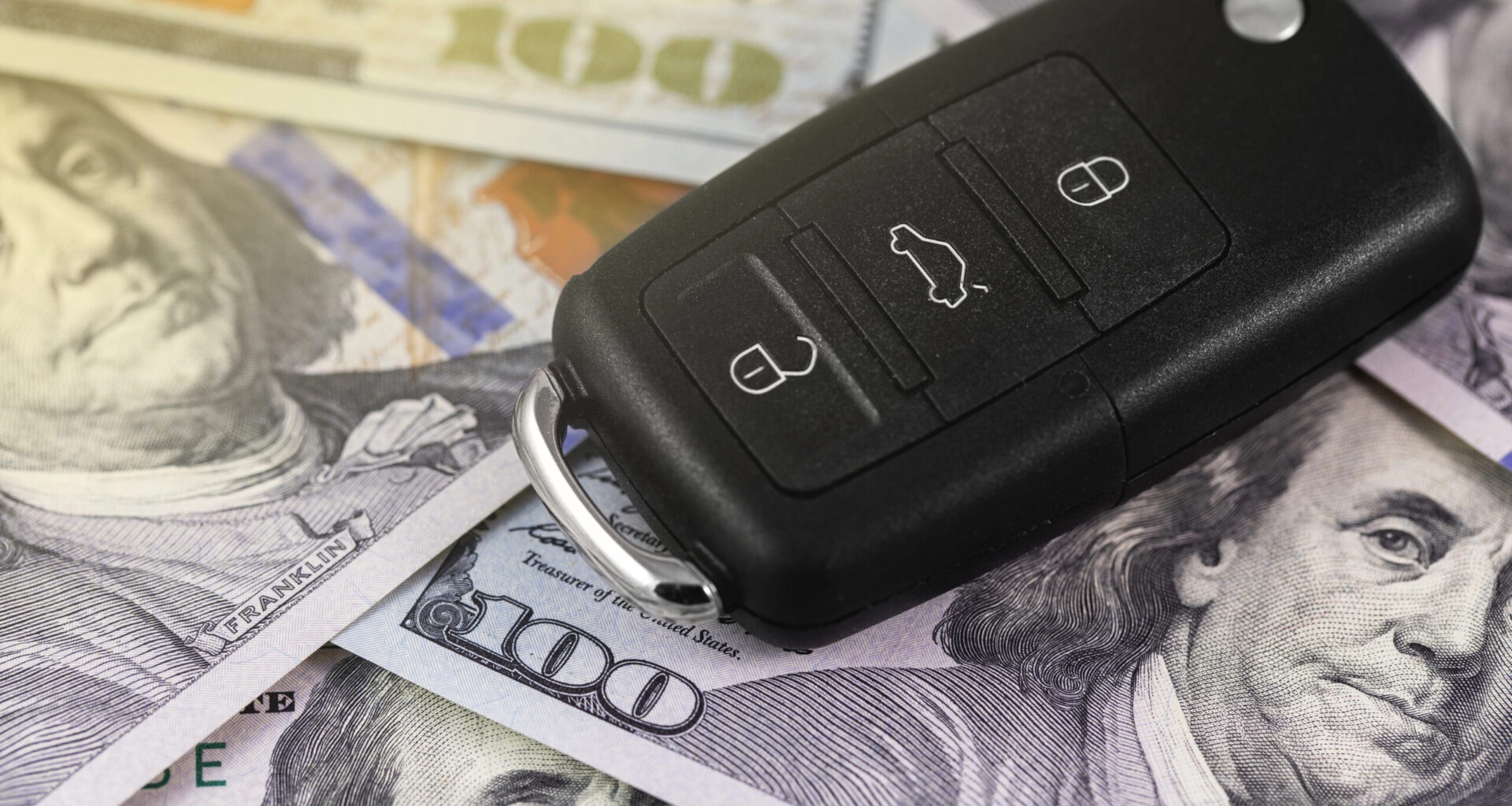
New Yorkers pay some of the highest auto insurance premiums. Estimates suggest that drivers in New York pay about 65% more for minimum coverage and 15% more for full coverage and it has created significant political pressure to address insurance costs.
The issue of uninsured motorists remains a significant concern across the United States. With millions of vehicles on the road, the phenomenon of driving without insurance poses risks not only to the uninsured drivers themselves, but also to other motorists, pedestrians, and property owners.
According to the Insurance Research Council (IRC), approximately 13% of U.S. drivers were uninsured in 2025, with New York at about 11%.
Car insurance is the tip of the iceberg, but one directly affecting drivers, both private and commercial.
• The average annual premium in New York sits around $4,000—roughly $1,500 above the national average. That financial burden affects millions of drivers, and it’s created significant political pressure to “do something” about insurance costs.
Other NY State factors in tort and insurance liability costs:
• New Yorkers spend an estimated $7,027 per household on tort liability costs annually, more than any other state in the country. A tort is a civil wrong that causes injury or harm to another and may lead to liability in court.
• New York’s economy loses an estimated $22,000,000,000 annually due to excessive tort costs and lawsuit abuse.
• New York paid out over $439,569,773 in medical malpractice claims in 2023 — the highest of any state in the country.
In her ‘State of the State’ speech in February, Governor Kathy Hochul highlighted her proposals to bring down costs of auto insurance rates and tackle fraudulent claims across New York State. A law that claims to fight fraud and excessive lawsuits to make auto insurance more affordable for New York drivers — and a report by the Lawsuit Reform Alliance of New York, nonpartisan advocacy organization committed to fixing New York’s broken civil justice system, offered a peek behind the curtain at the pro-litigation influence machine working to maintain the high-cost status quo.
Hochul’s new proposal charges that car insurance rates are driven up by a combination of fraud, litigation, legal loopholes, and enforcement gaps, with staged crashes and associated insurance fraud. These inflate everyone’s premiums by as much as $300 per year on average according to some estimates.
A coalition of business leaders from the state’s farming, retail, and transportation sectors rallied at the State Capitol to support Democratic Governor Kathy Hochul’s proposals to lower car insurance premiums. Kendra Hems, president of the Trucking Association of New York, argued that premiums have tripled in recent years and said that insuring a fleet of 10 trucks costs companies $150,000 a year. “These costs don’t just hit the trucking industry,” she said. “They ripple through our entire economy. They increase the cost of delivering goods, raise prices for consumers, and make it harder for businesses to compete.”
The suggested current law and variations have been circulating around Albany for years, with little progress. The plan to lower car insurance rates has drawn criticism from legal professionals and crash victim advocates who say the legislative changes would strip crash victims of rights while misstating the drivers of high costs. Even powerful Democrats have balked at the proposal.
The state Senate and Assembly have submitted their one-house budgets, and both omitted Gov. Hochul’s car insurance proposal from their spending agenda.
Assembly Member Michaelle Solages (D-Queens) reiterated the feelings of several of his fellow assembly people that lawmakers want to “prioritize solutions that address rising premiums,” but questioned whether reducing compensation was the way to go about it.
The Alliance claims New York’s civil justice system is one of the most expensive and unbalanced in the nation. They believe justice should be fair and balanced — not exploitative or driven by abuse, but that may be the ‘rub’ in defining what is fair and balanced.
New York No-Fault Law:
Coverage, Claims & Penalties
New York’s no-fault insurance law guarantees that anyone injured in a car accident receives up to $50,000 in benefits for medical bills, lost earnings, and related expenses, regardless of who caused the crash. The system is built around speed: benefits flow directly from the injured person’s own insurer (or the insurer of the vehicle they were in), bypassing the need to prove the other driver was at fault. Lawsuits for pain and suffering are restricted unless injuries cross a specific severity threshold defined by statute. Every motor vehicle registered in New York must carry no-fault coverage before it can be registered with the Department of Motor Vehicles. Motorcycles are the major exception. Motorcycle operators and their passengers are not eligible for no-fault benefits. If you ride a motorcycle, your injury coverage comes from your health insurance or a liability claim against the at-fault driver, not through no-fault.
No-fault benefits are strictly economic. They do not cover pain and suffering, emotional distress, or any other non-economic harm. Property damage, including vehicle repairs, is also outside the no-fault system entirely. You need collision coverage (which is optional) for vehicle repairs, and you can only pursue pain-and-suffering compensation through a lawsuit if your injuries qualify as “serious” under the statute.
When Can You Sue? The
Serious Injury Threshold
New York’s no-fault system was designed to keep minor-injury cases out of court. You can only file a lawsuit for pain, suffering, and other non-economic damages if your injury qualifies as “serious” under Insurance Law Section 5102(d). The statute lists these qualifying categories: Death, Dismemberment, Significant disfigurement, a fracture, Loss of a fetus, permanent loss of use of a body organ, member, function, or system, Permanent consequential limitation of use of a body organ or member, Significant limitation of use of a body function or system, and 90/180-day injury: A medically determined, non-permanent injury that prevents you from performing substantially all of your usual daily activities for at least 90 days during the first 180 days after the accident.
Now comes part of the dilemma. What if you do not have a valid driver’s license, no insurance,or an unregistered vehicle?
The trial lawyers’ lobby known for deep-pockets, along with other influential groups targeting Albany, is on a crash course with Hochul’s insurance proposal over her push to crack down on runaway litigation.
Local TV stations fear touching the subject of vehicle insurance reforms since firms like the Barnes Law Firm, Celino Law, William Mattar and a host of others, blanket the airwaves with huge advertising contracts. Claims of winning millions for injured drivers, passengers and pedestrians fuels the fervor of not only those seeking excessive relief from major injuries, but scammers out to use the law to fill their pockets. The law commercials post smiling clients (actors) with claims of winning fortunes, but as pointed out in the The Serious Injury Threshold in this story, smiles are far from the norm.
In reality, the vast number of personal injury accidents are settled out of court. There is a certain fear that, if a case reaches the Supreme Court, a trial will result in a jury awarding outlandish awards in serious injury presentations.
The big personal injury law firms suggest there are no fees until you win, but this is the norm for all such cases and law firms. What they do not admit that in a win or settlement the law firms take 30% off the top. Often this does not include any out of pocket costs such as investigators, video and visual productions and required paper and document costs. Still law firm TV commercials post actors claiming to represent actual clients with awards of millions of dollars.
While Governor Hochul’s suggestion in tackling huge claims by law firms for their clients often constitutes lawsuit abuse, the New York State Trial Lawyers Association counters the law changes are not targeting real fraud, but are they using anti‑fraud language to limit what honest drivers can recover.
Accidents involving unlicensed drivers present unique legal and insurance challenges, especially when the unlicensed driver is not at fault. Insurance companies will deny coverage if you knowingly allow an unlicensed driver to drive your car. Liability coverage may vary depending on the insurance provider and the circumstances of the incident. If you have the bare minimum amount of auto insurance coverage when an unlicensed driver causes an accident with your car, you can expect the injury victim to file a claim against your auto insurance policy. If the unlicensed driver has car insurance, you can file a claim with their insurance company. If the driver does not have insurance (a good possibility considering they were unlicensed), you can either: File a personal injury lawsuit.
The chances of a solid financial settlement comes into question if the uninsured, unlicensed driver has little, or no income worth a lawsuit. Then it is up to the courts to find a suitable punishment for the aggravated unlicensed/uninsured vehicle operator.
In Wayne County these type of cases may not be as prevalent as in larger counties and major cities, but local unlicensed, uninsured drivers still contribute to overall vehicle higher insurance costs.
Republican Assemblyman Brian Manktelow stated that he hopes something will happen. He said that he is not sure what the proposal even looks like. “I just don’t know yet. Once we get the final budget I will have a better idea. The hold-ups, according to Manktelow, “are definitely the trail lawyers. Another piece is the cap Hochul’s plan would put on it.”