
Got story updates? Submit your updates here. ›
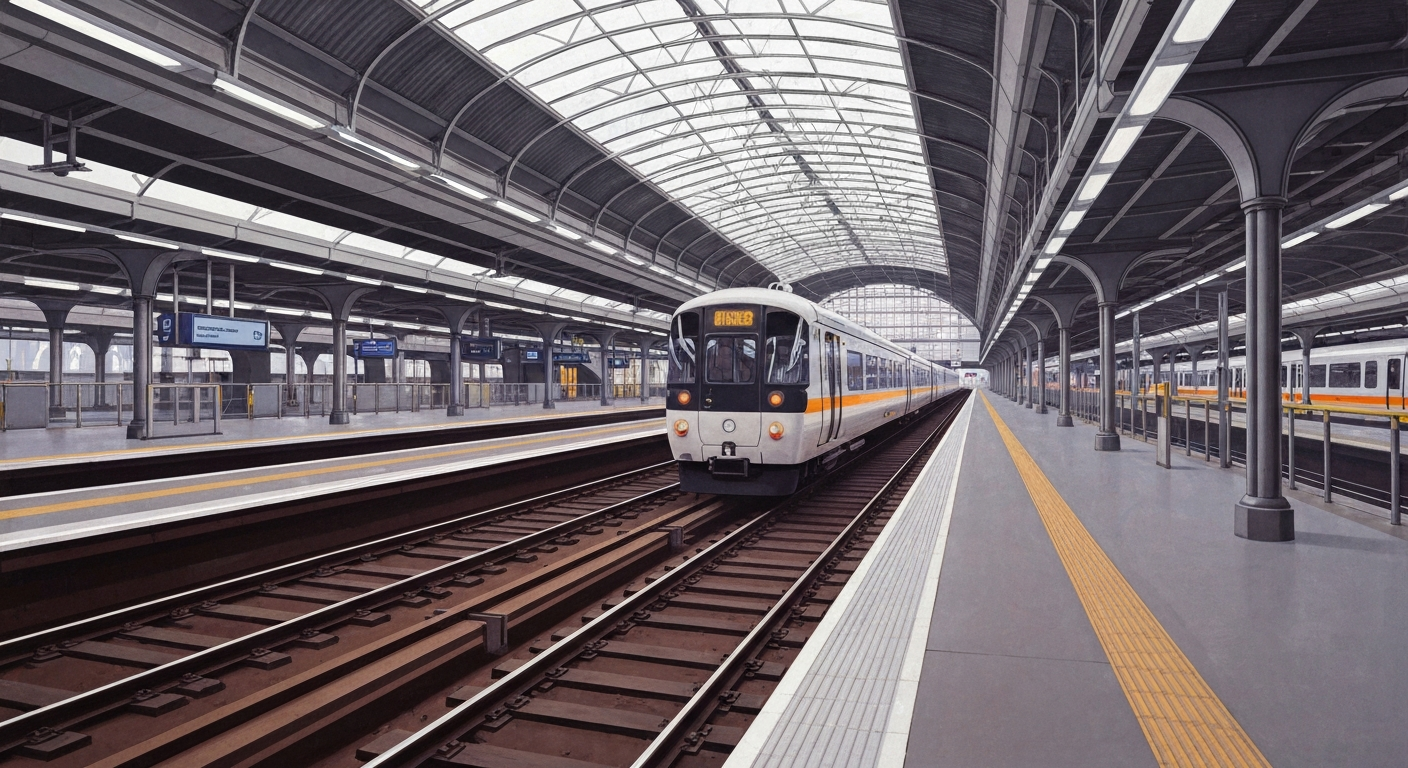 As London’s transportation network grapples with a major disruption, the city’s fragile infrastructure is exposed, underscoring the need for more resilient urban planning.NYC Today
An ’emergency services incident’ between Waterloo and Clapham Junction has brought rail services in London to a halt, causing widespread travel chaos and ripple effects across the city’s transport network. Commuters are facing lengthy delays, overcrowded buses, and a labyrinth of alternative routes as authorities work to restore normal service.
Why it matters
This incident highlights the fragility of urban infrastructure and the interconnectedness of modern cities. A single disruption can cascade into a day-long ordeal, underscoring the need to rethink how we manage and future-proof our transport systems to better withstand shocks.
The details
Network Rail has warned of 90-minute delays, but the impact goes far beyond just late trains. Commuters are being forced to reroute, with the Underground and bus services becoming overcrowded as people scramble to find alternative ways to reach their destinations. The lack of real-time information and the stress of navigating unfamiliar routes is taking a psychological toll on travelers.
The incident occurred earlier today, April 11, 2026.
What’s next
Authorities are working to restore normal service as quickly as possible, but the full impact of the disruption may continue to be felt throughout the day as commuters adjust their travel plans.
The takeaway
This incident serves as a wake-up call, highlighting the need for cities to prioritize the resilience and adaptability of their transport networks. As urban centers continue to grow, the ability to withstand and recover from disruptions will be crucial in maintaining the smooth flow of people and goods.