
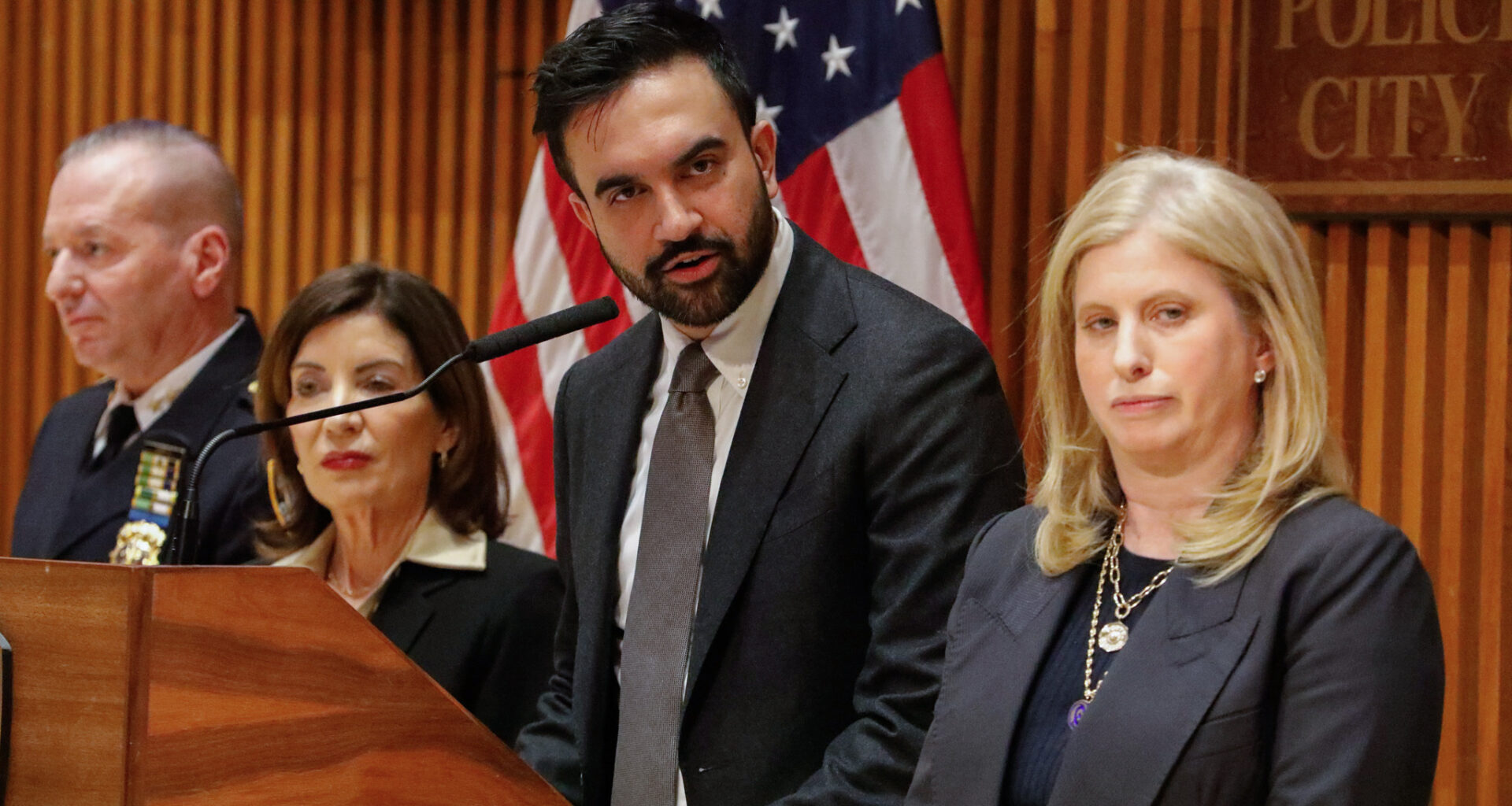
Way back in 2025, new mayoral candidate Zohran Mamdani promised voters sweeping reform at the NYPD.
The long-shot state lawmaker pledged to kill a controversial gang database and terminate a SWAT-like police unit that had been criticized for over-aggressive tactics.
He would get rid of NYPD teams focused on so-called “quality of life” infractions that some critics claimed target Black and Hispanic New Yorkers.
And he would shift the final word on discipline of bad cops from the police commissioner to a civilian watchdog.
One hundred days into his tenure at City Hall, Mayor Mamdani has either backtracked on these promises or has yet to detail how and when he’ll address candidate Mamdani’s concerns about the police.
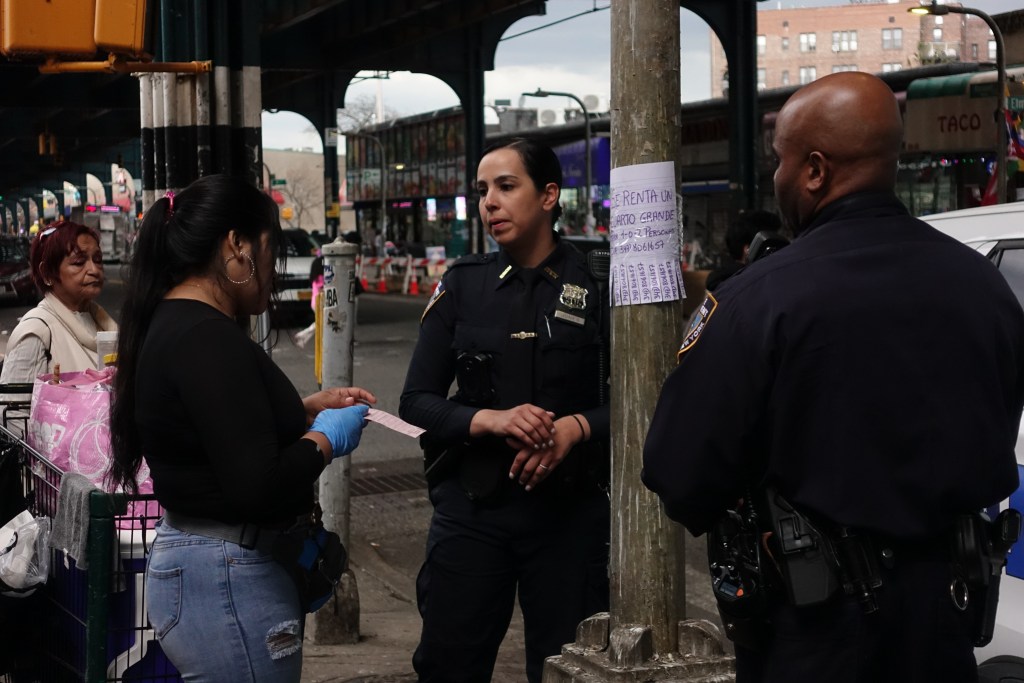 NYPD officers ticket a street vendor in Corona, Queens, April 1, 2026. Credit: Gwynne Hogan/THE CITY
Criminal justice reformers and cops alike aren’t sure what to expect from the democratic socialist who made his vow to change the “culture” of the NYPD a central message in his campaign.
‘Herculean Task’
The New York Civil Liberties Union — which supports many of Mamdani’s initiatives — is a little frustrated but steadfastly optimistic. Michael Sisitzky, the group’s assistant policy director, stressed the “preexisting problems with the NYPD that the mayor has inherited, saying it’s a pretty herculean task to right these issues.”
Leaders of the Police Benevolent Association, who are not big fans of the mayor, say their members are skeptical.
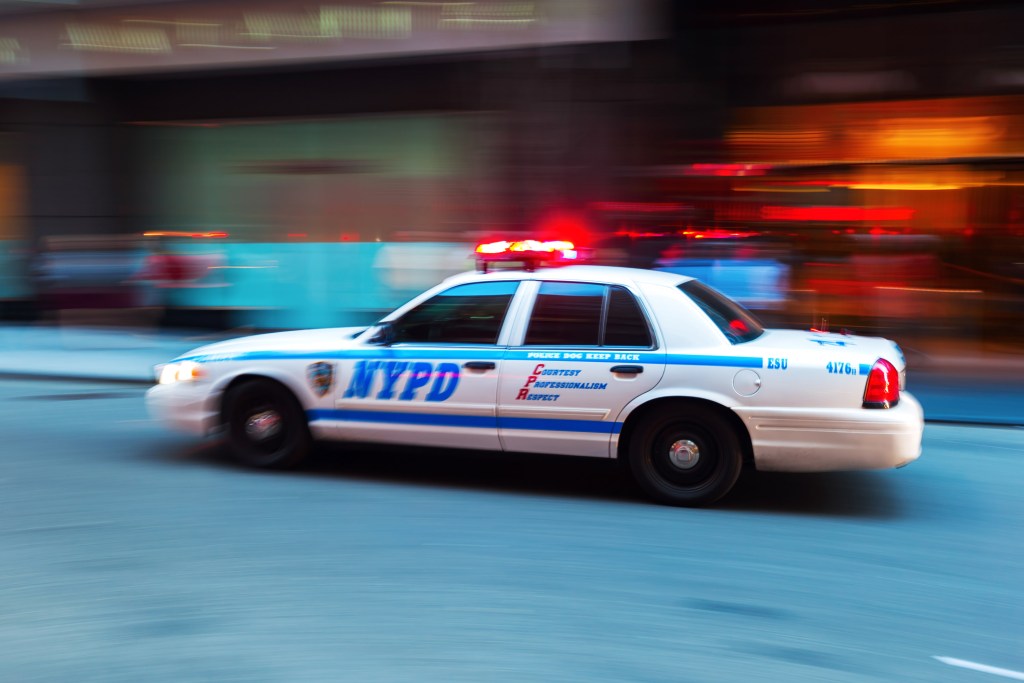 An NYPD car speeds through Manhattan, Oct. 28, 2025. Credit: Christian Mueller/Shutterstock
“It’s good that the mayor has not acted on some of his most drastic campaign pledges, but there is still a perception among police officers that the city under his leadership won’t have our backs,” PBA President Patrick Hendry told THE CITY.
“It is still early, and the mayor has a chance to change that perception, but he needs to make a real effort to hear our concerns and work with us to address them,” Hendry said.
The mayor told the New York Times in an interview published Thursday that he will overrule Police Commissioner Jessica Tisch if he believes it’s necessary to advance reforms, asserting that “as the mayor, ultimately I am responsible for what happens in our city within each and every city agency and department.”
From outsider to Mr. Inside
Mamdani spokesperson Sam Raskin noted some steps toward police reform. The mayor appointed a deputy mayor for community safety, a first step toward the formation of his promised department intended to reduce the number of volatile police responses to 911 mental health calls.
City Hall has codified an NYPD policy requiring the department to release body camera footage within 30 days of what Raskin called “critical incidents.”
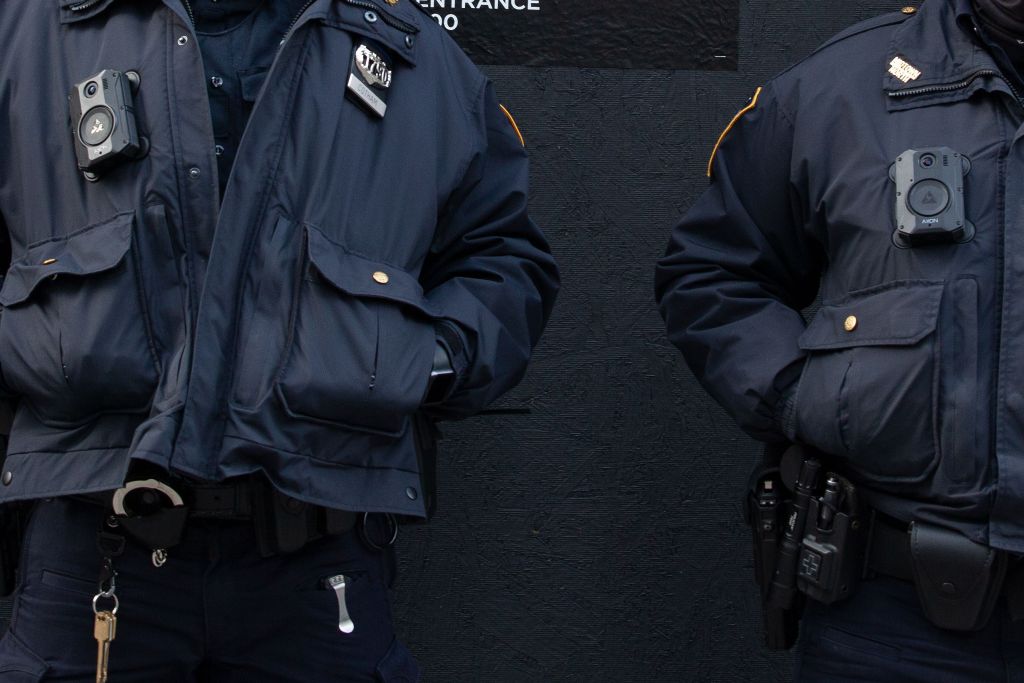 NYPD officers wear body cameras in Midtown Manhattan, Nov. 3, 2020. Credit: Ben Fractenberg/THE CITY
And police have stopped issuing criminal summonses for “low level” e-bike and cyclist offenses that had been championed by the previous administration.
Mamdani’s first weeks at City Hall, through April 5, saw a 24% drop in murders and a 20% drop in shootings compared to the same time period last year. All the major crimes have dropped except rape, which rose 8%.
“This administration is moving with urgency to build a safer, fairer city and increase transparency to restore trust in our public safety system — and we’re just getting started,” Raskin said.
Susan Kang, an associate professor of political science at John Jay College of Criminal Justice and a longstanding member of the Democratic Socialists of America, acknowledged that some DSA members are not happy with Mamdani’s pace of reform, but she said Mamdani’s more measured approach will get better results.
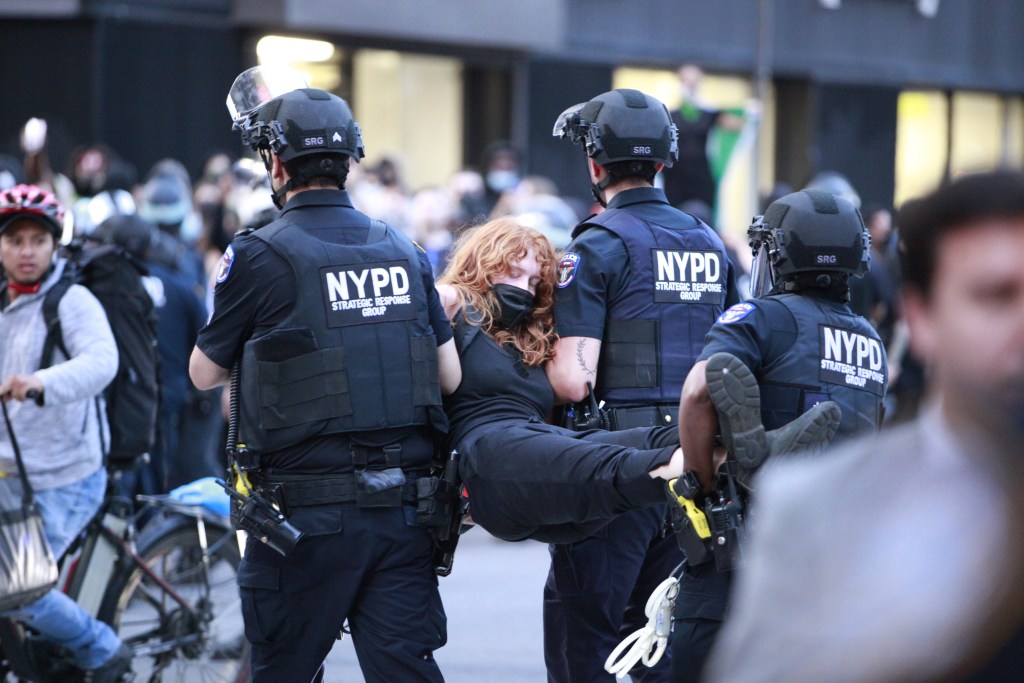 A marcher is carried away by police officers at an anti-ICE protest in Lower Manhattan, June 10, 2025. Credit: Alex Krales/THE CITY
The DSA helped put Mamdani in City Hall — and opposed his decision to reappoint Commissioner Tisch.
“The DSA works outside of institutions. A mayor works within institutions so he has a different set of goals,” Kang said.
From ‘defund’ to ‘reform’
Mamdani’s complicated relationship with the NYPD goes back to 2020 with the newly elected state lawmaker’s repeated demands to “defund the police” during protests over the police killing of George Floyd in Minneapolis, a position he later retracted. The mayor’s metamorphosis continued with his decision to retain Tisch, who public defenders say has opposed many criminal justice reforms.
One key area of disagreement between the mayor and his police commissioner is the database the NYPD compiles of suspected gang members, which Tisch has often praised as a critical public safety tool. Mamdani has a different take.
Last fall, his predecessor, Eric Adams, unveiled relatively tepid reforms that included notifying parents if their child was placed in the system due to suspected gang ties.
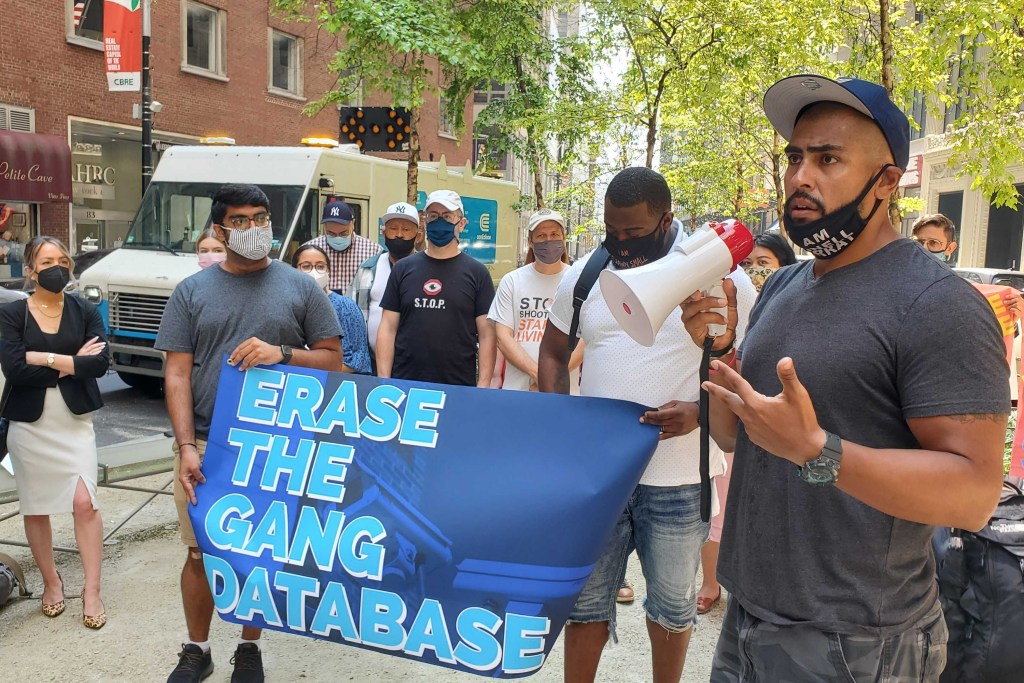 Members of the GANGS coalition protest on July 27, 2021, outside the NYPD’s inspector general’s office in Lower Manhattan. Credit: Eileen Grench/THE CITY
In candidate Mamdani’s view, that wasn’t enough. He vowed to eliminate the database altogether, dubbing it a “vast dragnet of New Yorkers.”
Last week, however, the mayor stood silently next to Tisch as she again praised the database, noting police relied on it to get ahead of retaliatory shootings.
On Monday, Mamdani did not directly address questions about whether he still intends to eliminate it, telling reporters he supported Adams’ “reforms,” and that “implementation of those reforms and the results of that are part of the active discussion that we’re having.”
“Coming in with an ambitious agenda to change the police is always a process that takes time, Kang told THE CITY. “If you go in with guns blazing you don’t get buy-in. Mayor Mamdani is doing everything right to have that buy-in that respects the need for public safety as well as the need for human rights.”
A strategic response
Then there’s the Strategic Response Group, an NYPD unit that City Councilmember Chi Osse, D-Brooklyn, has proposed eliminating over accusations that it has used excessive force on protesters, including at an anti-ICE protest in January. Sisitzky of the NYCLU noted the mayor has yet to weigh in on Osse’s bill, known as the Curb Act.
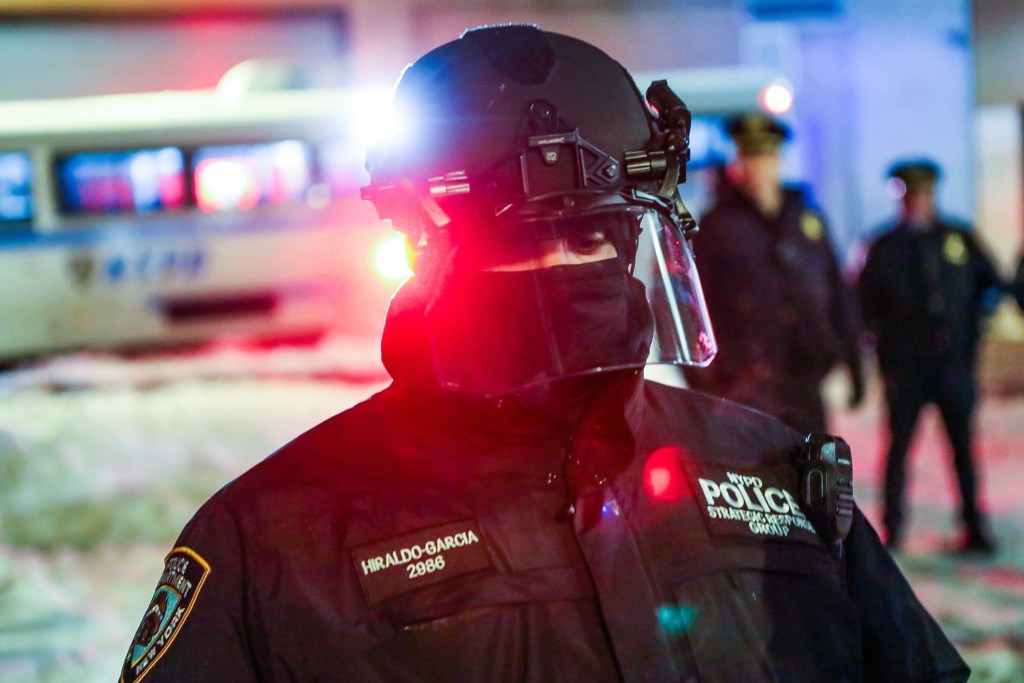 An NYPD Strategic Response Group officer helps to police an anti-ICE protest in Manhattan, Jan. 27, 2026. Credit: Alex Krales/THE CITY
As a candidate, Mamdani repeatedly called for the unit to be disbanded. Six weeks into his mayoralty, Mamdani praised the response by the NYPD — which included the SRG — to an attack by two men inspired by the terrorist group ISIS after one of them tossed improvised explosive devices at anti-Muslim protesters outside Gracie Mansion.
On Wednesday mayoral spokesperson Raskin said Mamdani “remains committed” to eliminating the Strategic Response Group.
Another split between Mamdani and Tisch centers on the “Quality of Life Teams” she created last year in response to a spike in 311 complaints about low-level malfeasance from public urination to loud music to rowdy behavior. Critics likened it to the “broken windows” approach of targeting smaller-bore crimes with enforcement disproportionately affecting the Black and Hispanic communities.
During the campaign, Mamdani was a steady critic of quality-of-life enforcement. At a January press conference Mamdani deflected a question about their differences over these units, saying, “What we are fully aligned on is the fact that we need to see genuine public safety across the city.”
Tisch quickly stepped in to clarify: “I just want to add that the Quality of Life Division is by no means a return to broken windows policing.”
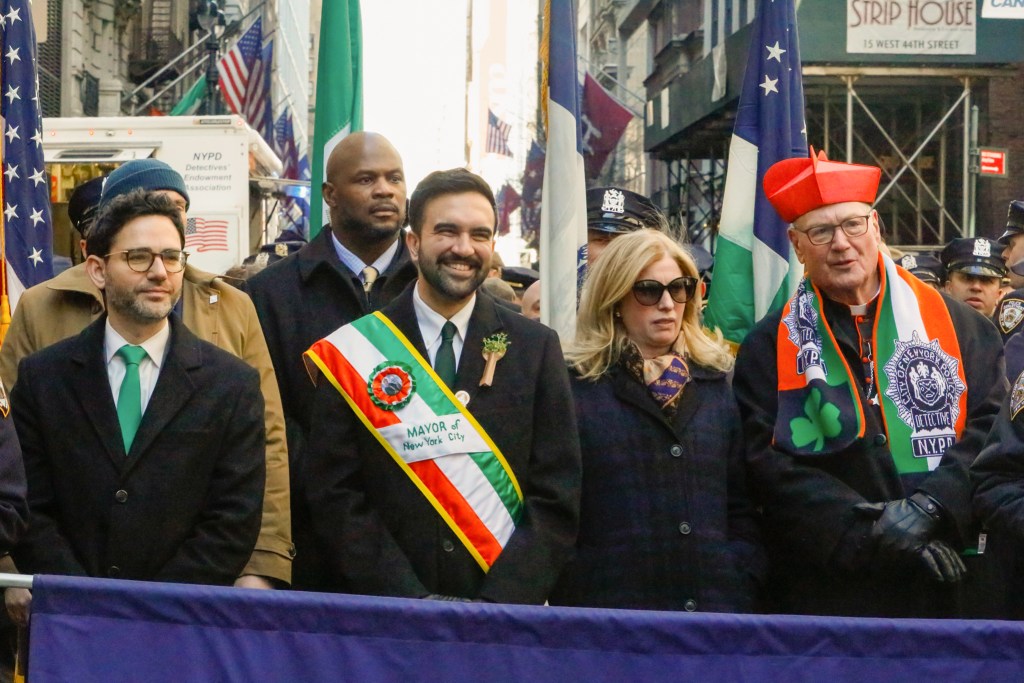 Mayor Zohran Mamdani marches next to NYPD Commissioner Jessica Tisch and Cardinal Timothy Dolan in the St. Patrick’s Day Parade in Manhattan, March 17, 2026. Credit: Alex Krales/THE CITY
Candidate Mamdani also took issue with the police commissioner having the final say over disciplinary recommendations for bad cops, proposing that the Civilian Complaint Review Board have the last word.
Tisch often overrides the CCRB’s calls, including in August when she rejected the recommendation of the CCRB and an NYPD administrative judge to fire a cop who’d fatally shot a driver fleeing an arrest.
Mamdani appears to have backtracked on this, saying after his victory in November that “what I believe is that the CCRB’s recommendations should be taken seriously, that we should ensure they’re able to make those recommendations time and again.”
How many cops?
One area mayor and his police commissioner appear to agree on is the number of uniformed officers necessary for the NYPD to do its job.
In his first preliminary budget proposal, Mamdani ditched his predecessor Adam’s last-minute plan to hire 5,000 more cops, enraging many Republican and some Democratic politicians who framed that as a cut to the department’s size .
But Tisch declared the criticism of Mamdani’s decision much ado about nothing. During a recent budget hearing, she noted the department had recently been able to hire 4,000 new officers, bringing the uniformed headcount to the full amount of 35,000 for the first time in four years.
Related