
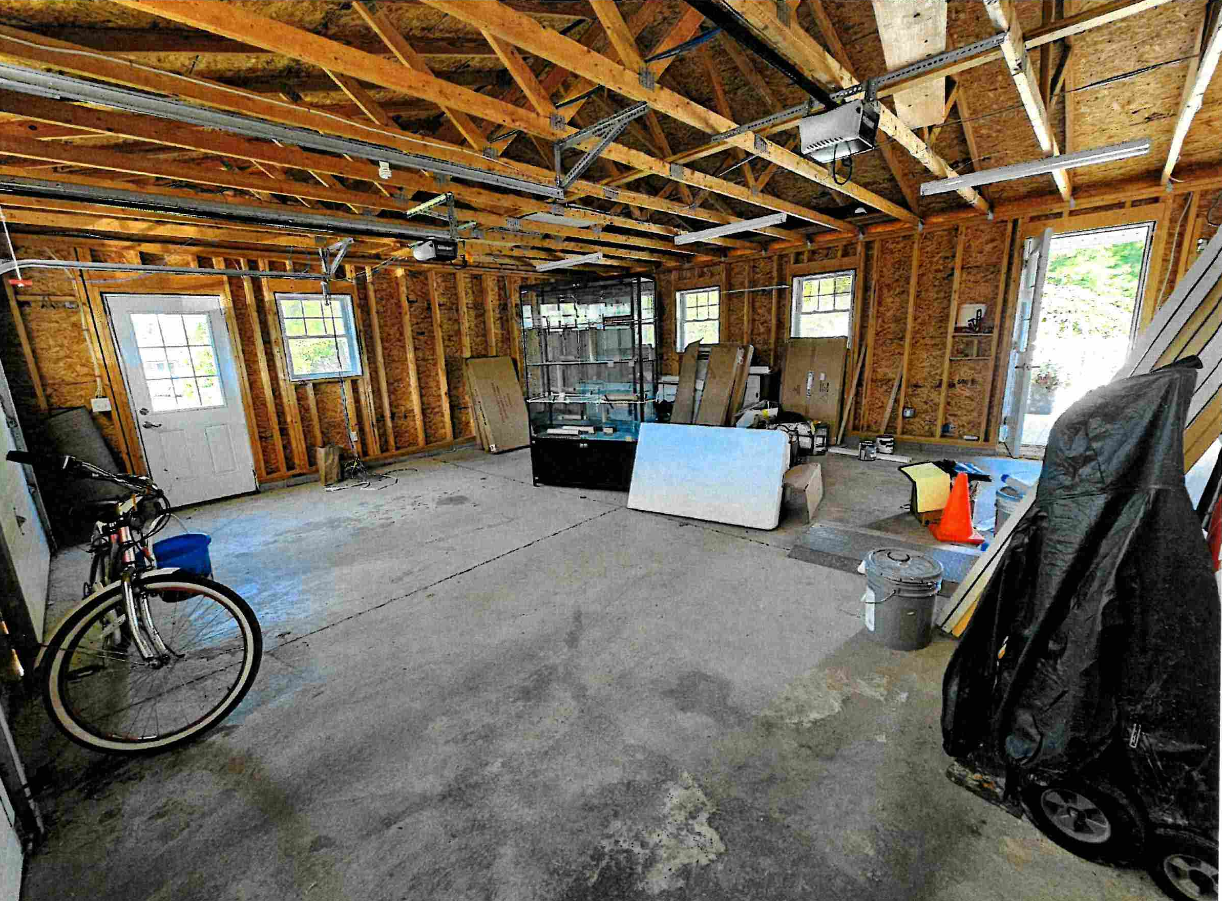
The Cayuga Nation is suing the New York State Liquor Authority in state and federal court after it denied a liquor license to a business that was intended for this Seneca Falls garage space.
Courtesy of the New York State Liquor Authority
ALBANY — A denied liquor license for a store in a renovated garage in Seneca Falls has ignited a legal fight that goes far beyond alcohol sales. It’s a proxy war over power and legitimacy within the Cayuga Nation.

The New York State Liquor Authority and its commissioners entered the long-simmering struggle in September, when one faction of the Cayuga Nation filed a federal lawsuit accusing the agency of unlawful and discriminatory treatment in its refusal to grant a liquor license to Lakeside Enterprises, a nation-owned business on the reservation.
Article continues below this ad
On April 2, members of the Cayuga Nation and Lakeside Enterprises filed a separate lawsuit in state Supreme Court in Erie County. The nation claims the state also unfairly denied its application due to bias.
In both the federal and state cases, the Cayuga Nation is asking the courts to order New York to approve the liquor license because the state unlawfully denied it to a sovereign tribe that complied with federal law.
But in response to the federal lawsuit, a separate group representing the Cayuga Nation’s Traditional Chiefs and Clan Mothers moved to intervene in March. They said that the plaintiffs in the other civil actions don’t represent the true Cayuga Nation. The group supported New York’s motion to dismiss the lawsuit, saying the push to sell alcohol is harmful and illegitimate.
Make the Times Union a Preferred Source on Google to see more of our journalism when you search.
Add Preferred Source
On one side is Clint Halftown, who was tasked by the Nation’s council in 2002 with exploring ways to earn money for the tribe. Since 2016, he has been recognized by the Bureau of Indian Affairs as the point person for federal interactions with the tribe. But that designation is not recognized by the loose collection of tribal members who call themselves the Traditional Chiefs and Clan Mothers.
Article continues below this ad
A photo of Clint Halftown, the federally recognized representative of the Cayuga Nation, that was included in state court filings. Some of his business development endeavors have earned the ire of traditionalist elements in the nation.
Courtesy of the state Supreme Court in Erie County
The two sides are at odds over basic facts in a conflict centered on how longstanding cultural principles should shape the tribe’s modern system of governance. The traditionalists avoid gaming, alcohol and haven’t adopted Anglo-style government or lucrative commercial ventures.
Citing the pending litigation, the State Liquor Authority and Cayuga Nation declined to comment.
For Michael Sliger, an adjunct professor at Cornell Law School who authored the amicus brief on behalf of the Chiefs and Clan Mothers, the effort is not just about stopping alcohol. It is a broad-based campaign to restore traditional governance.
Article continues below this ad
“Clint Halftown has gone more of the capitalistic route, and really set aside a lot of the ancient teachings that have guided the tribe for centuries,” Sliger said.
In response to questions for this story, an attorney for Cayuga Nation sent a two-page statement dismissing Sliger’s authority and connection to the nation. The attorney said that the Cayuga Nation Council rejects assertions of a return to “traditional governance,” saying that current clan mothers and leadership structures already operate within Cayuga traditions.
In court filings, and in response to questions from the Times Union, the Halftown faction accused the traditionalists of using the alcohol case to rehash the internal dispute over who leads the Cayuga Nation. They said leadership authority has already been decided by the federal government, which rejected the Chiefs and Clan Mothers’ claim to leadership. The decision was upheld by a federal court in 2019.
‘Oversaturate the market’
The liquor store is planned for a former home purchased by the Cayuga Nation that sits behind the LakeSide Trading and LakeSide Gasino, businesses also owned by the nation. The garage, not far from the Mohawk River and Schenectady County Airport, will be converted into retail space, according to the liquor license application.
Article continues below this ad
The nation has two beer licenses issued by the State Liquor Authority for separate establishments on the reservation. Both are in good standing with the state.
In September 2024, Lakeside Enterprises submitted an application to the State Liquor Authority, seeking the nation’s first liquor license. It didn’t take long for two competing liquor stores, neither of which are owned by the Cayuga Nation, to object to the application.
The liquor store is planned for a former home purchased by the Cayuga Nation, which sits behind the LakeSide Trading and LakeSide Gasino. The garage will be converted into retail space, according to the liquor license application.
Courtesy of the New York State Liquor Authority
P&C Liquor Corp. told the state there was no need for an additional liquor store in Seneca Falls and that granting the license would “oversaturate the market” and harm existing taxpaying businesses.
Article continues below this ad
DA’s Liquors, which is about a mile west of the proposed liquor store, raised similar objections, and said Cayuga Nation’s sovereign status would allow Lakeside to sell liquor at lower prices by avoiding New York sales tax.
At a hearing last year in New York City, State Liquor Authority commissioners criticized the absence of the Cayuga Nation’s principal and delayed a decision on its application. The board later issued a preliminary denial, citing concerns about compliance and public safety, but agreed to reconsider after the nation threatened litigation.
During subsequent hearings, commissioners allegedly made dismissive remarks and questioned the nation’s ability to enforce alcohol laws due to its sovereignty. The nation said in the lawsuit that repeated delays, inconsistent instructions, and demands beyond legal requirements reflected unfair and nontransparent treatment of its application.
At one point, the commission attempted to require the Cayuga Nation to stock New York products, something that isn’t demanded by state law.
Article continues below this ad
‘Strengthen the nation’
Native American tribes can regulate alcohol only with federal approval from the Secretary of the Interior. They also have to obtain a state liquor license.
There are eight federally recognized tribes in New York, and four have the authority to regulate alcohol distribution on Native American lands. The Cayuga Nation received that federal approval in 2021.
In the federal lawsuit, the Halftown faction of the Cayuga Nation presents alcohol sales as a lawful exercise of tribal sovereignty and economic development. It argues that federal law allows tribes to regulate and sell alcohol on their lands when they have an approved ordinance and comply with state law, both of which the Cayuga Nation says it has done.
Article continues below this ad
Court filings also push back against concerns made by the State Liquor Authority commissioners about risk or misuse, saying that those claims are speculative and rooted in bias.
In separate court filings, the traditionalists say that that alcohol has long had devastating effects on the Haudenosaunee people — the term for the confederacy of tribes that covered much of the northeast — and should not be treated as an ordinary commercial product. It traces that history to the 18th and 19th centuries, when alcohol abuse contributed to social instability and was allegedly exploited by settlers to facilitate land loss.
Central to the filing is the Code of Handsome Lake, a foundational spiritual teaching that condemns alcohol as harmful and promotes abstinence. The brief says these teachings led to a lasting cultural shift among many Cayuga and other Haudenosaunee communities.
They contrast that position with the legal arguments being made by the Halftown faction, accusing current leadership of disregarding tradition by pursuing expanded alcohol sales, and say the court should consider the perspective of community members who view such activity as culturally and historically damaging.
Article continues below this ad
In response to questions, the attorney who provided the statement on behalf of Cayuga Nation said the council will continue to expand commercial enterprises to support its citizens.
“As with nearly every other nation, the Cayuga Nation’s enterprises exist to strengthen the Nation as a whole, and revenues are directed toward core governmental and community priorities, all for the benefit of the Nation’s citizens,” the statement said. “This includes supporting public safety, improving affordable housing opportunities, providing food, investing in infrastructure, and expanding services that benefit citizens including culturally-important programming.”