
ROCHESTER, N.Y. — For those forced to live on the street, a park bench or even just a smooth piece of concrete is often what they call home, even if it’s just for a night.
Advocates say a national movement is making those public places inaccessible to those who need them most.
What You Need To Know
Although New York state has helped establish shelters to mitigate homelessness, advocates say they haven’t sufficiently addressed the conditions faced by unsheltered individuals
Those who are impacted by homelessness are often forced to seek shelter in public spaces. However, a large percentage of those public spaces are now becoming inaccessible to those who need them most
According to reports from the New York State Comptroller’s Office, there were more than 158,000 homeless New Yorkers in 2024 – about one in five of the nation’s homelesss
Barriers, spikes and armrests now occupy the spaces that those facing homelessness once did.
Hostile architecture has swept over the nation, altering public amenities. Making it harder for people without shelter to find safe places to rest.
“The easiest way to fight against homelessness is to provide people with housing,” Rochester chapter of Democratic Socialists of America co-chair Gregory Lebens-Higgins said. “And because we’re not meeting people’s needs. People are forced to remain on the streets. Although we do have some shelters, many of those shelters are not sufficiently accommodating. Many cities are just making it more uncomfortable for people to be homeless by [using] strategies such as hostile architecture.”
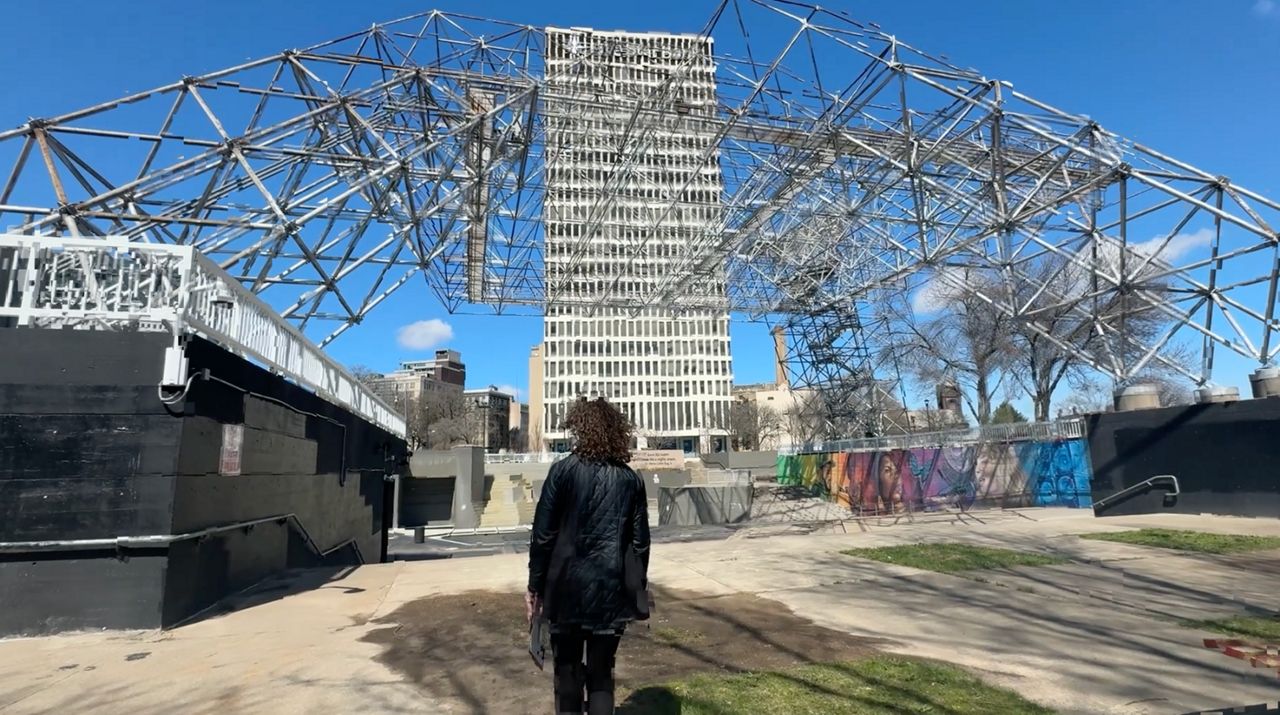
And as these spaces have become inaccessible, the Rochester chapter of Democratic Socialists of America organized a walk-through in partnership with Rochester Grants Pass Resistance for residents to see firsthand these changes.
“In order to do something about this,” Higgins said. “If we can get a critical mass, we can support legislation at City Council to cut down on hostile architecture in our community and to increase support for unhoused people.”
For long-time resident and associate real estate broker, Marlynn Butler, this is a first for her, coming across these issues.
“I don’t think we’re doing enough to help,” Butler said. “Especially like the veterans being homeless. You know, that’s a big issue with me because my dad is a veteran. And it just saddens me so much to see it.”
According to reports from the New York State Comptroller’s Office, there were more than 158,000 homeless New Yorkers in 2024 – about one in five of the nation’s homeless. Its organizers hope local leaders would limit the use of these architectural designs and do more to aid the homeless community.
Seeing these changes in the community has been problematic not only for its primary targets, but for all people.
“When public resources are made more uncomfortable, benches are made more uncomfortable when there’s a lack of access to public restrooms. It affects everybody,” Higgins said.