
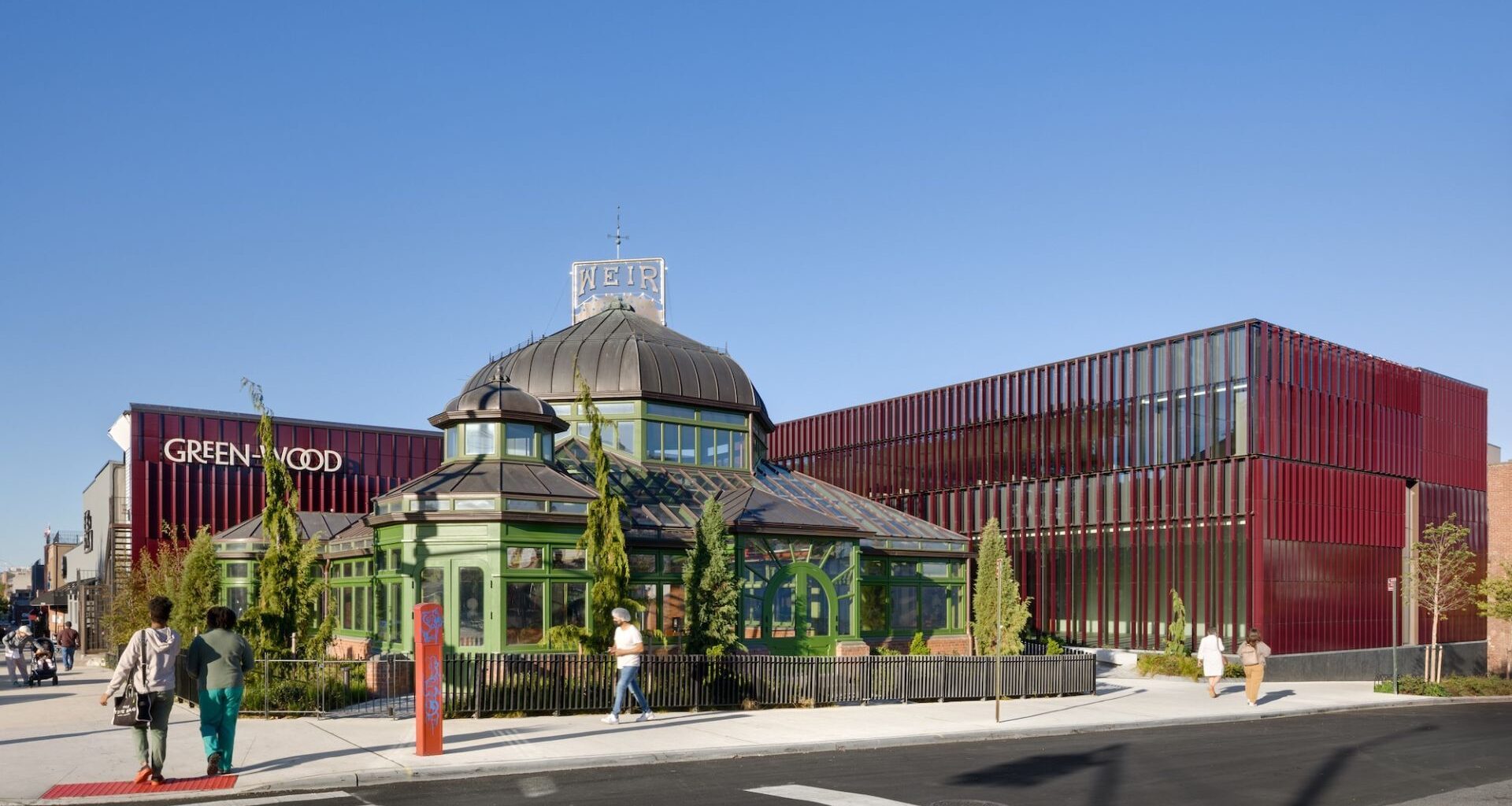
Brooklyn’s Sunset Park neighbourhood is a study in layered urban life: along busy Fifth Avenue, a mechanic’s garage sits beside a furniture warehouse and down the block from a wholesale bakery, while modest apartment buildings give way to luxury towers. Into this mix, Green-Wood Cemetery’s new education and welcome centre, the Green-House, inserts itself with quiet assurance, its presence mediating between inheritance and change.
(Image credit: Rafael Gamo)
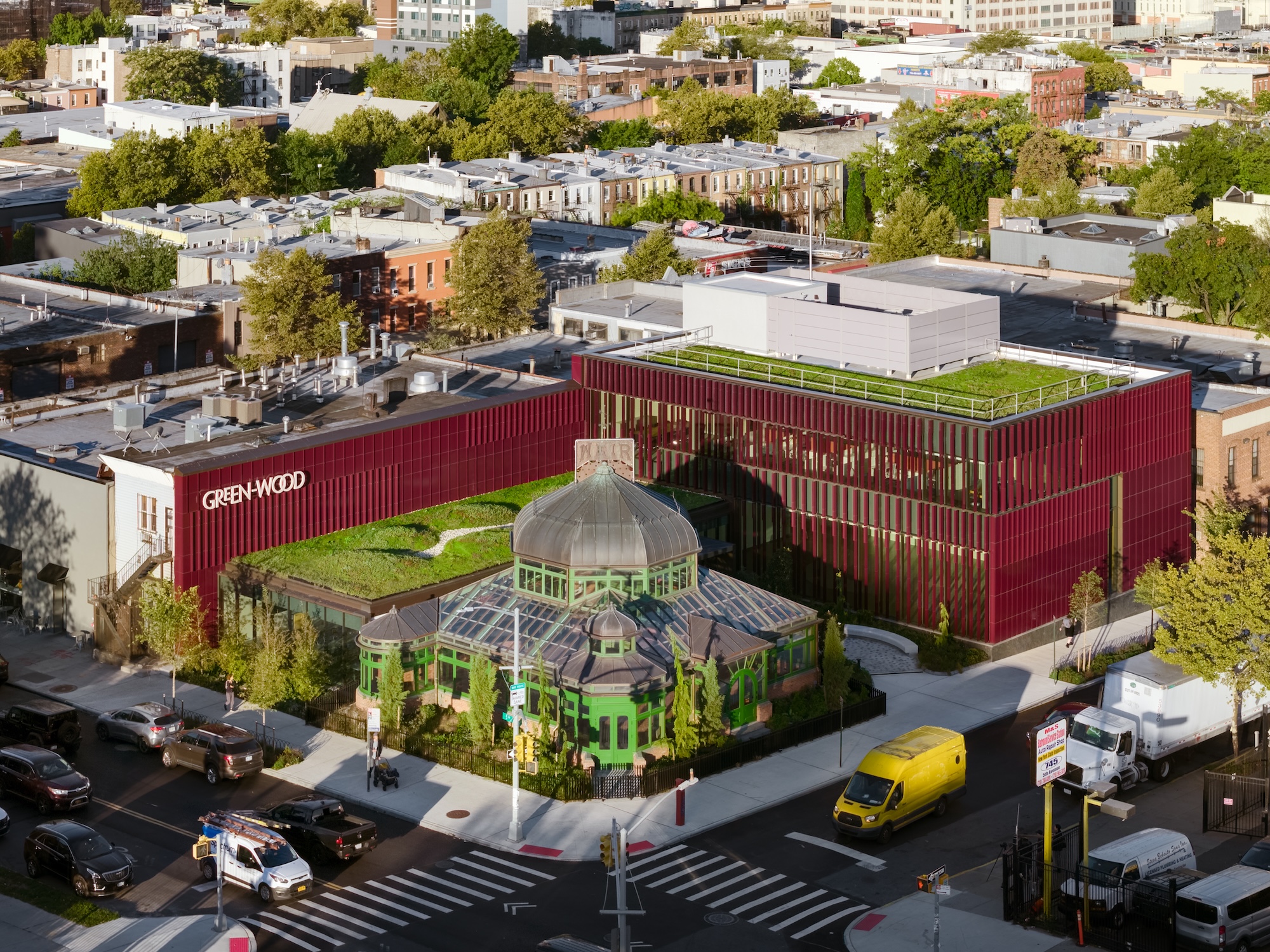
Designed by New York-based Architecture Research Office (ARO), the unapologetically contemporary building straddles multiple worlds, wrapping itself around – and deferring to – a landmarked greenhouse that anchors the street corner. The gesture is apt: positioned along this commercial thoroughfare, the centre becomes a new point of entry to the historic cemetery across the street, itself a place where the complexities of New York are writ large.
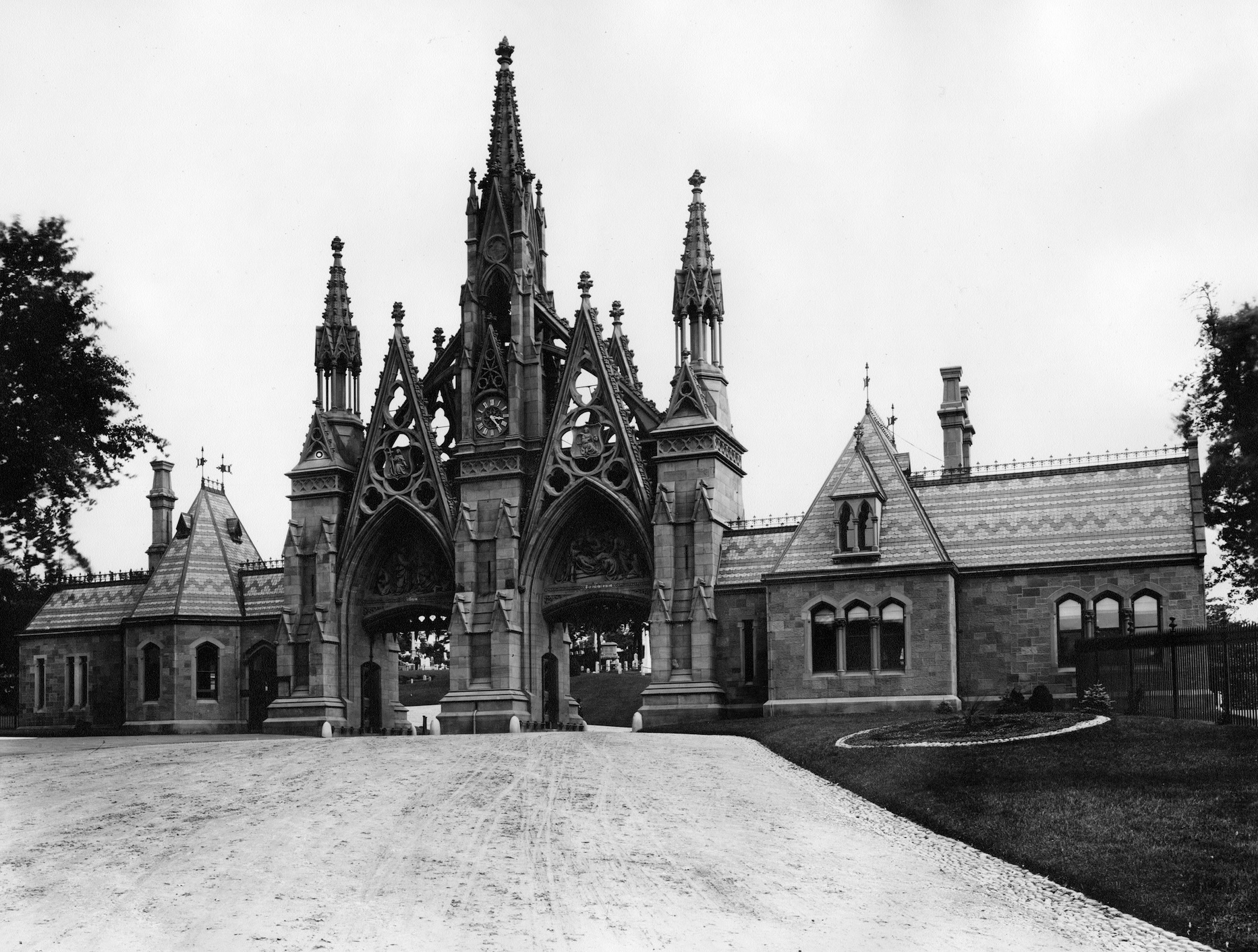
The Gothic entry arch leading to Green-Wood Cemetery, pictured here in 1895.
(Image credit: Getty Images)
Founded in 1838, Green-Wood emerged from the rural cemetery movement as both burial ground and public landscape – 478 acres of hills, glacial ponds and lush vegetation set improbably within Brooklyn’s dense fabric, dotted with mausoleums and monuments. From the outset, it was conceived as a place where life and death might coexist: as much for promenades and carriage rides as for mourning. At its height, it was said to be the state’s second most popular tourist attraction, after Niagara Falls. Over time, it became the resting place of a wide-ranging cast of luminaries – ‘permanent residents,’ as they are known – from Boss Tweed to Leonard Bernstein, Louis Comfort Tiffany, Jean-Michel Basquiat and Paul Auster.
(Image credit: Rafael Gamo)
By the late 20th-century, however, like many cemeteries, it had slipped into decline, open only to mourners. Then-president, Richard Moylan, recognised it would need to move beyond memorialization, understanding its value as a cultural resource mirroring the city’s history. Under his leadership, it was reopened to the public and reanimated by returning to its original premise: a place for the living.
The cemetery, now operating as a nonprofit, hosts a wide range of events and activities, from birdwatching and performances to workshops and festivals, including those that engage with mortality itself. Today, a National Historic Landmark and accredited arboretum, it remains an active cemetery and a vital cultural resource, its identity grounded in what its stewards describe as three intertwined elements—history, art and nature.
(Image credit: Rafael Gamo)
As public offerings expanded and annual visitation climbed into the hundreds of thousands, Green-Wood’s public-facing infrastructure remained largely unchanged. The cemetery envisioned a visitor centre—sited just outside its boundaries to create a more welcoming point of entry.
‘You can’t easily get people to walk through cemetery gates – no matter how elegant – because of a natural fear of confronting loss,’ says Green-Wood president Meera Joshi. ‘We needed something to demystify the experience – a gentler transition onto the grounds.’
You can’t easily get people to walk through cemetery gates – no matter how elegant – because of a natural fear of confronting loss. We needed something to demystify the experience.
Meera Joshi, President, Green-Wood Cemetery
(Image credit: Rafael Gamo)
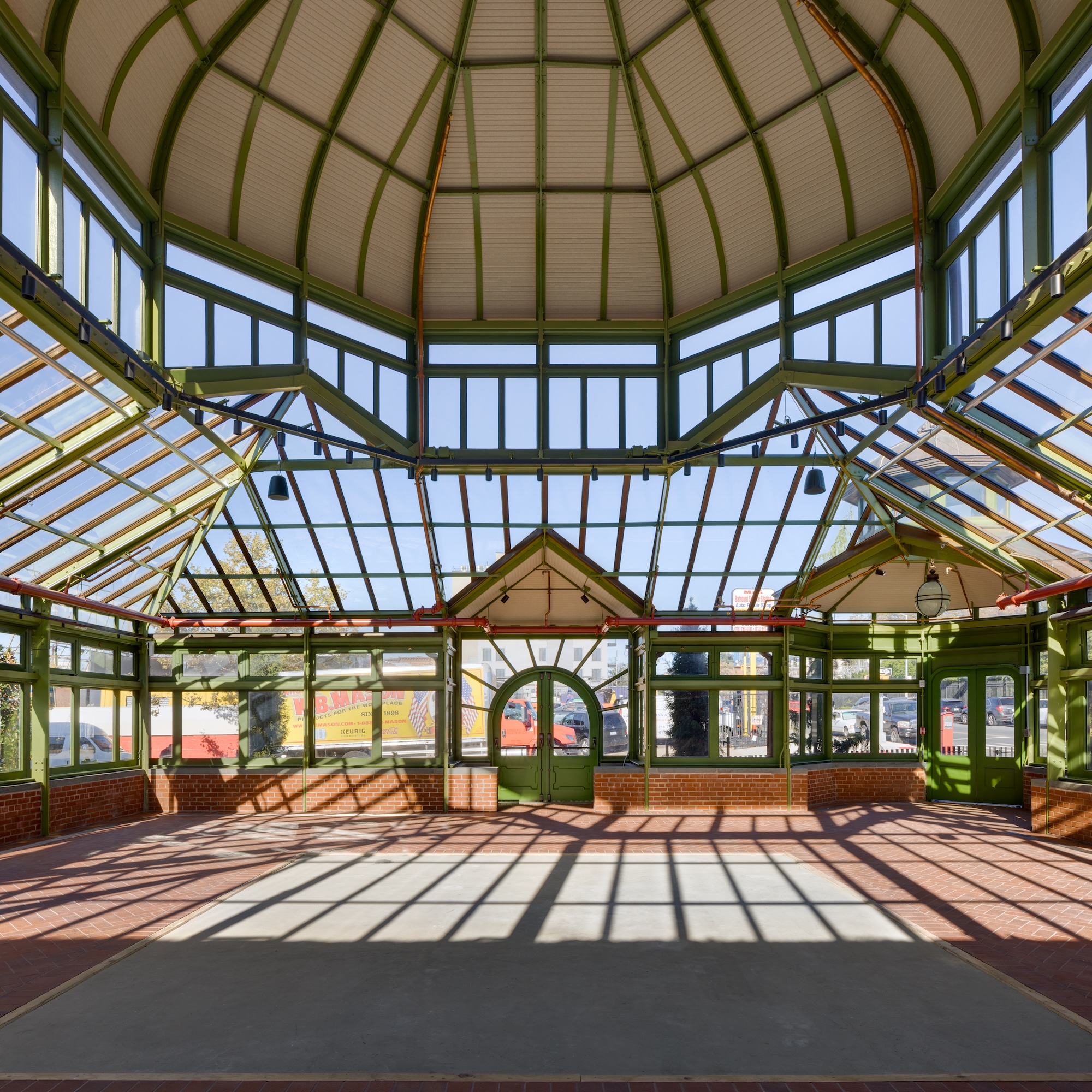
The 1895 Victorian Weir greenhouse, set down the hill from the main entry’s imposing Richard Upjohn–designed brownstone gate, offered a compelling anchor: a delicate steel-and-glass remnant of the once-thriving funerary ecosystem that surrounded the cemetery. ‘Restoring the greenhouse felt inevitable,’ says Joshi. ‘It’s what Green-Wood does – bringing history back so it can be experienced today – it’s in our DNA.’
At just 1,750 sq ft, however, it could not accommodate the necessary infrastructure or programme.
(Image credit: Rafael Gamo)
The resulting design brief called for a new building that would integrate the landmarked structure while providing classroom and exhibition space, offices, and archives – consolidating previously dispersed functions and supporting year-round use. More than a threshold, it would orient visitors to Green-Wood’s narratives and rich landscape, extending its reach to both the city at large and the surrounding Sunset Park community. ‘The new centre,’ says ARO principal Kim Yao, ‘would support their mission of continuing their transition into a cultural organization.’ Adds ARO principal Stephen Cassell, ‘In some ways, the building and greenhouse are almost symbolic of this future.’
(Image credit: Rafael Gamo)
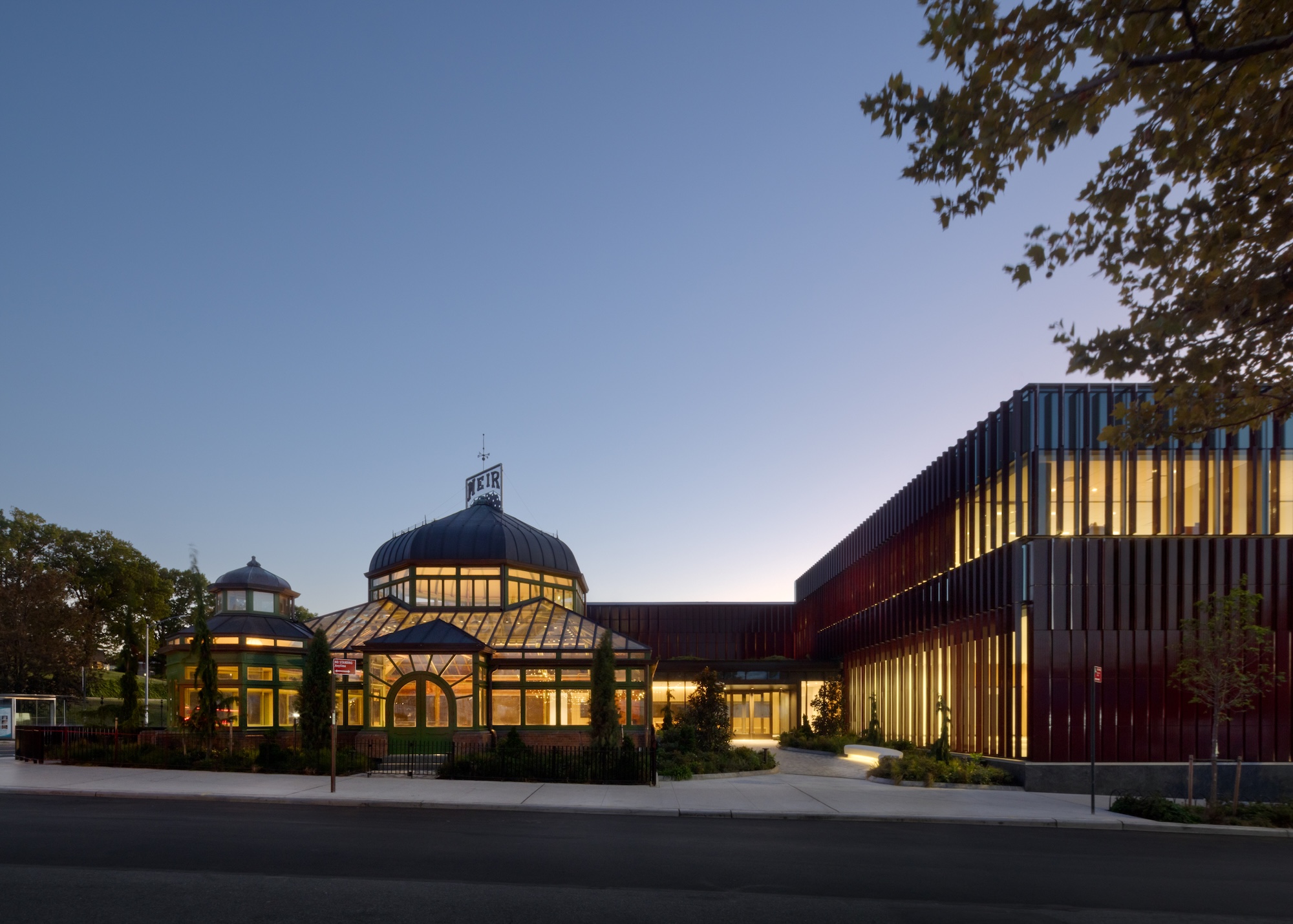
For ARO, the challenge was one of calibration: how to build alongside a fragile historic structure without overwhelming it, while accommodating a multi-part programme. Working with restoration architect Walter B. Melvin, the team carefully rebuilt the greenhouse – replacing its glazing and much of its structural framing, and discreetly integrating life-safety, lighting and mechanical systems. A large ceramic tile map of the cemetery, based on an 1882 visitor’s map, is set into the floor, transforming the space into a flexible, light-filled venue for events and gatherings.
(Image credit: Rafael Gamo)
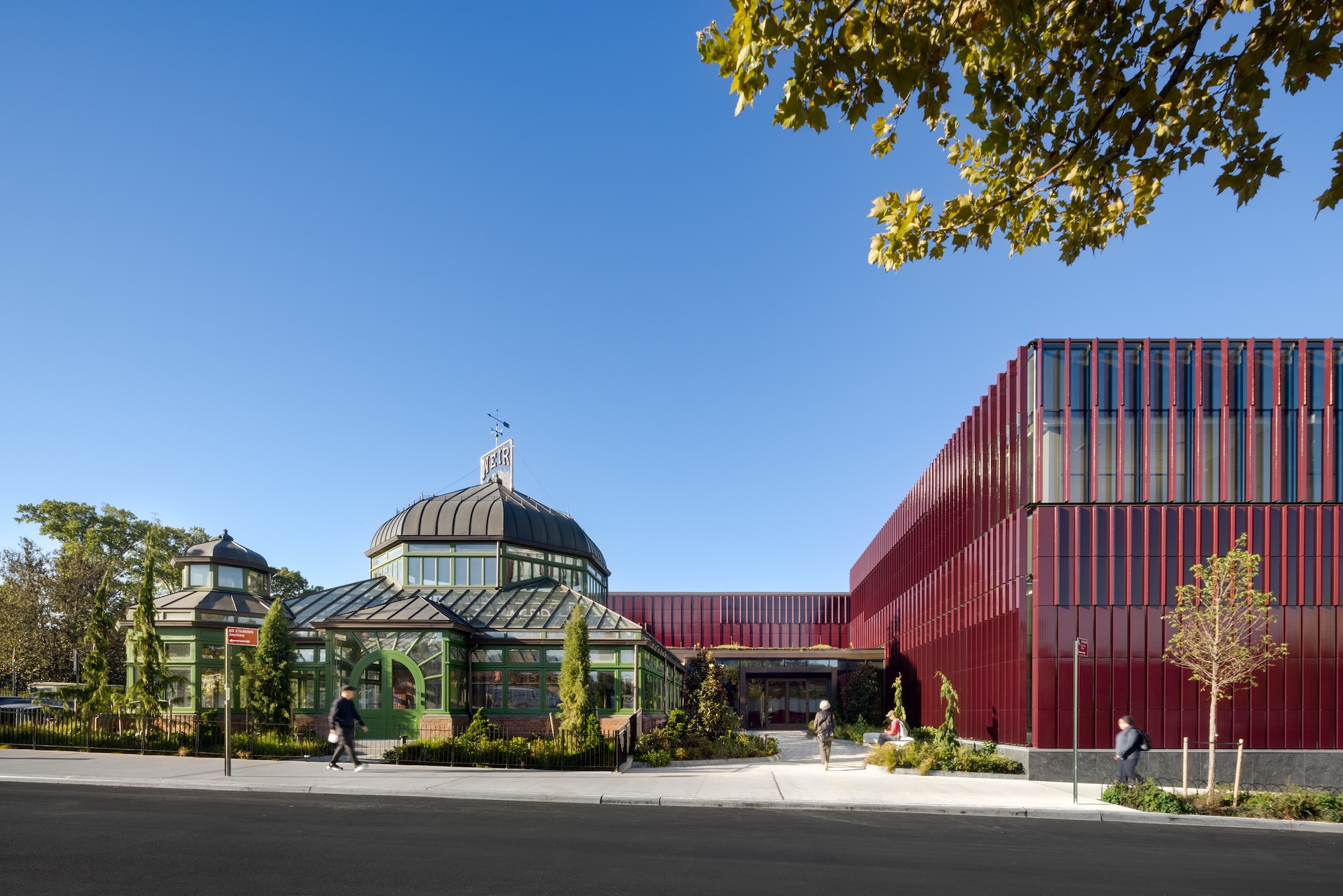
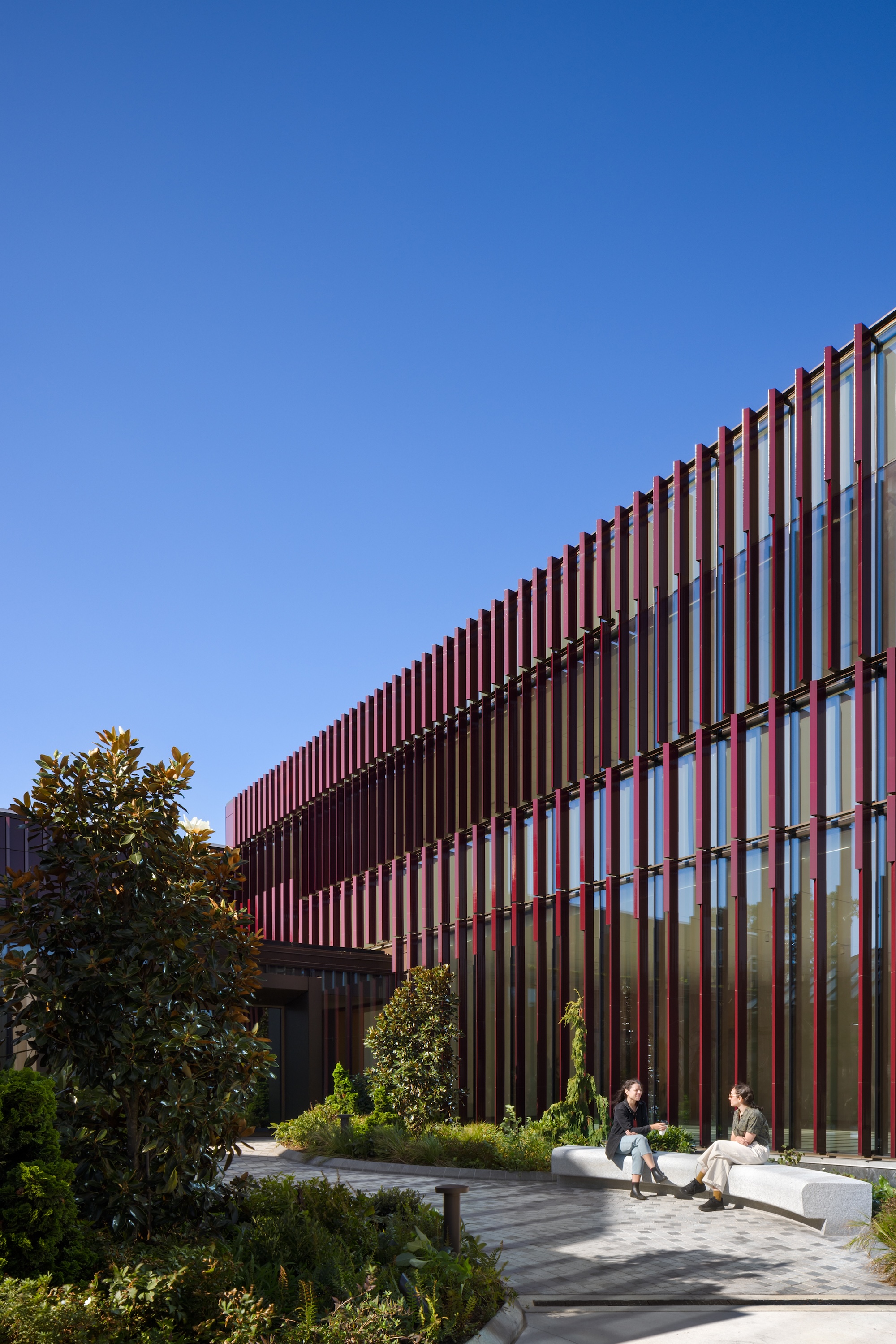
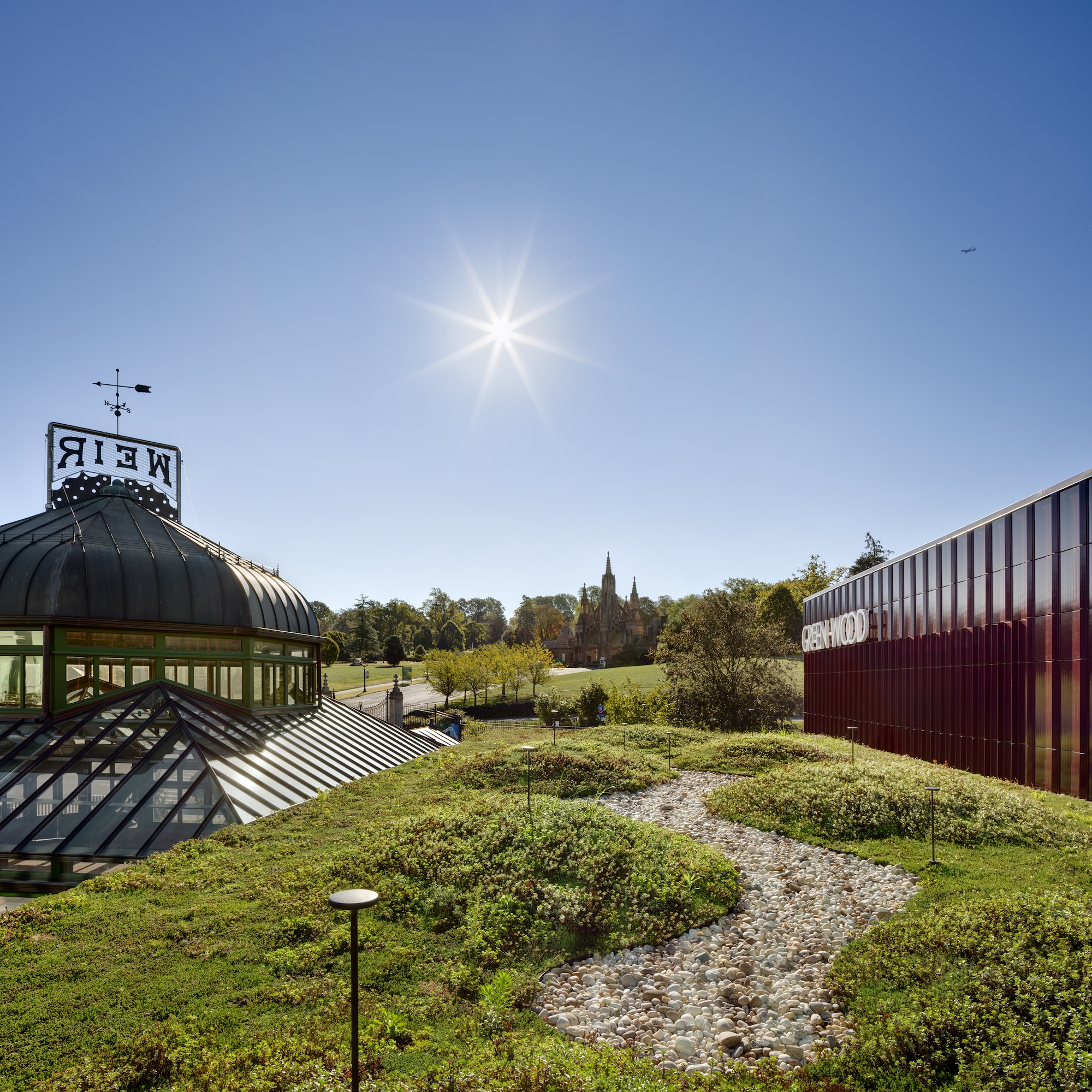
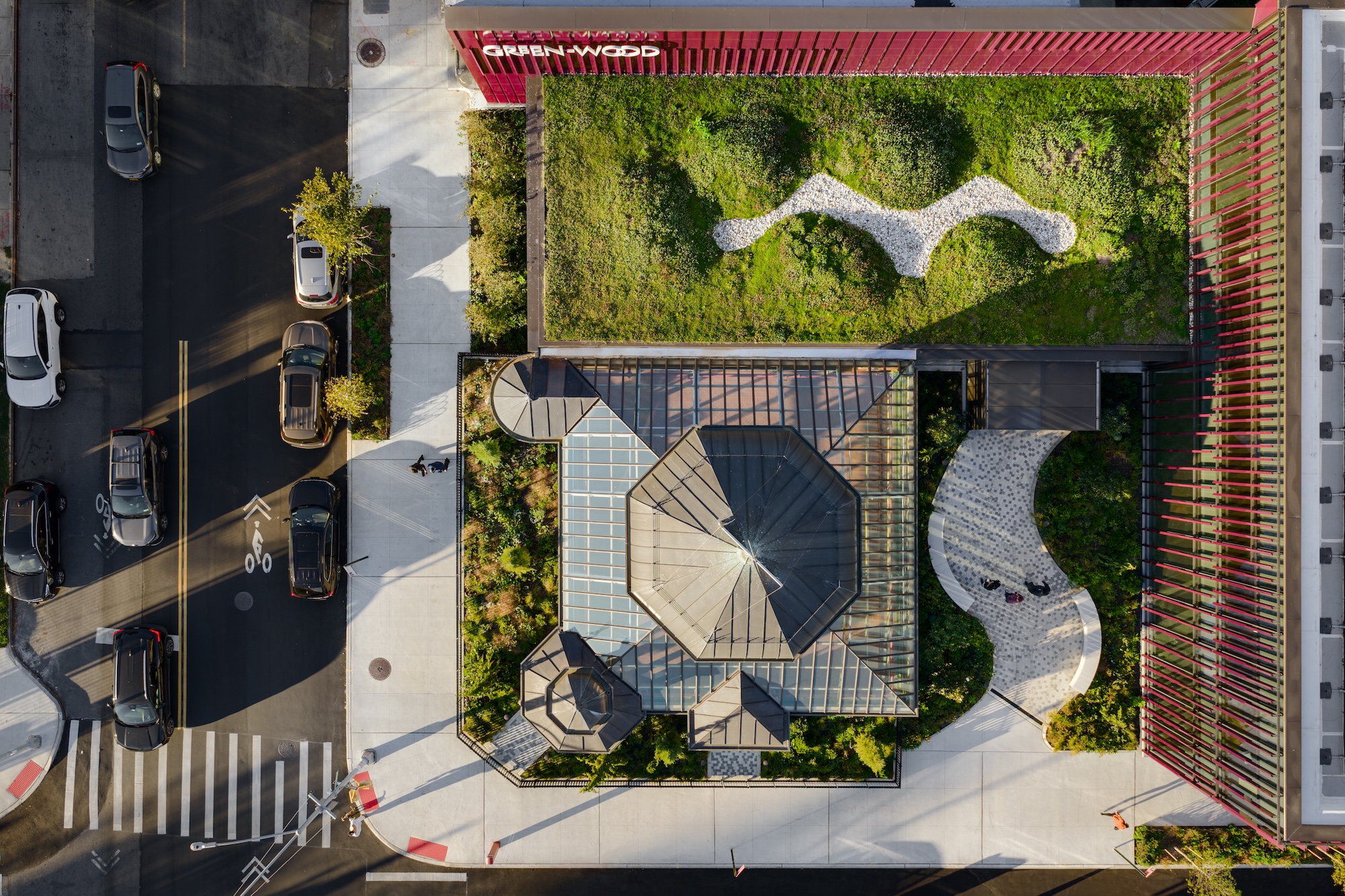
The new 17,000 sq ft LEED Gold building takes an L-shaped form that embraces the greenhouse while holding back from it. A low, one-storey volume with a green roof contains the lobby and classroom and sits to one side, preserving views from Fifth Avenue and allowing the historic structure to read as an object in the round. Opposite, a two-storey wing pulls away to form a landscaped entry court by Michael Van Valkenburgh Associates, echoing the greenery of the cemetery beyond. This volume houses galleries for collections and rotating exhibitions, research space and offices, with the archive tucked below grade in a climate-controlled suite.
(Image credit: Rafael Gamo)
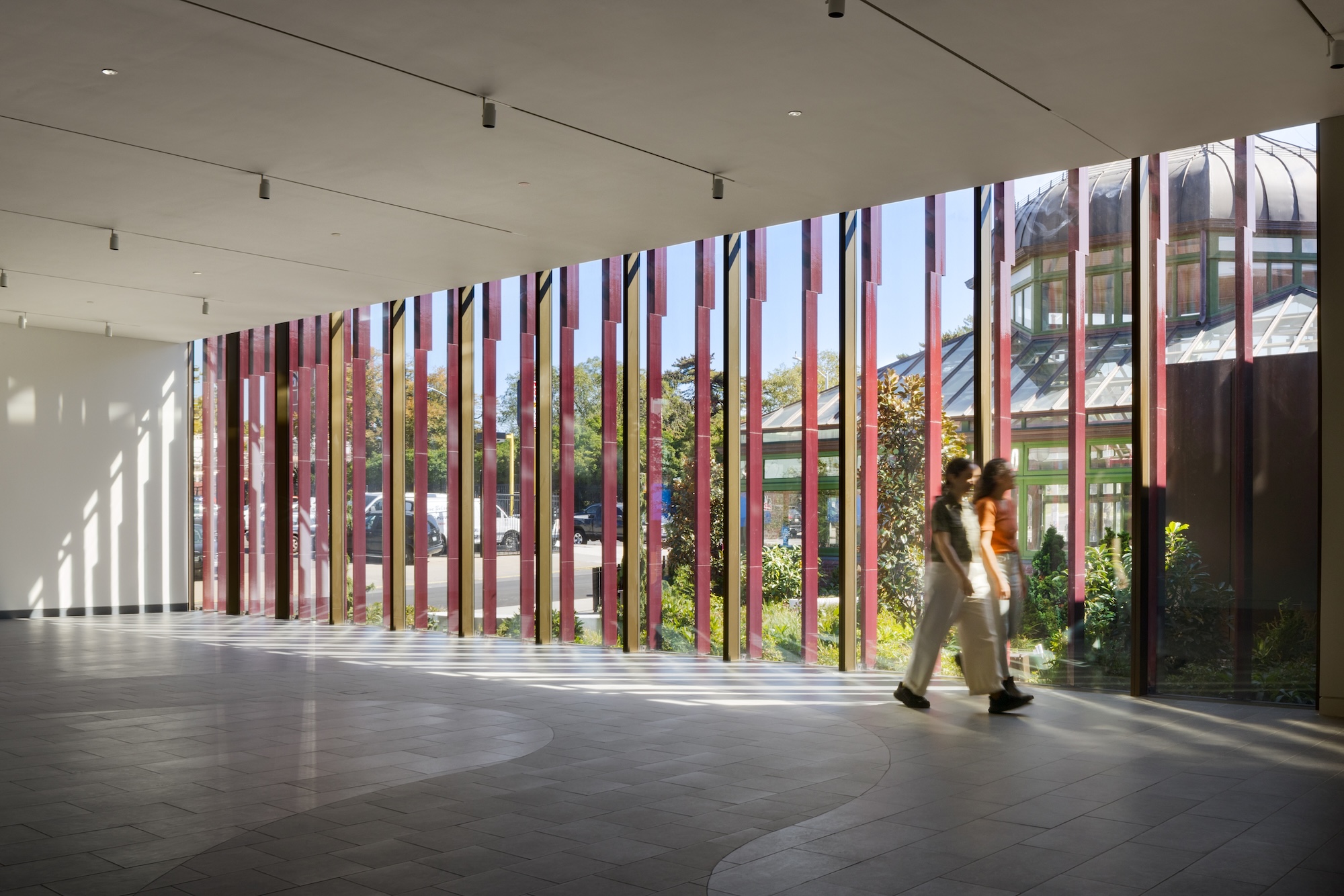
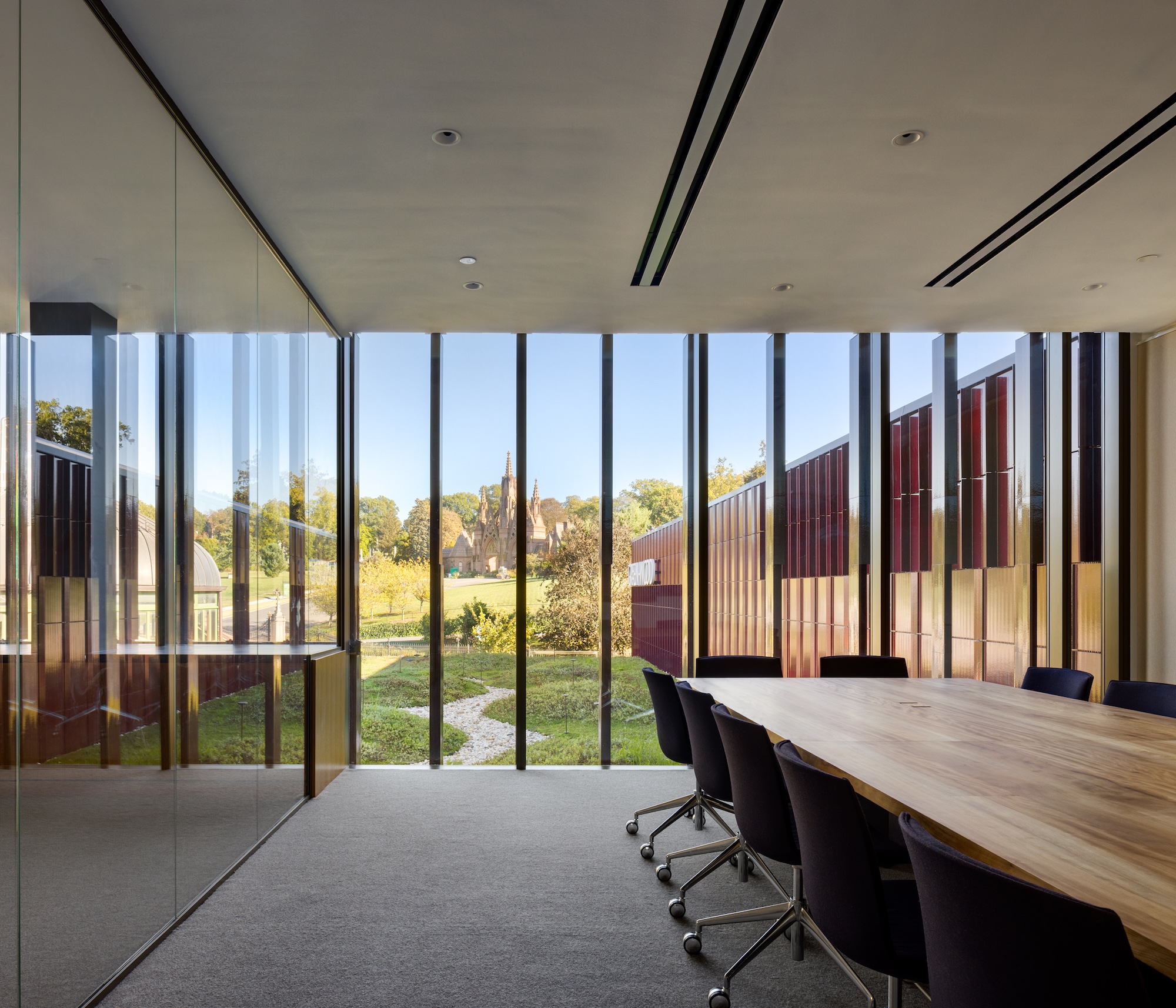
Prioritising daylight and views, the architects resisted an all-glass solution. Instead, they clad the building with custom glazed terracotta—its aubergine tone a contemporary counterpoint to the Upjohn gate’s brownstone and a foil to the greenhouse’s copper roof as it patinates. Composed of a rain screen and vertically oriented baguettes acting as a brise-soleil over a curtain wall, the façade filters light and frames views while receding into the background. ‘The materiality was about tying into the cemetery’s rich palette,’ says Cassell, ‘but in a way that doesn’t compete with the greenhouse and lets it be read clearly.’
Inside, restrained finishes – porcelain tile floors, plaster ceilings, and wall panels of slatted white oak over acoustic backing – bring warmth and clarity to the interiors.
(Image credit: Rafael Gamo)
Looking ahead, the centre signals an ongoing shift in how the cemetery positions itself within the city – as a place that, as was originally intended, is engaged with the living world and with its surrounding community. ‘We can now serve more New Yorkers through diverse programming—and create space for people to better understand mortality, loss and how to navigate both,’ says Joshi.
As Yao notes, the project ultimately mirrors Green-Wood’s broader mission: ‘stewarding the past while looking to the future, quite literally, through the architecture.’