
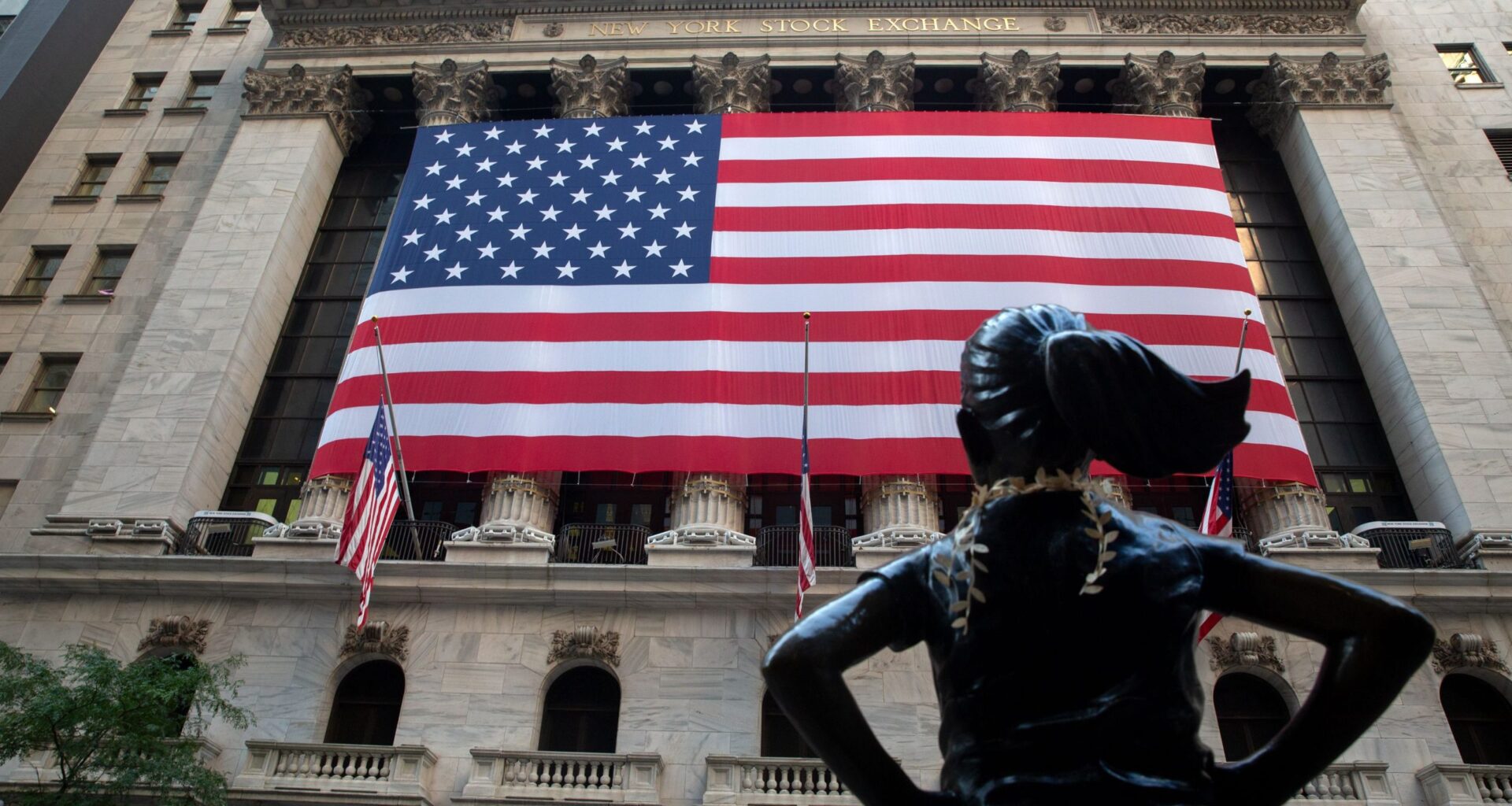
Earlier this month, real estate giant RXR and its partner TF Cornerstone filed for a permit to tear down the Grand Hyatt Hotel famously built by Donald Trump and replace it with a 95-story office building that will cost $6.5 billion to construct.
The project won City Council approval back in 2021, but is finally advancing now amid signs that — despite differences with Mayor Zohran Mamdani and his tax-the-rich agenda — Wall Street and the financial sector are eager to pay record rents for new office space.
“The demand is there,” RXR CEO Scott Rechler told THE CITY. “I had a meeting Thursday with brokers who work with financial service companies and they told me their clients are growing so fast that when their leases are nearing an end they always need more space than they currently occupy.”
During the pandemic, the headlines spotlighted a series of Wall Street firms that relocated elsewhere, especially to Miami. Efforts to defeat Mamdani’s push for higher taxes on the wealthy and corporations have led to stories predicting companies would flee New York.
But the numbers tell a different story. Wall Street employment in the city is at a record. Available office space on Park Avenue, a key location for those firms, is almost nonexistent in the most attractive buildings. And developers are planning three new towers on Park, confident there will be financial firms to fill them.
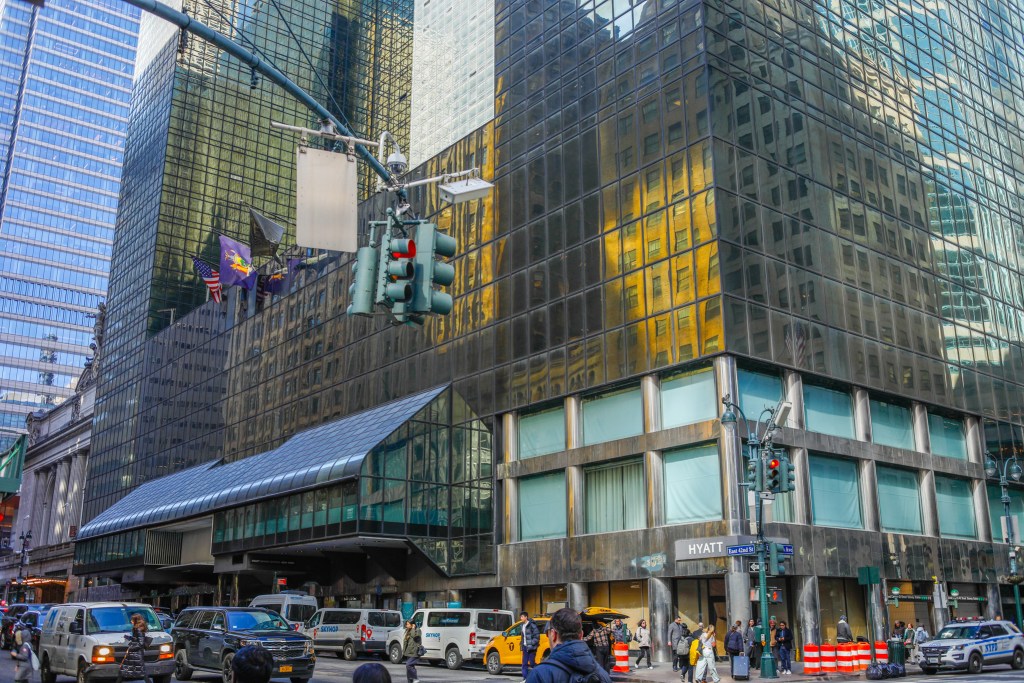 Plans are in motion to replace the Grand Central Hyatt over east 42nd Street with a $6.5 billion, 95-story office tower – a sign of Wall Street’s confidence in New York. Credit: Alex Krales/THE CITY
“There is really only one driver of the decisions financial companies make and that is where the people they want to work for them are and where those people want to live and work,” said Mary Ann Tighe, CEO of the real estate firm CBRE’s Tri-State region and a broker who has worked on scores of the most important office deals in recent decades. “And New York is still a magnet for those young people.”
It is true that Wall Street firms are expanding elsewhere in the United States and the city’s share of securities industry employment is also at a record low. But that is not an exodus.
Securities firms now employ a record 209,000 workers in the city, according to the final 2025 job number released his month by the state Labor Department. Wall Street profits and bonuses also set records last year, which has led to billions in unexpected income tax collections for the state, which gets 20% of all its tax revenue from the industry, and the city.
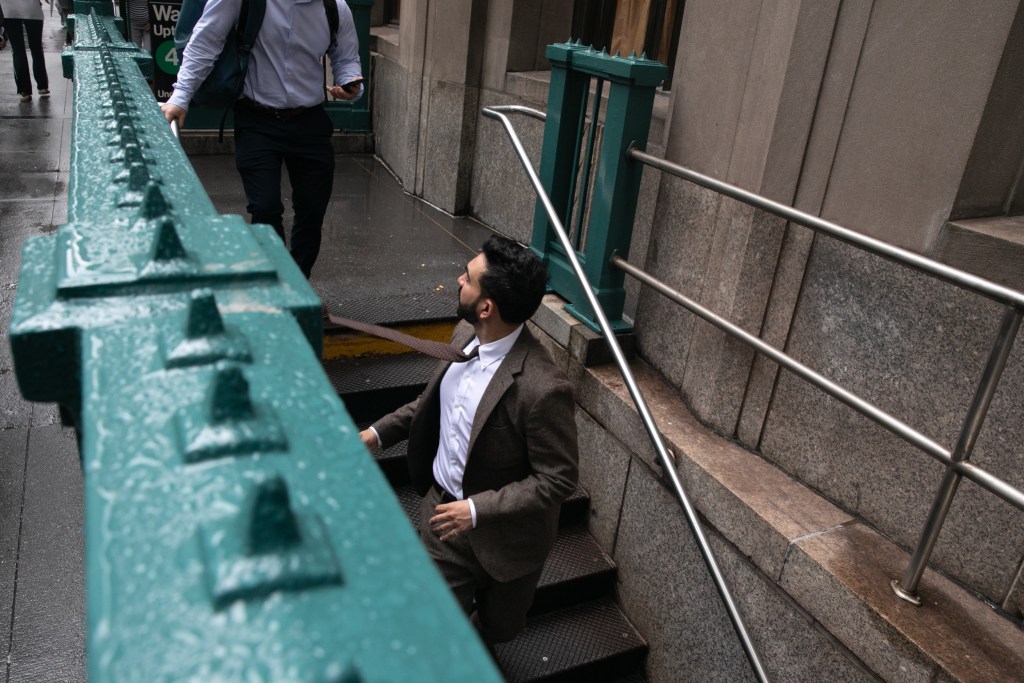 Mayoral candidate Zohran Mamdani heads into the 4-5 Wall Street station after a campaign event, June 10, 2025. Credit: Ben Fractenberg/THE CITY
Real estate deals show how committed these firms are to the city.
The vacancy rate on Park Avenue is only 7% and the most modern buildings are 96% occupied, according to research from the real estate firm JLL.
“Park Avenue is where people want to be,” said JLL broker Joe Messina. “It’s a wide thoroughfare with great views and great light. And everybody is there including your peers and your clients.”
New office towers are underway at 350, 405 and 570 Park Ave. The building at 350 Park is for the giant hedge fund Citadel, which abandoned its historic home in Chicago in 2022, moving its headquarters to Miami, but relocating a substantial number of people to New York.
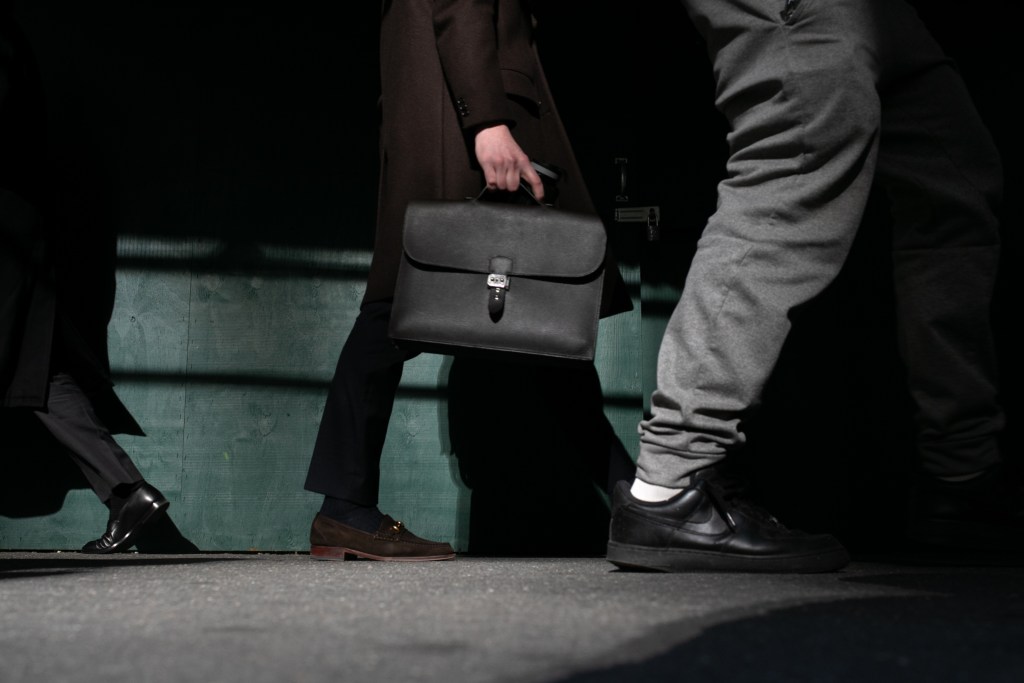 Workers stroll down Wall Street near the Stock Exchange, Dec. 3, 2025. Credit: Ben Fractenberg/THE CITY
Park Avenue and the rest of Midtown East have gotten a major boost from JPMorgan Chase’s decision to build what is essentially a campus that includes a new $3 billion, 60-story headquarters for about 10,000 employees. Chase also owns 250 Park Ave. and nearby 383 Madison Ave. where it is spending $1 billion on a renovation. In all it controls 6 million square feet of office space. (Chase is a corporate sponsor of THE CITY.)
Financial firms that work with Chase, the nation’s largest bank with $4.4 trillion in assets, as well companies that provide legal and other services to Chase, want to be near the campus as well.
“They have really reinvigorated the whole area,” Messina said.
Some of the city’s biggest financial firms are buying their office buildings, a more permanent commitment even than signing a long-term lease, notes Tighe, naming Wells Fargo, and the private equity firms KKR and Blackstone.
High office prices: ‘No one blinks’
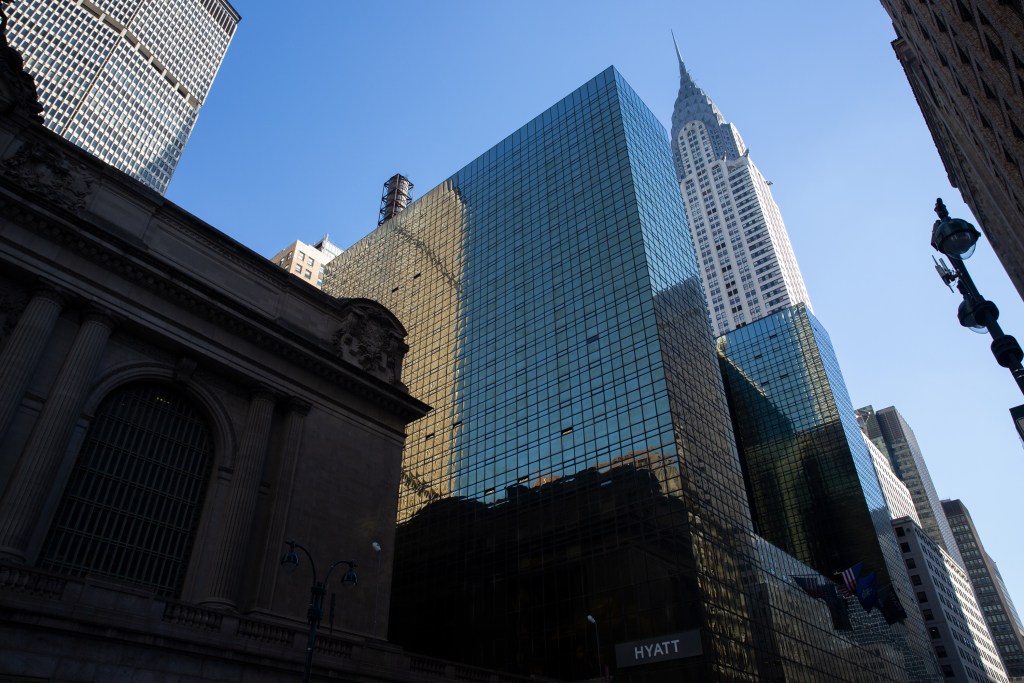 A new project will raze the Grand Hyatt Hotel next to Grand Central Station and replace it with a 95-story office building that will cost $6.5 billion to construct. Credit: Ben Fractenberg/THE CITY
175 Park, which will be the tallest office building in the Western Hemisphere, is in talks with financial service firms and law firms and other professional service firms. It will be very expensive to rent space there.
“Two years ago when people came to our marketing suite to see what we planned, I would mumble when they asked the cost,” Rechler said.”Now I just tell them and no one blinks.”
Some on Wall Street are doing one thing and saying another as they work to defeat Mamdani’s tax plan.
Chase CEO Jamie Dimon in his widely read shareholder letter released this week noted that the firm had reduced its number of employees in the city from 30,000 a decade ago to 24,000 today while increasing its workforce in low-tax Texas from 26,000 in 2015 to 32,000 today.
The numbers are somewhat misleading since he is including retail employees at working at bank branches. Chase wouldn’t disclose to THE CITY branch employment numbers but it boasts 485 branches in Texas, a state with more than 30 million people compared with a little less than 300 in New York, a city with some 8 million people.
But Dimon is growing the bank’s footprint elsewhere.
“This trend will likely continue,” he said in the letter. “Companies need to remain competitive in this very tough, fast-moving world. And higher taxes mean lower returns on capital and less competitiveness by their nature.”
Chase isn’t alone in expanding elsewhere. Goldman Sachs is constructing a new building in the Dallas area, bringing its headcount there to 5,000, its largest office outside of New York.
‘We expect respect’
As a result, the city’s share of all securities jobs in the U.S. has fallen from a third in 1990 to just over 17% today, according to the annual report on the industry from the state comptroller.
The mayor’s rhetoric and tax plan have top executives on edge.
“The tone and the treatment in New York is a problem,” said Tighe. “We are a funding source for all the things that are happening in the city. You don’t need to send us a thank you note but we expect respect and a seat at the table.”
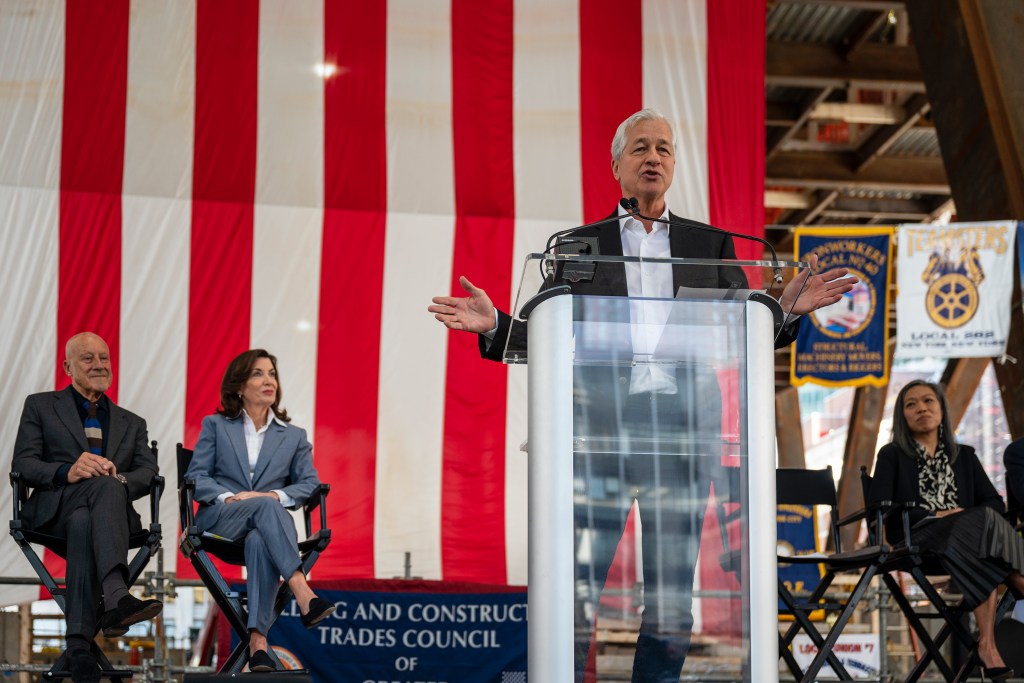 JPMorgan Chase CEO Jamie Dimon, right, has talked tough about Mayor Mamdani’s tax-the-rich agenda. Credit: Hiram Alejandro Durán/THE CITY
The Mamdani Administration insists Wall Street and other businesses should pay more.
“Despite the hyperbolic rhetoric coming from some in the business community, the reality is that Wall Street is doing as well as it ever has,” said Cassio Mendoza, a spokesperson for the mayor. “Meanwhile, working New Yorkers are struggling to afford housing, child care, and groceries. The Mamdani administration is focused on growing the economy equitably so that New Yorkers across the five boroughs benefit from our city’s immense economic prosperity.”
There is one major downside to Wall Street’s love in the city. The Bloomberg and de Blasio administrations achieved an economic goal that had been the Holy Grail of the city for decades: To diversify the economy so that it didn’t plunge into a recession every time Wall Street faltered.
For the moment, New York is once again an industry town.

“Now we are back to relying on Wall Street to drive the New York economy,” said Rahul Jain, state deputy comptroller for New York City.
Related