
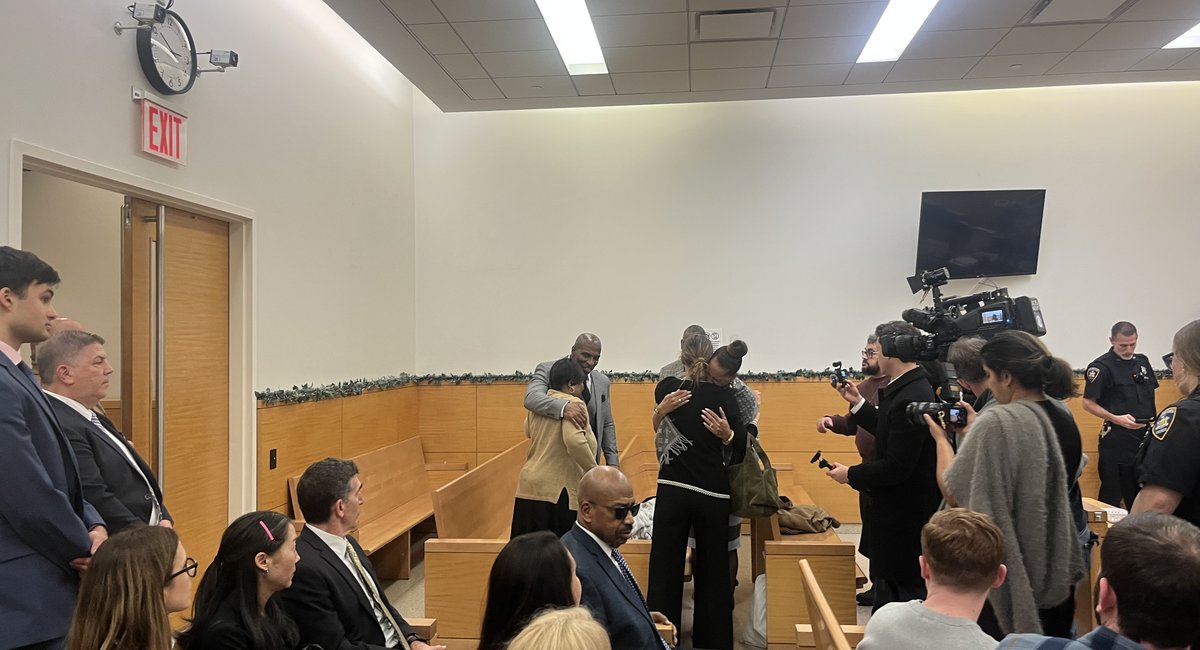
In March, Brooklyn prosecutors signed off on their first exoneration of the year, freeing Kenneth Windley after nearly 20 years in prison.
Such exonerations have been a proud hallmark of the Brooklyn DA’s office since its Conviction Review Unit was established in 2014. But lately, they’ve been rarer.
While the unit has exonerated as many as 10 people in a single year, it only exonerated one person in 2025.
Brooklyn is not alone in its slowdown in overturning convictions. In New York City and across the country, the number of wrongful convictions has dipped significantly in the last few years.
The National Registry of Exonerations, which collects information about exonerated people in the United States, reported just five exonerations across the five boroughs last year, the lowest total in 15 years, and a precipitous drop from the two previous years.
The trend is similarly stark nationwide, where 2025 saw the fewest exonerations since 2011, dropping by more than 60 percent after reaching a nationwide peak in 2022.
Nichole Parisi, the chief executive officer of the Association of Prosecuting Attorneys, a national training and support organization for prosecutors, said that the recent dip in the numbers might just be “a natural decline.”
“Especially with conviction review units, when at the beginning there were a large amount of reviews and exonerations and that’s just slowed down,” Parisi said in a statement.
But some defense attorneys who work on wrongful conviction cases are more concerned.
Kenneth Windley
Kenneth Windley, third from the left, at a press conference after his exoneration.
Willow Higgins / Gothamist
After re-investigating Kenneth Windley’s case for years, the Brooklyn District Attorney’s conviction review unit admitted that Windley had been wrongly convicted and a Brooklyn Supreme Court Justice overturned his conviction.
Windley had spent nearly 20 years in prison for robbery after buying his mother a new stove with a money order that, prosecutors now agree, he didn’t know was stolen.
Ultimately, the actual perpetrators of the crime confessed. They were the same two men Windley pointed law enforcement to from the start.
David Shanies, one of Windley’s attorneys, said that the process of getting someone exonerated has always been an uphill battle. But over the past few years, he said he has noticed the process getting harder across the board.
“We have to do that much more to make an airtight case that a client was wrongfully convicted,” he said.
Fluke, or trend?
Since the downturn has been a recent development, some experts say it’s hard to know for certain why the numbers are falling and whether it’s part of a broader trend.
For nearly a decade, the number of annual exonerations across the country fluctuated, but never fell below 100 per year. Then in 2022, exonerations reached a record high.
Ken Otterbourg, a researcher at the National Registry of Exonerations, said that the 2022 peak might be explained by two large clusters of exonerations in Chicago. More than one hundred people were exonerated after the misconduct of two different officers in the city’s police department came to light.
At this point, Otterbourg said, it may be too soon to tell if the low numbers we are seeing become the new norm, or if the previous highs were anomalous.
“Whether there’s something else going on in the water, I don’t know,” Otterbourg said.
But others worry that the dip is connected to a more systemic shift.
Reexamining past convictions has been tied to what is known as the progressive prosecution movement, said Charlie Linehan, the former chief of Brooklyn’s conviction review unit.
Progressive prosecution is a justice reform model aimed at prosecuting fewer low-level crimes and reducing mass incarceration.
Progressive criminal justice initiatives gained traction over a decade ago nationwide, legal experts said. In New York, bail and discovery reform legislation was passed shortly before the pandemic. But by 2024, after a pandemic-era crime spike, New York’s lawmakers were struggling to pass criminal justice reform measures in Albany.
“Progressive politics is on the back foot right now, taking a beating,” Linehan said. “I think people are far less willing to stick their neck out and risk criticism for doing this kind of work, which is a tragedy in my opinion.”
Elizabeth Felber, the supervising attorney at the Legal Aid Society’s Wrongful Conviction Unit, said it seems like both prosecutors and judges are increasingly worried about opening the floodgates of wrongful convictions.
“Perhaps the DAs don’t want it to seem like they got so many cases wrong,” Felber said.
A leader in exonerations
For years, Brooklyn’s conviction review unit has earned a reputation as a national leader in overturning convictions.
The unit’s most productive year was its first, in 2014, when it exonerated 10 people. The following year, 12 people were exonerated county-wide, but only seven of them were with the help of the office’s conviction review unit. Since then, the unit’s annual numbers have fluctuated, averaging two to five exonerations per year, according to the office.
2025 was a particularly slow year for the unit, when it only helped exonerate one person.
Linehan, the former unit chief who left the office in January 2025 to start his own practice, said that he finds the unit’s recent output “hugely disappointing.” At least one other jurisdiction, Philadelphia, has surpassed Brooklyn in its total number of exonerations to date, according to the National Registry of Exonerations.
But the Brooklyn District Attorney’s Office says that its unit remains the best.
“Brooklyn’s Conviction Review Unit has established itself as the most prolific in the country, with 42 exonerations since 2014 plus vacatures of over 550 cases tied to police officers who were found guilty of misconduct. It remains the biggest, best resourced and most active, and we are fully committed to correcting every miscarriage of justice that happened in Brooklyn,” said Oren Yaniv, a spokesperson from the office.
Brooklyn’s conviction review unit has been operating without a permanent leader since Linehan left. Four attorneys who work these cases have told Gothamist that they are concerned about the lack of leadership, which they believe is partly to blame for the unit’s slowdown.
Ron Kuby, a New York-based defense attorney, said that not having a permanent unit chief in Brooklyn is “unhelpful at best.”
“So much of what the Brooklyn CRU does is dependent on leadership. I think that’s true generally of CRUs,” Kuby said. “If they are leaderless, and there are no deadlines, there are no priorities, and there is no accountability.”
Brooklyn’s District Attorney, Eric Gonzalez, said that he is actively looking for a permanent chief, but in the meantime, the program’s acting chief, Julio Cuevas, “is doing a great job.”
Looking ahead
Many experts point out that wrongful convictions don’t happen as frequently as they used to. In the 1990s, during the height of the War on Drugs, police were commonly using techniques that are now considered unethical.
Accepted best practices for interviewing suspects and witnesses have changed significantly in the last three decades, as well as technological advancements like body camera footage and the use of DNA. There are now also hundreds of attorneys who dedicate their careers to addressing these past harms.
Eventually, experts say, the number of innocent people in prison from that period will start to slow, either because their convictions have been overturned or because they die in prison. Tremendous progress has been made, Linehan said, but that’s not the cause for the dip we’re seeing in the data.
“That’s a little too optimistic,” Linehan said.