
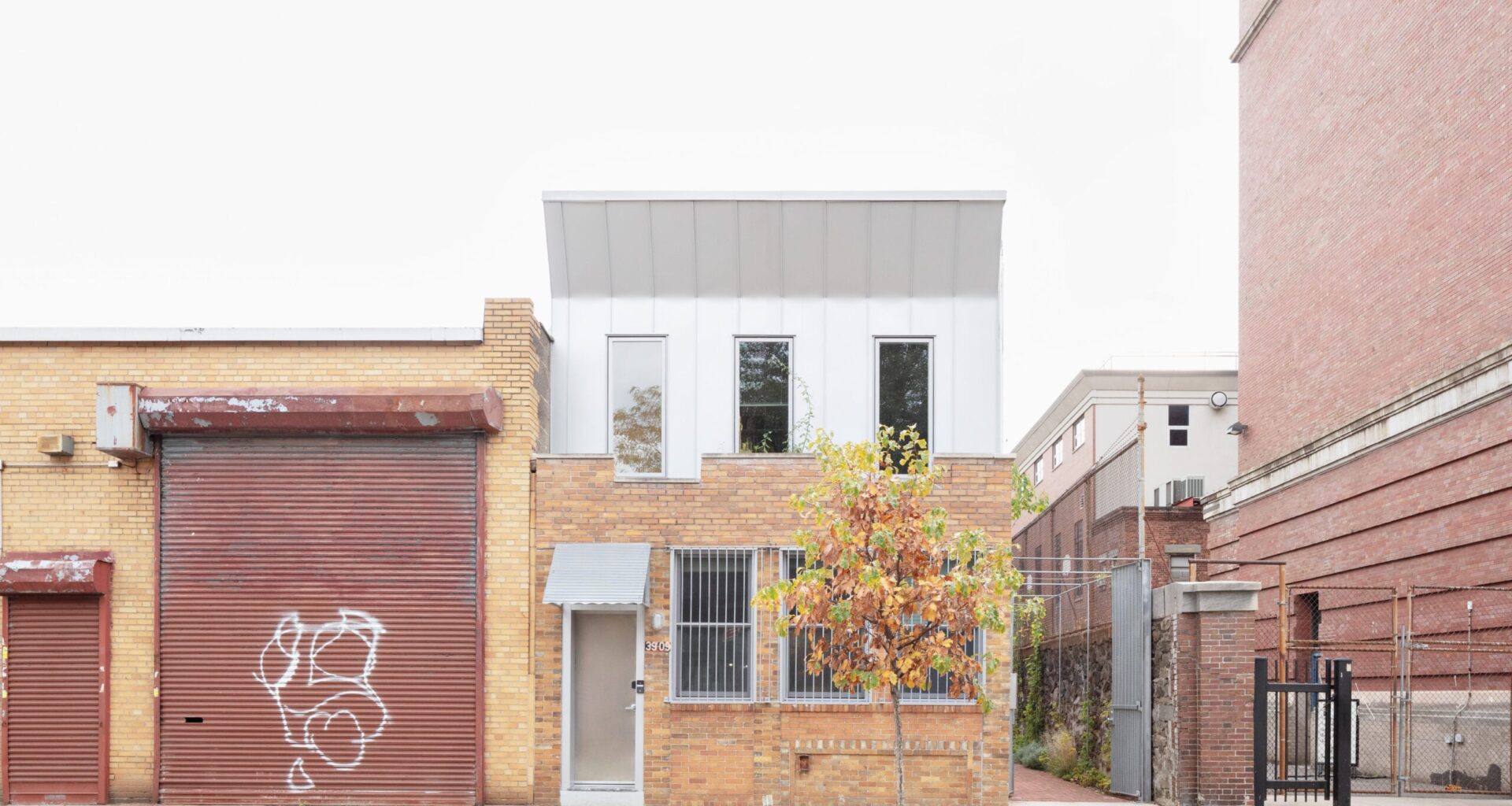
Staying Connected
Between the two houses is a red-brick-covered patio, which the team expanded by removing an external staircase that had previously connected the upstairs floor, once a separately accessible unit. John compares the outdoor space to a forum, capable of hosting community gatherings. “We’ve had events here, and it works great.” Hemmed in on all sides, the patio is accessorized by plantings—most prominently a large shadbush—enabling unobstructed sightlines between and even through the two houses.
The back house, where domestic functions are concentrated, is where the firm’s lush material palette and the couple’s aesthetic sensibilities merge: Wood storage lining the wall, door hardware from John’s parents’ apartment, and a custom 1994 Felix Gonzalez-Torres wallpaper similar to one at the couple’s former loft, all demonstrate an attention to efficiency and density without sacrificing a domestic and personal feel.
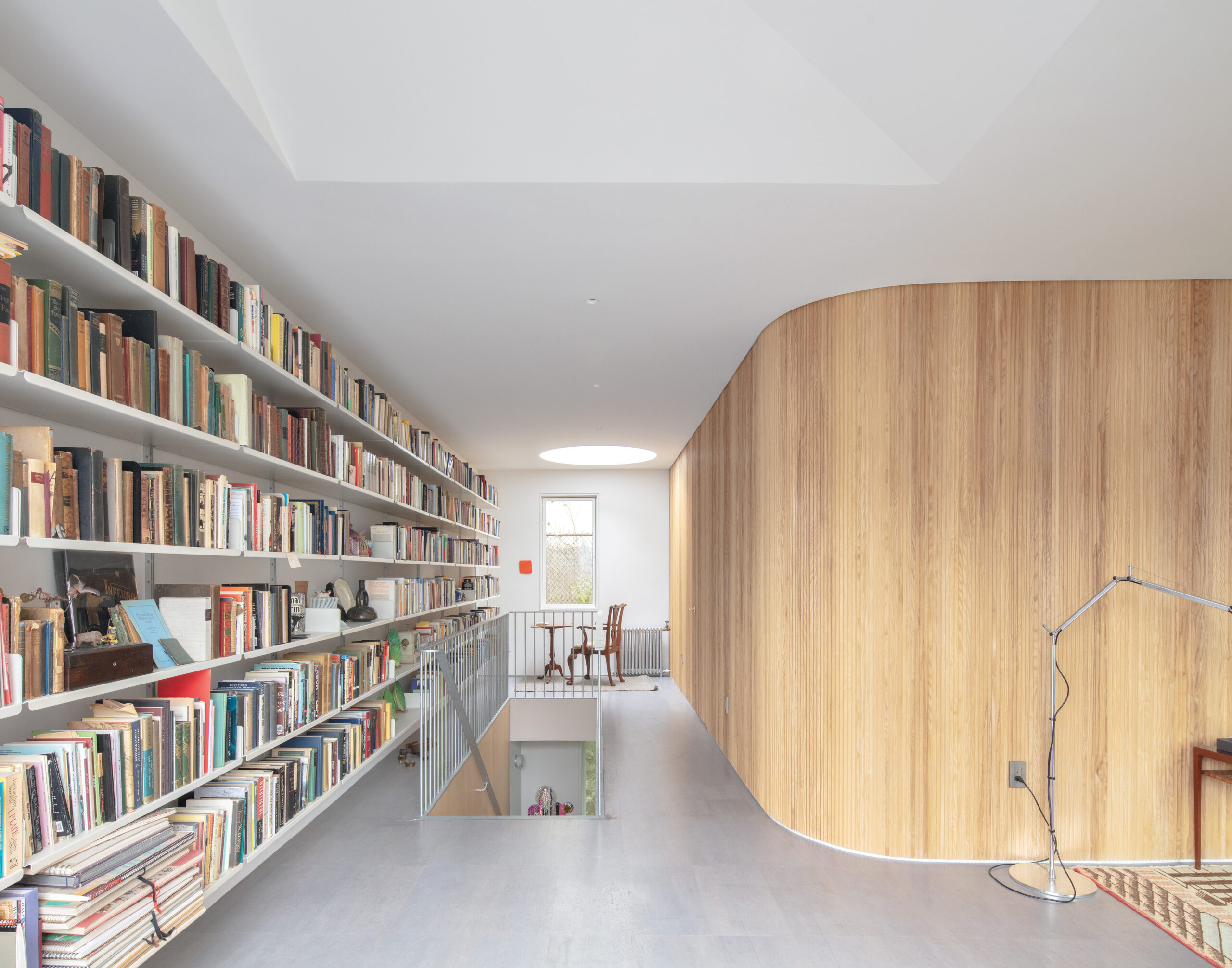 On the second floor, a library and living room overlook the courtyard, creating a salon-like setting for conversation, reading, and informal hosting. Courtesy NAHO KUBOTA
At the rear of the back house, the kitchen’s sage-green cabinetry and marble surfaces echo the narrow alleyway just outside, created by the gap between the house and its rear neighbor, which sits a story higher. It’s an earthy, residual space, furnished sparingly with a single, excess offcut of kitchen marble mounted as a snug bench. “The grotto,” as Carin fittingly calls it, “is incredibly mysterious and exciting.”
Upstairs, flashier features include a curved wall of Tambour paneling that separates the living room from the bedroom and closet and, according to Carin, “adds to the sense of fluidity and modular space.” The space is awash in light: A new circular skylight spotlights a reading nook below, and an original square skylight was retained—a midconstruction improvisation.
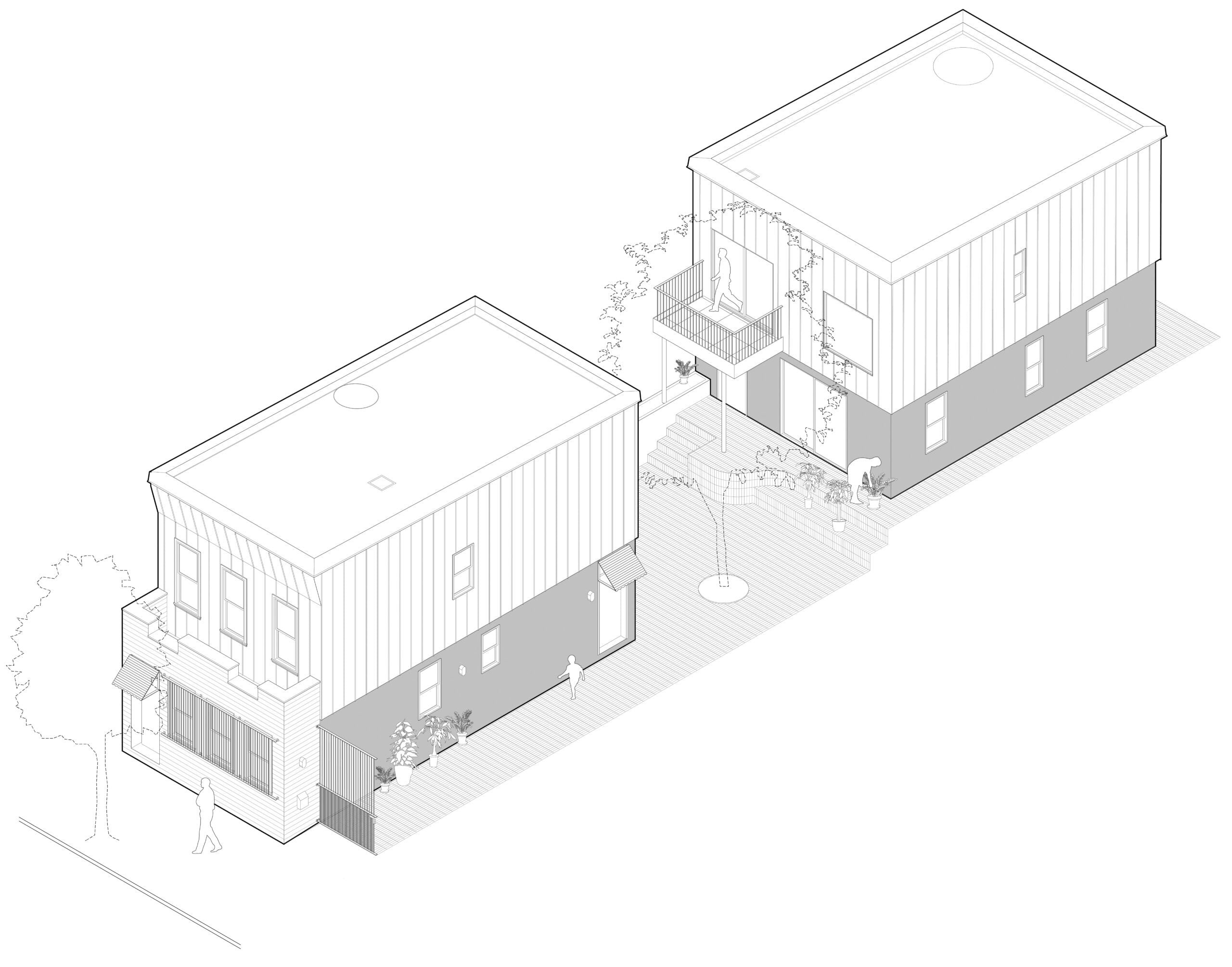 Though programmatically distinct, the two houses function as a single composition. Inside, targeted interventions reveal tin ceilings and layered textures, paired with site-specific artworks, including a custom made piece by Kameelah Janan Rasheed. render courtesy Leong Leong
Functionally Flexible
The front house received a lighter touch, serving as a crucible of the project’s careful management of budget, flexibility, and conservation. “A lot of what we did was uncovering and revealing,” Leong says—wood floors and the ground-level tin ceilings were mostly preserved. The house contains a large studio on the second floor for visiting artists and other guests. A large dining table, a large-format mural from the artist Kameelah Janan Rasheed, and two kitchens add to a peripatetic, hostel-like atmosphere. “They wanted the front house to be adaptable, enabling it to be used by multiple users and guests,” Leong remarks.
It also holds the couple’s offices. Carin’s, on the second floor, is frenetic and bright, with original wood floors and what they describe as an outdoor loggia atop the frontispiece. Below, in John’s street-facing office, the marble wrapping the back house’s kitchen and forming the grotto bench makes yet another appearance, this time as his desk. “There was a lot of design that was happening in real time,” Leong says, referencing the unplanned retention of skylights and wood and the found uses for excess stone. “This house was the little house that could.”
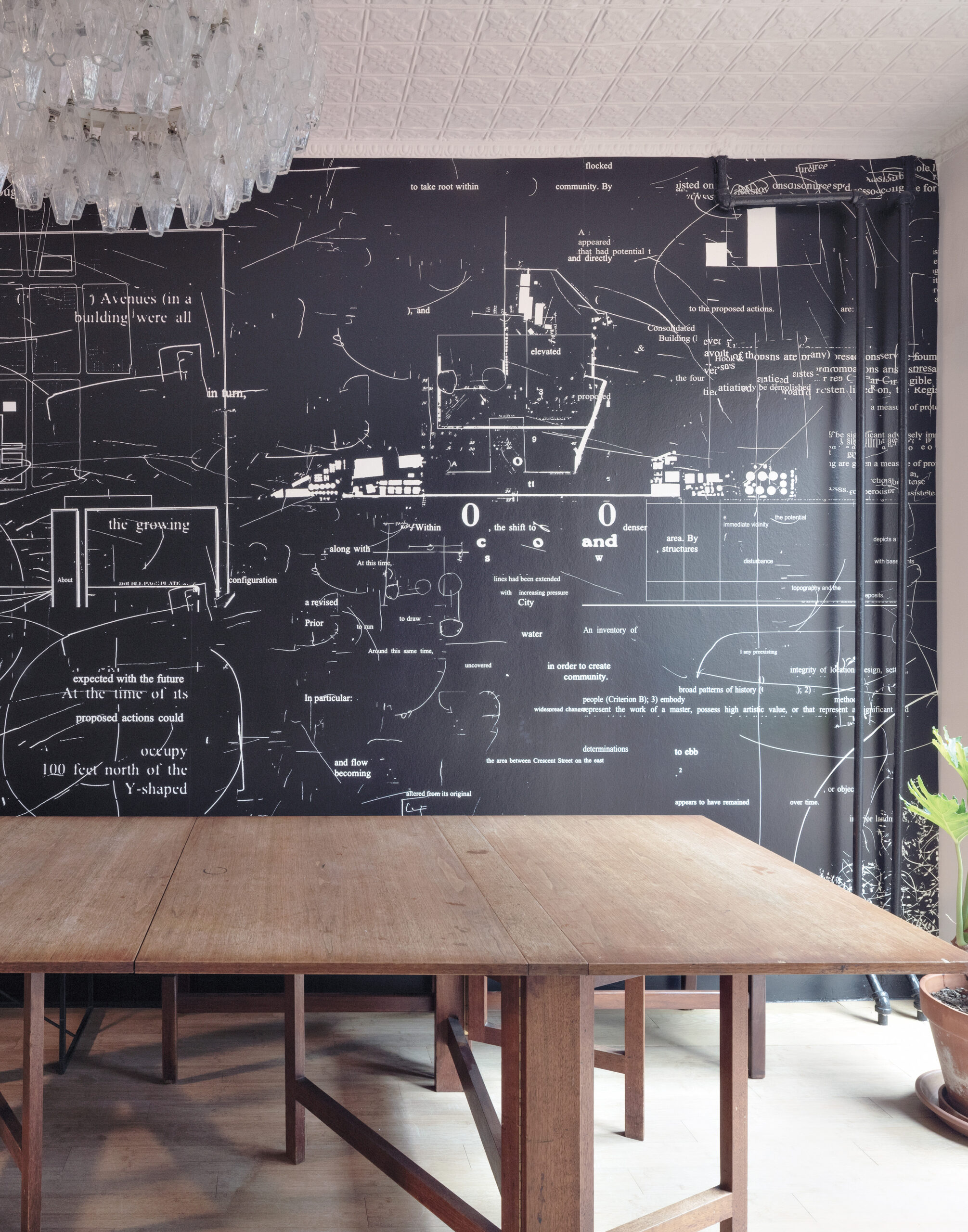 Courtesy NAHO KUBOTA