
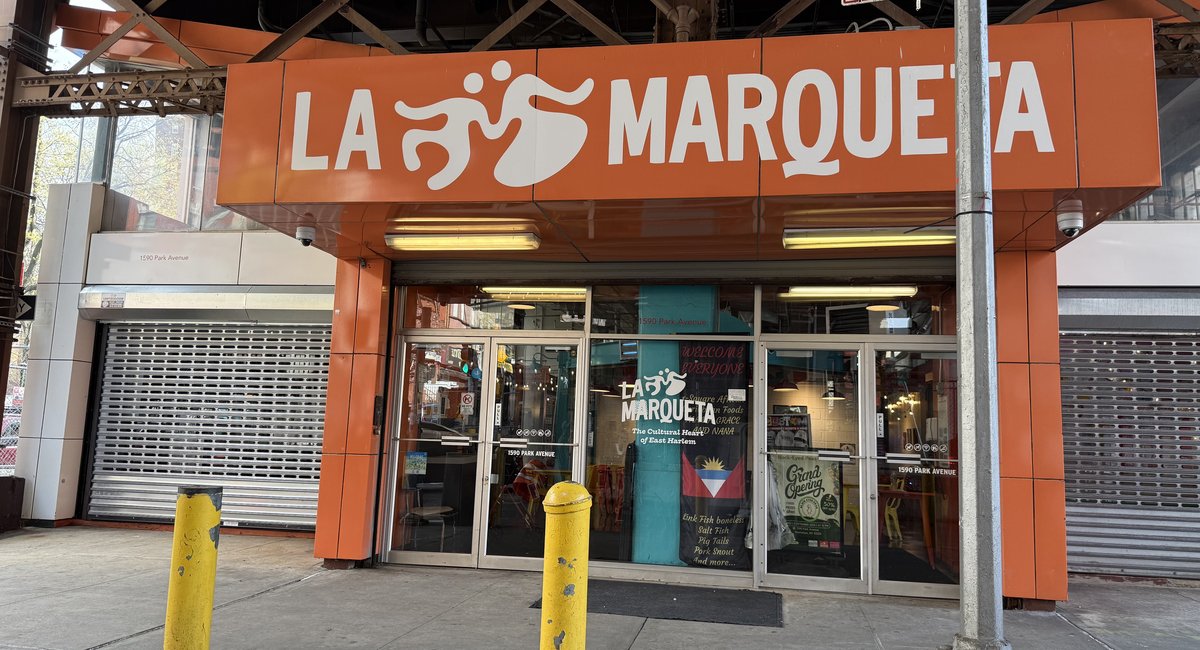
East Harlem residents gave mixed reviews for the city-owned grocery store Mayor Zohran Mamdani said this week will come to the neighborhood before he leaves office.
Groups representing traditional private grocers and bodegas remain firmly opposed.
During his 100 days address on Sunday, Mamdani announced that an empty city-owned lot several blocks north of La Marqueta on Park Avenue would become the site of a city-owned grocery store by 2029. It’ll be one of five Mamdani plans to open during his term — one in each borough. City Hall says other sites will be selected and may open sooner, including one by the end of next year.
The initiative aims to provide affordable groceries in the predominantly Latino neighborhood, which Mamdani said is lacking in full-service grocery stores. The announcement was met with a blend of excitement and skepticism from residents this week.
Destiny Louissant, 27, who lives in the area and said she would have preferred other investments in the community to come before a grocery store, adding that the area already has several of them.
“I feel like we should prioritize safety and other environmental concerns in the area rather than a grocery store — there’s literally one up the block, there’s a lot in the area,” she said. “We could use community centers for the kids and to have educational programs going on, or even senior centers for the elders that are in the area.”
Vanessa Almeda, 35, lives in the Johnson Houses, a public housing complex adjacent to La Marqueta. She said she’s struggled to keep up with the prices at other local stores, especially for meat products, and said she looks forward to a cheaper option.
“What’s really expensive is the meat, so if they do make the grocery store and they bringing down meat prices, I feel like that is gonna be so convenient for a lot of people,” she said. “Grocery shopping is super expensive and I’m on public assistance, so sometimes public assistance is not enough.”
East Harlem resident Durrell Robinson, 39, said he’d welcome lower prices than the ones available at neighboring grocery stores.
“I use the grocery store right around this corner, and I notice that the prices are higher than what I get when I order things on Amazon delivery,” Robinson said. “I don’t know if that’s enough space to be able to have enough inventory to be able to really move the needle when it comes to what’s around the corner.”
The city-owned La Marqueta was first opened as Park Avenue Retail Market in 1936 by then-Mayor Fiorello LaGuardia, giving East Harlem’s predominantly Jewish and Italian pushcart vendors a retail space and area residents access to fresh food. As the neighborhood transformed into Spanish Harlem with the waves of Puerto Rican, Dominican, Cuban and Mexican immigrants moving into the neighborhood, it eventually became known as La Marqueta.
According to City Hall, stores in the NYC Grocery initiative will have low long-term operating costs due to no ongoing rent or property taxes, and those savings will be passed on to the customers.
Mamdani was pressed on details about his plan during a press conference inside La Marqueta on Tuesday. City officials have yet to say how they will calculate the cost of the groceries, or how much of a discount they will be able to provide customers.
“I can’t give you an exact example of the cost of a cucumber in our essential basket,” the mayor said. “But what I can tell you is that when New Yorkers come to city-run grocery stores, they will see a clear price differential when it comes to those essentials.”
Mamdani has also said he expects basics like bread and eggs to be cheaper than at commercial stores.
In his 100 days speech, the mayor addressed skeptics of city-owned businesses, telling them he “looks forward to the competition.” The skeptics and competition have been quick to answer.
Antonio Pena, president of the National Supermarket Association, which represents 450 stores in New York City, said the mayor’s plan was unfair to local grocers in the area who pay taxes and compete against national chains.
“To have the city decide to open a store in the same neighborhood in which our members are operating at already low margins — because running a store in the city is very expensive, extremely expensive — we feel that it’s a big slap in the face to us,” Pena said.
On Tuesday, Mamdani argued bodegas were not likely to sell the same items as the city-owned grocers.
“Now we also know that for bodegas, some of the primary revenue generators are tobacco products and lottery products,” he said. “Our city-run grocery stores are not going to be selling that.”
City Hall officials estimated the East Harlem store would cost $30 million to build. So far, the administration has proposed a budget of $70 million in capital funds for all five stores, leaving open questions about whether there’s enough money for the broader initiative.
Pena said those numbers reveal the city’s inefficiency in opening and running businesses. He said building a store in New York City from the ground up shouldn’t cost more than $12 million, while retrofitting existing buildings shouldn’t cost more than $4 million. And he said the budget would have been better spent on subsidizing costs for already existing grocery stores in order to reach a wider swath of the neighborhood.
“The city could have took the $30 million and dispersed it amongst the independent community, and they would’ve gotten a bigger return on their investment than just on building one store,” he said. “ Why not go to them and say, ‘Listen, what can we do to help you? What do you think we could do to help you sell core items at 30% less? What can we do for you?’ I mean, our guys would’ve instantly said, ‘Help us with the rent, subsidized rent and utilities.’”
Bodega and Small Business Group founder Francisco Marte echoed the sentiment.
“They should invest that money or facilitate how the merchandise can get the last mile, get to the store, to the independent supermarkets,” he said.