
Today, the housing crisis is affecting cities and their inhabitants globally. The house and its larger type, “housing,” are amongst the most prevalent structures that architects and designers are commissioned to design. In urban centers, density is an emergent strategy to continue to produce and provide space while reducing the environmental resource consumption opposite to urban sprawl. Yet, single-family dwellings account for 67 percent of housing units in the country. Historically, this type, the house, shaped the careers of young architects, including Diller Scofidio + Renfro, Steven Holl, Frida Escobedo, and more; its scale and programmatic requirements were suited to experimentation with form, materials, and tectonics. This optimism continued into the late 1990s and early 2000s, until the housing bubble, real estate speculation, and an interest in institutional and civic projects reoriented architectural discourse. More recently, we are witness to a reduced tolerance for experimentation, dwindling patronage, and crucially, the emergence of social digital platforms that have homogenized the aesthetics and imaginations of the house, thus shifting the creative force to homeowners.
In the past few years, amid the housing affordability crisis, architects have been investigating with renewed vigor the potentials of alternative spatial configurations, whether for a single-family house or a multi-family building. In New York City, architecture firm SO–IL has worked with developers to challenge the boundaries of permissible, code-compliant housing, where the organization of public and private spaces and circulation softens boundaries between interior and exterior, prioritizing collective outdoor spaces to facilitate social encounters.
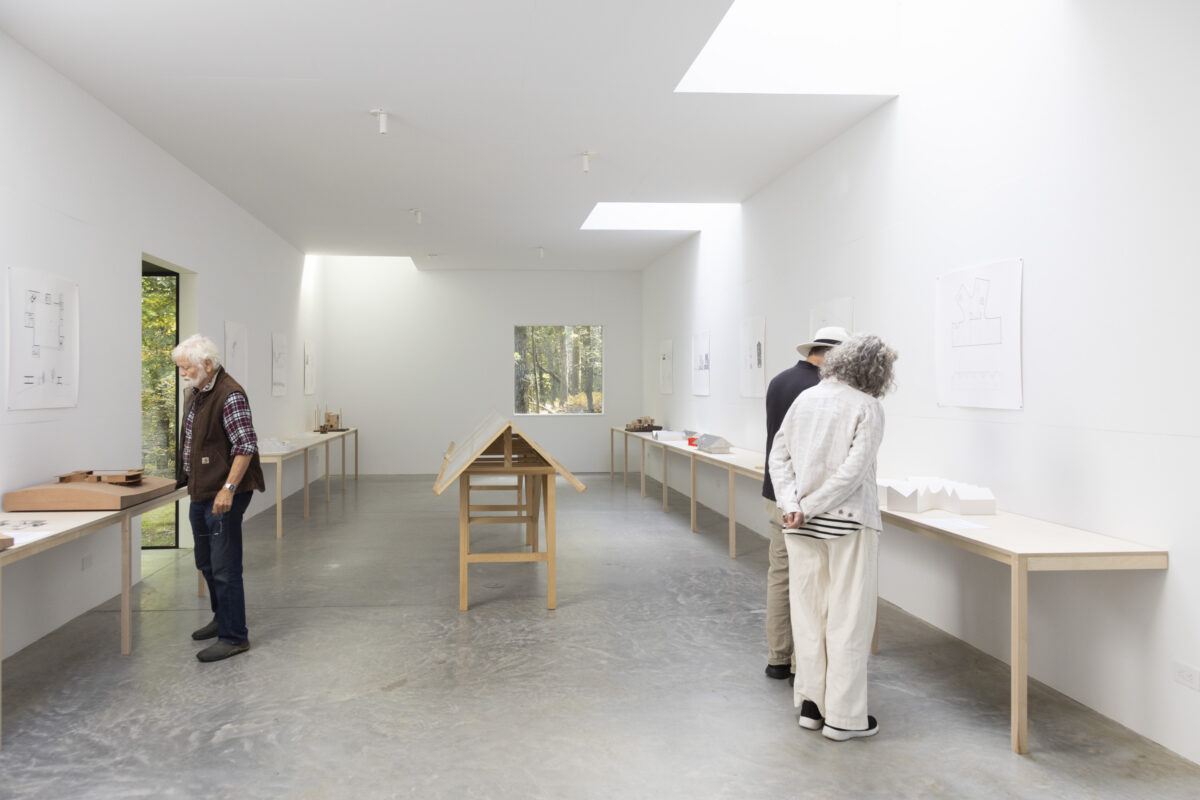
More recently, New Hudson Valley Houses, an exhibition upstate at ‘T’ Space, featured ten projects by Stan Allen, Toshiko Mori Architect, Steven Holl Architects, MOS, and Garrick Ambrose. These were presented through models and drawing, affirming design aspirations that promote the preservation of the landscape, freedom of thought, materials, details, and ecology. Another exhibition, The House Transformed, opened at Princeton School of Architecture in September 2025, curated by Mónica Ponce de León with Shoshana Torn and Massimo Giannone. This show presented a larger group of architects contributing to the transformation of the typology under the idea of intimacy: co-living with animals, plants, and extended families. More, Log, Cynthia Davidson’s critical tri-annual publication, has dedicated their Fall 2025 issue to the “House and Home,” signaling a renewed interest in the house and its associated domestic space.
The COVID-19 pandemic forced a global confrontation with domestic space, highlighting even more the inequalities embedded in the expanded ecosystem of housing. The question of who can afford to shelter in place prompted architects to rethink how to design the house as the most immediate environment shaping daily life, social relations, and patterns of resource use. Over the past decade, the boundaries between living, working, learning, and caregiving have blurred dramatically. The rise of remote work and the climate crisis necessitate spatial configurations to enable new domestic alliances. If in the 1960s and ’70s the house constituted a symbol of wealth and social hierarchy, today we can free the domestic environment of these orders, and instead promote the right to housing as a cultural project that rewrites the architecture of the home as an infrastructure of care and more-than-human alliances.