
Just as his career in art was beginning to take off, self-taught painter John Kane created a self-portrait in 1928 — one that captured not only himself, but also a deeply personal chapter of his life.
The painting features his wife, Maggie Halloran, whom he had recently reunited with after a long separation, offering a glimpse into both his identity as an artist and his life as an immigrant.
What You Need To Know
“Self-Made: A Century of Inventing Artists” is a new exhibition at the American Folk Art Museum
It focuses on how artists without formal training have depicted and defined themselves on their own terms
Admission to the museum is always free
“He really showed himself as an artist, you can see that’s how he identified. And it’s funny because at the time in newspapers they placed him as this man of labor, he had been shown with strong arms in photographs, and here he is being shown painting this pastoral scene possibly Scotland where he and his wife both came from as immigrants to the United States,” said Suzi Oppenheimer, the Ponsold-Motherwell Curatorial Fellow and a Research Associate at the American Folk Art Museum.
Kane’s work is now part of “Self-Made: A Century of Inventing Artists,” a new exhibition at the Upper West Side museum near Lincoln Center. The show explores how artists without formal training have depicted themselves — and defined their identities — on their own terms.
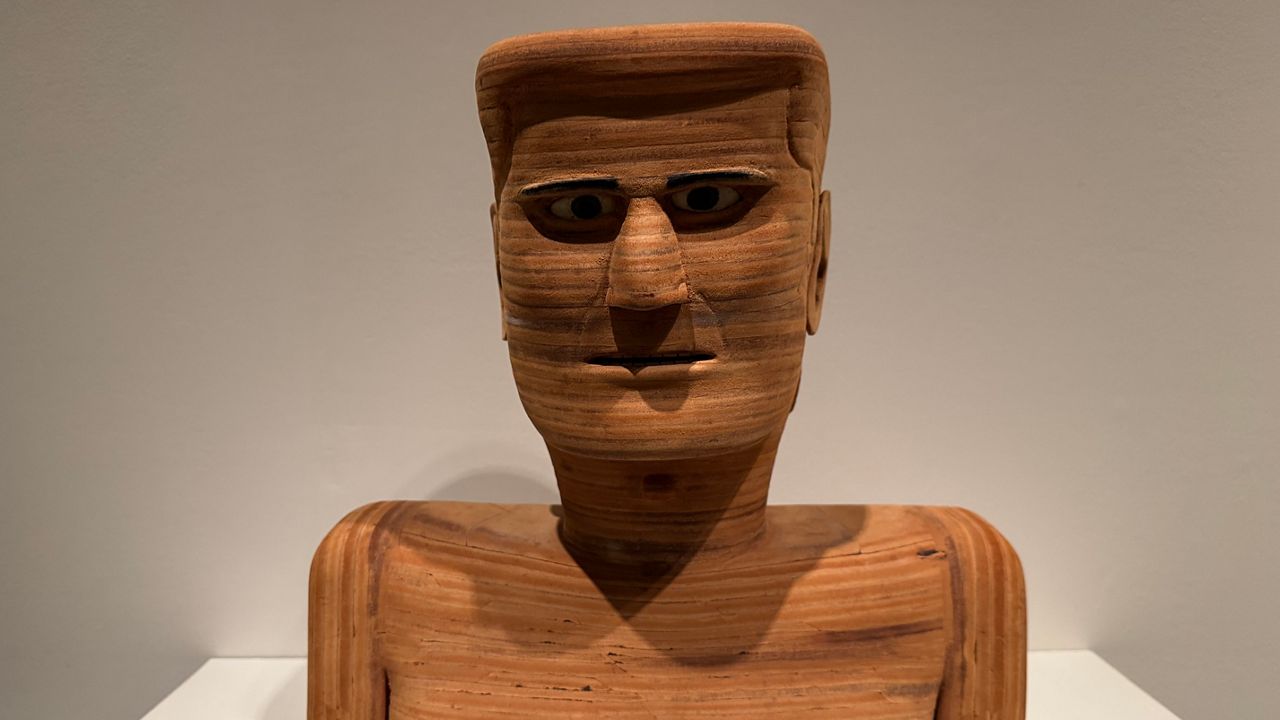
Many of the works in the exhibition are being displayed publicly for the first time, spanning from the early 20th century to the present day.
“Creating their own artistic identity through methods of self-fashioning and we confined our exploration of this theme around three angles and three modes, first is the self portrait, second alter egos, third autobiographies,” said Valérie Rousseau, Curatorial Chair and Senior Curator of 20th Century and Contemporary Art at the museum.
The exhibition marks the museum’s first deep dive into self-representation among self-taught artists, featuring a wide range of mediums including painting, photography, film and sculpture.
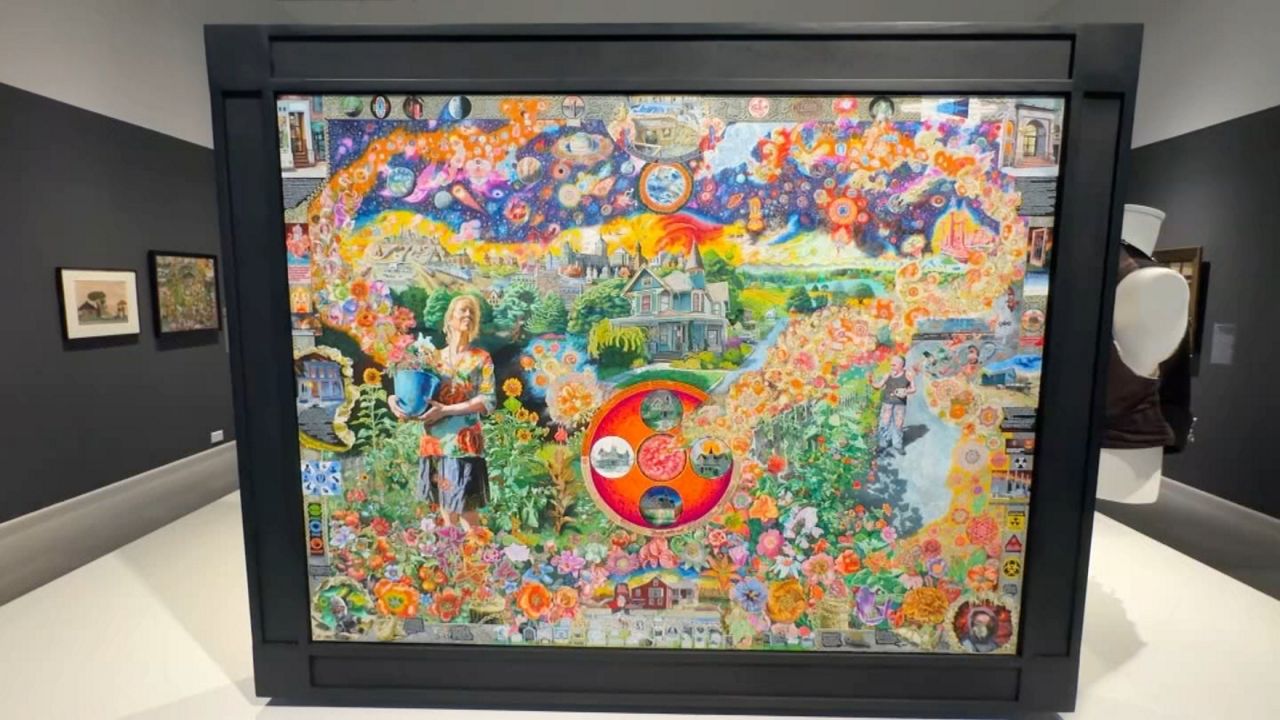
Among the contemporary works is “Voyage to Candyland” by Joe Coleman, which reflects the artist’s move from Brooklyn to upstate New York with his wife during the COVID-19 pandemic.
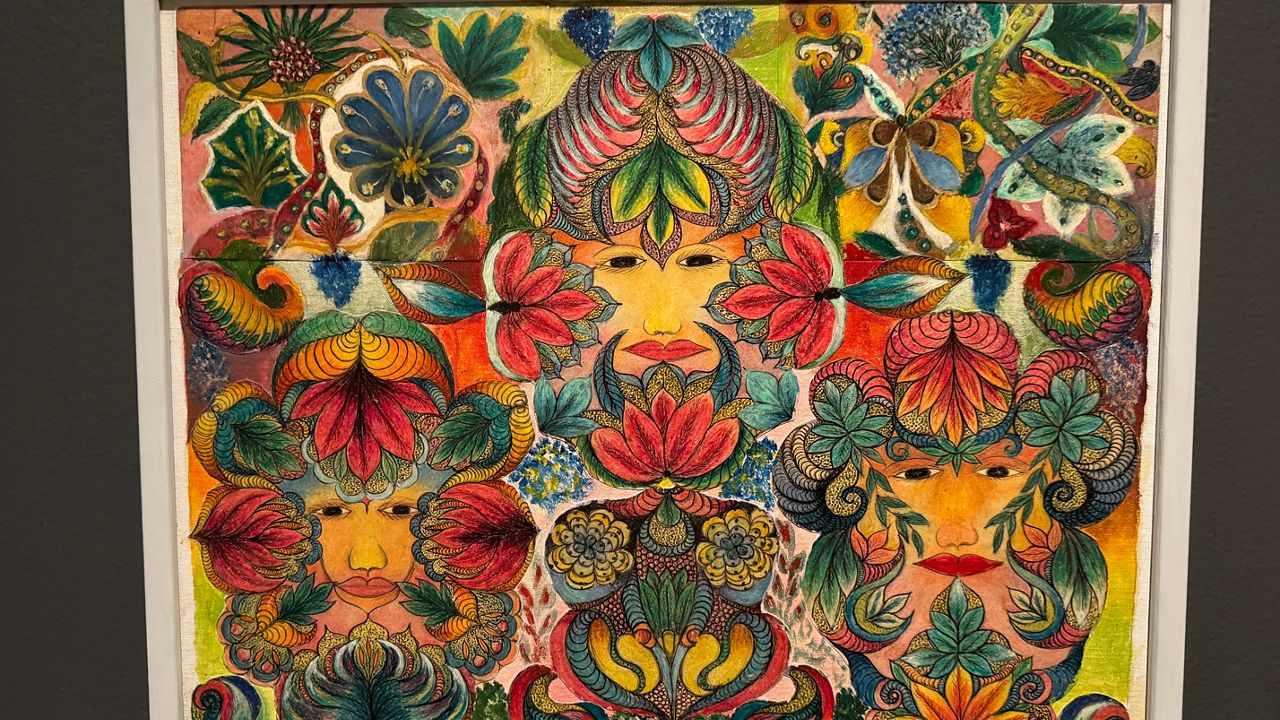
The collection raises a broader question: Why do artists turn the lens on themselves?
“You can ask any psychologist and get a thousand answers but I think this is a good exhibition to think of ‘why do we paint ourselves?’ Saying I am here, this is how I want to be seen, this is how I want to present myself, and asking the world to meet you there,” Oppenheimer said.
“Self-Made” will be on display through Sept. 13. Admission to the museum is free.