
(New York, New York) – A growing online debate is highlighting what critics see as a cultural double standard in how religious imagery is received—particularly when it intersects with politics and pop culture.
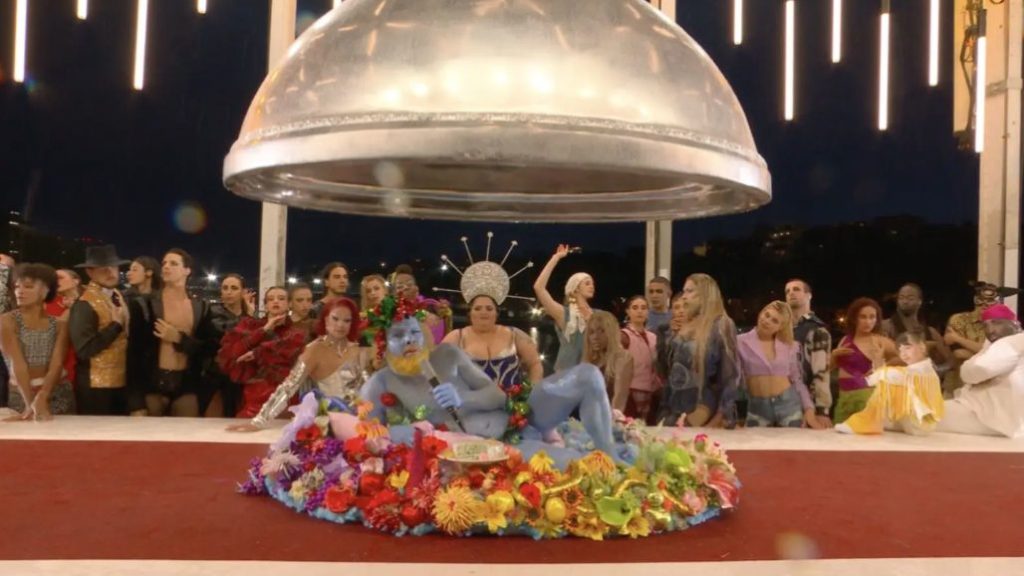
The conversation has been fueled by two separate controversies: one involving Donald Trump depicted in a religious-style image as a healer, and another tied to a drag performance at the 2024 Summer Olympics that resembled The Last Supper.
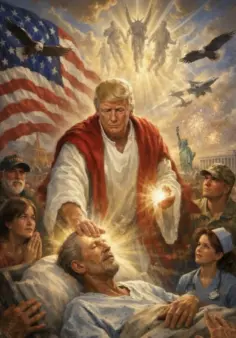 RealDonaldTrump on Truth Social.
The Olympic performance drew sharp criticism from many Christians, especially after organizers initially denied the connection before later acknowledging the artistic inspiration. Critics argued the scene mocked a sacred moment, while organizers maintained there was no intent to offend and later issued an apology.
At the same time, the Trump image circulating online sparked backlash of its own, with some calling it inappropriate or self-aggrandizing. But for many observers, the intensity—and direction—of the outrage in each case has become the real focus.
Some argue the contrasting reactions reveal an inconsistency: religious imagery is fiercely defended in certain contexts, yet more freely reinterpreted or criticized in others. Others counter that both instances are simply examples of expression, and that public reaction varies based on individual beliefs rather than any coordinated double standard.
As the debate grows, it’s underscoring a deeper divide over religion, politics, and expression—raising ongoing questions about where the line is drawn, and whether it’s being applied evenly.