
After a boiler explosion in October collapsed a 20-story chimney, residents of the South Bronx public housing complex are still contending with unreliable hot water, broken elevators, and thousands of unanswered repair requests.
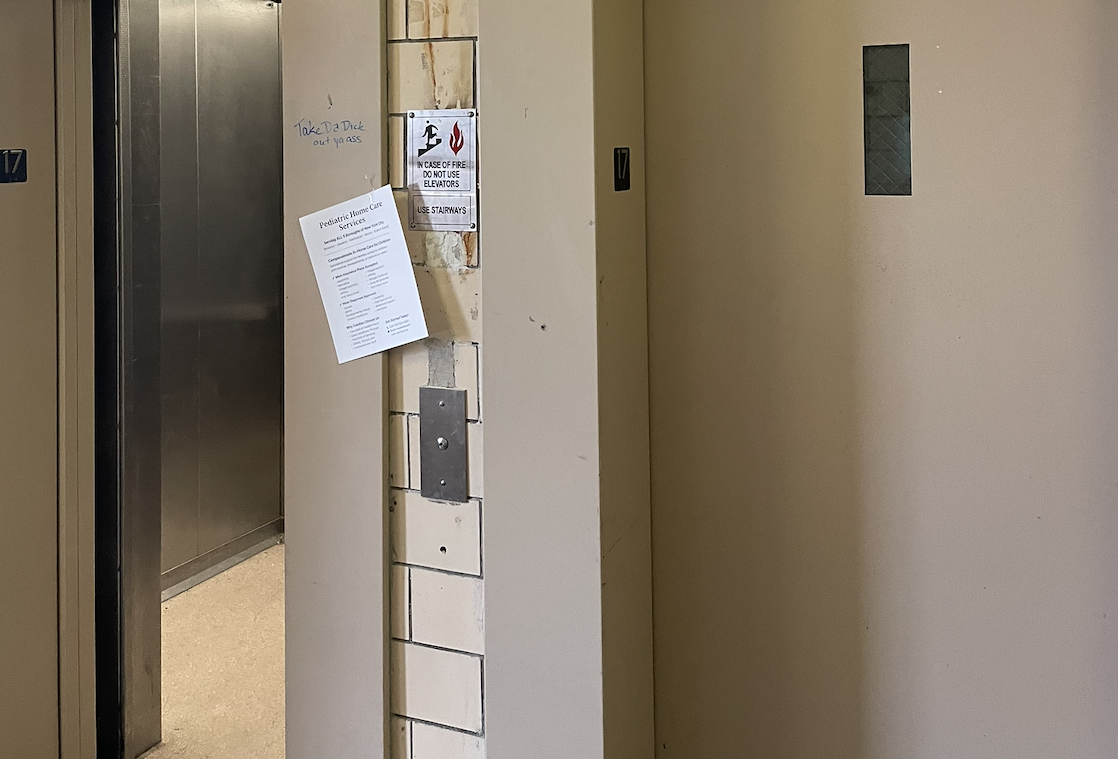
On a February afternoon, an elevator on the South Tower of the Mitchel Houses in the South Bronx froze with a thud. For nearly 30 minutes, a reporter waited helplessly as the display remained frozen and the call buttons yielded no response, until suddenly, the door swung open. It was Wendell Harrison, a 12th-floor resident who had lived in the Mitchel Houses long enough to recognize the sound.
“Yeah, it does that on the 12th floor,” he said, without particular alarm. “You just gotta give it a real good kick.” Asked if he had gotten used to it, he shrugged. People had gotten used to it, he said.
That shrug might be the most telling detail of life at Mitchel Houses nearly six months after a boiler explosion tore a 20-story chimney off the corner of 205 Alexander Avenue. On Oct. 1, 2025, the first day of the city’s heating season, investigators believe that a technician switched on a boiler that had accumulated gas inside, triggering a blast that sent tens of thousands of bricks crashing down next to a playground and basketball court. No one was hurt, former Mayor Eric Adams said during a press conference after the event.
The New York City Housing Authority (NYCHA) immediately shut off gas service to the complex’s 174 apartments. Residents received hot plates and $20 for food from NYCHA for the whole period of six months. But the gas outage lasted through Thanksgiving, through Christmas, and into the new year.
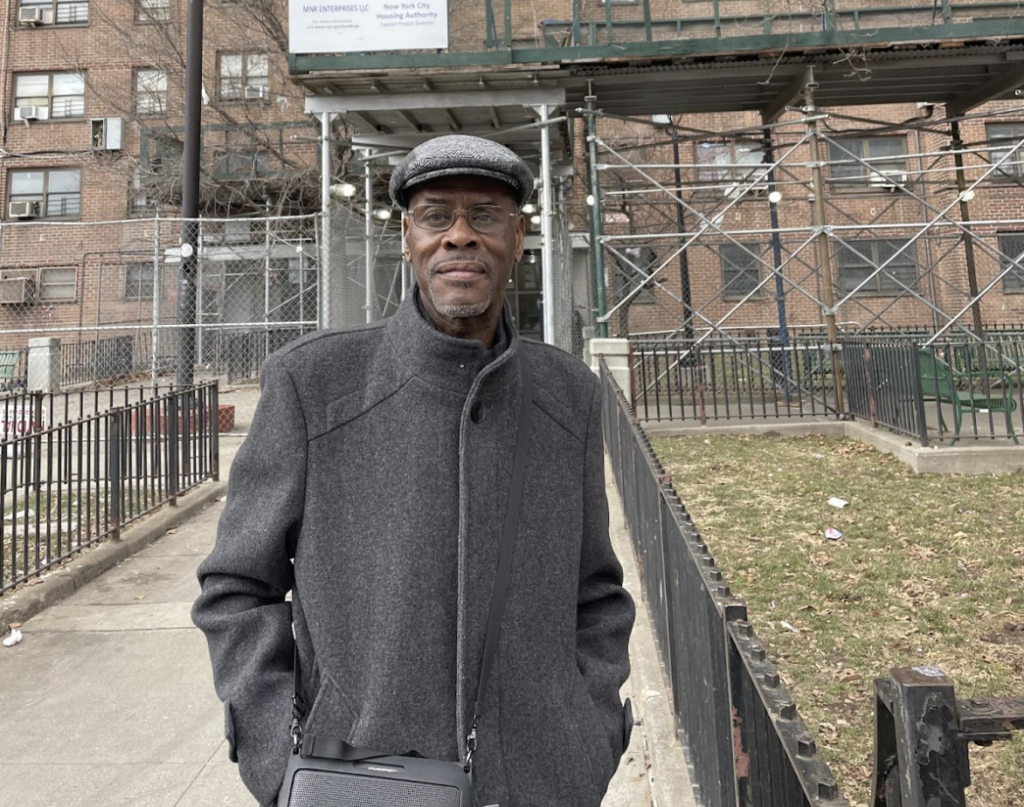
Wendell Harrison stands in front of the Mitchel Houses. (Credit: Carol Chen)
“We didn’t have no Thanksgiving, we didn’t have no Christmas,” Harrison said. “We couldn’t cook no food. We couldn’t bake nothing. Everything was over the hot plates.”
Months later, the long-awaited gas was finally restored to all of the buildings in late February, according to the residents inside.
But to the people who live here, the restoration of this one utility doesn’t address the chronic neglect they say predated the explosion and continues to define daily life, from elevator breakdowns to lack of heat or hot water.
Javaughn Robinson, who lives in 1G of the building adjacent to the collapse site, said the hot water supply comes once a day at best, with no predictable schedule, even as New Yorkers battled historic cold temperatures this winter. “You might get it once, really,” he said. “And how do you know when you’re gonna get it? I can’t. I couldn’t even tell you that when I get up in the morning.”
The federal monitoring office overseeing the New York City Housing Authority, appointed under a 2019 federal agreement to provide independent oversight of the authority, documented the problem in its latest report, released in December, noting that residents were “experiencing heat and hot water outages repeatedly.” In response, NYCHA installed a third mobile boiler and addressed specific complaints flagged by the monitoring team, according to a NYCHA spokesperson.
But residents’ accounts suggest those interventions did not fully resolve the issue.
According to NYCHA’s public metrics dashboard, as of April 14, there are nearly 7,200 open work orders across the Mitchel Houses complex, a figure NYCHA says encompasses maintenance, skilled trades, and vendor requests combined. A NYCHA spokesperson said Bronx skilled trades workers were on schedule for 97 percent of their appointments in March.
But the data also show an average wait of 438 days to complete a repair across all order types, and 92 days specifically for elevator mechanics.
Part of the issue is chronic underfunding and perceived institutional neglect. NYCHA estimates that it needs more than $600 million in capital investment for the Mitchel Houses over the next five years, against a systemwide capital need approaching $80 billion.
For Bronx elected officials, Mitchel Houses represent a failure that is years in the making and has no clear resolution in sight.
“Mitchel Houses is a case study in what happens when public housing is allowed to fall into chronic neglect,” said U.S. Rep. Ritchie Torres, whose district includes the development, in a statement to the Mott Haven Herald. “Months after the collapse, residents are still dealing with unreliable hot water, broken elevators, and power outages, and this is entirely unacceptable. NYCHA and the city owe tenants a clear, public timeline for permanent repairs, and we have to secure the long-term investment to modernize these buildings so Bronx families are never put in this position again.”
Harrison said that he has no illusions about what comes next. “NYCHA is not gonna do nothing,” he said. “They don’t care about nobody. NYCHA cares about NYCHA.”