
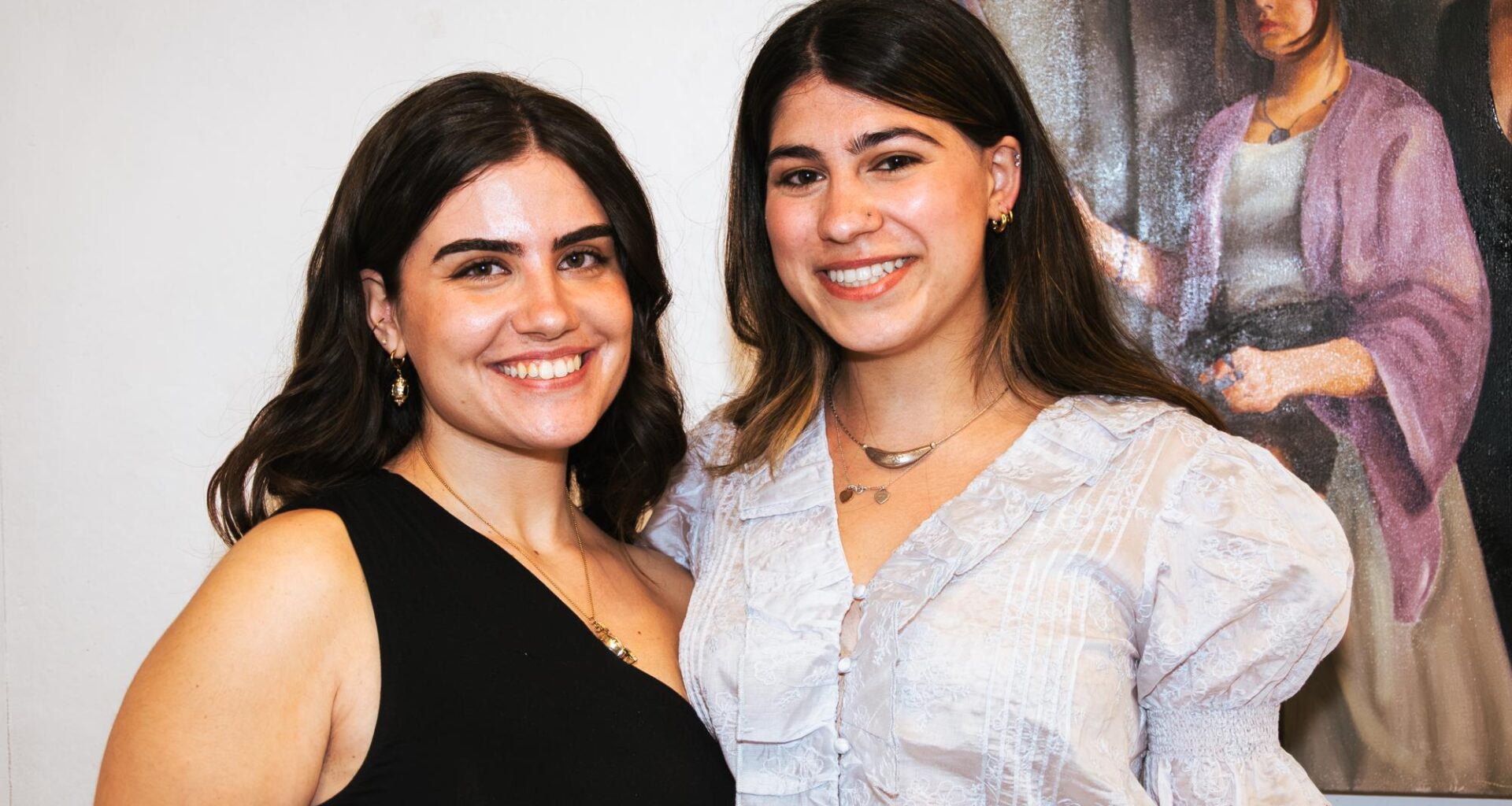
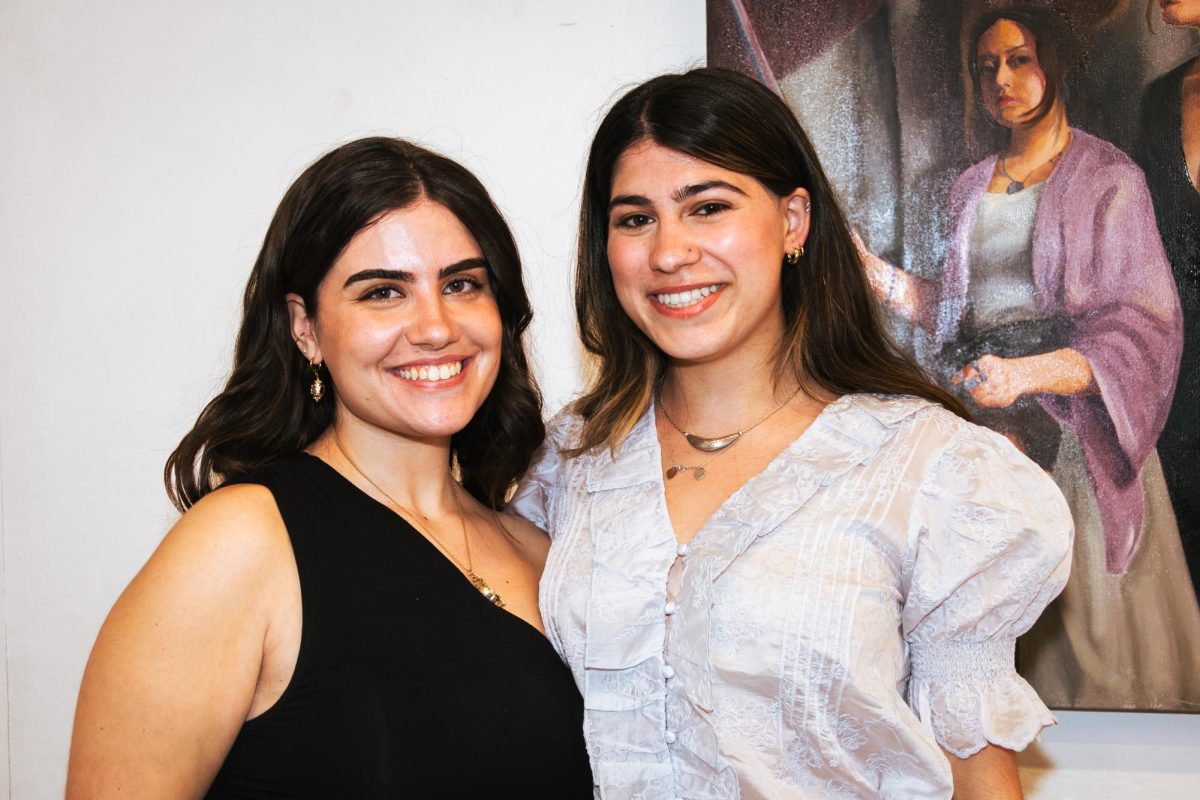
Fordham seniors Lily Sood and Nicole Miceli will display their senior thesis exhibitions in the Lipani Gallery until April 22.
Visitors of the Lipani Gallery during the month of April will be greeted with the incredibly potent art that lies between the moments of everyday life, usually overlooked against the momentum of busy city schedules.
The walls of the gallery showcase the senior exhibition thesis works of visual art partners-in-crime Lily Sood and Nicole Miceli, both Fordham College at Rose Hill (FCRH) ’26.
The two friends, who share a studio space at Fordham Lincoln Center, did their senior exhibition side by side, exploring similar themes through two different mediums. Through Miceli’s painting and Sood’s photography, the viewer is embraced by each artist’s personal expression of their heritage and the way they interpret humanism.
The works of Miceli greet the viewer with the eyes, holding an intense gaze inspired by the historic Renaissance. Her five paintings hold the title “Volti Viventi,” meaning “living faces” in Italian. Her collection is a tribute to her relationships as well as herself, with stylistic inspiration coming from her time abroad in Italy, where she found a calling in its art and culture.
As viewers make their way through Miceli’s works, they see soft brush strokes and gorgeously blended pigments to complement the personal themes of love, family and matriarchal values.
“I became obsessed with Renaissance art. It just permeated my brain in a way that made sense,” Miceli said.
Miceli is a visual arts major and double minoring in new media and digital design and art history, with the latter being decided after her time studying oil painting at Florence University of the Arts, when she “became just so, so obsessed.”
“I wanted to bring a lot of that style home with me,” she said.
As viewers make their way through Miceli’s works, they see soft brush strokes and gorgeously blended pigments to complement the personal themes of love, family and matriarchal values. Through the somber facial expressions and pomegranate symbolism in “Madonna and Child” and the realism and intimacy of “Venus in her Bedchamber,” Miceli calls upon the importance of the human soul, balancing both the simplicity of the moments and the complexity of why they stand out.
“A really big part of Renaissance art is the concept of humanism and capturing human qualities,” Miceli said.
I think that what I’m trying to do now is make art for myself, by myself, for everybody. Nicole Miceli, FCRH ’26
Miceli hopes all viewers can connect with her pieces, which carry the exclusive history of many famous Renaissance paintings. During that period, art was made on behalf of commissions from royalty or the wealthy. As a result, the paintings were kept from the general public; the talent and symbolism hidden and preserved only for the view of the high-class. Miceli wants to go against that, only harnessing the aesthetic of the period.
“I think that what I’m trying to do now is make art for myself, by myself, for everybody,” she said.
Across the gallery literally, and roughly 3,800 miles away thematically, Sood’s photographic anthology captures the everyday life and color of India, regarding the same themes of simple human life and interaction.
Similar to Miceli’s works, Sood’s documentary street-style portraits capture intimate moments within busy days. Visitors are transported to everyday life in India. Images include: a little girl with her bike in a bright magenta dress, a street vendor selling vibrant green fruit and a potter standing proudly in a brightly patterned tunic in front of her merchandise.
We see (Indian culture) in the media, and we see it portrayed in one way, but how does it actually exist? Lily Sood, FCRH ’26
Visitors of the Lipani Gallery can view 12 images selected from over 2,500 photos Sood took on her trip to India. While participating in an undergraduate research grant that brought her there, she was also visiting her extended family, people she had not gotten to see much throughout her life.
“I’ve always felt a little bit disconnected from that side of my heritage,” she said.
Sood explains that she grew up consuming India through the media, watching things such as “The Darjeeling Limited” and “The Cheetah Girls.” But she felt she was missing out on the big picture. Her love for photography, cultivated from an early age, made her want to “fact-check” ways of life in India that exist away from the spotlight.
“We see (Indian culture) in the media, and we see it portrayed in one way, but how does it actually exist?” Sood said.
Along with her trusted Fuji X-Pro Two camera, Sood’s exhibition came from a process of wandering through the simmering hot streets in places like Delhi and Bulandshahr. While many of the photos consist of Sood’s family members, she also prioritized catching strangers in their natural surroundings. Since childhood, she said she has always been fascinated with people and their environments, which had coexisted with a fear of social settings.
Through their work, the strength of their friendship is evident, and their love for the people in their lives shines through.
“I grew up with a lot of social anxiety; I guess (photography) was my way of communicating with other people,” Sood said.
Though she was met with a language barrier (Sood doesn’t speak Hindi, but hopes to learn), many individuals she photographed were excited to have their picture taken. For example, in a piece of the collection in which a woman stands before a set of cups, Sood explained how she was so attracted to the woman’s calm and poised stature. Though Sood’s camera began to overheat, she couldn’t waste the opportunity to capture the enchanting scene.
“She was just standing there minding her business, just waiting for people to come by and buy what she was selling,” Sood said.
The most touching aspects of Miceli and Sood’s exhibitions come from their fascination with people. Through their work, the strength of their friendship is evident, and their love for the people in their lives shines through. Each work takes the viewer by the hand and pulls them into somebody else’s shoes. For a brief moment, they can see a whole different life through each shot or brush stroke.
The impact of this exhibition is as lifelong as Miceli and Sood’s friendship; it serves as a love letter to each other, their family and friends, and themselves.