
ALBANY — The New York State Museum will open a huge exhibit this summer to commemorate the 250th anniversary of the signing of the Declaration of Independence.
Opening on July 1, the 6,500-square-foot exhibit will cover not just the Declaration but the next 250 years.
Murals will showcase “two centuries of activism” in the state, including the Seneca Falls women’s rights convention. The exhibit will also cover New Yorkers’ work on abolition, civil rights, labor rights, environmental justice and LGBTQ-plus rights.
“It helps connect those revolutionary principles — the idea of making change for good — with the advances of human rights that New York state has really led the way on,” said museum Director Jennifer Saunders. “We’re really telling stories of people who took action.”
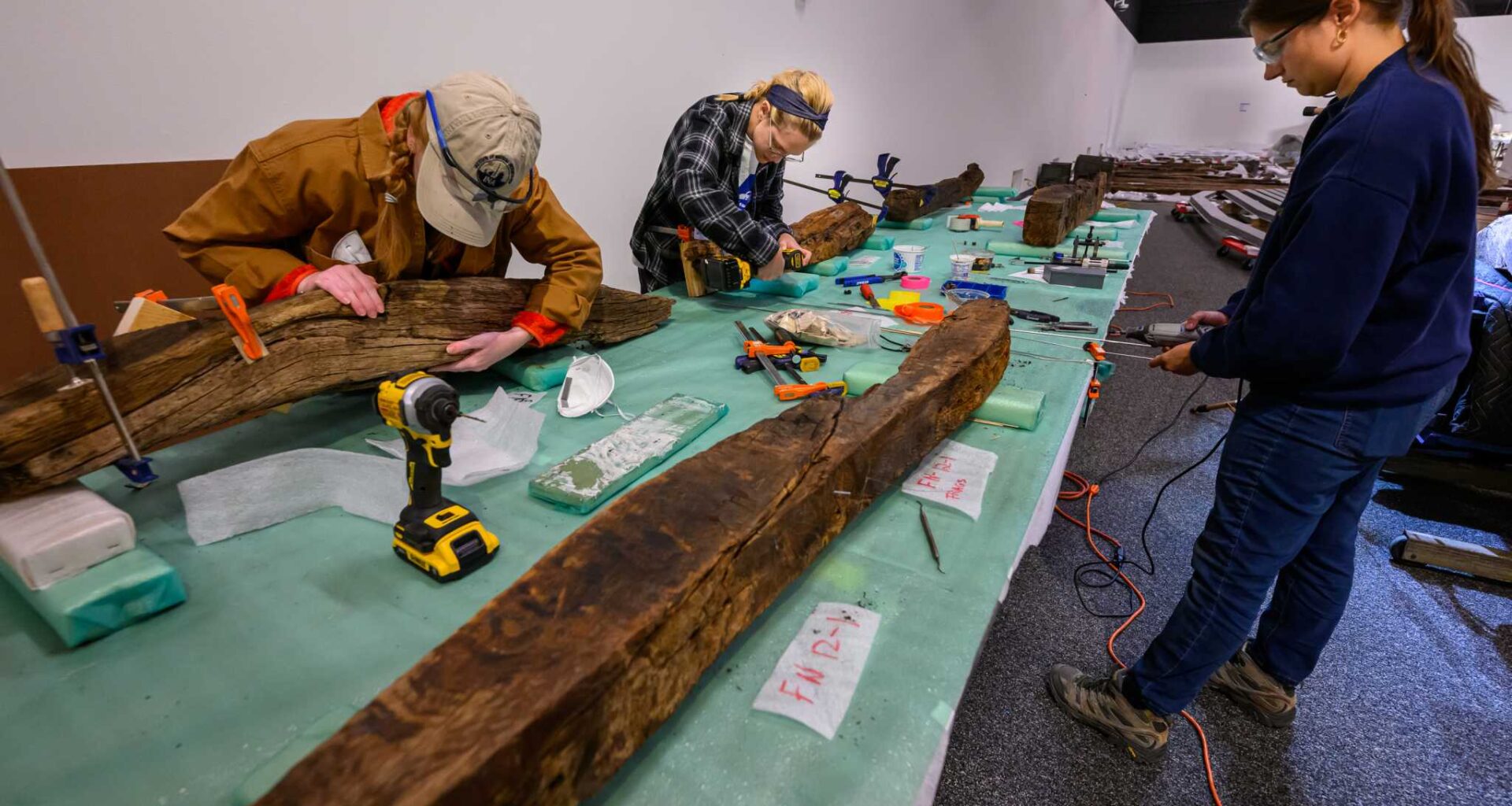
The Revolutionary War gunboat was found in pieces. It has been painstakingly pieced back together.
In panels around the gunboat are stories of individuals from the war, including “untold stories” about enslaved people, Indigenous people, women and Loyalists who played key roles in the war.
Nearby, visitors can touch a cannon and lift a musket, the gun used by both sides.
“It is actually much heavier than I imagined,” Saunders said.
There will also be a documentary-style film featuring interviews with historians.
The theme of that part of the exhibit is “the power of place,” about the importance of New York to the revolution.
Moving on to the founding of the nation, the exhibit will display original documents showcasing the role of New Yorkers in crafting the Constitution.
Also included will be a reproduction of the Hiawatha Belt, which was created to record the Great Law of Peace between the five nations of the Haudenosaunee (which French colonists called the Iroquois) Confederacy. Those Indigenous nations stretched across what is now New York state.
The final part of the exhibit, dubbed We The People, showcases the next 250 years of fights for people’s rights. Items will include a signed baseball from Jackie Robinson, who ended 60 years of segregation in professional baseball when he joined the Brooklyn Dodgers.
In more modern history, the museum will show a Volkswagen Beetle that was driven around the country by its owner after someone wrote an anti-gay slur on it while she attended a Pride event in Albany. She left the slur, but covered the rest of the car in rainbows and drove it in every state in the country (including Hawaii and Alaska) to protest hate crimes.
“As you can see, it’s a robust exhibit that covers a lot of ground,” Saunders said.