
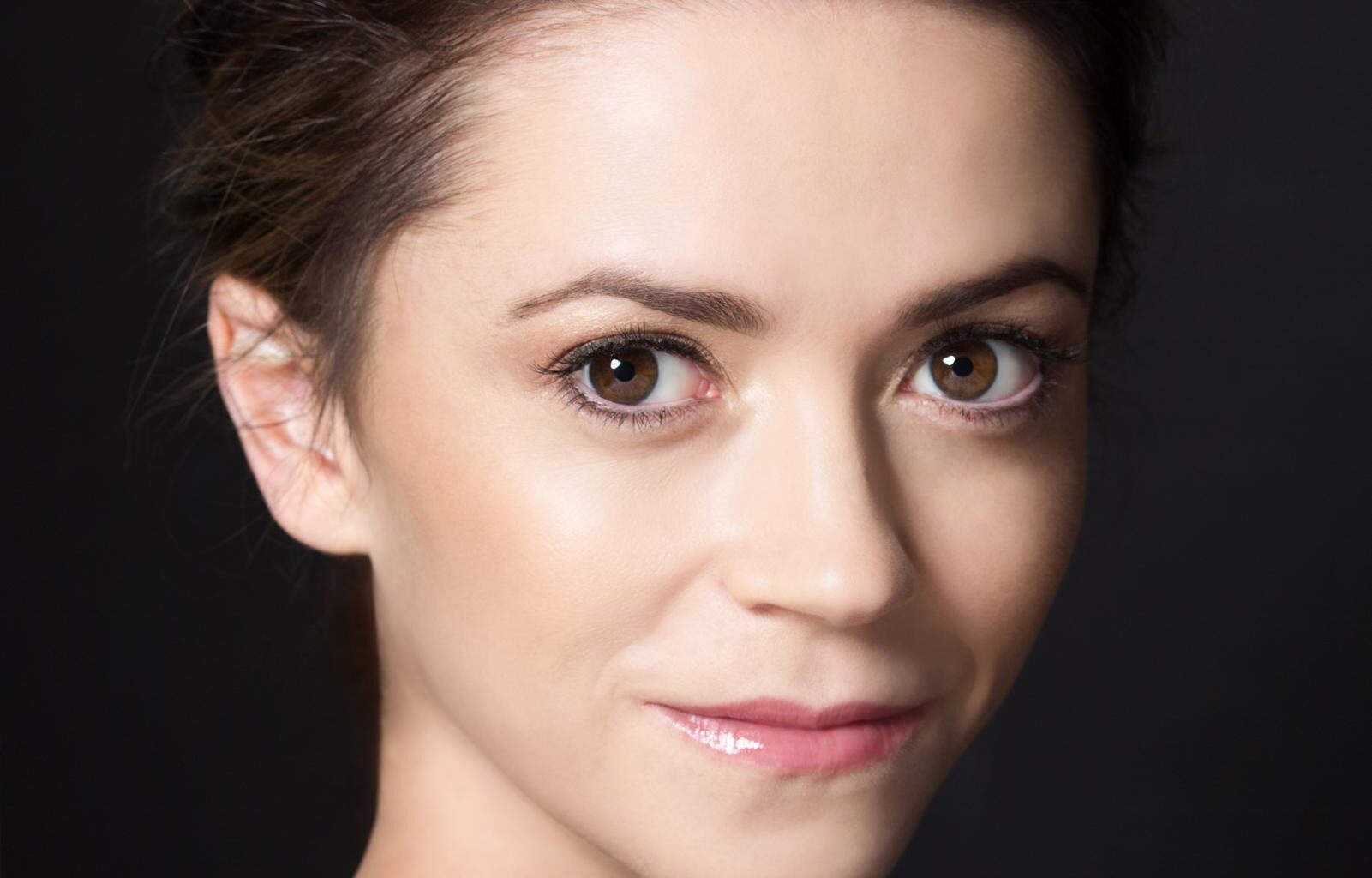
Professional ballet is a notoriously short-lived career. There is no denying the mental and physical demands that years of training, physical exhaustion and nightly performances put on the rare few that make it to the top of the elite career field. New York City Ballet principal dancer and Fordham College at Lincoln Center graduate Megan Fairchild is one of those few.
As the curtain comes down on Fairchild’s 25-year career this spring, she represents the gold standard for the longevity that is possible in a dancer’s career. The secret to her years of success, according to Fairchild, has nothing to do with her time in the studio and everything to do with the balance she found outside of it.
The prima ballerina sat down with The Observer to discuss her journey to find that balance, including her years spent at Fordham. She also let us in on what her identity as a dancer means to her now and her hopes for what will come next.
Fairchild has been a beloved dancer with the New York City Ballet since becoming an apprentice during her senior year of high school in 2001. She moved quickly through the ranks of the company, gaining the title of principal dancer in 2005. She is renowned for her precision and musicality, a valuable attribute when performing the technically challenging range of choreography demanded by New York City Ballet’s diverse repertoire.
Alongside Fairchild’s multitude of accomplishments, she radiates a calm confidence and ease, both in herself as a dancer and in her identity outside of her career.
Fairchild’s accomplishments are not limited to the studio and theater — she holds a degree in math and economics from Fordham University, as well as a Master of Business Administration (MBA) degree from New York University. Fairchild is also an author — she published her book “Ballerina Mindset: How to Protect Your Mental Health While Striving for Excellence” in 2021. Additionally, she is on the board of the Professional Children’s School (her personal alma mater) and Yaa Samar! Dance Theatre, where she utilizes her MBA as part of their finance committee. On top of her artistic, academic and professional successes, Fairchild is a mother to three daughters.
Alongside Fairchild’s multitude of accomplishments, she radiates a calm confidence and ease, both in herself as a dancer and in her identity outside of her career. But she says that was not always the case. Fairchild recalled struggling to feel like she belonged in the early stage of her career, even as she began moving through the ranks and gained the titles she trained her whole life to achieve. As a young principal, the stress and competition of casting and performing well was difficult.
“I didn’t have any confidence in myself as (an) artist. I just was like, ‘I like to dance, and I’m pretty good at it,’ but I didn’t see myself as someone that they should use,” Fairchild said.
Fairchild remembered the heightened pressure of her first starring roles. She recalled one particular performance during NYCB’s summer residency in Saratoga: As a second-year member of the corps de ballet, Fairchild was an understudy for the leading role in “Coppelia.” When all of the principals scheduled to perform got injured, she had to step in. Fairchild ended up performing the lead role for four shows — two per day. The experience was a testament to her reliability and hardworking nature, but the pressure it put on her as a young dancer was undeniable. She remembered doubting her abilities before and crying in the days leading up to the performances.
I was trying so hard to be this perfect thing and look the right way, and then I realized all the other aspects of your life and having a full life is what makes you a good dancer. Megan Fairchild, NYC Ballet principal dancer
Fairchild credits the faith of directors and other supporters for getting her through those difficult early moments. As she progressed in her career, however, it would be her experiences outside of the studio — stepping into the role of a student and expanding her identity beyond who she was as a dancer — that allowed her to find faith in herself.
“I was trying so hard to be this perfect thing and look the right way, and then I realized all the other aspects of your life and having a full life is what makes you a good dancer,” Fairchild said.
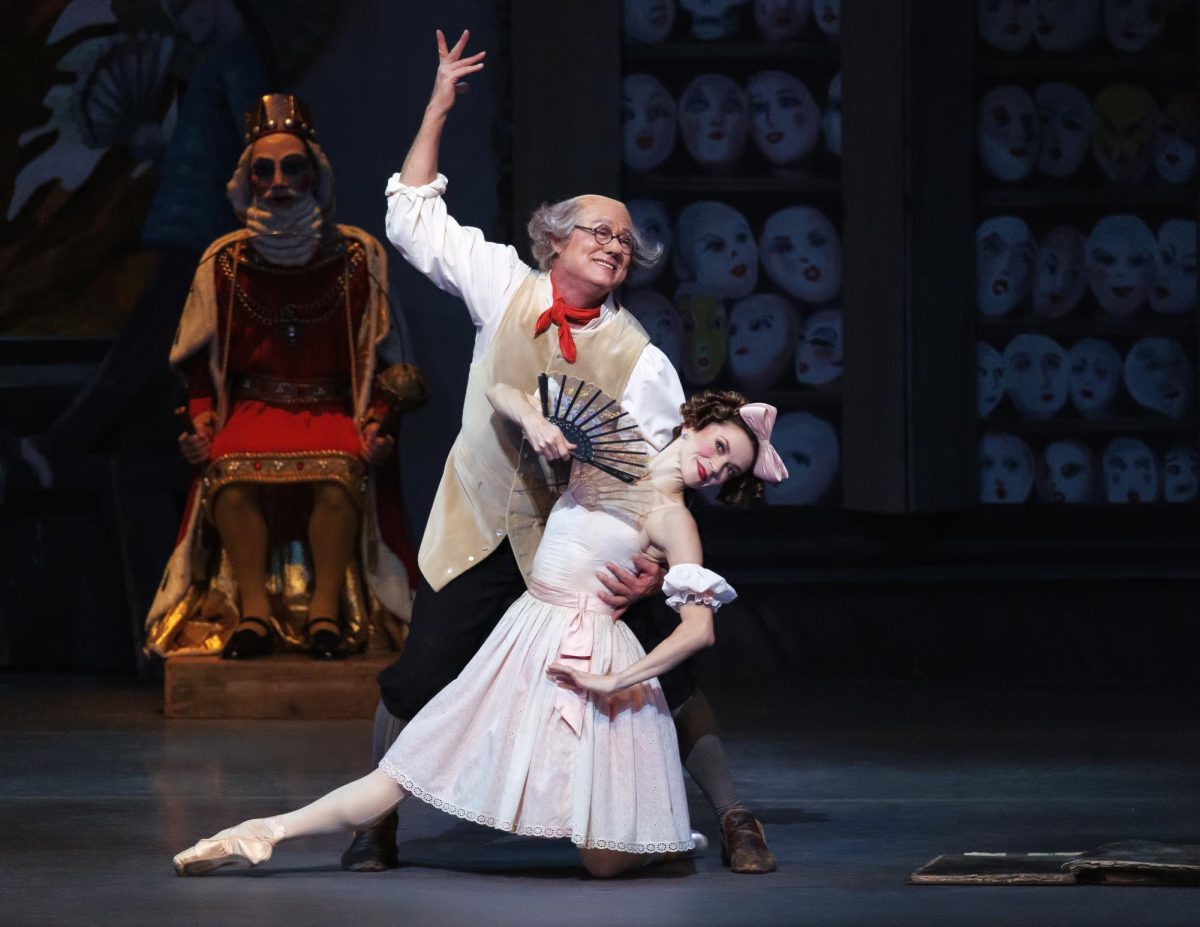
COURTESY OF ERIN BAIANO
As one of New York City Ballet’s biggest stars, Fairchild is renowned for her technicality and musical precision.
Fairchild was always dedicated to her academics — growing up in Utah, school was important to both her and her family. An accomplished student, she attended a school a good distance from her family’s home for its honors program. Like many young dancers who leave home to study at the School of American Ballet, she attended the Professional Children’s School to finish high school.
Immediately after graduating high school, during her first year in the corps de ballet, she enrolled at Fordham, starting out with just one introductory writing class. At the time, continuing her academic education seemed like the natural next step, but in the throes of her first season of “The Nutcracker,” she found it hard to balance the new workload.
Two years later, she tried again, but still struggled to manage the added demands of school as she adjusted to her career. By age 22, she was getting used to the rigorous schedule of being in the company and was ready to add her academic pursuits back into her life for good. This time, Fairchild said she was finally able to reap the benefits that continuing her studies could bring, both to her health and her career.
It felt like, ‘I have this other part of my brain that has energy — to expand, to grow, to learn — that I’m not using at the ballet. Megan Fairchild, NYC Ballet principal dancer
Her first class upon her return was the quintessential Fordham core theology course, a class that she admits, as many students may, did not seem very exciting at first. With her grueling rehearsal schedule, she had to take the class on Monday nights, but Fairchild recalled that even at that late hour, “it woke me up, it gave me life.”
Coming from Utah, where Mormonism dominates religious conversation, she remembered finding it exciting to have such lively group conversation about all different religions. She credits that first theology professor for getting her excited to engage in academics again, even on a Monday night.
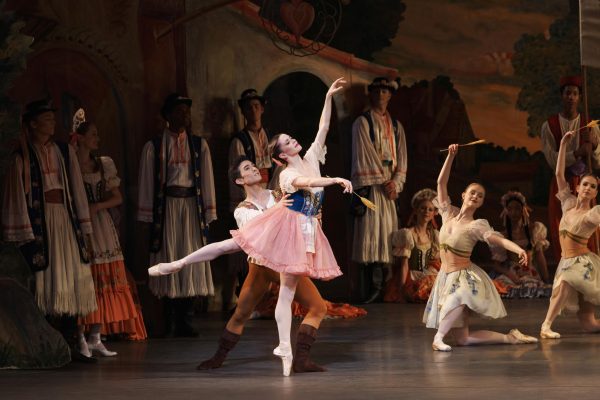 Fairchild’s final performance with the New York City Ballet will be in “Coppelia” on May 24. (COURTESY OF ERIN BAIANO)
“It felt like, ‘I have this other part of my brain that has energy — to expand, to grow, to learn — that I’m not using at the ballet,’” Fairchild said.
From then on, she was set in her academic routine, taking around two classes per semester and often more in the summer. After 15 years of hard work and balancing academic and artistic responsibilities, she graduated with a degree in math and economics.
Since joining the company, Fairchild has been excited to see more and more dancers prioritize continuing their education alongside their career. She estimated around 75% of her colleagues are beginning academic pursuits, many of them at Fordham.
After fighting to develop that confidence in her career, Fairchild is open about the mental toll that a career in dance can take.
“We wouldn’t be able to do it without the partnership we have with Fordham,” Fairchild said, expressing gratitude for the flexibility she was granted to allow her prolonged studies.
For Fairchild, continuing school offered a needed confidence boost. She said exercising that different part of her brain and completing her degrees took pressure off casting and intense rehearsals; it felt good knowing that she had other goals and opportunities to work on.
“The fact that I had more things to put my mind on and focus on is when I started to have more success and really thrive mentally,” Fairchild said.
In the same way that she saw her performance improve with the intellectual variety of her studies, Fairchild finds similar benefits in her role as a mom. After so many years, Fairchild feels she can trust her body and her training, so when she is not at work, Fairchild said ballet is not her focus at all.
“I think I’ve danced better than ever after having kids because I’m not obsessing over shows,” Fairchild said.
After fighting to develop that confidence in her career, Fairchild is open about the mental toll that a career in dance can take. She said it requires a “thick skin” to stand in front of the mirror all day or to put oneself in the vulnerable position of performing in front of thousands of people each night. According to Fairchild, it often feels that in the ballet career, dancers are “all kind of pretending to feel fine about things.”
“That’s ridiculous,” Fairchild said. “I know we’re all feeling the same things.”
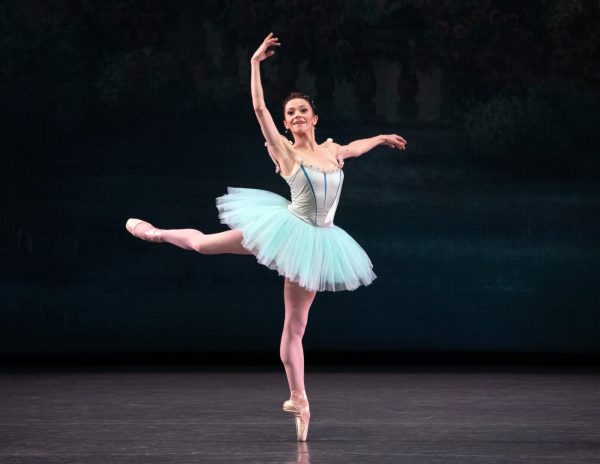 “We’re making magic happen,” Fairchild said about why she loves her work as a dancer. (COURTESY OF ERIN BAIANO)
To combat that experience, she started discussing her personal journey with her audience. In 2015, 10 years after gaining the title of principal dancer, she started a podcast called “Ask Megan,” where she gave advice on all those career difficulties that she had to work through — things like auditioning, managing injuries and pursuing academics. While she no longer produces the podcast, its large success (even with those outside of the dance community) inspired the creation of her book in 2021.
We’re making magic happen, and that’s what elevates people in the audience and makes them cry, makes them feel something. Megan Fairchild, NYC Ballet principal dancer
Fairchild said stress will always be part of a career in dance “because we care about it so much,” but that means that dancers and companies have to find a way to manage it. For that reason, Fairchild is grateful for many systematic changes that came during her career. Beyond an increase in academic interest, she said their company better supports its dancers by offering things like personal trainers and classes during time off to help the dancers stay in shape.
But for all the ways that Fairchild (and the larger dance world) are learning to manage the high standards that come with the career, she is clear that she does not think there is anything wrong with its level of intensity. For Fairchild, that high standard is exactly what makes ballet so exciting, and what she said made her into the person she is today. Dance teaches resiliency and discipline, traits that Fairchild describes as “superpowers” that are not always present in those she works with outside of the dance world.
“We’re making magic happen, and that’s what elevates people in the audience and makes them cry, makes them feel something,” Fairchild said.
On May 24, Fairchild will grace the audience one last time as a New York City Ballet principal dancer with a retirement performance of “Coppelia” at the David H. Koch Theater in Lincoln Center. It is not common to choose a full-length ballet for a retirement performance, but Fairchild said she wanted to perform something she had prior experience dancing all in one night (as opposed to doing multiple shorter repertoire picks, as many dancers do for their retirement performance) and because, she said, “my daughters will be able to enjoy it.”
After that performance, Fairchild and her family are making an exciting move to France. Always a hard worker, she plans to start work with The George Balanchine Trust in Europe, where she can help preserve and share much of the repertoire that she performed throughout her career with the next generation of dancers. Ultimately, she said she hopes to utilize her MBA to work in arts consulting or to step into an executive role at a dance company, but Fairchild adds that she is going to “take some time to get settled first” — a fair plan after a decades-long career as a prima ballerina and a move across the ocean.
There is certainly something special about Fairchild retiring with “Coppelia” after it being one of her first starring roles so many years ago. Her composure and regality make it hard to picture that scared younger dancer taking on the role last minute, but that progress is a testament to her journey. It is her decades of hard work both in and out of the studio that allowed her to shine on stage and protect her longevity.
“Sometimes when you’re doing it, you’re not sure what it’s going towards. You just gotta keep going,” Fairchild said.
There is no doubt that audiences and aspiring dancers everywhere are grateful that Fairchild did just that.