
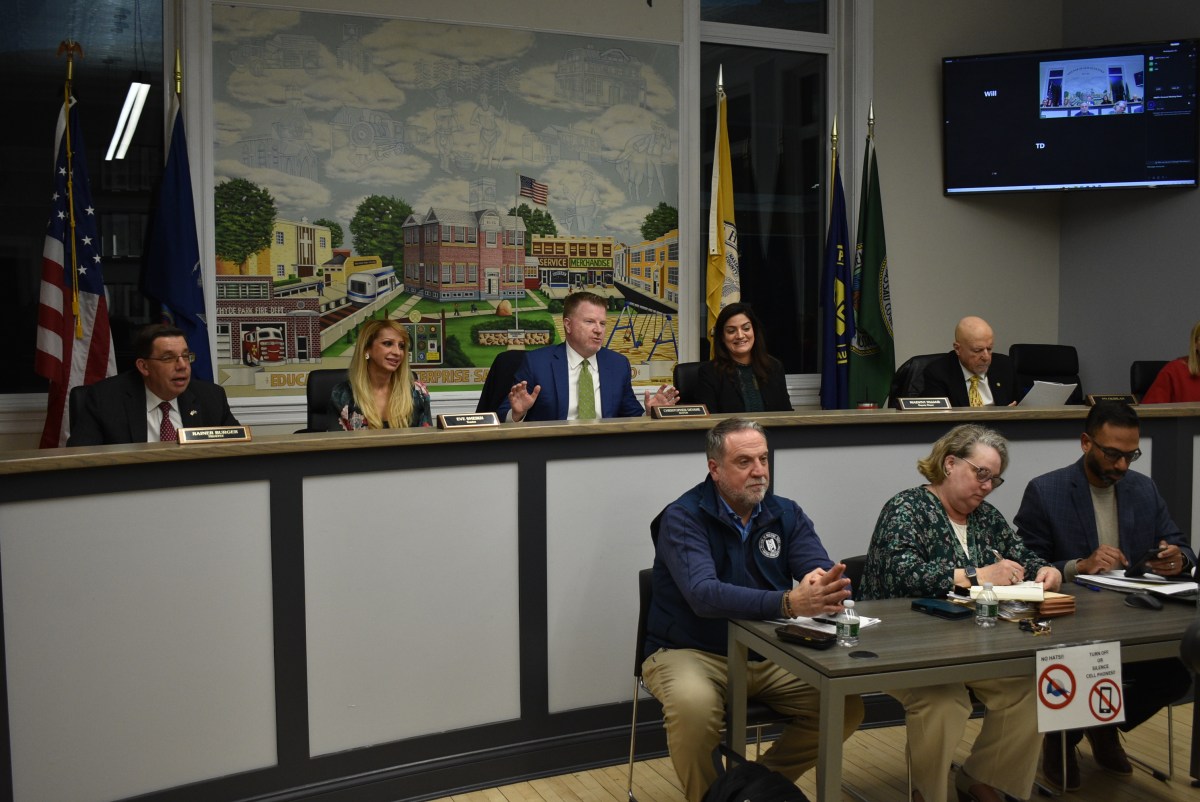
The Village of New Hyde Park Board of Trustees unanimously adopted its 2026–2027 budget during its Thursday, April 16, meeting.
The total budget remains unchanged from the tentative proposal presented on March 19, with a total set at $8,157,852. The budget presents a 2.46% increase of $195,850 over last year’s adopted budget.
Officials previously said the plan includes a 1.999% tax levy increase in the prior year, which would raise taxes by an estimated $35 to $37 annually for the average homeowner.
When the tentative budget was first introduced last month, Mayor Christopher Devane said the board was “proud” to remain under the state tax cap.
“We kept it under the tax cap as we’re finishing the refurbishment of DPW; we’re opening a new park, Sakowich Park, on the south side; we’ve redone Village Hall; and we have a new community center being built next door,” he said.
In addition to the budget vote, trustees unanimously approved several routine agenda items, including mileage reimbursement for official travel and approval for employees and officials to attend conferences, schools and seminars in the coming fiscal year.
The board also approved five landscaping permit renewals, including companies based in Floral Park, Franklin Square, New Hyde Park, Uniondale and Freeport.
During the public comment portion of the meeting, residents raised concerns regarding neighborhood conditions, traffic congestion and communication from village officials.
A resident who has lived near the South 12th Street park since 1958 raised concerns about the appearance of a tan storage structure. She said that only part of the building had been upgraded while the side facing her property remained unchanged.
Devane said completing additional exterior work would be “cost prohibitive,” while emphasizing the broader benefits of the park improvements.
“That place was a barren wasteland for decades and now it’s a community park,” he said. “The park is something that is really helpful to you and to the neighborhood.”
Another resident expressed support for senior housing while raising traffic concerns. Devane said the village should explore age-restricted housing options for longtime residents wishing to remain in the community.
“We have a distinct need for this,” he said. “There is no other alternative for them, other than to go live with their kids, or move into a different state.
Residents also questioned how the village shares updates with the community. The board said the village has since moved away from its printed newsletter, which cost about $5,000 per issue – roughly $20,000 annually – and now relies on its mobile app and digital alerts.