
There are a few dates on the NHL calendar when my inbox and social notifications fill with versions of the same questions from New York Rangers fans.
“When is Chris Drury talking?” and “Where can I watch it?”
My responses are generally, “I’m not sure yet,” and, “Nowhere, unfortunately.”
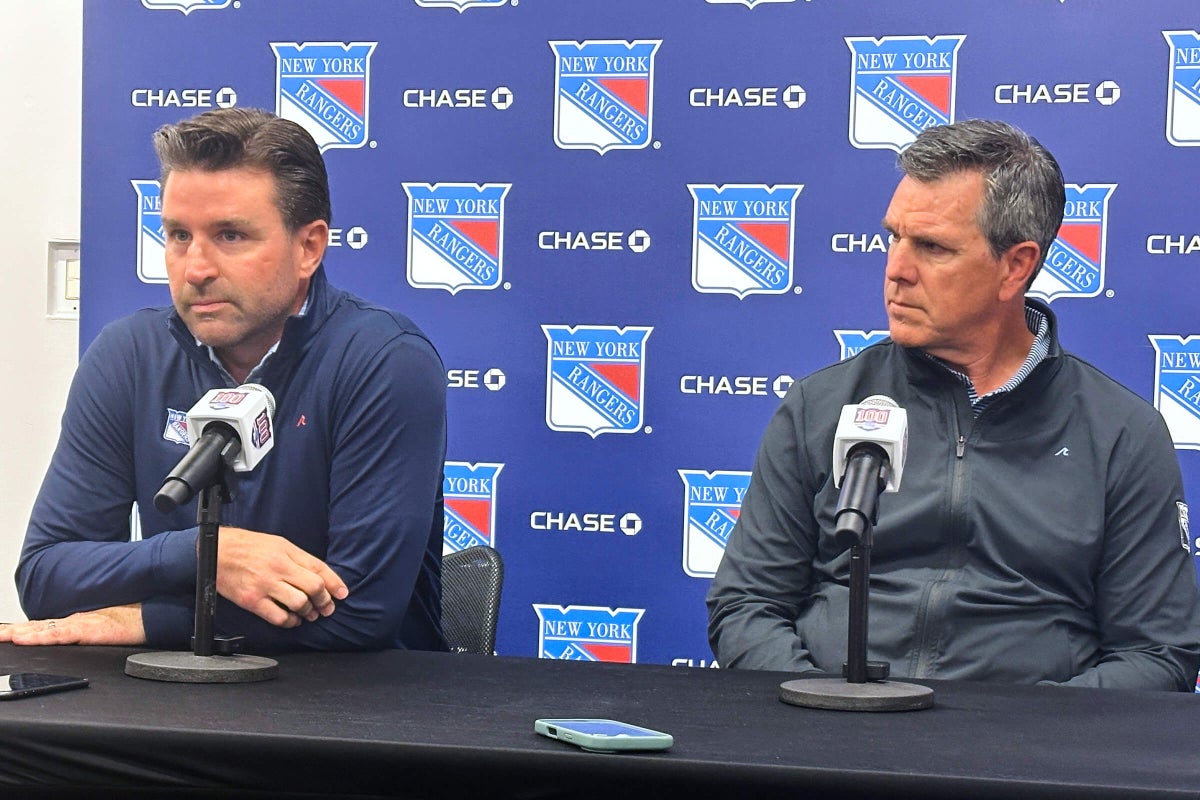
While front-office executives across the league typically schedule face-to-face media availabilities around notable events — trade deadline, draft and end of season, as a few examples — Drury is the only general manager who doesn’t regularly hold solo, in-person news conferences. The last one came in September 2023, with Drury’s only other appearances taking place in NHL-mandated group settings and occasionally alongside his team’s coach.
The norm during Drury’s tenure, which will soon hit the five-year mark, has been gate-kept Zoom calls capped between 10 and 15 minutes and never broadcast to the public. Video is turned off, and reporters in attendance are muted until they are called upon to ask a question — after which a meeting host promptly mutes them again.
It was the same story on Friday. Drury declined a request from the New York chapter of the Professional Hockey Writers Association to speak in person, then spent 14 minutes evading the topics fans care about.
Regarding the next steps in the Rangers’ self-proclaimed retool, Drury dodged the question by saying it was still “so raw and so new” — even though it’s been over three months since he announced those intentions in a Jan. 16 letter to season-ticket holders. He declined to discuss how close New York is to reaching the playoffs again (“I’m not going to get into the timelines”); what went wrong with past draft picks that didn’t pan out (“It’s hard to say”); and whether he’s planning any additional changes to scouting and player development staffs with spotty track records (“We’re looking at every department”). When asked about the Rangers’ top offseason needs, Drury deferred to earlier comments from coach Mike Sullivan.
Avoiding these questions places an undue burden on Sullivan and the players. As they are required to speak to the media daily, they often must address decisions made above their heads. That culture of secrecy permeates every facet of the organization, with team employees nervous to do or say anything that might jeopardize their jobs.
A lack of transparency doesn’t seem to be frowned upon in the Madison Square Garden universe: Leon Rose, president of the fellow MSG-owned New York Knicks, hasn’t addressed the media since September 2021. At least Drury speaks a few times a year, but the Knicks have made the NBA postseason for four consecutive years. The Rangers, on the other hand, have missed the Stanley Cup playoffs twice in a row, including a dismal last-place finish in the Eastern Conference this season. That should turn up the accountability meter a few notches.
Instead, the Rangers feigned transparency by issuing Drury’s “retool” letter. “The intent was to communicate with our fans,” he said Friday, but one vaguely worded statement doesn’t answer all of their questions about what to expect in the coming seasons. How can people have faith in the process if they don’t know what it entails?
If the goal is to communicate with fans, the open forum of a news conference would offer a chance to speak directly to them. They want to see and hear it for themselves — and in the age of streaming services and social media, the reach can be enormous. MSG has its own television network, for goodness’ sake.
An in-person setting would allow for follow-up questions and organic conversation. Conversely, I’d describe the current setup as robotic and impersonal — and extremely guarded. The limited access has allowed Drury to take the path of saying very little. The level of substance that comes out of these Zooms is minuscule.
New Yorkers are as passionate and engaged as they come, and they’re smart enough to understand nuance. Most can respect an executive who doesn’t want to show all their cards, but addressing past mistakes and laying out future goals doesn’t require revealing state secrets.
I often remind myself not to take things too seriously in this profession — we’re covering pro sports, not the Pentagon, after all. But I consider it my responsibility to serve as a sounding board for readers, stay attuned to their concerns, and ask fair questions that they want answered.
Ultimately, this isn’t about the prerogative of any individual executive, or about appeasing journalists who want information. It’s about doing right by the people who buy tickets and merchandise and various subscriptions that allow all of us — athletes, team staffers and reporters alike — to have these privileged careers. Maintaining open dialogue is the best way to earn the trust and understanding of those who make these dream jobs possible.
Maybe fans care less about this than I think they do, but my impression is that it matters to many of them and will be harder to brush aside as a nonissue if the losses continue to mount. Everyone appreciates transparency, which is a lesson Drury and the Rangers should take to heart at a time when confidence in the organization is eroding.