
Earlier this month, the streets right outside the Bronx Documentary Center were flooded with people from all around the city, waiting for the doors to open for Martha Cooper’s “Streetwise” exhibition, running now until June 14th.
Over the course of six decades, she compiled her most prominent works. All displayed around the gallery, graffiti titles label each group of work, and photographs on the back of skateboards. She brought the streets she photographed into a single room.
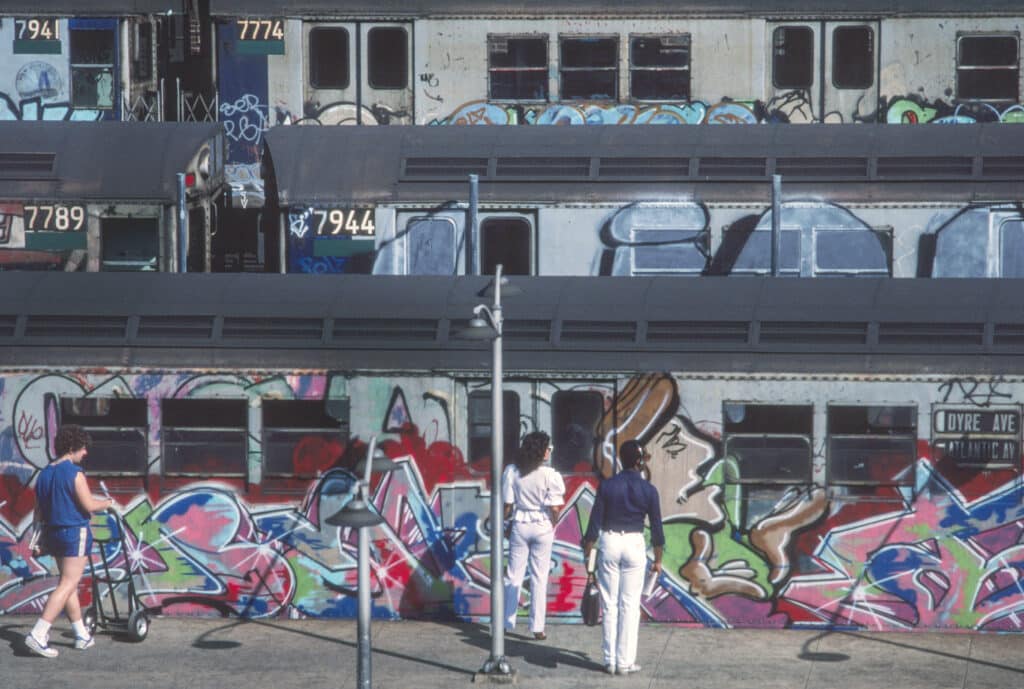
180th Street Subway platform; Bronx, 1982. © Martha Cooper
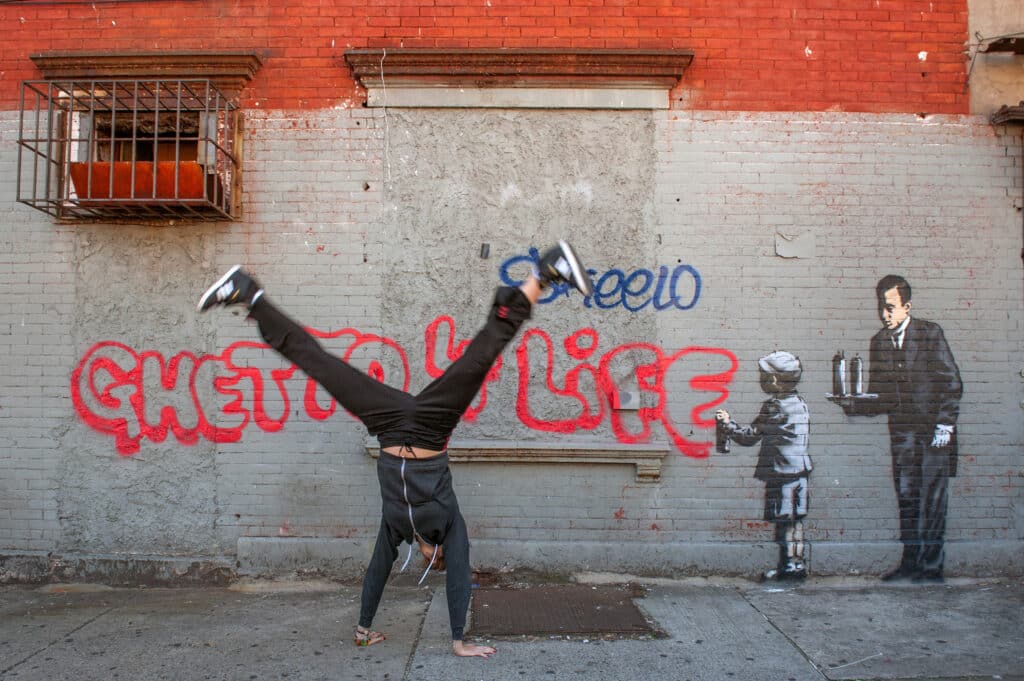
Ghetto For Life; by Banksy at; Ghetto For Life painted at 651 Elton Avenue; Bronx; New York; on 22 October 2013; as part of Banksy‘s one-month residency in New-York; Better Out Than In. The mural was cut from the wall and moved to Connecticut when the building was demolished in 2024. © Martha Cooper
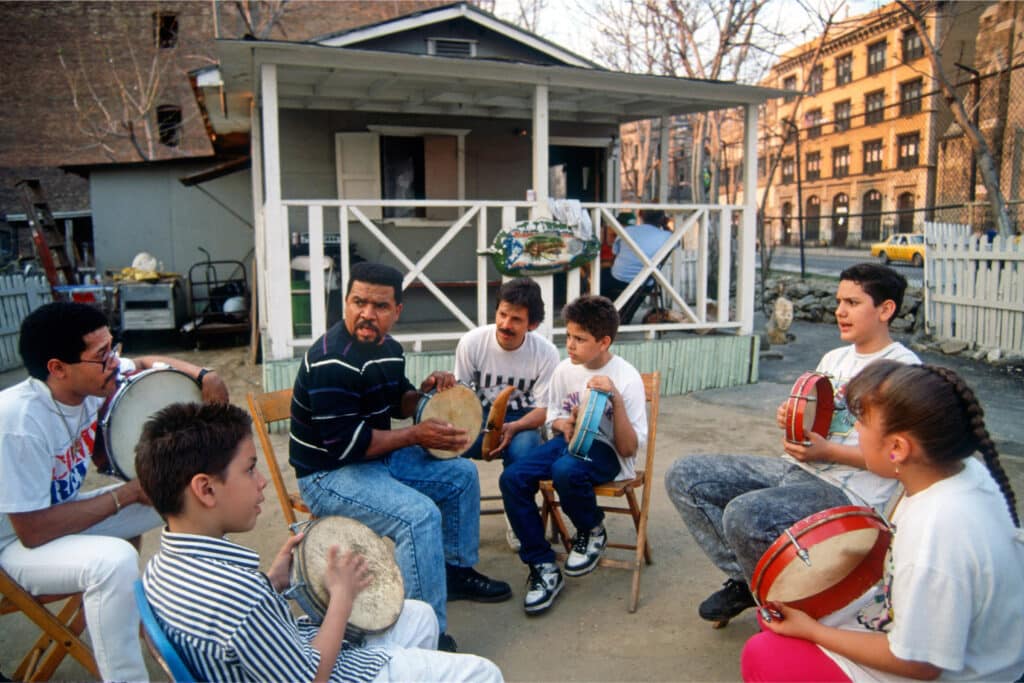
Benny Ayala teaching Puerto Rican plena music at Rincon Criollo. The panderetas (frame drums) were made of stretched skins inside the casita. Bronx, 1988. © Martha Cooper
Featured in the exhibition, the series includes photographs ranging from graffiti, early breaking, street racing, and BMX riding to the casitas series of houses built in Puerto Rican neighborhoods, which together showcase the wondrous art world she documented over her 45-year career.
The exhibition also presents a series of photographs taken in the Sowebo neighborhood of Southwest Baltimore, as well as select images from Tokyo Tattoo in 1970, documenting its tattoo culture, which was uncommon and unacceptable at the time.
Alongside the gallery, showcased are the books she has published throughout her career, as well as Cooper’s very own Nikon film camera and the Kodak Baby Brownie Special Camera she used for the images on display.
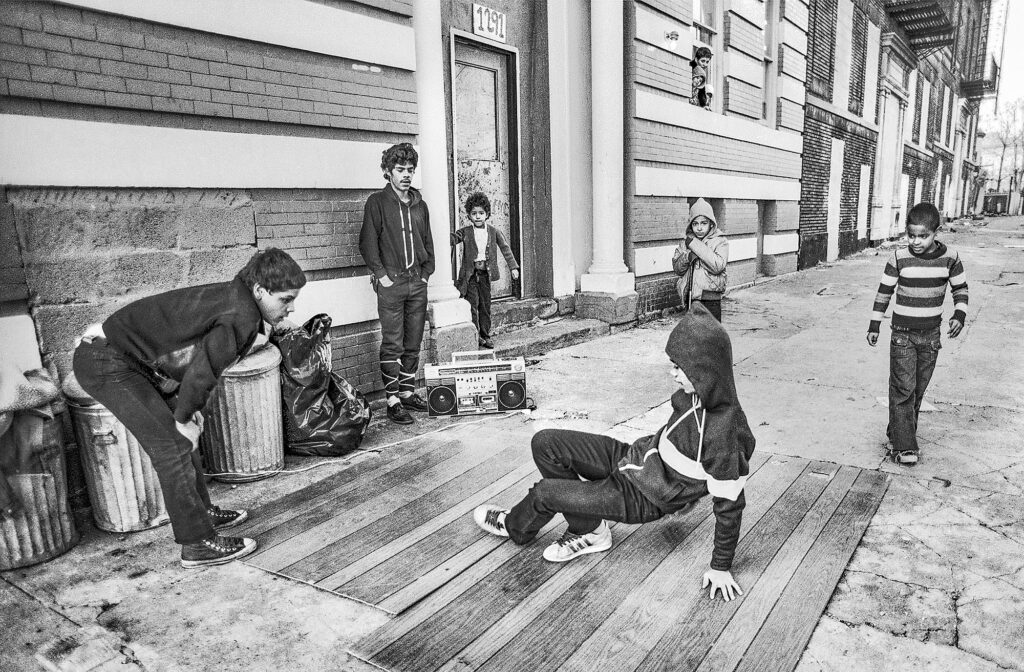
Boys practicing breaking moves on the sidewalk, Bronx 1982 © Martha Cooper
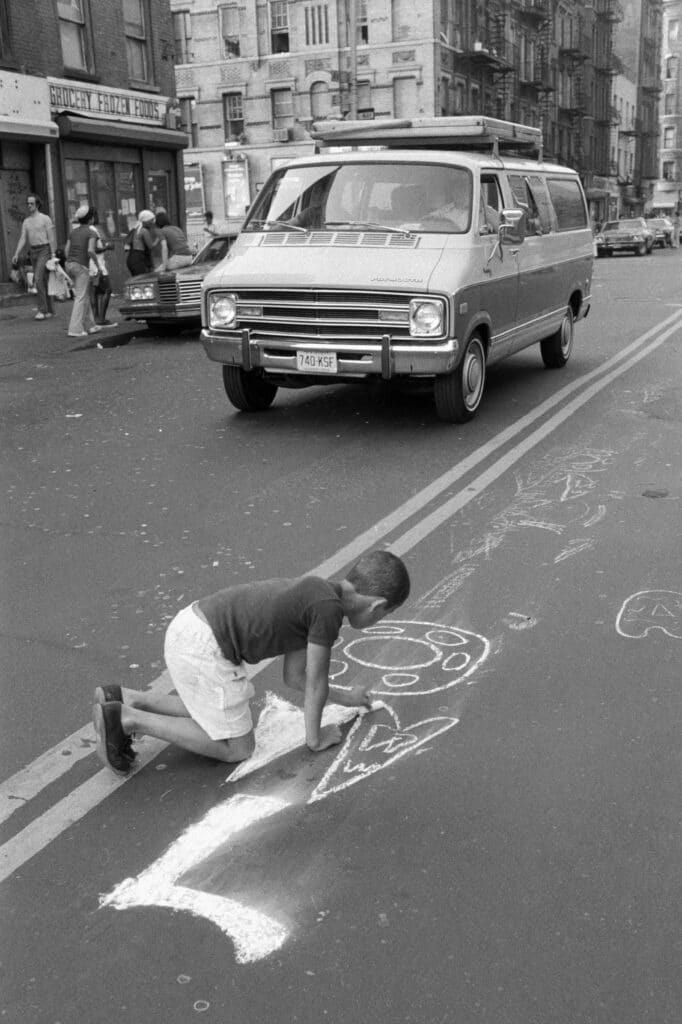
Boy painting his nickname OWL on the street as a van approaches, Lower East Side, 1979. © Martha Cooper
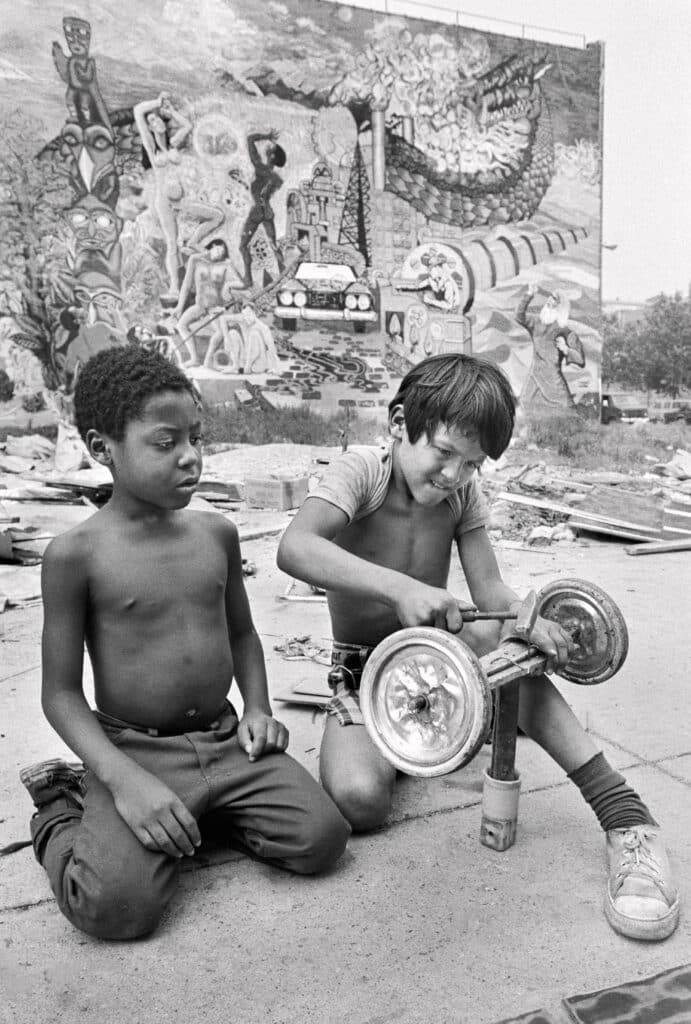
Boys constructing a go cart from found materials, Lower East Side, NYC 1978. Mural “New Birth” in background at Rivington & Chrystie Streets for Cityarts Workshop, 1974 directed by James Jannuzi with artists Alfredo Hernandez and Pedro Vidal Tirado. © Martha Cooper
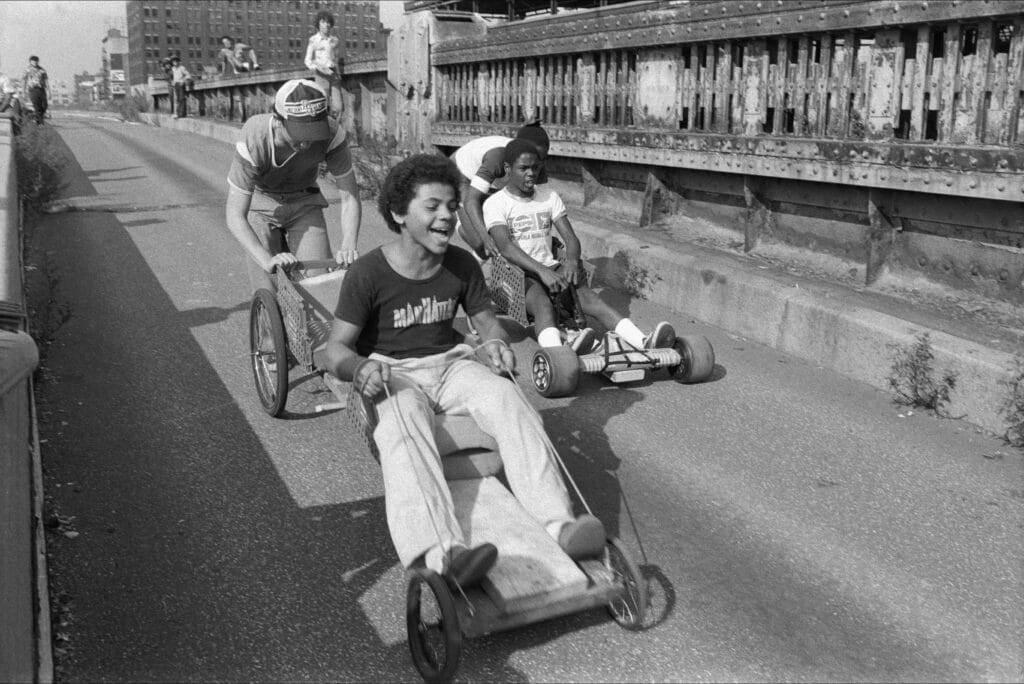
Boys racing their homemade go carts on the portion of the West Side HIghway which has since been demolished; Lower East Side; 1978. © Martha Cooper
Cooper’s interest in the graffiti scene stemmed from graffiti artist Donald Joseph White, also known as “DONDI.” She was first introduced to him through a young boy she met while photographing kids playing in the street. He was sketching in a notebook and told her, “I can introduce you to a king.” That king turned out to be Dondi.
“I was introduced to Dondi…and I was fascinated by how serious an art form it was to the people who were doing it,” recalled Martha Cooper, “and how they had their own language, their own aesthetics, and kind of went from there.” It was also a natural fit for who she was at the time: an art major in college who later pursued graduate work in anthropology. As she put it, the graffiti world “perfectly combined my interests.”
Much of the work displayed is part black-and-white and part color, creating a creative balance within each series. Cooper, who no longer shoots on film, explained that since she photographs so much art, color simply makes more sense. “The art is in color,” she said, “I think it’s better to shoot in color.”
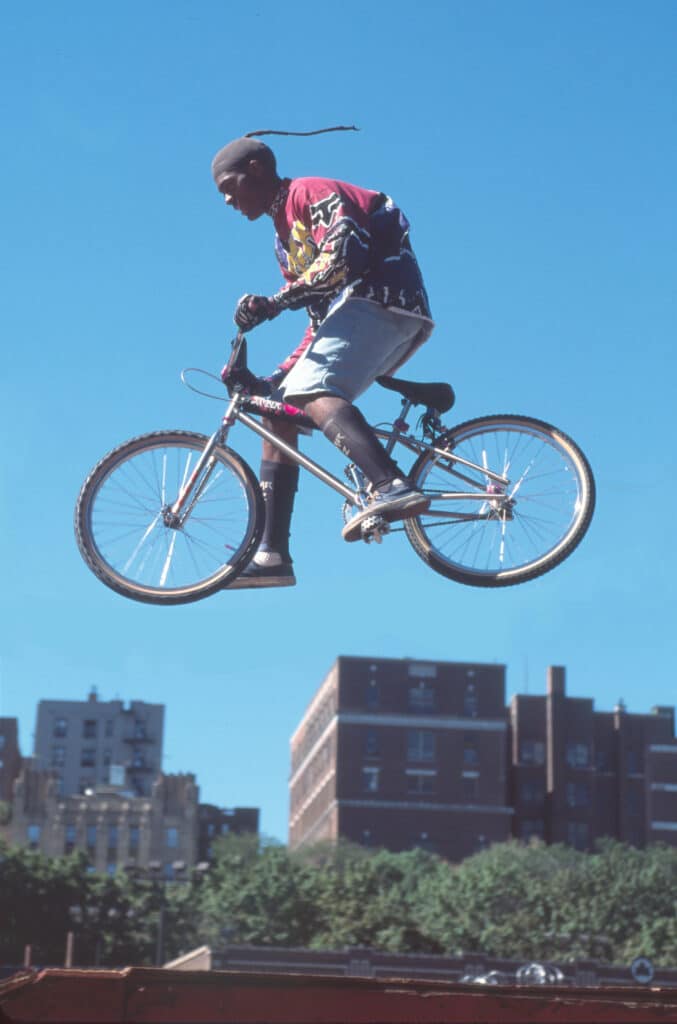
BMX bike jumping at Mullaly Skateboard Park; Bronx; 1995. This park was renamed the Reverend T. Wendell Foster Park in September 2022 to honor the first Black representative from the Bronx in the New York City Council. The change was made in response to community efforts to rename the site; which was previously named after John Mullaly, a 19th-century journalist known for racist views. © Martha Cooper
The exhibition also features a live casting by artist John Ahearn and Rigoberto Torres, a longtime friend of Cooper’s. Seeing his work integrated into the space feels like a natural extension of her philosophy, documenting the people and culture around her, not just as subjects, but as collaborators.
With “Streetwise,” Cooper had to make difficult choices. “I had to make a lot of decisions for this show,” she said, “because there was a lot more work that I didn’t show.” What remains is still a staggering body of work, one that documents the important times in New York City history and beyond.
When asked what she hopes people take away from the exhibition, Cooper kept it simple: “Maybe they will look at their neighborhoods with a fresh eye.”
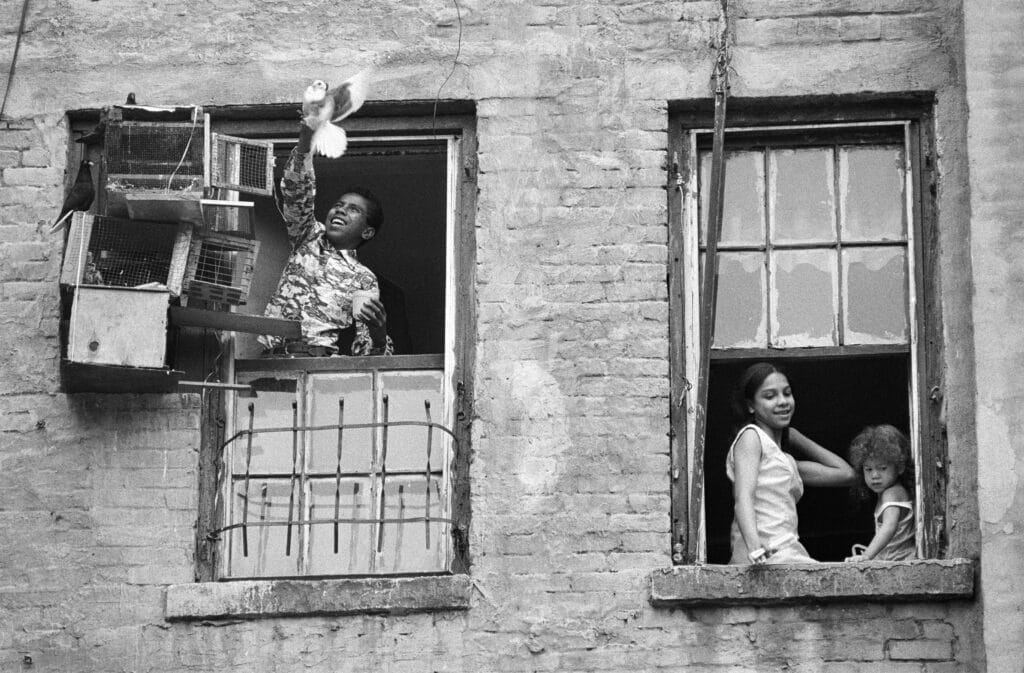
Boy with his pigeon coop in window, Houston Street, Lower East Side, 1978. © Martha Cooper
“Martha Cooper : Streetwise” is on view at the Bronx Documentary Center in New York, until June 14, 2026.
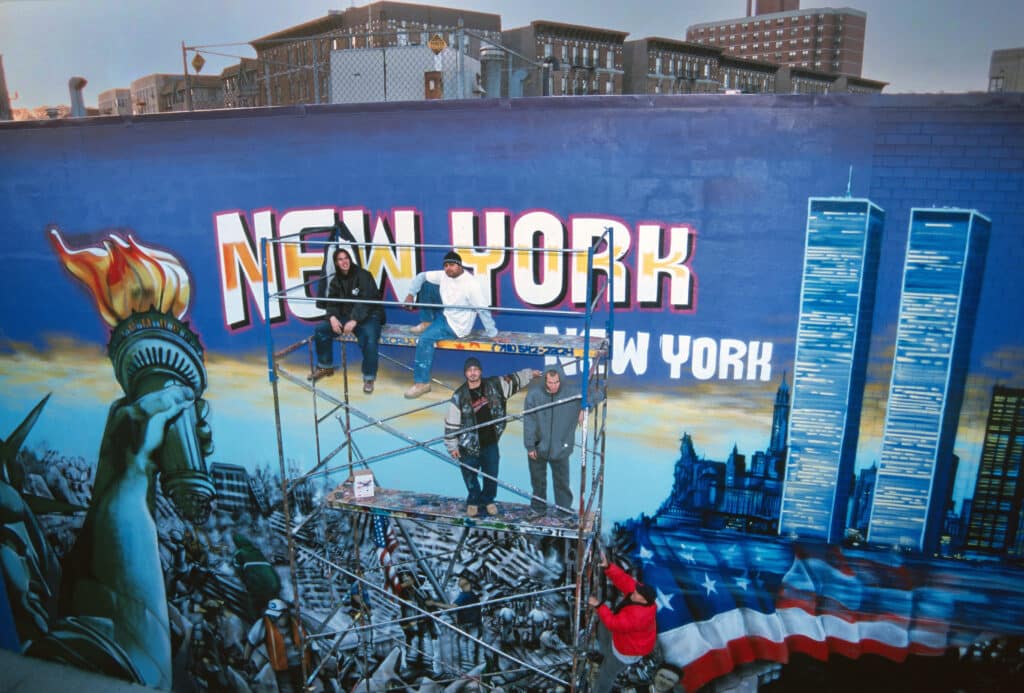
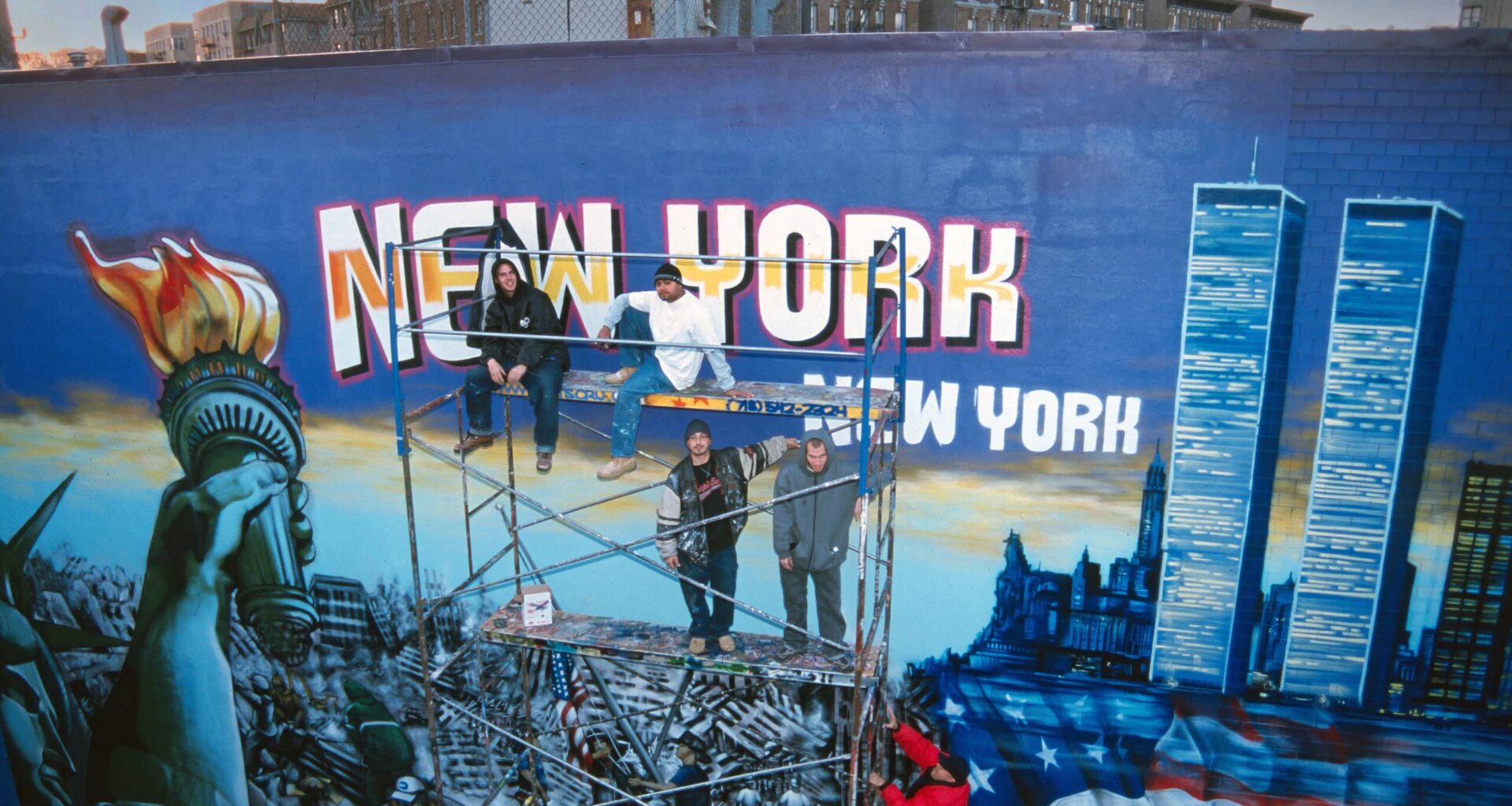
TATS Cru with their World Trade Center Mural seen from 207th Street #1 subway line; 2002. © Martha Cooper