
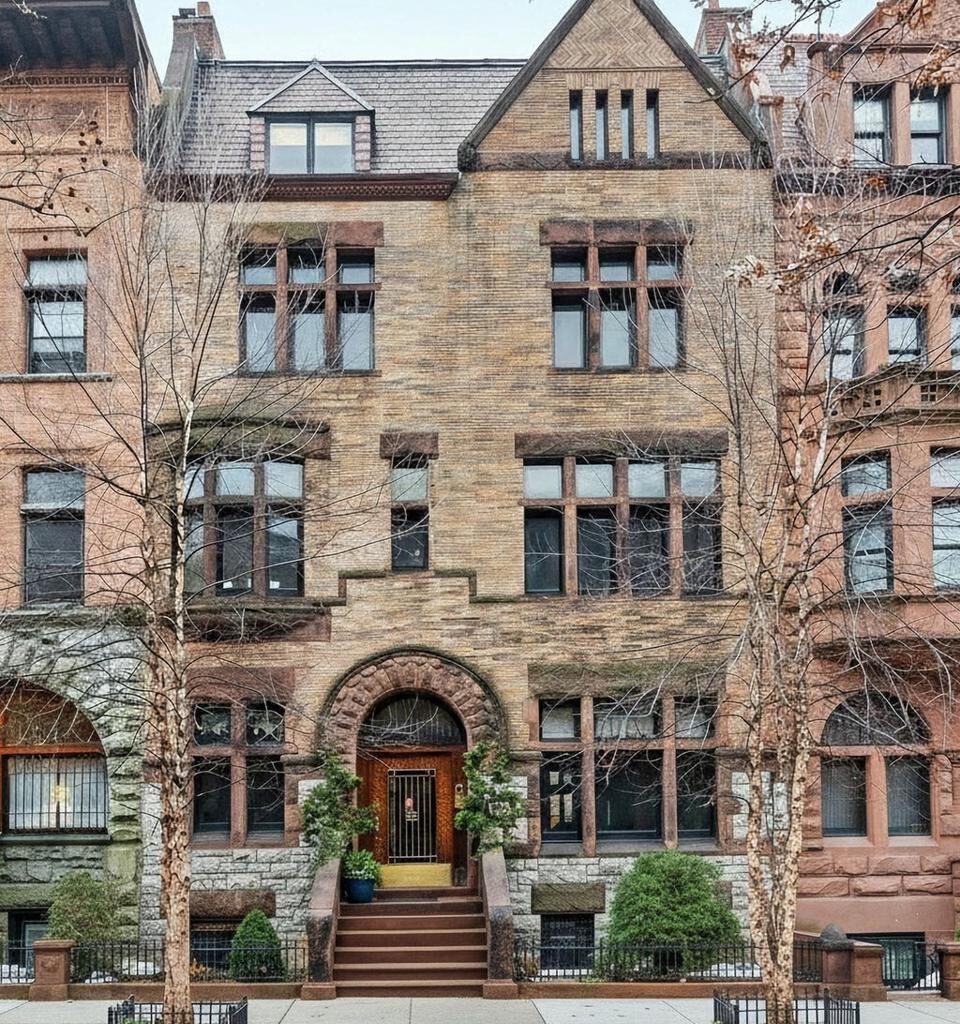
Architect C.P.H. Gilbert went a bit wild with home designs in late 19th-century Brooklyn. Properly known as Charles Pierrepont Henry Gilbert, he swept in during the Gilded Age, a time when architectural freedom produced a fever dream of elaborate mansions and row houses in greater New York City.
Having a statement home was one way for the upper crust to put their considerable wealth on public display.
As if anyone needed to be reminded.
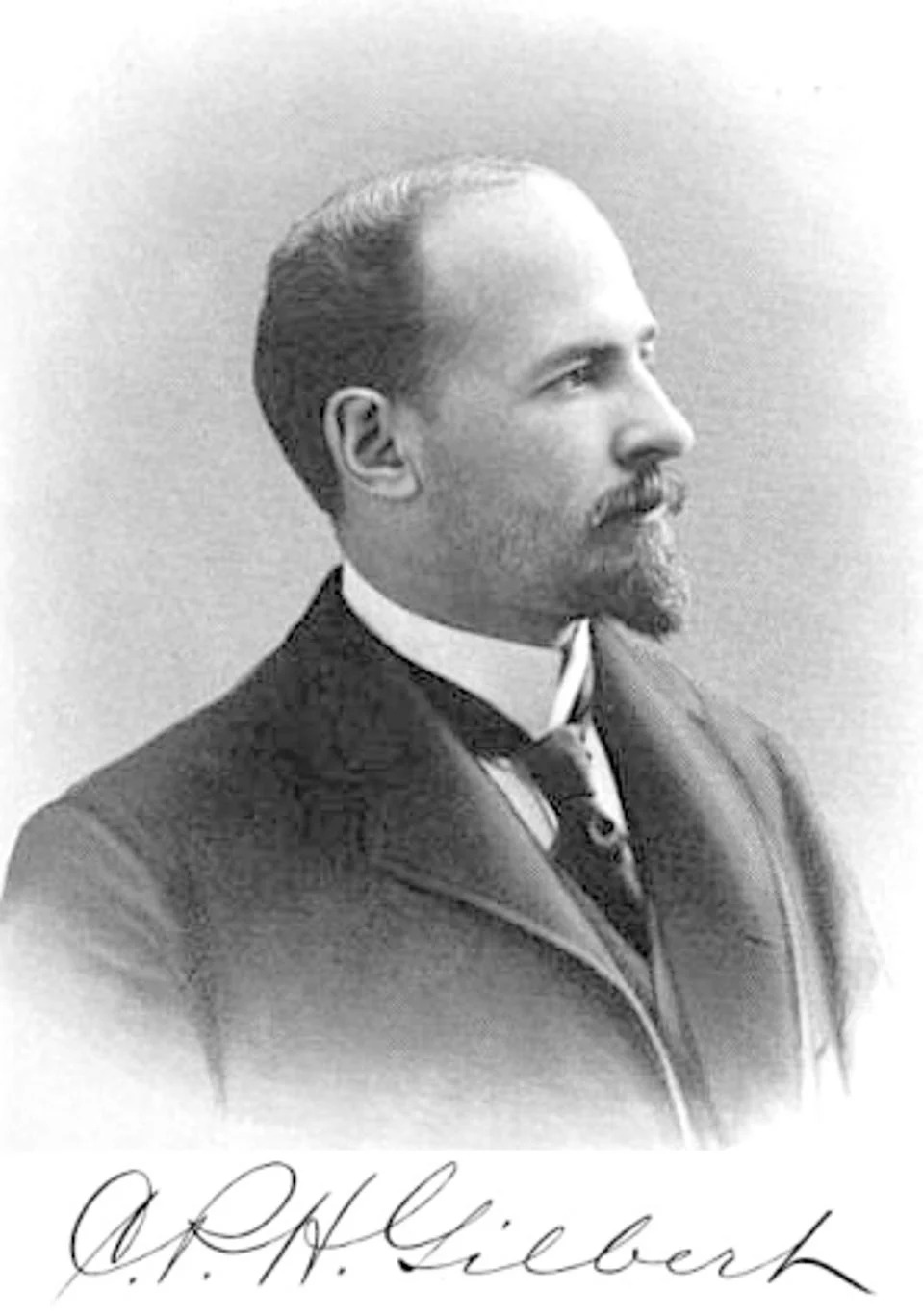
Architect C. P. H. Gilbert’s Gilded Age touch helped shape some of New York’s most lavish residential streetscapes.
Public Domain
The Astors, the Vanderbilts, the Rockefellers—the tech-bro powerbrokers of their day—were already household names, synonymous with oil, steel, banking and railroad interests. The standard 19th-century millionaire playbook.
For some, the flamboyant mansions outlasted their fortunes. For others, generational wealth stayed the course. Millionaires’ Row on Fifth Avenue in Manhattan still showcases some of the era’s standout buildings. (Of course, Manhattan being ever-evolving Manhattan, there’s now a Billionaires’ Row along West 57th Street near Central Park, where nothing shouts conspicuous peacocking like sky-high penthouses at the top of sleek glass boxes.)
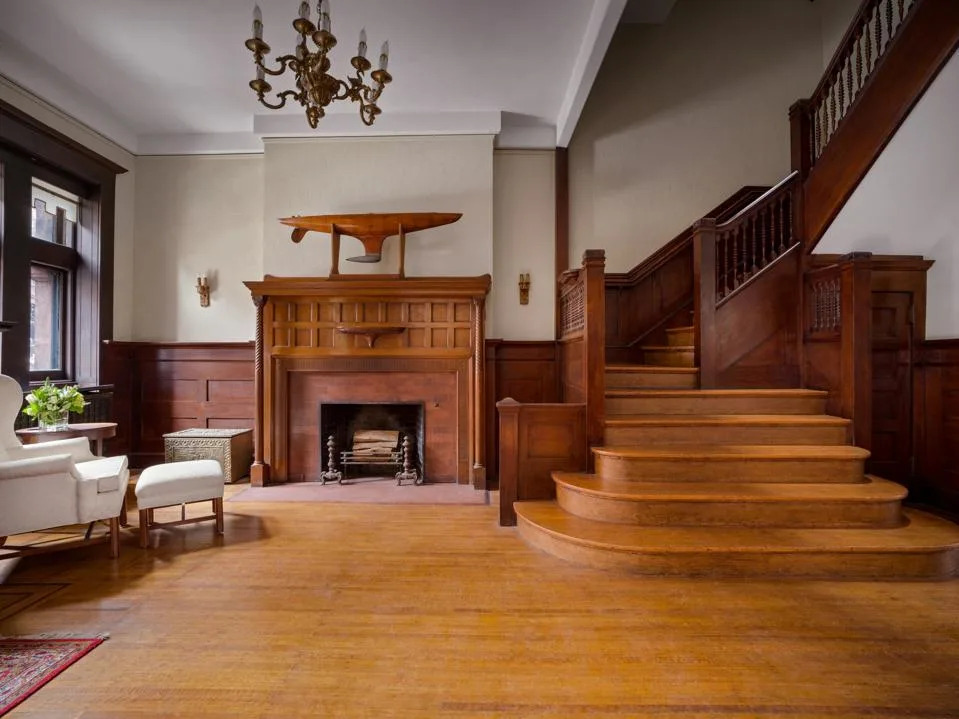
The home’s 1887 pedigree is legible not only in its detailing, but in a scale that feels increasingly rare in any borough.
Platinum Forbes Global Properties
But back to our man Gilbert.
He could design “a mean Neo-Gothic mansion,” as one New York Times story put it. But he started out creating a series of brawny brownstones in addresses such as Carroll Street and Montgomery Place in Brooklyn, sticking close to Prospect Park, the green center of the onetime city-turned-borough.
Now one of Gilbert’s works, owned by just four families in its 140-year history, is on the market.
The house at 842 Carroll Street in the Park Slope neighborhood stands amid two other brownstones designed by the architect, each with a different facade, which seems to be a C.P.H. Gilbert calling card.
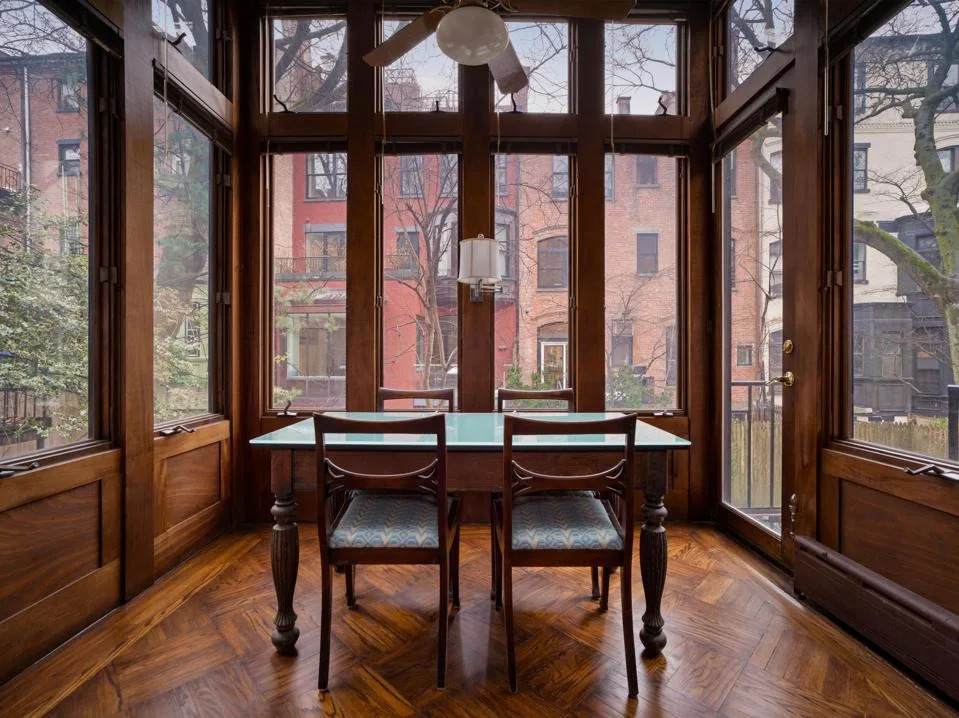
Rich mahogany gives the sunroom a mood of warmth and intimacy without sacrificing its airy feel.
Platinum Forbes Global Properties
Again, as a bit of explanation, the New York Times points to a pair of historical buildings elsewhere in Brooklyn, on Garfield Place, described this way: “No. 313 tall and thin, with a medieval palette of dark stone, and No. 315 short and wide, with light-colored brick and a much more delicate design, the two forming a story of architectural Mutt and Jeff.”
The Carroll Street home leans toward the 20th-century cartoon duo’s famously contrasting figures: Mutt’s height and Jeff’s girth. At more than 32 feet wide, the property ranks as one of the largest and widest historic townhouses in Brooklyn. What that means is an abundance of space, about 8,200 square feet inside and 1,200 square feet outside.
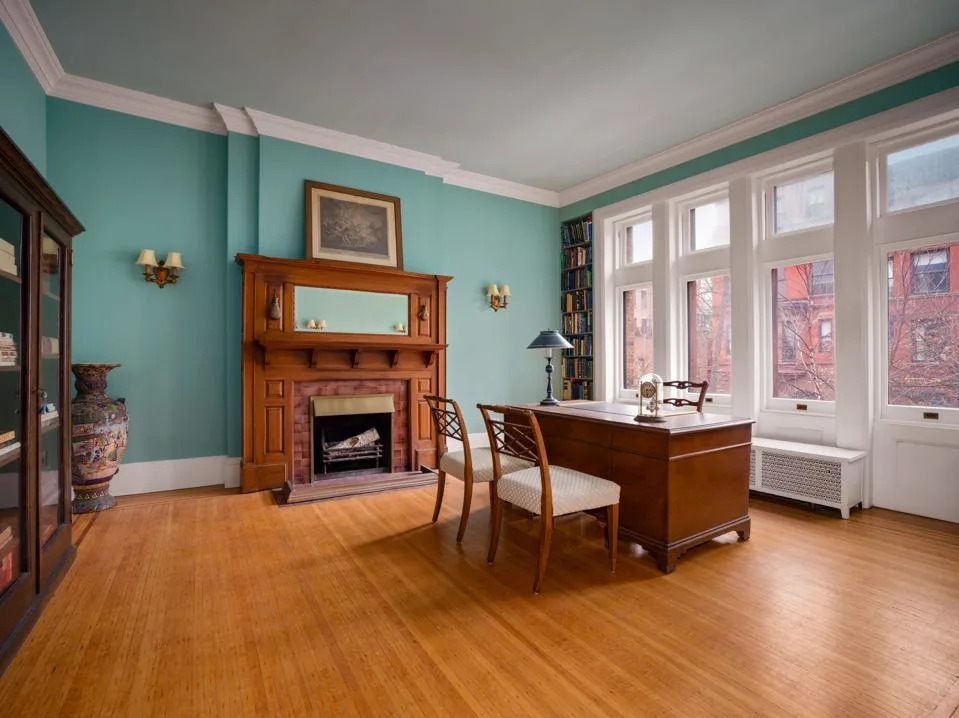
Fireplaces, two on each floor, some lined in wood or tiles, bring their own artistic statements to each room.
Platinum Forbes Global Properties
The five-story, 12-bedroom home, assertive in its Romanesque Revival style, retains the same dramatic stone arch above a massive mahogany and metal front door as it did when it was built in 1887. The entryway is an unshakable architectural statement that’s meant to impress—and it succeeds. It’s grand enough to accommodate the brash aspirations of the era, and the elaborate bustles of pearl-clutching ladies climbing the social ladder.
The entryway is an unshakable architectural statement that’s meant to impress—and it succeeds.
The current owners bought the home in 1974 and immediately embarked on a three-year renovation that gave careful consideration to historical details while upgrading essential areas like kitchens (there are three). They also added air conditioning and upgraded the electrics.
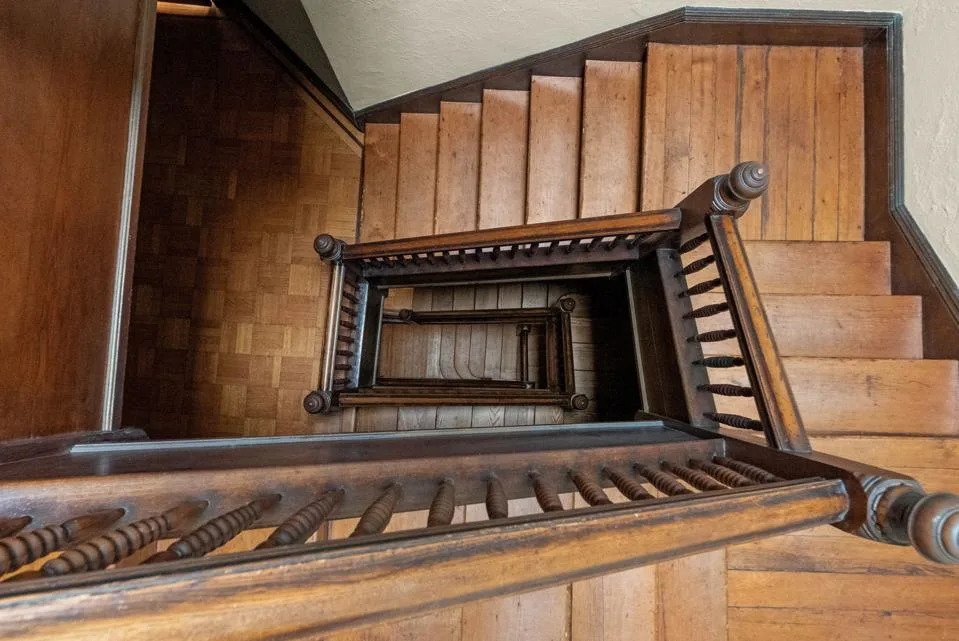
As in many classic brownstones, the staircase at 842 Carroll Sreet functions as both circulation and showpiece.
Platinum Forbes Global Properties
Inside, care was given to preserve and restore the original woodwork throughout. Rich mahogany pocket doors are original. A wooden staircase linking the home’s five levels was rebuilt, and wooden floors, mantelpieces and paneling were matched to showcase the original craftsmanship.
The updated white kitchen with granite countertops feels neutral, designed to complement the extensive wood elements. The kitchen ceiling sports a pair of murals, one depicting clouds with a hovering lone hawk, seemingly ready to swoop down for a bite to eat. (It was added when the couple’s son was young.)
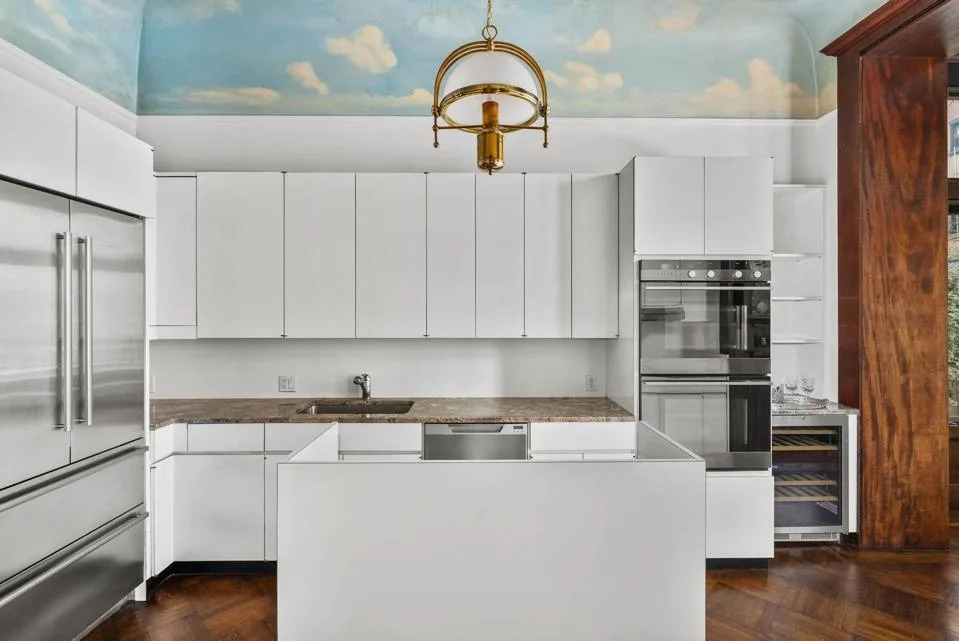
A thoroughly modern kitchen feels at home here, its whimsical painted coved ceiling winking at eras gone by.
Platinum Forbes Global Properties
Some upgrades brought a different feel to the home. Long windows letting in cascades of natural light brings the garden into view from the breakfast nook. Climb the stairs and you are greeted by light, either from windows or glass doors that open out to terraces on each floor. The windows and doors also open views that sweep down to the yard or out to the neighborhood.
It’s hard to know what influenced Gilbert when he designed the Brooklyn brownstones. The architect left behind no notes or papers to document what he was thinking.
He did, however, go on to create more than 100 other homes, some on prestigious Fifth Avenue, such as the former Felix M. Warburg House, which has become the Jewish Museum, and an elaborate French-style mansion for retail magnate F.W. Woolworth, which has since been demolished.
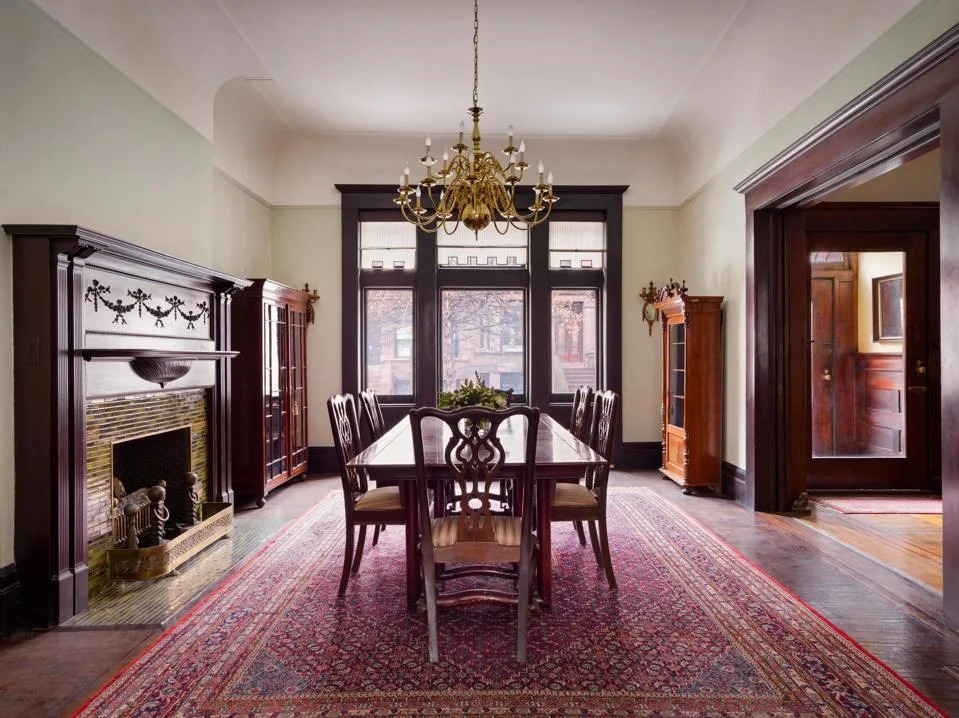
Though arranged as a series of distinct rooms rather than an open plan, the home still feels notably generous in scale.
Platinum Forbes Global Properties
Kitty-corner from the Carroll Street home in Brooklyn stands another of Gilbert’s creations, the historic Adams Home, commissioned by the man who co-founded Chiclets chewing gum. The sandstone, terra cotta and brick home also follows the bold Romanesque Revival pattern.
In the last 30 years of his life, Gilbert withdrew from work and, seemingly from public life. He died in 1952 at the age of 91.
The Gilded Age had a far shorter run, lasting to the 1920s. Americans would be changed by two world wars and work through a postwar recovery period that brought a completely new architectural aesthetic. Skyscrapers and sleek midcentury modern style took over.
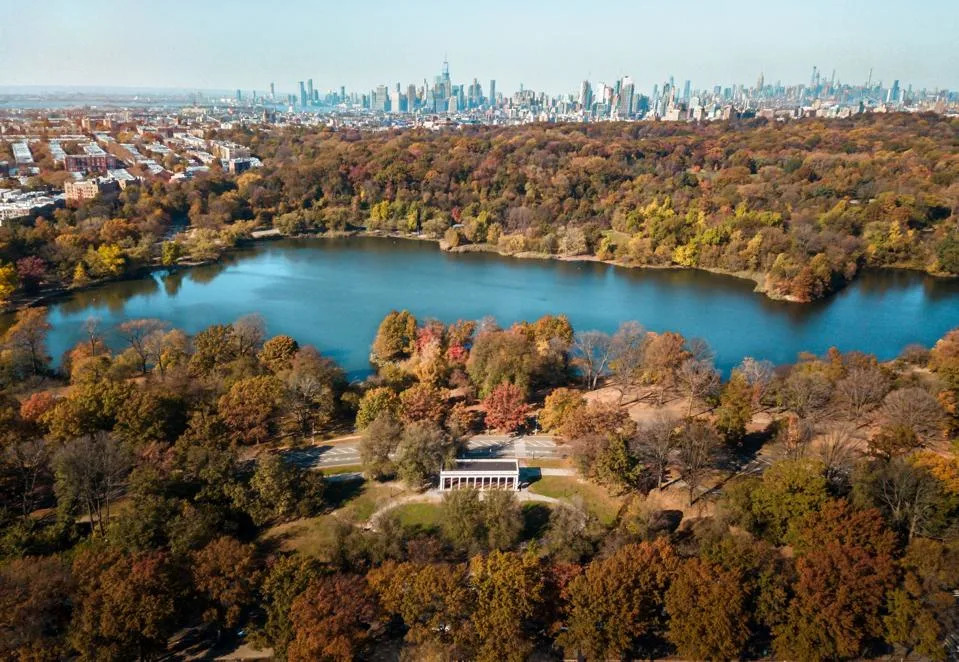
Prospect Park, one of Brooklyn’s most beloved and storied green spaces, is just a short stroll away from Carroll Street.
Shutterstock
Still, Gilbert’s brownstones, particularly the early ones in Brooklyn, stand as a reminder not so much of wealth as a visionary architect flexing his creative muscle, without apology.
842 Carroll Street is represented by listing agents Thomas Handschiegel and Mackenzie Kyle of Platinum Forbes Global Properties at $16 million. Platinum Forbes Global Properties is a member of Forbes Global Properties, the invitation-only network of top-tier brokerages worldwide and the exclusive real estate partner of Forbes.
This article was originally published on Forbes.com